ON UGLINESS WITH DAVID MICHON, AUTHOR OF FOR SCALE
Here at Scura, we’re always on the lookout for alternative perspectives on design and interiors. It’s why we set up this platform in the first place: to cast a light on the homes and work of the people who we felt were going under the radar in traditional design press. So, we have a natural affinity for people doing things differently. FOR SCALE, a Substack set up in 2022 by LA-based writer and consultant David Michon, certainly falls into that category. Or maybe it’s more accurate to say it falls into a category all of its own, because David’s ability to draw from critical theory, psychology, far-and-wide cultural references and an encyclopaedic knowledge of design in his writing makes for a reading experience like no other.
In David’s own words, FOR SCALE “celebrates the supreme potential of domestic space”. A recent post considers the aesthetics of transitions in decor, inspired by the new year and its associated god, Janus, who represented transitions – “BY THE WAY also of doorways and frames! Very décor! […] Do you seek DISRUPTION and A TON OF CHANGE, or do you seek THE SMOOTH and SEAMLESS?” David writes in his distinctive style. More than anything, FOR SCALE is interested in domestic design that breaks the rules, holds a degree of tension and challenges received wisdom about what makes a good interior. Last year, for example, Frank Gherry was lauded for his ability to teach us a lesson on ‘HOW TO DESTABLIZE COMFORTABLY’ while we are invited to look at Martin Parr’s work as an exercise in appreciating banality – “[his images] feel like they totally mythologize Décor in a way that Architectur*l Digest hasn’t for decades – there’s a f*cking life to this, even !without a person! in them,” David wrote.
Receiving David’s insightful, opinionated and, at times, frankly hilarious newsletters in our inbox every Monday is like opening a present from someone who is very good at shopping: you have no idea what’s inside, but you know you’ll love it. We’re always hungry for more, so we invited David for a chat here on Scura. His choice of topic? The aesthetics of ugliness. Read on to hear his thoughts on the matter, and more about why he set up FOR SCALE (which you should definitely subscribe to here).
Scura: Can you tell us a bit about your background, and how FOR SCALE came to be?
David: A million years ago, my first job was at Monocle. Then I worked at Winkreative, briefly edited Icon, and after that I went freelance, doing a mix of editorial work and strategy and copywriting.
Over time, I became less interested in writing for magazines. I found pitching really difficult, not because I didn’t want to write, but because the things I found interesting weren’t landing with editors. I think for a long time I assumed that was my fault, that I just wasn’t good at convincing people of a story’s value.
I still wanted to write, but I didn’t want to go through that process anymore. Substack was gaining momentum at the same time, and I was living in LA during Covid, when there was a huge amount of energy around vintage resale. Supply chains were broken, people had left their jobs, and suddenly there were all these incredibly smart dealers pulling obscure objects into view and making them feel urgent, valuable, desirable.
It wasn’t just the Togo sofa going viral, there were people doing genuinely interesting work, recontextualising things you’d never heard of. I wasn’t seeing that energy reflected in mainstream interiors media. That was really the context FOR SCALE emerged from.
Scura: How would you describe FOR SCALE’s approach to design and interiors?
David: It has much more to do with psychology and cultural theory than with decor itself. I always want the takeaway to be about the reader – about you – rather than about trends or how to achieve a look. It’s not “buy this chair”. It’s about how you look at things, how you relate to the spaces you inhabit.
That’s why I almost never recommend products, and why something like doing a gift guide has never felt right. Ultimately, I’m not really interested in materiality for its own sake.
There’s also a tension there. Interiors matter a great deal to me – I’m very affected by my surroundings – but at the same time, it’s absurd to be overly pretentious about a chair. You have to hold both ideas at once.
Scura: It feels like you’re actively challenging received ideas about taste and beauty.
David: I hate when people talk about “good taste”. There’s a vested interest in keeping taste elite, in reinforcing hierarchies of what’s good and bad, because that’s how you sell things. But the goal should be to have a good relationship with your interior. That’s it.
If you like what’s around you, that’s the best taste for you. The idea that taste is something people are born with, divinely bestowed, is nonsense. Of course, some people are more skilled at arranging rooms, and there’s a lot to learn from that. But it’s just as important to ask why something appeals to you, to understand your own subjectivity.
Scura: Are there any universal qualities of a good interior?
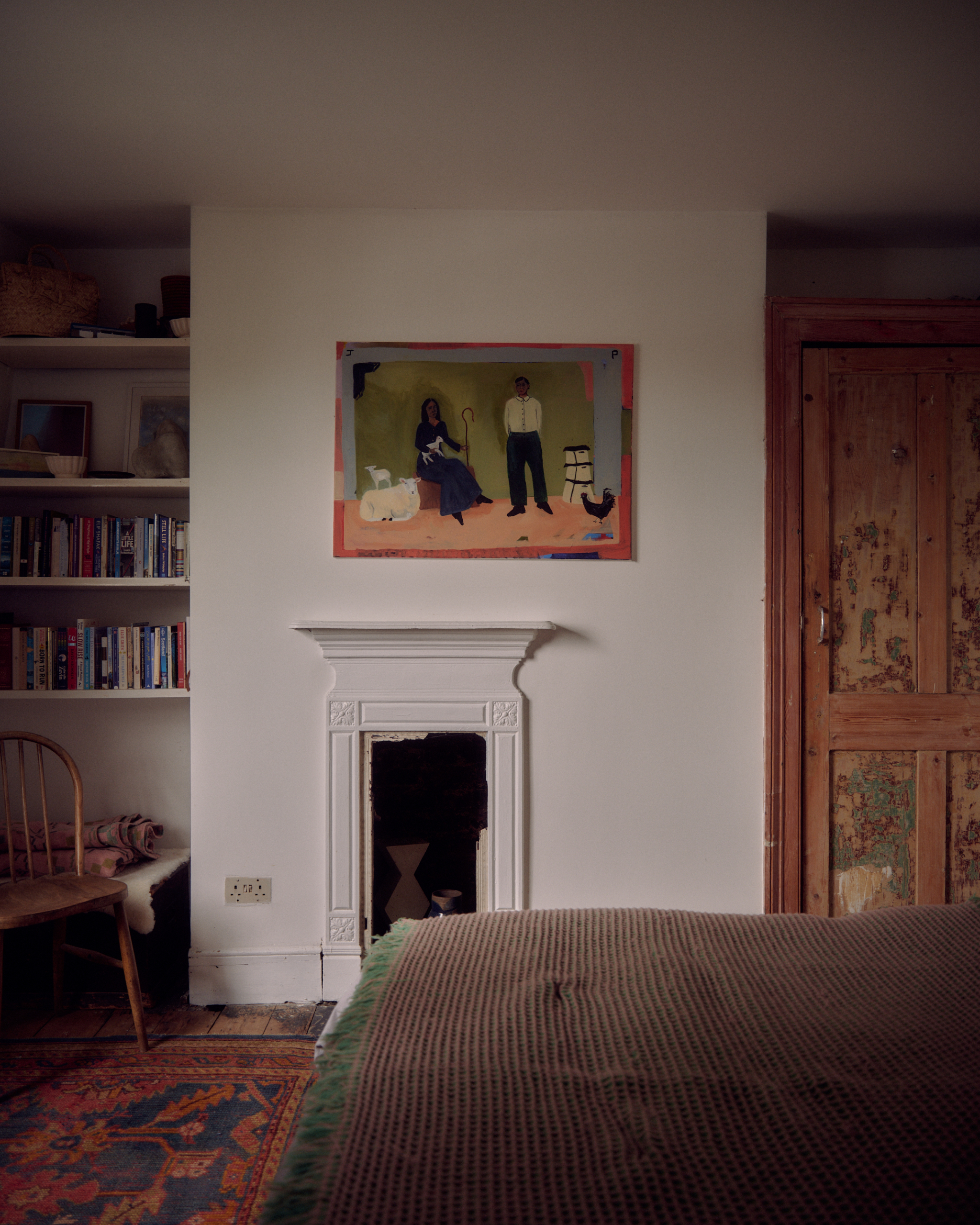
David: I don’t know if there are universals, but I respond when I feel like I can get to know someone through a space. Spaces that make me curious are always more interesting than those that simply look nice. When everything feels perfectly curated, when there are no cracks at all, it feels flat. Boring, even. You want something slightly out of place. That’s where personality shows up. A space where not a single object feels wrong is, to me, very bad. It’s also creepy, like something’s being covered up!
Scura: How do you approach your own interiors?
David: I’m not really a planner. Some people like to see the picture on the puzzle box before they start. I don’t. I come across things I like and respond to them as they appear.
Part of that is self-preservation as I get overwhelmed easily. I’m not scouring the internet for the perfect sofa. I encounter a few, and I choose one. I appreciate humility in interiors. I’m not trying to create a magazine-worthy apartment, even though I love looking at other people’s.
Scura: Your writing style is fast and direct. It’s very recognisable. How intentional is that?
David: It’s an attempt to do two things. First, I believe there’s energy in the design world, so I want the writing to have energy too. Writing quickly, without over-editing, helps preserve that. I want it to feel like I sat down and wrote it in one go.
Second, it’s about control. In traditional interiors writing, one person writes the words, another chooses the images, and a third assembles it all. You can end up describing things that would be better shown visually. With FOR SCALE, I control everything from the words, images, layout, and that allows for a different structure.
It’s also influenced by how we scroll now. Sometimes you move quickly through ideas; sometimes you stop, go down a rabbit hole, then come back. That rhythm feels more honest to how we consume information today.

Scura: Let’s talk about ugliness. How do you define it in interiors?
David: Ugliness is a construct, just like beauty.
If all you surround yourself with is beauty, there’s no friction; nothing challenges you. Ugliness introduces tension, it pushes you to question your preferences. I think that’s healthy, not just in interiors but across life. Read things you don’t normally read. Watch films you think you won’t like. Have things in your home you think are ugly and see what happens.
Historically, ugliness has always been important. A lot of things that later become mainstream start out as strange, uncomfortable, or unattractive – that’s what the avant-garde is, essentially. The nice thing about domestic space is that you can run these experiments on yourself. There’s also something freeing about acknowledging imperfection. The pressure to be flawless can really damage people. Living with things that aren’t perfect, visually or otherwise, can be a reminder that flawlessness isn’t the goal.
Scura: Do you have an example?
David: I was buying bath mats for my apartment. Everything was calming, neutral, spa-like, which is what I thought I wanted. And then I bought a bright red bath mat. I don’t like red. The emotions it evokes is not how I want to feel when I’m showering. It felt wrong.
But I thought, let’s live with it. It’s a small investment. And honestly, I already love it. It has had an effect – ugliness can be energising.
Scura: Do you think contemporary taste culture, disseminated through Instagram and Pinterest, makes us less tolerant of ugliness?
David: Ugliness feels like a relief now. Seeing something awkward or unpolished can be refreshing.
Those platforms have been incredibly valuable and I’ve learned a huge amount from them. But there’s a difference between using them to expand your vocabulary and using them to copy and paste from. The problem isn’t responding to an image; it’s not asking why you respond to it. If you’re just repeating something, it’s never going to be as good.
Scura: Do you see designers working productively with ugliness?
David: The designers I admire most are those who can incorporate genuinely personal, awkward things into a space, such as objects that don’t obviously fit, and make them feel at home. That takes fearlessness. It shows a willingness to let life in and an understanding that messiness will appear regardless.
There’s humility in that too, recognising that the person who lives there matters more than the designer’s aesthetic signature.
Scura: How do you think about comfort in relation to ugliness?
David: We over-index on homes needing to be frictionless, cosy, joyful, soothing. That’s great for some people, but not for everyone.
There are other ways of living. Maybe you want something abrasive, dark, dishevelled. That’s just as valid. The idea that homes must spark joy at all times feels limiting.
There are also different kinds of ugliness. There’s the outsider’s judgement – they think your home is ugly – which doesn’t matter. And then there’s the ugliness you invite in deliberately, as an experiment with yourself. That second kind is much more interesting.
We should make room to be weird at home. Everything feels like it’s getting less weird. If your home can be a place where you’re allowed to be a bit of a freak, that’s valuable.
Scura: What’s coming up for FOR SCALE?
David: I’m interested in taking it off the internet, finding ways for writing to support physical experiences. I’m co-curating a photography exhibition with Holly Hay at the USM showroom in New York, where interiors appear as emotional context rather than the subject.
I’m also working on a Verner Panton centenary event for Louis Poulsen, and a life-drawing class with Ace Hotel in Toronto, featuring a nude model on vintage furniture. It’s about acknowledging how furniture interacts with bodies, how it can be sensual, charged.
I’m also working on the third print edtion of FOR SCALE, which will come out in May. We’ve just opened up submissions for our décor criticism prize, the top prize of which is $1,000.
That’s the energy I’m carrying forward: using the FOR SCALE lens in different formats, and seeing where it can go.