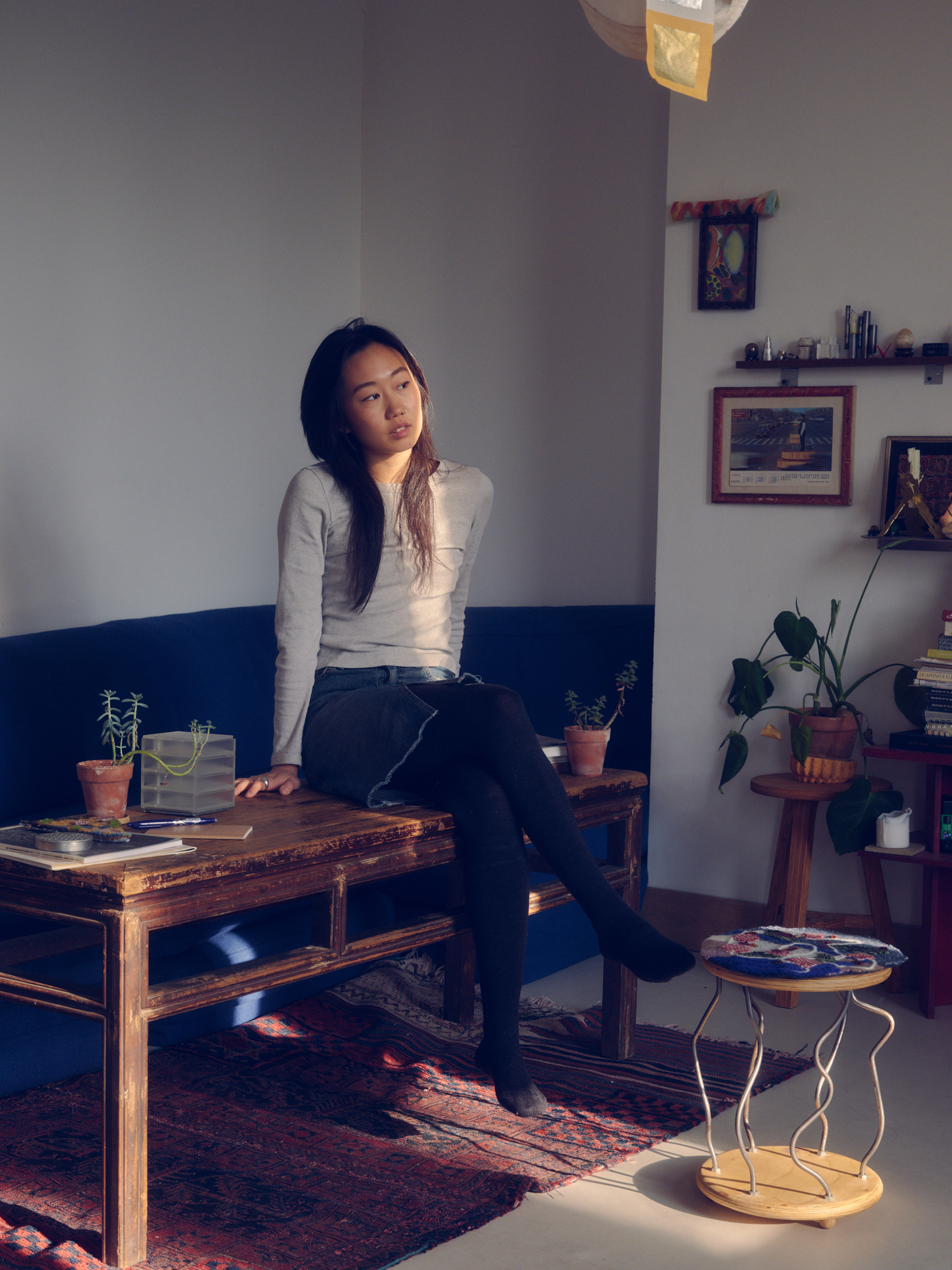
Designer Jake Robertson’s Home is a “Living Library”
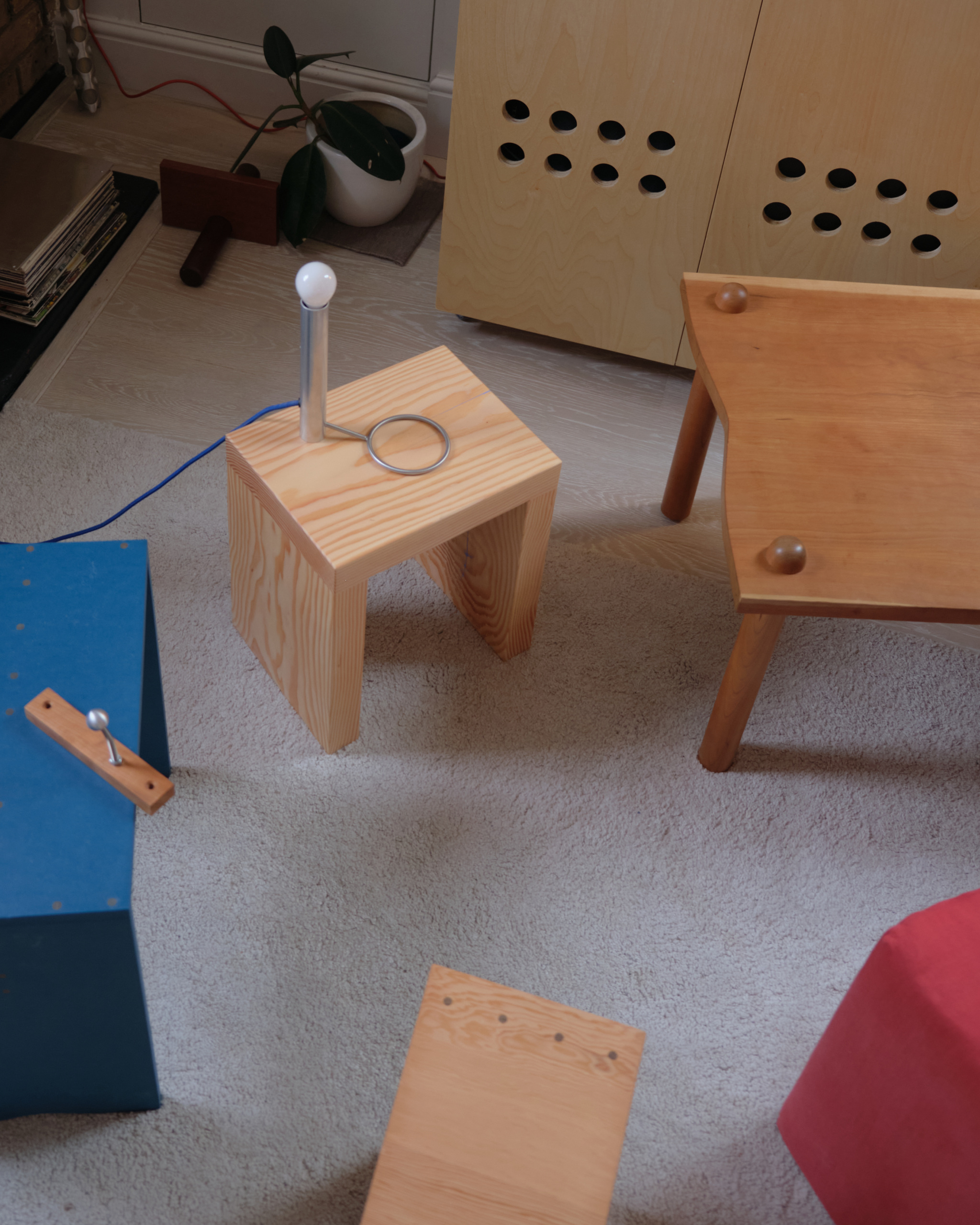
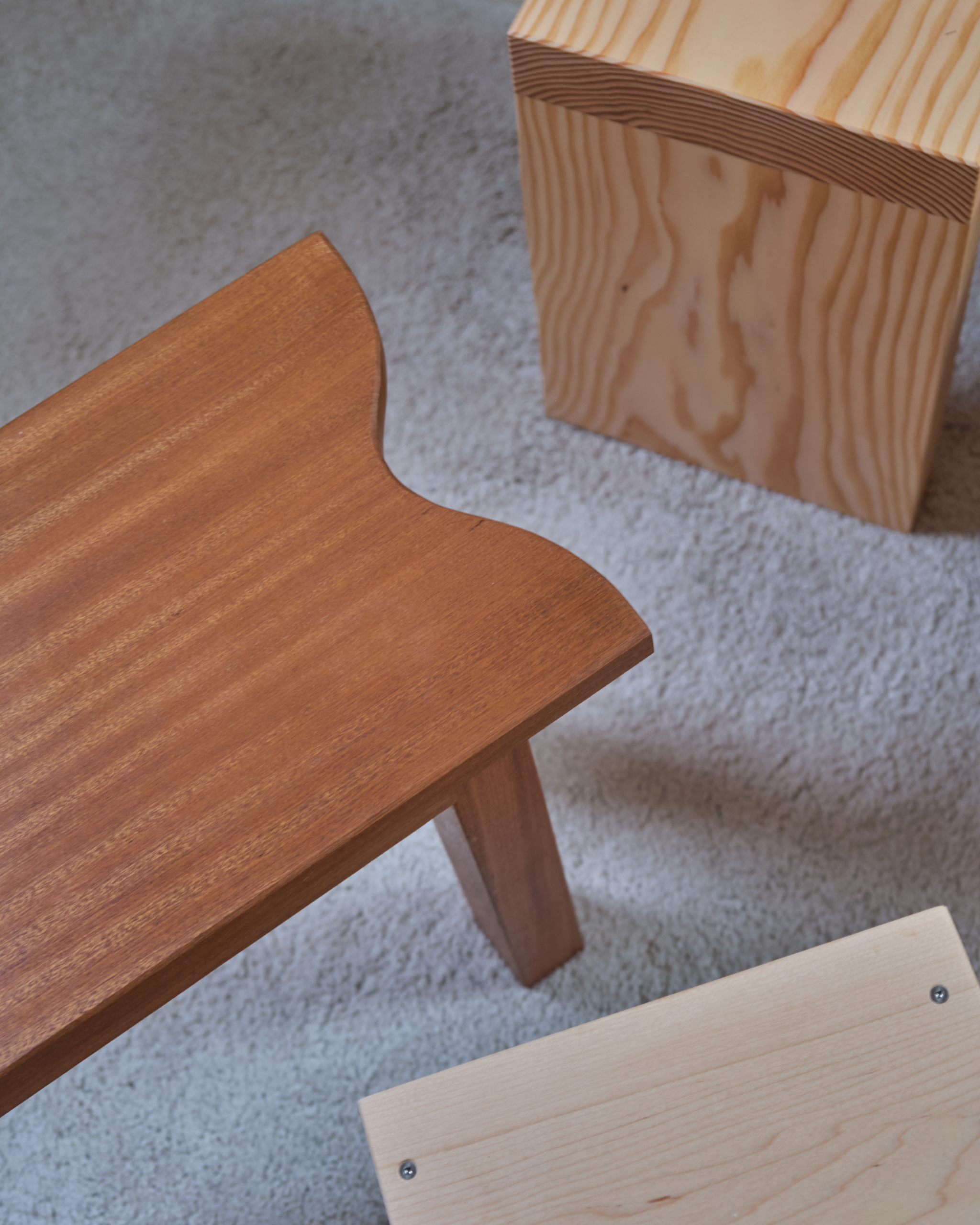
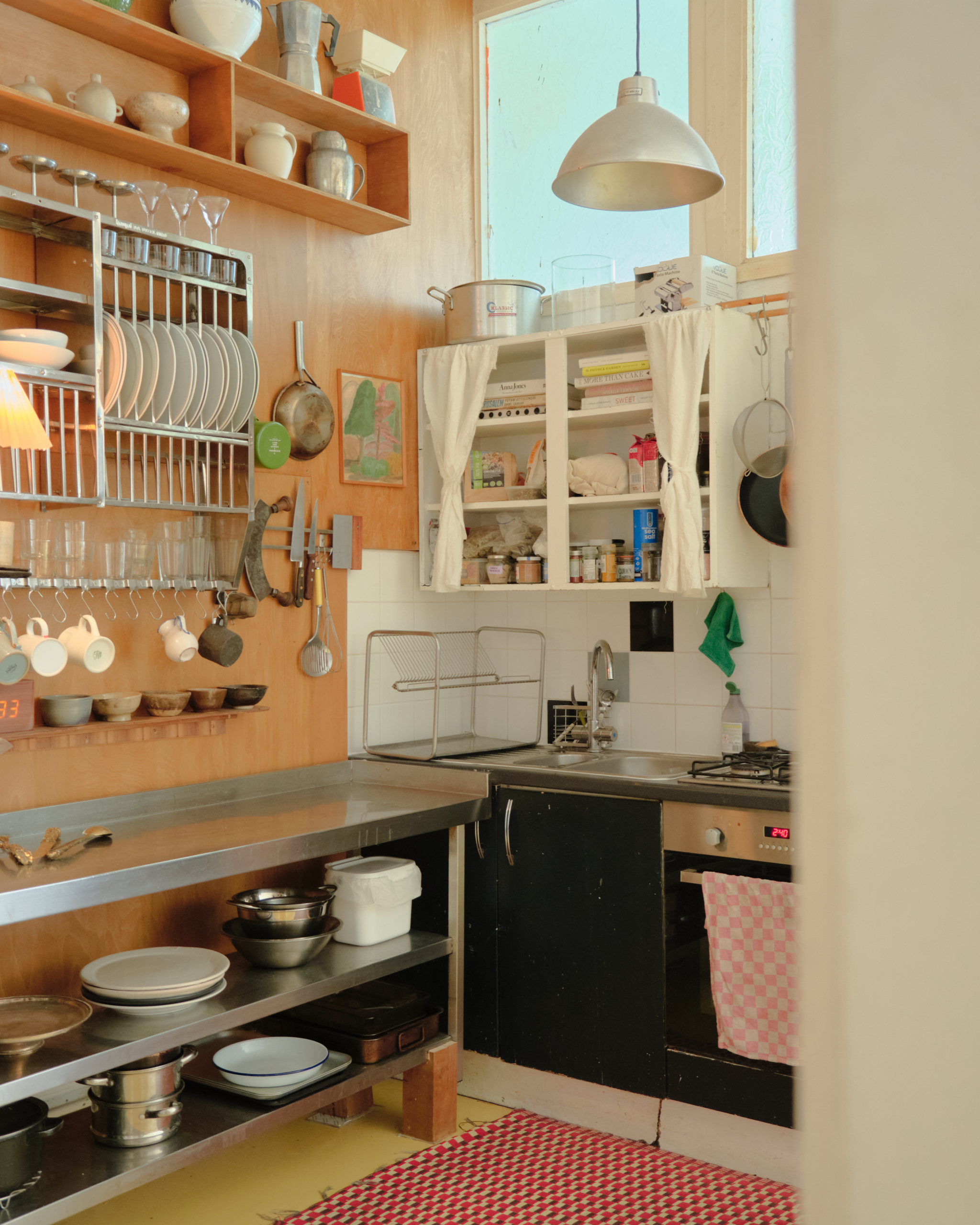
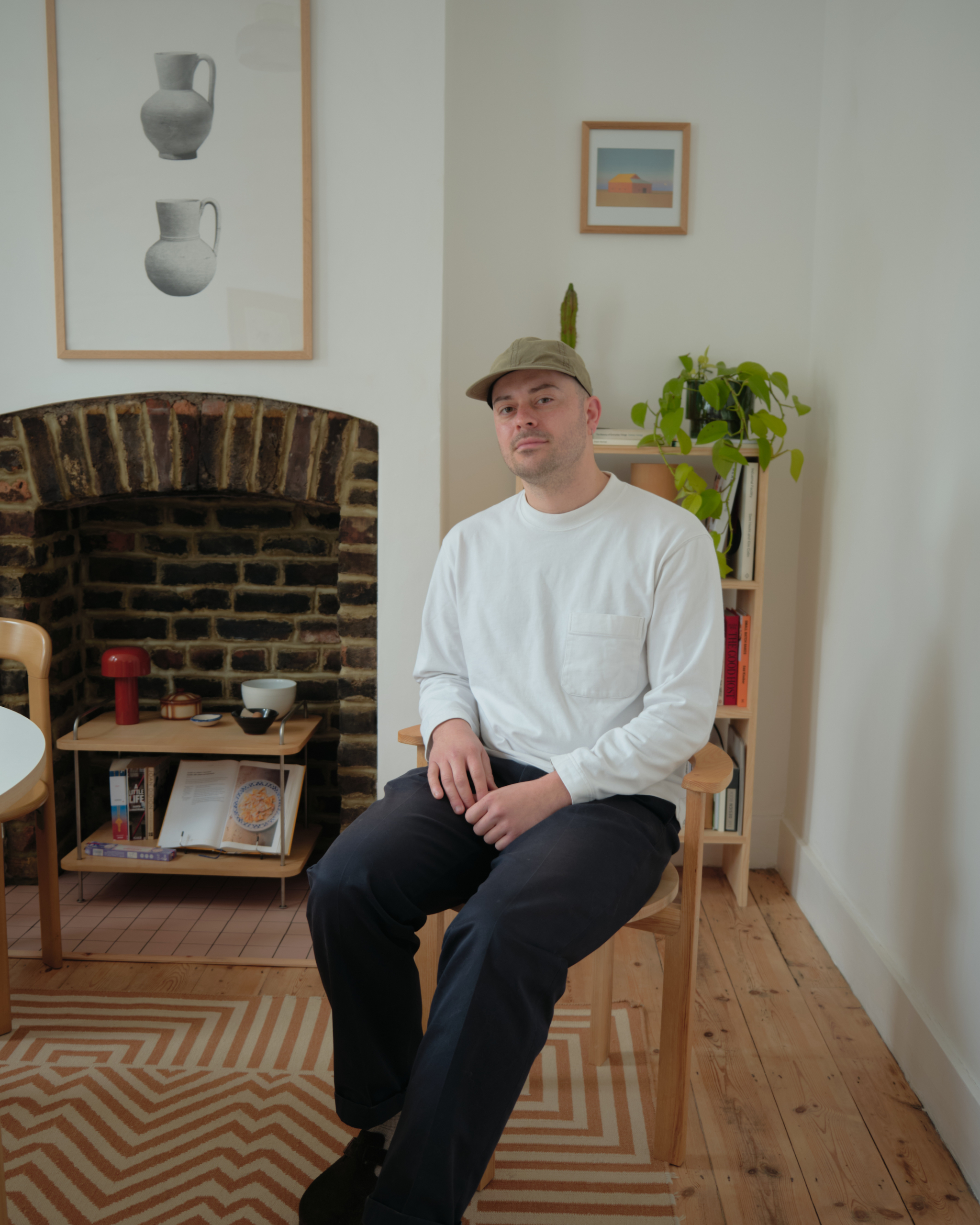
“I refused to buy IKEA because it was a great excuse to try something out,” says designer Jake Robertson of his approach to furnishing the rental flat he and his girlfriend, Maayan, moved into three years ago in Brockley, south-east London. Offered unfurnished but freshly renovated, the flat instantly appealed to Jake as a space for experimentation; somewhere he could develop and expand his material-led furniture and lighting practice. “It’s become a living library of all the pieces I’ve made,” he says, sitting on a red stool he built around the time they moved in.
Many of the pieces that followed emerged out of simple necessity: a place for friends to sit when Jake and Maayan hosted Thanksgiving, for instance. Others arrived by way of side projects whose outcomes weren’t intended for the flat, but feel perfectly at home here, such as a Valchromat and sapele-veneer clock from a self-initiated challenge to make 10 functional objects in as many days during a creative-reuse residency. A vase made from extruded plastic atop a bookcase, meanwhile, is evidence of his part-time job with James Shaw.
We sat down with Jake at his flat for a wide-ranging conversation about why he rarely commits designs to paper before making; his belief that half of any object arises from letting the materials lead; and the ongoing journey towards developing design language that feels uniquely – and happily – his own.
Hi Jake. To begin, can you tell us a bit about your background and how you arrived at what you’re doing now?
I’m originally from Manchester and moved to London to study product and furniture design at Kingston University. I graduated about eight years ago and decided to stay in London. I then happened to start working for James Shaw, and I’ve been with him for almost five years now. I would say that’s really been my education. It’s basically just been me working for him, seeing how the business operates, learning techniques and methods, and even the way of thinking. I feel like those years have been formative for developing my own sense of making and design.
A few years ago, I started wanting to apply everything I’d learned to my own practice. James was great because he let me use the workshop out of hours. I wasn’t trying to sell things; there was no financial motive behind what I was doing. I was just experimenting and trying to build up a portfolio. That developed into a way of working that uses offcuts and waste material, and really letting the materials breathe on their own.
What did you learn from working with James Shaw?
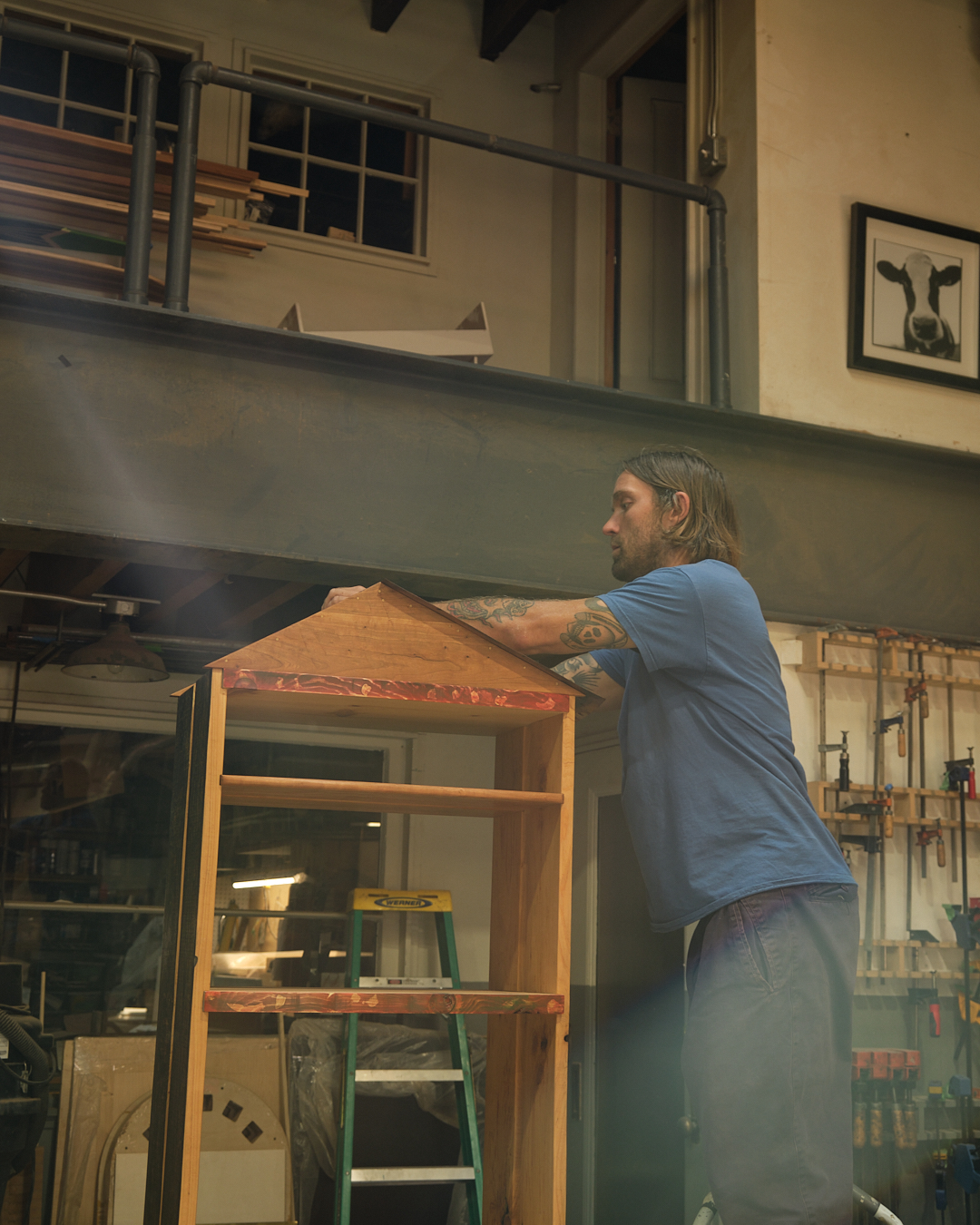
A lot. His approach is almost like working with no prototype. Every time you make something, you’re aware it will become an object in itself, regardless of the outcome you originally intended. Combined with being resourceful with materials, you get outcomes that weren’t set goals. That’s really informed my work. Even if I have a drawing, I pretty much know it won’t matter at the end of the day. What I find in the material is what informs the process of making most of the time.
His practice allows for a lot of playing as you go, and not setting an end goal. His plastic work, in particular, is so freehand and illustrative. And beyond that, there’s the friendship that comes from sharing a love of small details and objects. He hasn’t heard me say this, but I’d call him a mentor. He’s always asking about my work.
Have you always been interested in making things?
Yes. I did an art foundation, art at A-level, art at GCSE. It was something I felt good at and really enjoyed. At foundation I hit a crossroads, and a tutor told me that if I wanted to make physical things, I should go to Kingston and study products and furniture, so I followed that advice. I wasn’t really introduced to design before that; no one I knew back home was interested in it. Moving to London opened that world up.
But there are family influences. My grandpa was an engineer, so there was tinkering in his garage. My dad would help me make things for school; I remember making a wooden guitar while others brought in tissue boxes. So I guess I always knew that making things was possible.
Your work often reuses or repurposes materials. Where does that come from?
It’s mainly resourcefulness. The renewable or sustainable side is a great bonus, but for me it starts with being resourceful. In the first weeks of working for James, I was sent around Elephant and Castle looking for old bedboards people had thrown out to use as jig material. That taught me that you can find stuff off the street.
Now I go to timber merchants to find offcuts. I like finding interesting qualities in things that have been thrown away. And of course those things are cheaper to use, which in a city like London is helpful when you’re trying to cut costs wherever possible.
Can you talk about the residency where you made one piece every day for 10 days?
Yes, that was a self-directed project during a residency between Blue Garage in Lewisham, Whip Works and Renée Materials. They gave me access to a workshop and materials. At the end of the residency, I had a pile of material and wanted to make one thing every day for the last ten days I was there. It became a really fun way of experimenting within quite strict limitations and, when I shared each piece on Instagram, it was great to see how people reacted to what I came up with.
Some of those pieces I’m now making again, like the hooks, which I’ve developed into a series. But what surprised me was seeing something of me and my interests come out in each piece, even with strong restrictions. Even the minimal things like cutting a groove, or making a timber frame, all had a clear sense of my making. I wasn’t sure I’d come out with one piece I liked, but, in the end, each piece became special. And, even better and unexpectedly, they made sense together as a collection.
What are the other pieces that best embody your approach?
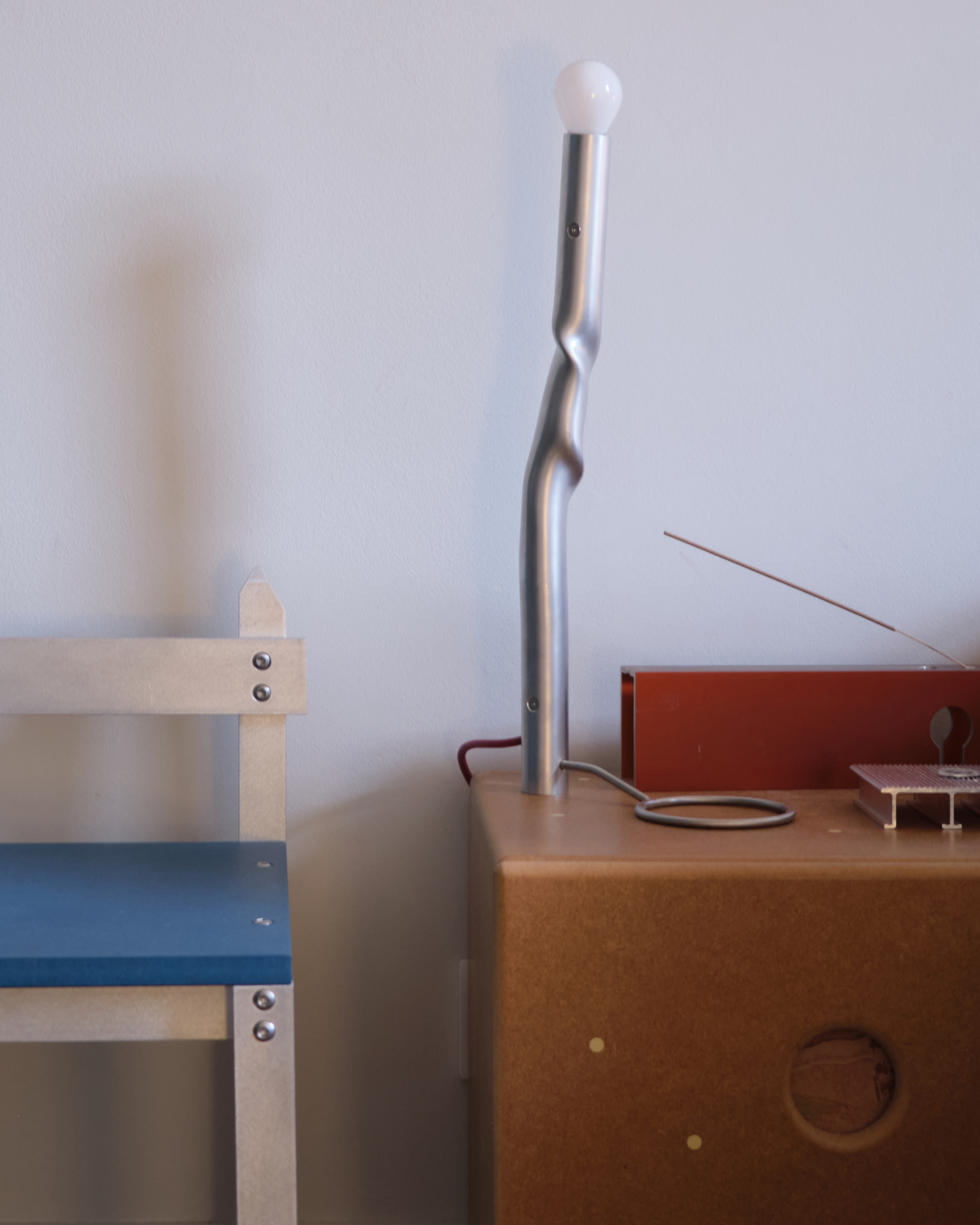
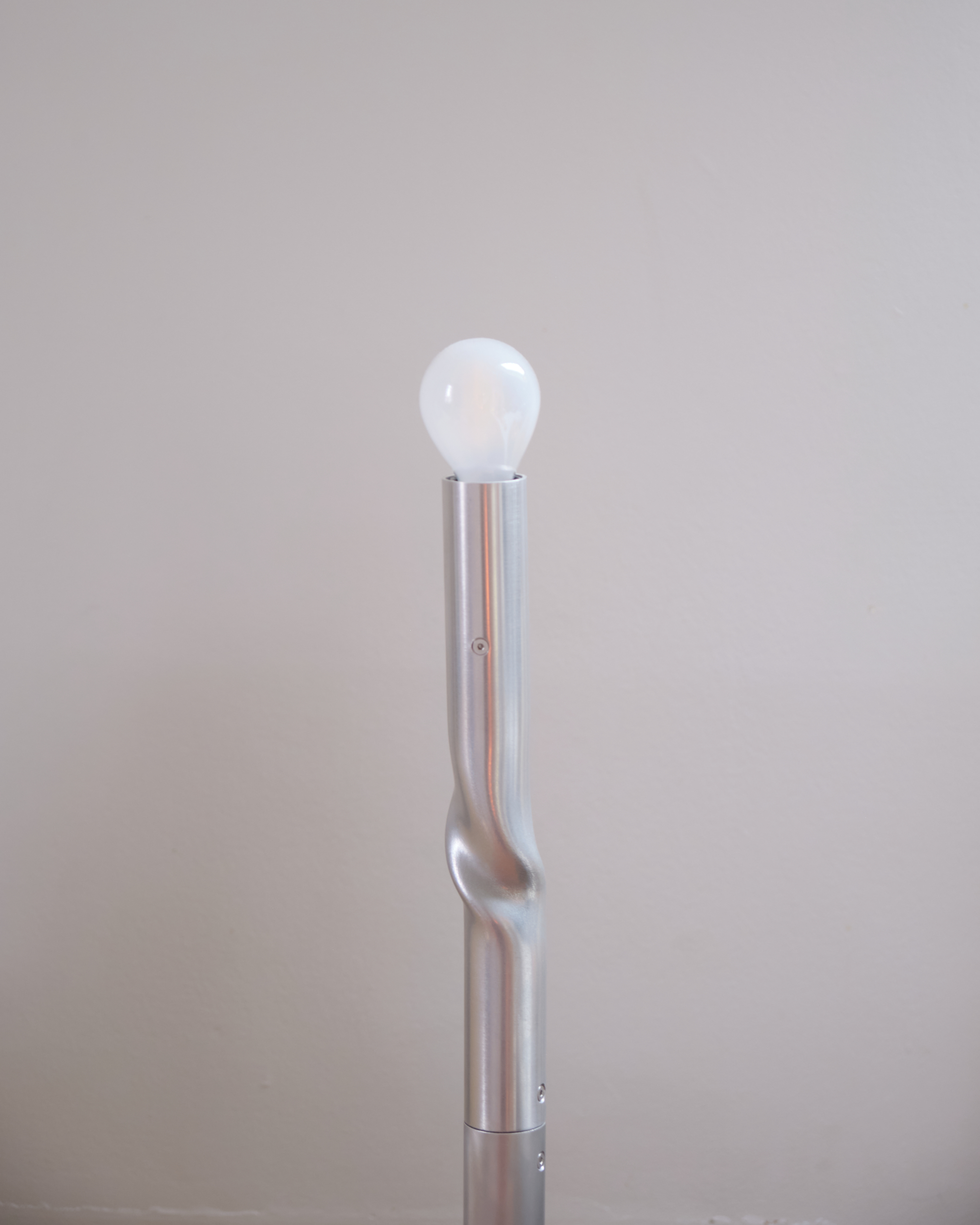
The bent aluminium chair with the sapele seat and backrest is something I’m really happy with. That was a commission based on a high chair I made for a show, and it was so much fun to work on. Visually I’m really happy with it because it feels like me speaking my own language, and I reference it a lot in other pieces. The fixings are handmade saddle washers that sit between the rod and the wooden seat, and to make them I had to cut into an aluminium tube.
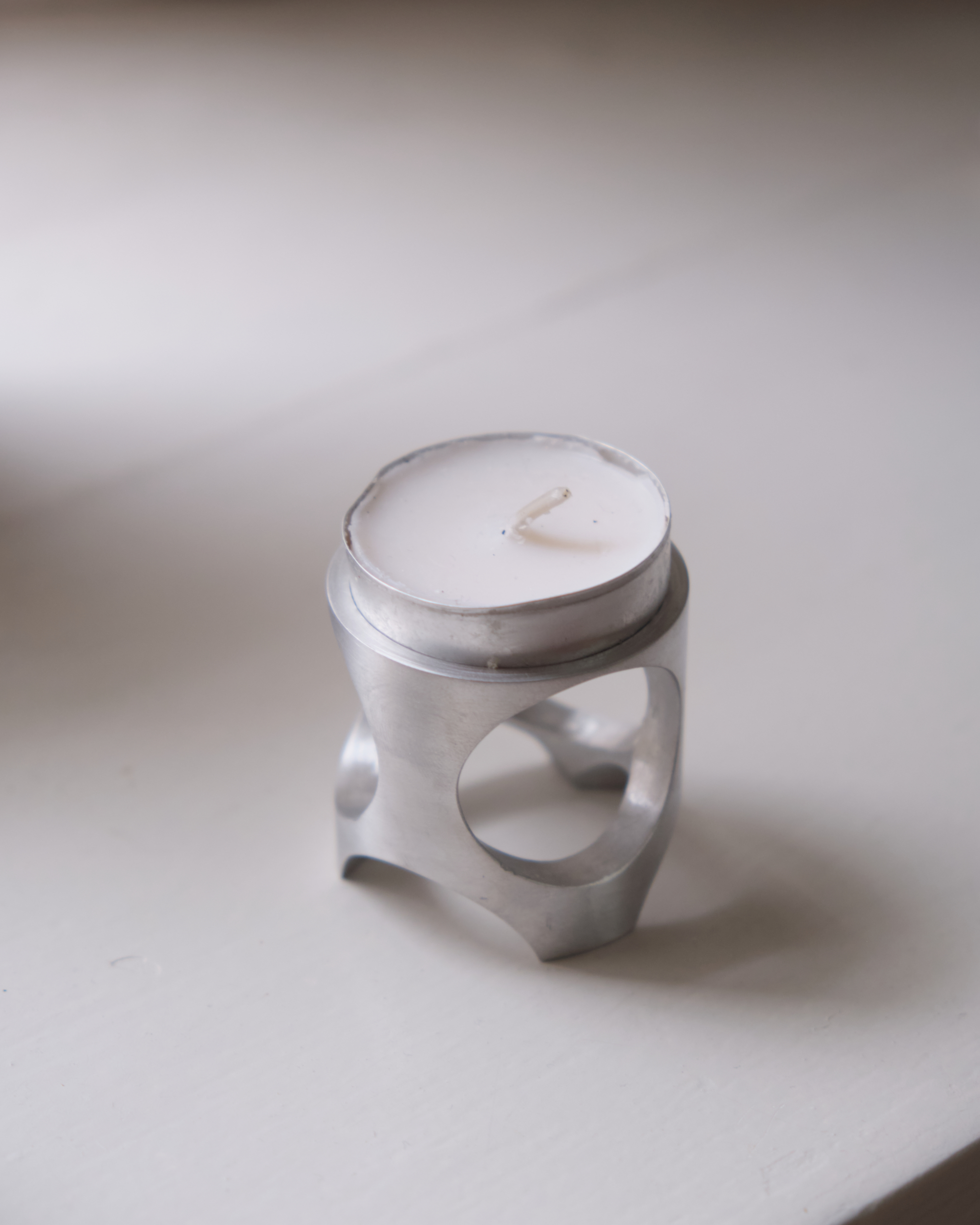
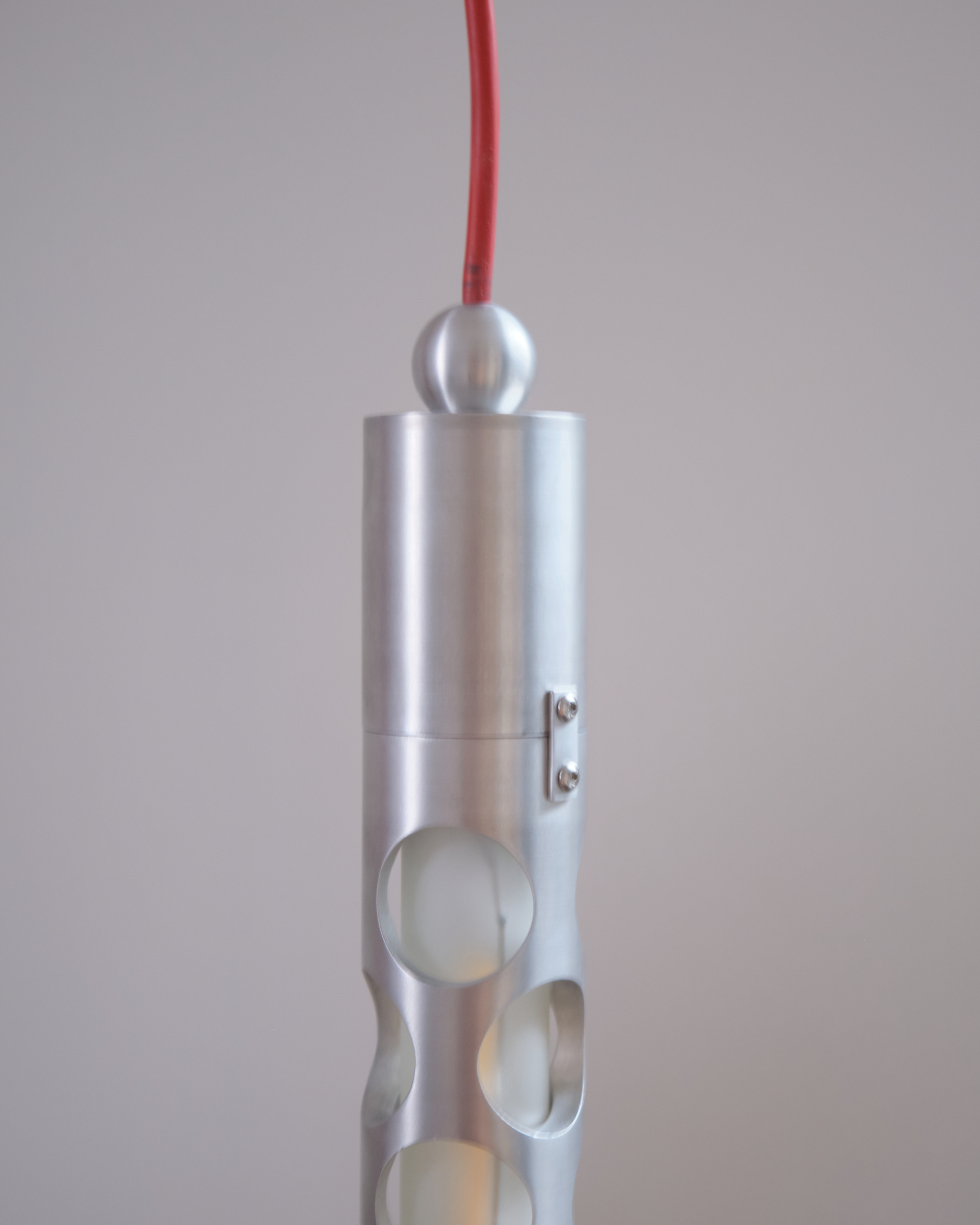
The off-cut from that tube became the pendant lamp. It was covered in holes from cutting the washers, and every time someone came by the studio they’d tell me it had to be a lamp. So I put a long bulb through it. It’s really nice that something born out of one piece continues in another. It’s not quite cannibalising, but something adjacent; it just keeps existing down the line.
Can you describe your home and how you use it?
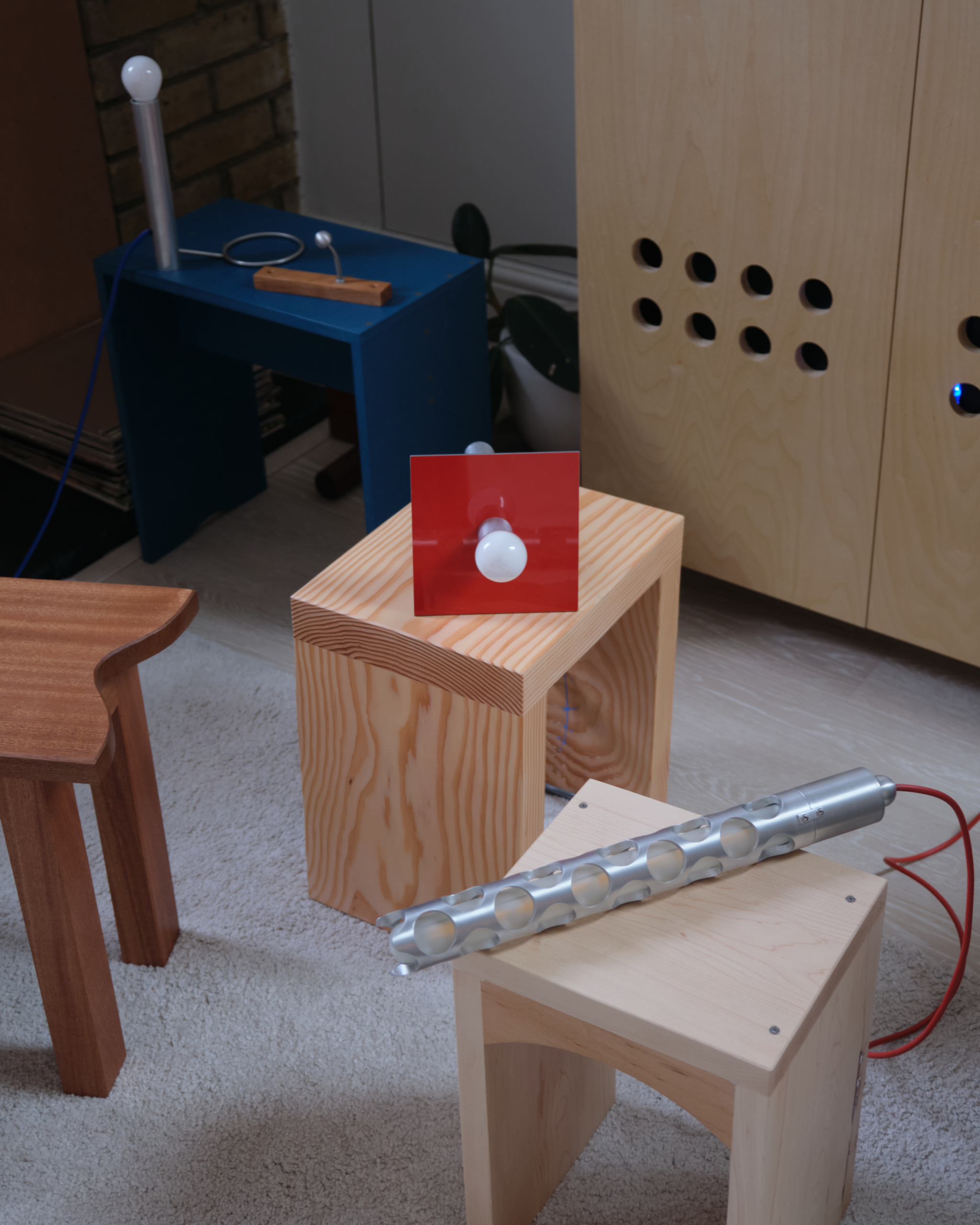
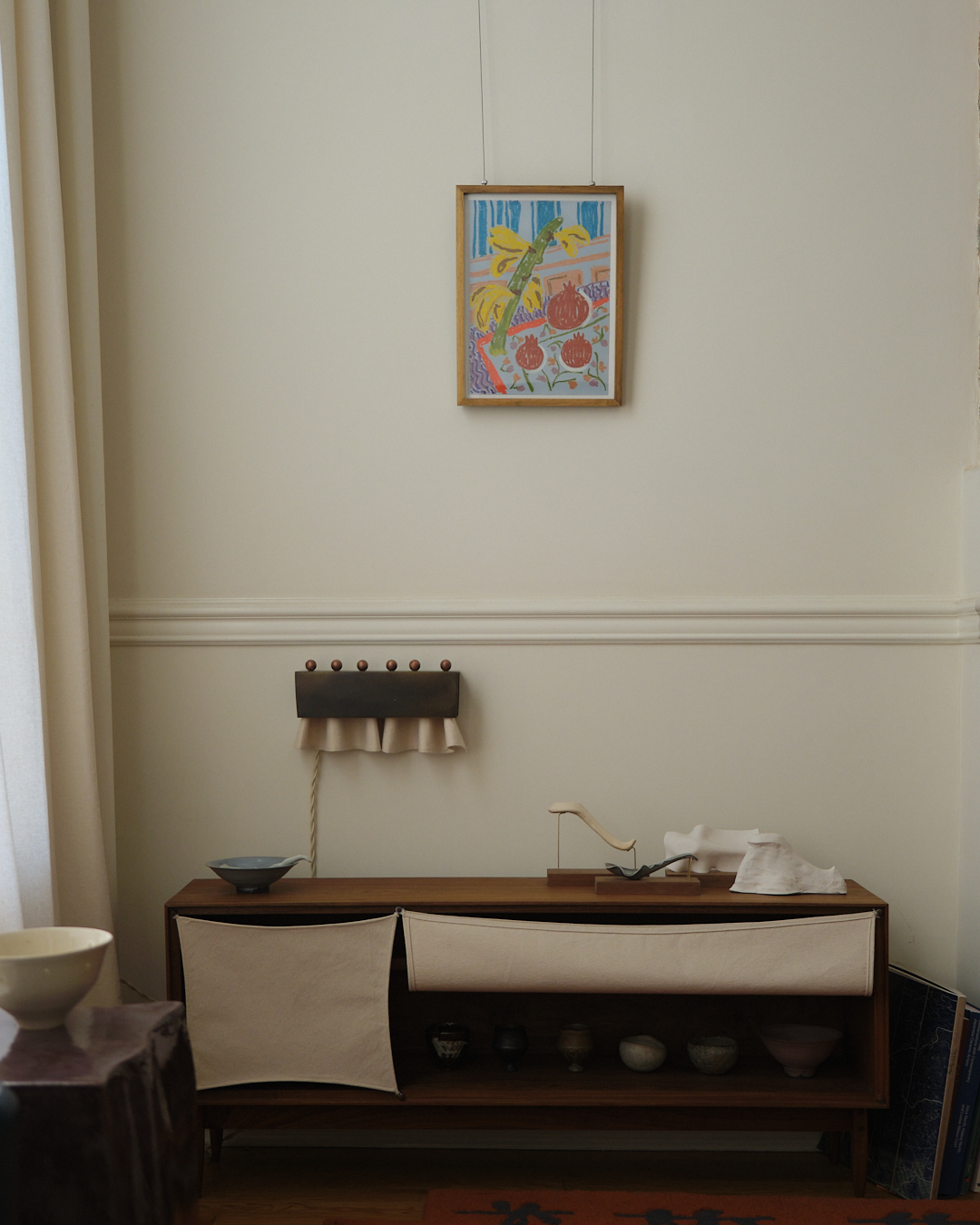
It’s a top-floor flat in Brockley, in what would have been an attic of an old Victorian lodging house. I live here with my girlfriend. It was unfurnished, which was great because I’d made so many things and needed places to put them. It became like a library of all the pieces I’ve made. I’ve added more over the years, like the stools and the TV cabinet, and now everything has its place.
In the early days of my practice, I was really just trying to fill my own flat. My girlfriend would say, “We could buy this at IKEA,” and I’d refuse because it was a great excuse to try something out. I made the red stool about three years ago and I sit on that every day.
I love bringing everything back to my flat and putting them together in this little world. It’s special to try to make pieces that fit within that. It also means when I’m making, I’m really cut-throat with ideas. I need parameters. The more parameters, the happier I am. Fifty per cent of the work is the material; it’s not really my choice how things end up looking.
We’re homebodies. We spend every evening on the sofa. We cook a lot. It’s a kind sanctuary, a place to rest from what can be a busy and challenging city to live in, in many ways. My girlfriend is Canadian and far from family, so making the space feel safe and cosy is important to us.
You host people often too?
Yes, we host Canadian Thanksgiving every year. This year I was rushing around the week before making nine stools. It was so much fun to have people pick their own stool. They were all different heights. Hosting is important to us but the space isn’t great for it, so we get around that by having flexible furniture and not being too precious about where people sit.
What’s next for you?
I’m in an experimental phase, just making and trying things, and trying to sell some work while also trying to be seen and make connections. I’m still learning what it is I’m trying to do. I don’t think I’ll ever fully crack it.
We’ll probably stay in the flat for a few more years. We aren’t set on living in London, so wherever the next home is, I’ll try to grow this family of objects. For now, we recently changed the flat around, and it feels like living in a different place. Sometimes that’s all you need.
Suggested stories
An Artist’s Home in Hackney with Plenty of Creative Headroom
Going Out, Staying In With Dan Pope
Filippo Muzi Falconi’s World Is Filled With Wonder, Naturally
Making Work – and a Home – Out of Restrictions, Remains and Resourcefulness
A Designer Finding New Forms in Ancient Traditions
A Collector Who Sells – and Lives With – the Things She Loves
Functional Beauty: Jewellery Designer Helena Vieira’s Converted Warehouse Apartment
The State of Design? Designer David Searcy Has Thoughts
Inside Jesse Butterfield’s Studio
Jewellery Designer Jessi Burch’s Brooklyn Apartment is a Portal into her Mind
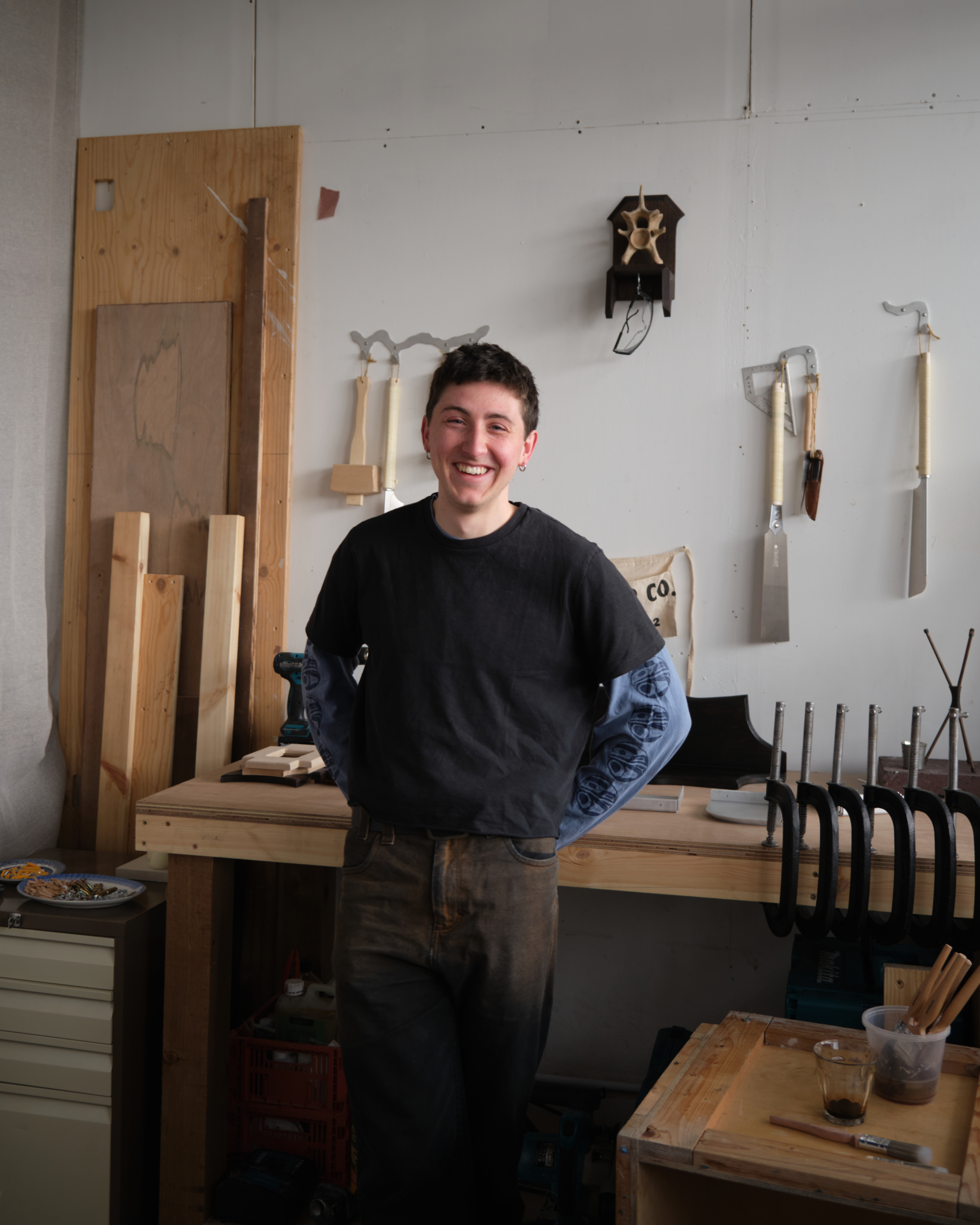
How “primitive craft” and “contemporary production” come together at Lewis Graham’s studio
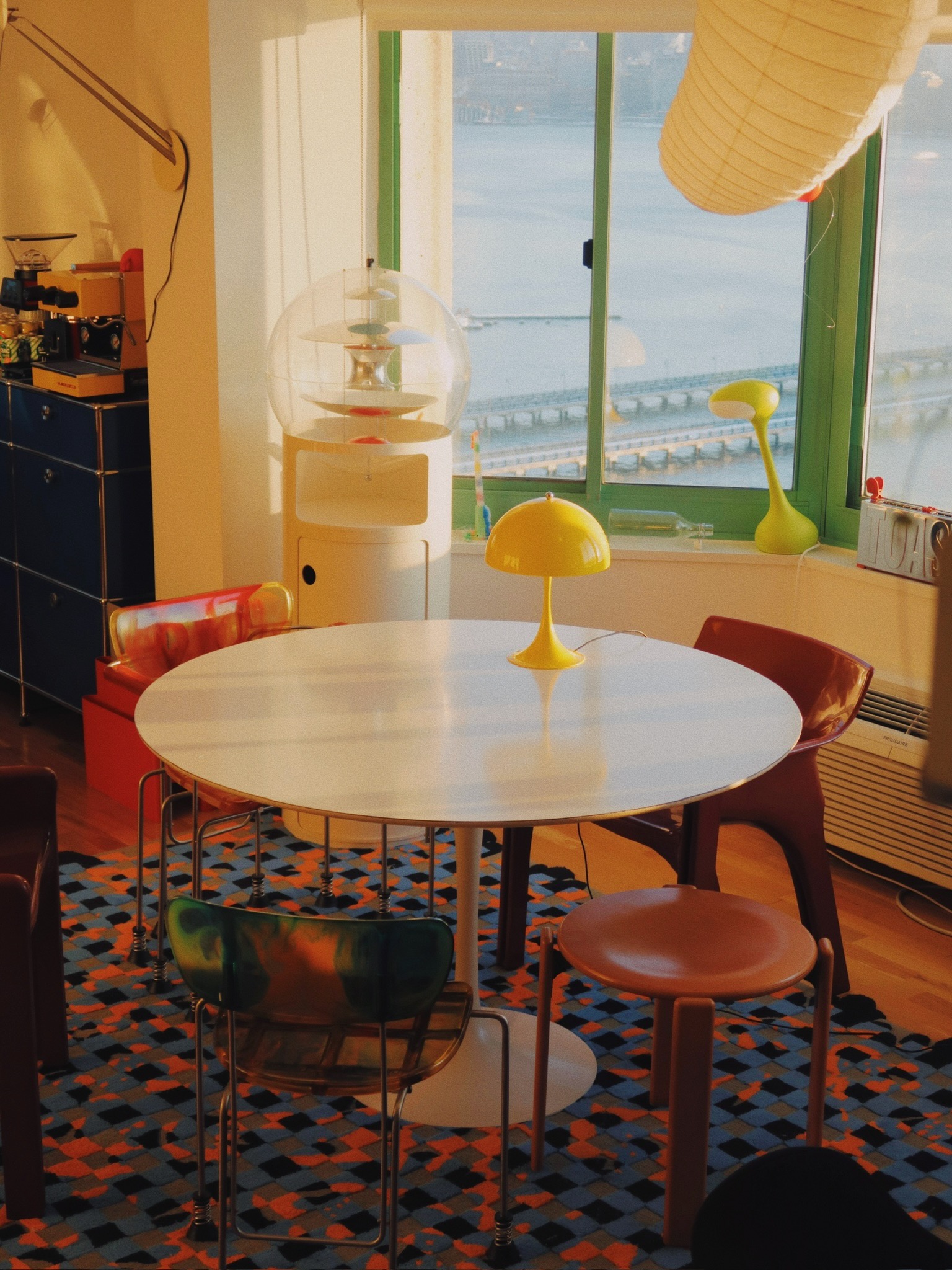
An Apartment With No Sofa But 50 Lamps
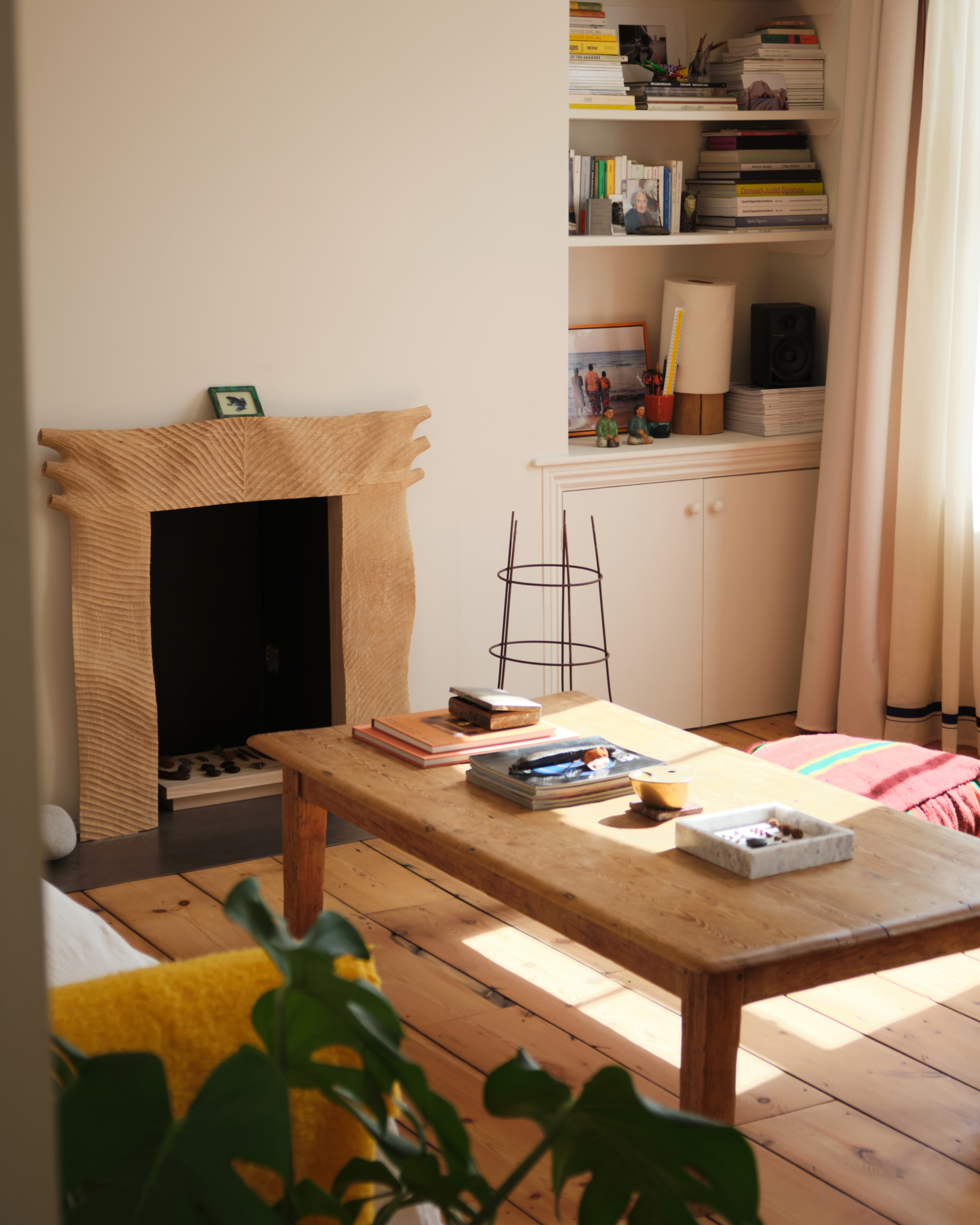
A Happy Family Collaboration in De Beauvoir
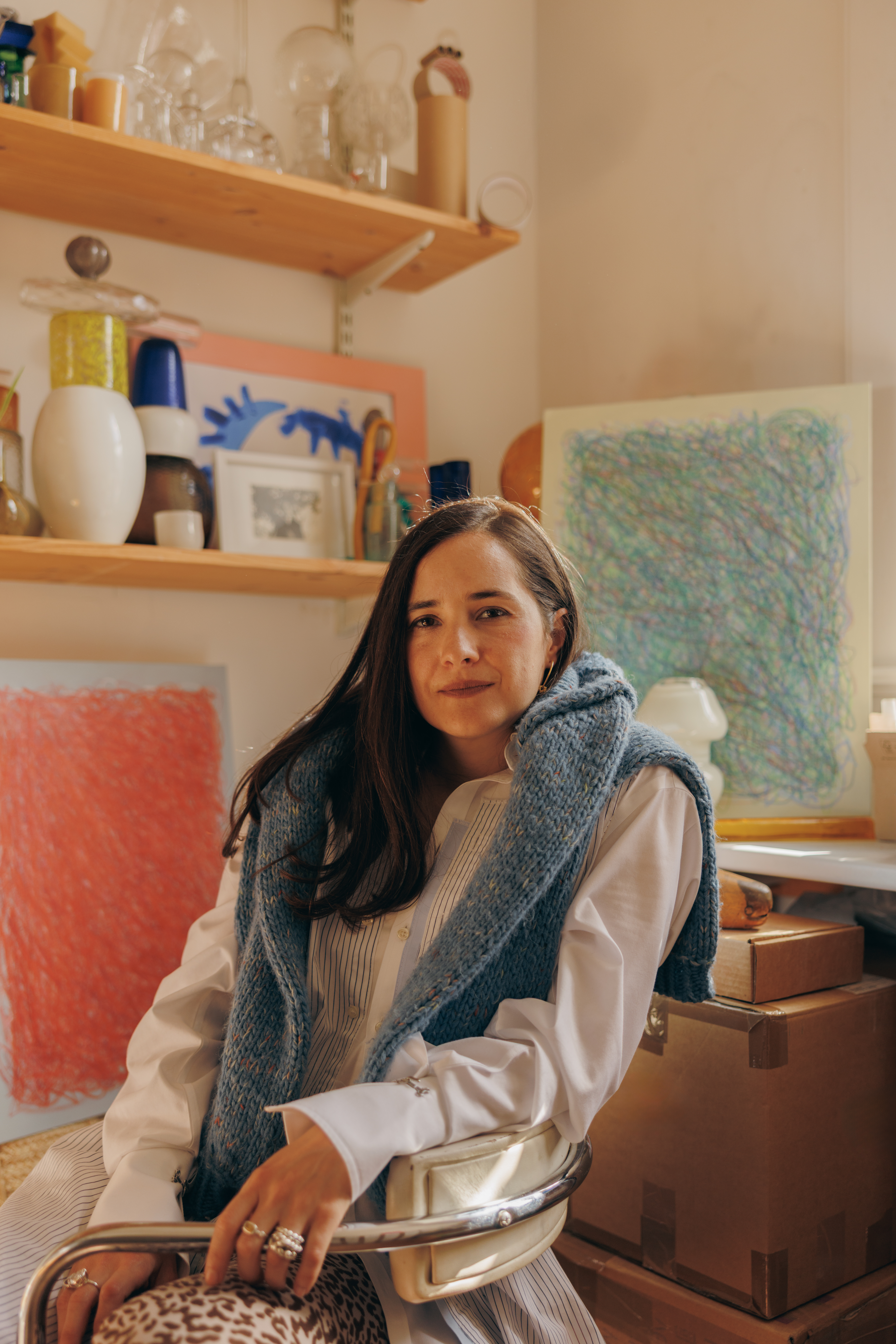
How “The Muse of Spirited Resourcefulness” Guided The Making of Glass Artist Juli Bolaños-Durman’s Edinburgh Home
ON UGLINESS WITH DAVID MICHON, AUTHOR OF FOR SCALE
The Home That Thomas Wheller Is Making
Jewellery Shaped by Architecture, History and the Human Hand

THE SCURA GUIDE TO GOSPEL OAK & AROUND
Scura Selects: November 2025
Luke Malaney’s Work is Always in Motion
Going Global: Reflections and Recommendations from Flawk’s Show at Collectible NYC
The Fluent Creativity of Liyang Zhang
SCURA Selects: What to see at Open House & LDF
FRIENDS OF SCURA: ALEXANDRA ARIAS
What is Flawk?
A Design Duo’s Reunion with a Family Farmhouse in Alsace
The best eats in London under £20
Introducing the Flawk Shop: a new home for a family of objects
An Architectural Adventure in Finland’s Far North
Freddy Tuppen’s Flat Keeps Getting Better
A Slower Guide to Istanbul
Inside A Copenhagen Apartment Shaped By Instinct, Collaboration and Kerbside Finds
A Guide to Copenhagen, Curated by a Design Duo We Love
Step Inside Tom Golland’s Colour Playground
Picasso Chairs and Playful Precision: Josh Page’s Creative World
Ajay Larr on the Architecture of Food and Why Meals Matter
A Slower Guide to London
The Scura Guide to eBay
The Homespun Beauty of Textile Designer Isabel Farchy’s Patchwork Panels
NYC Design Getaways
Our friends: PPP LAB on crafting for simplicity and usability
Hidden Feasts: Jiaonest
Scura’s Guide to Independent Stoke Newington
Welcome to Scura