How “primitive craft” and “contemporary production” come together at Lewis Graham’s studio
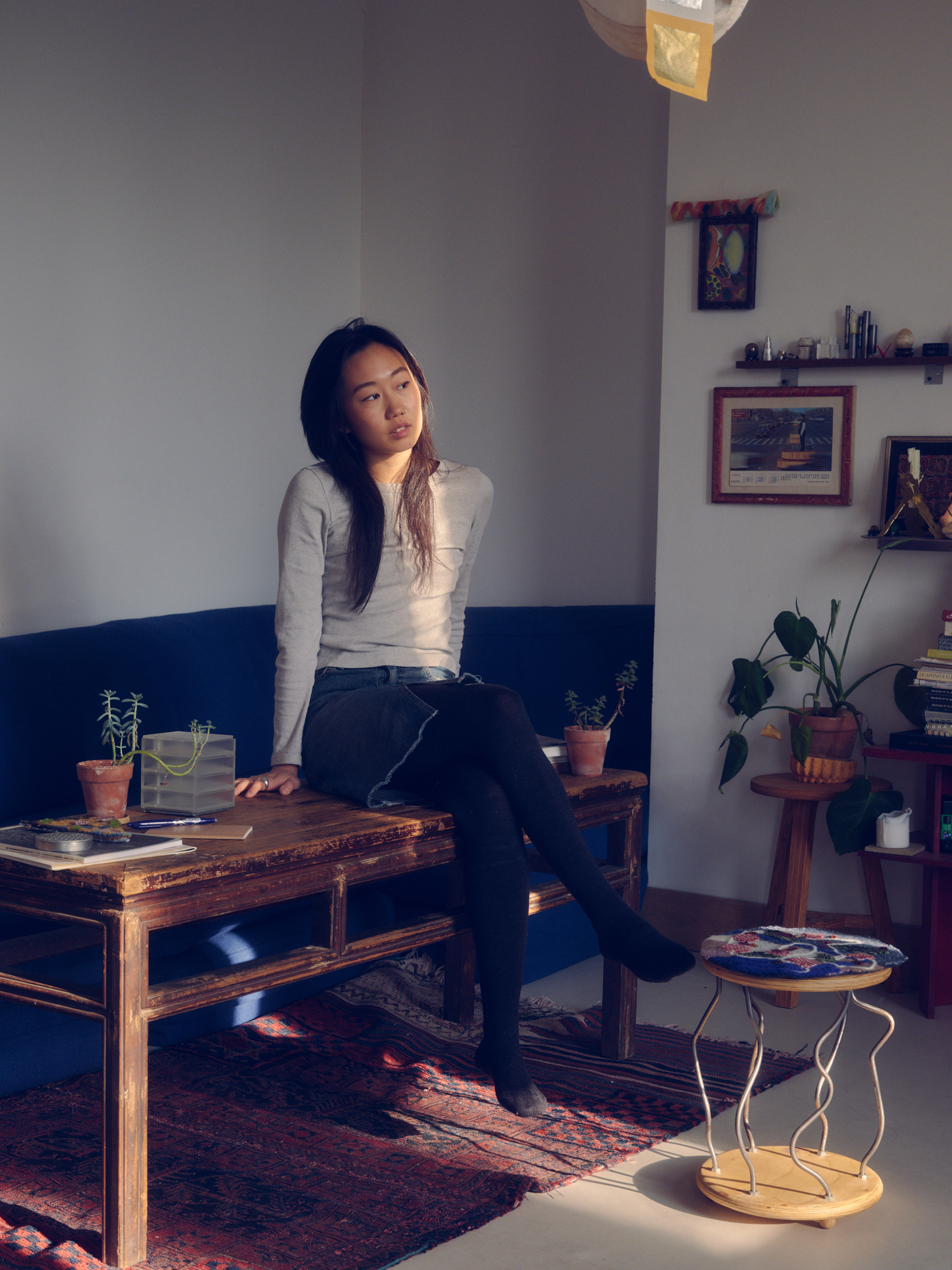
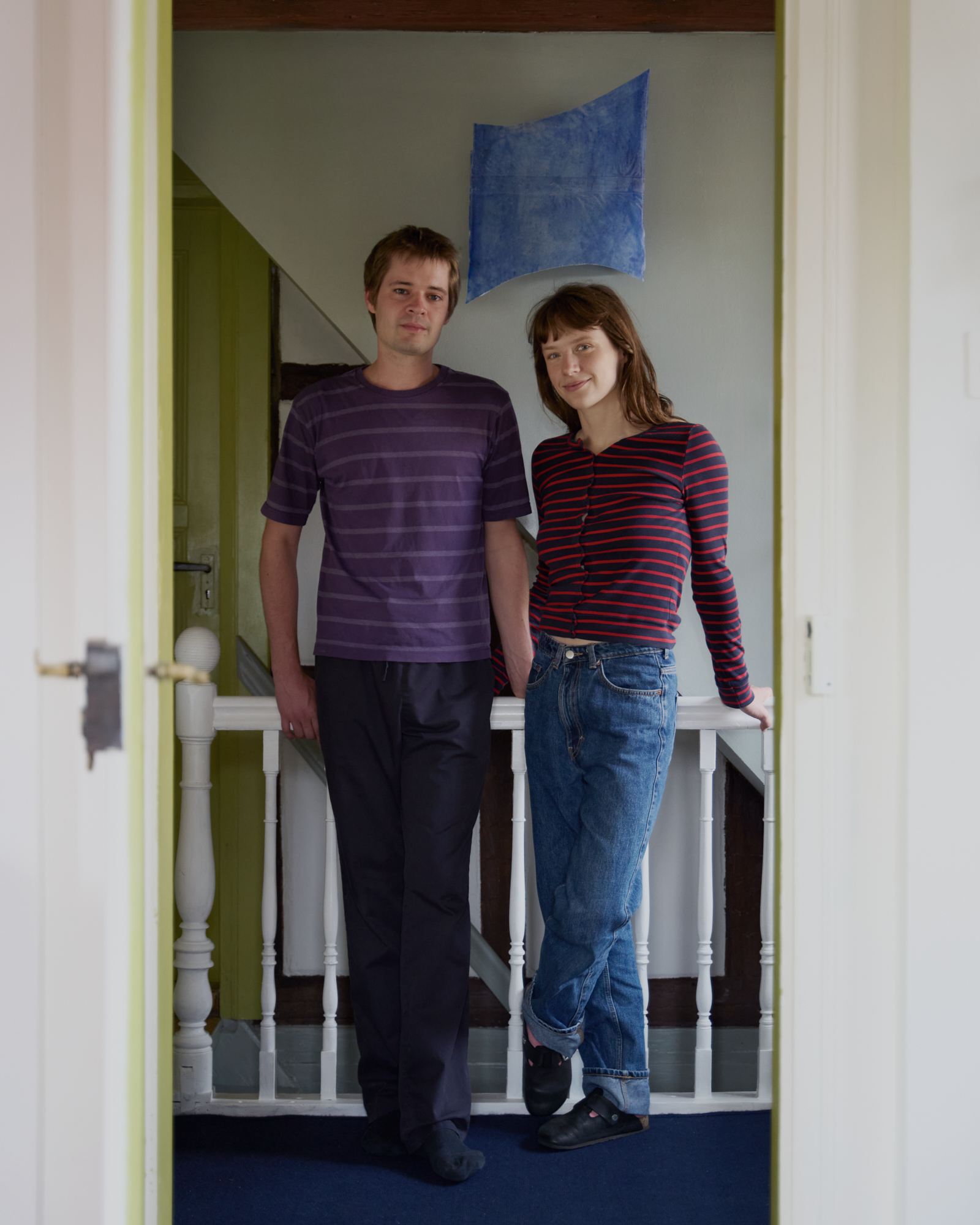
We can’t get enough of Apohli, the design practice run by Lewis Graham and Martina Branchetti. Regular Scura readers might remember we visited Martina at her apartment in Copenhagen last year, where we discovered a layered and eclectic home made from vintage finds, pieces picked up on the street, and furniture and accessories that she and Lewis have made together. In fact, the pair laid the foundations for what became Apohli in this way, experimenting collaboratively to create pieces they either wanted or needed for themselves. Since then, Martina’s place has become the Danish base for their practice when London-based Lewis is in town.
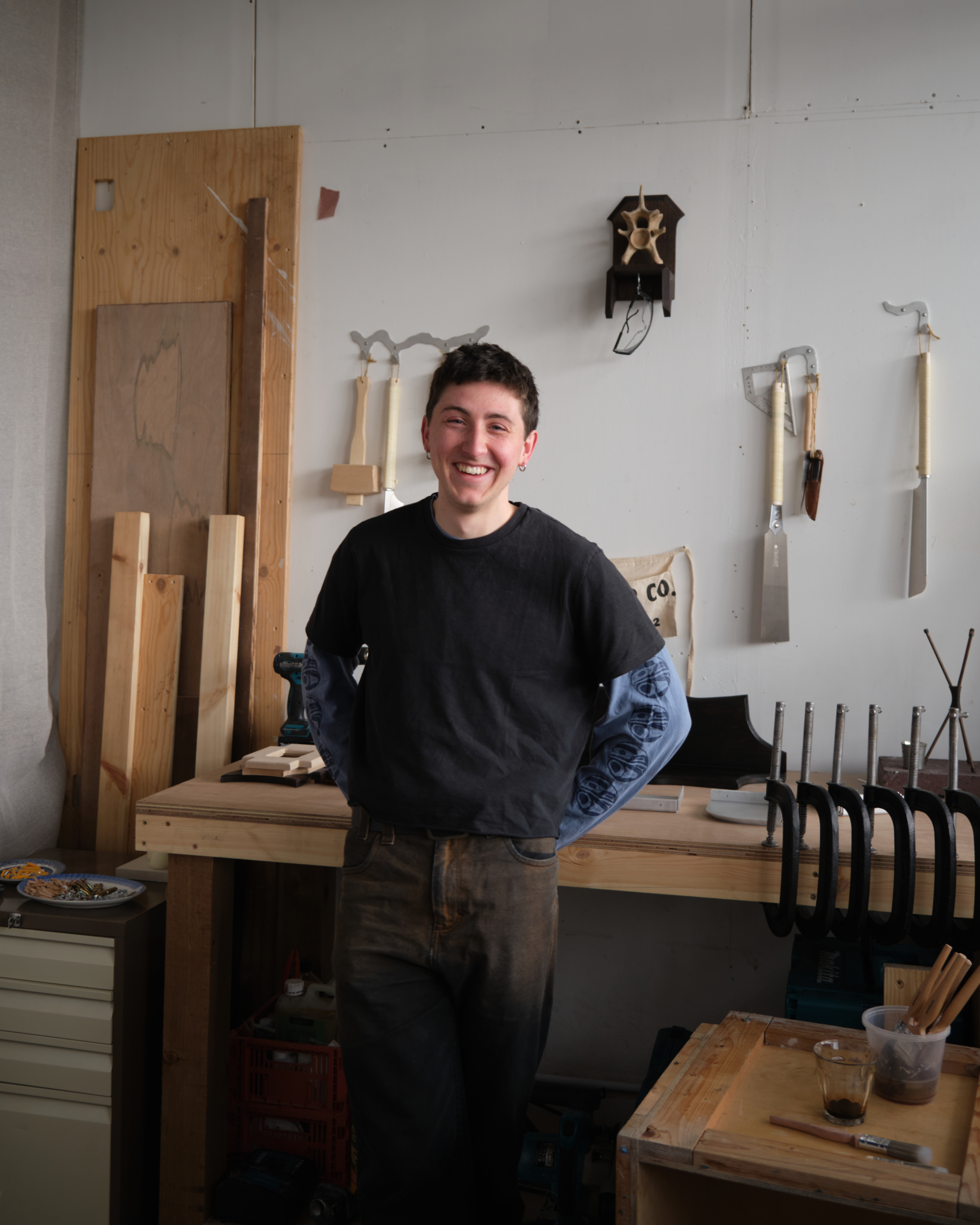
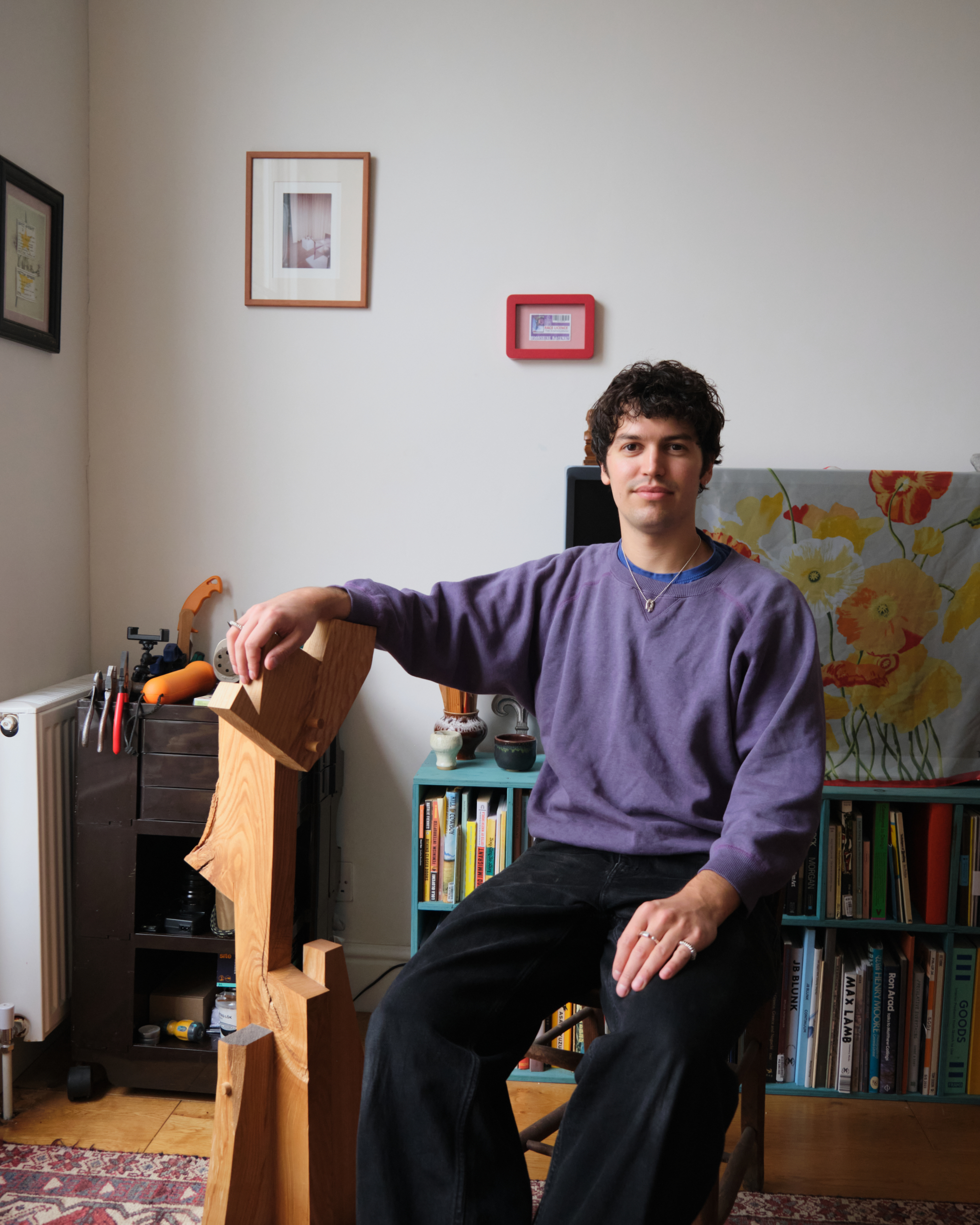
Now, we’re back for more. This time on home turf in London to visit Lewis’s studio in Clapton, which, with its dedicated space for researching, designing and making, is the more official base of Apohli and its work across spatial, object and digital design.
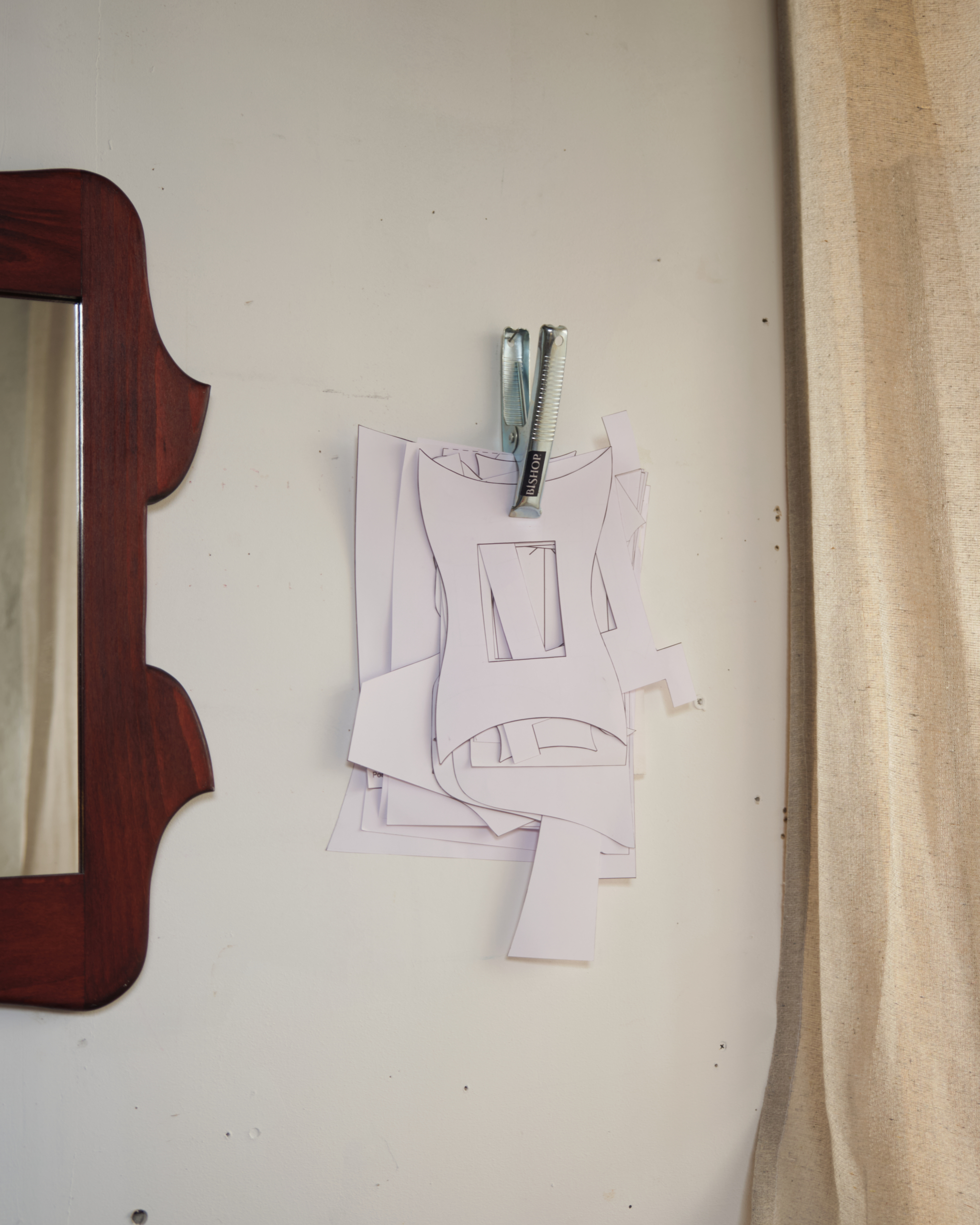
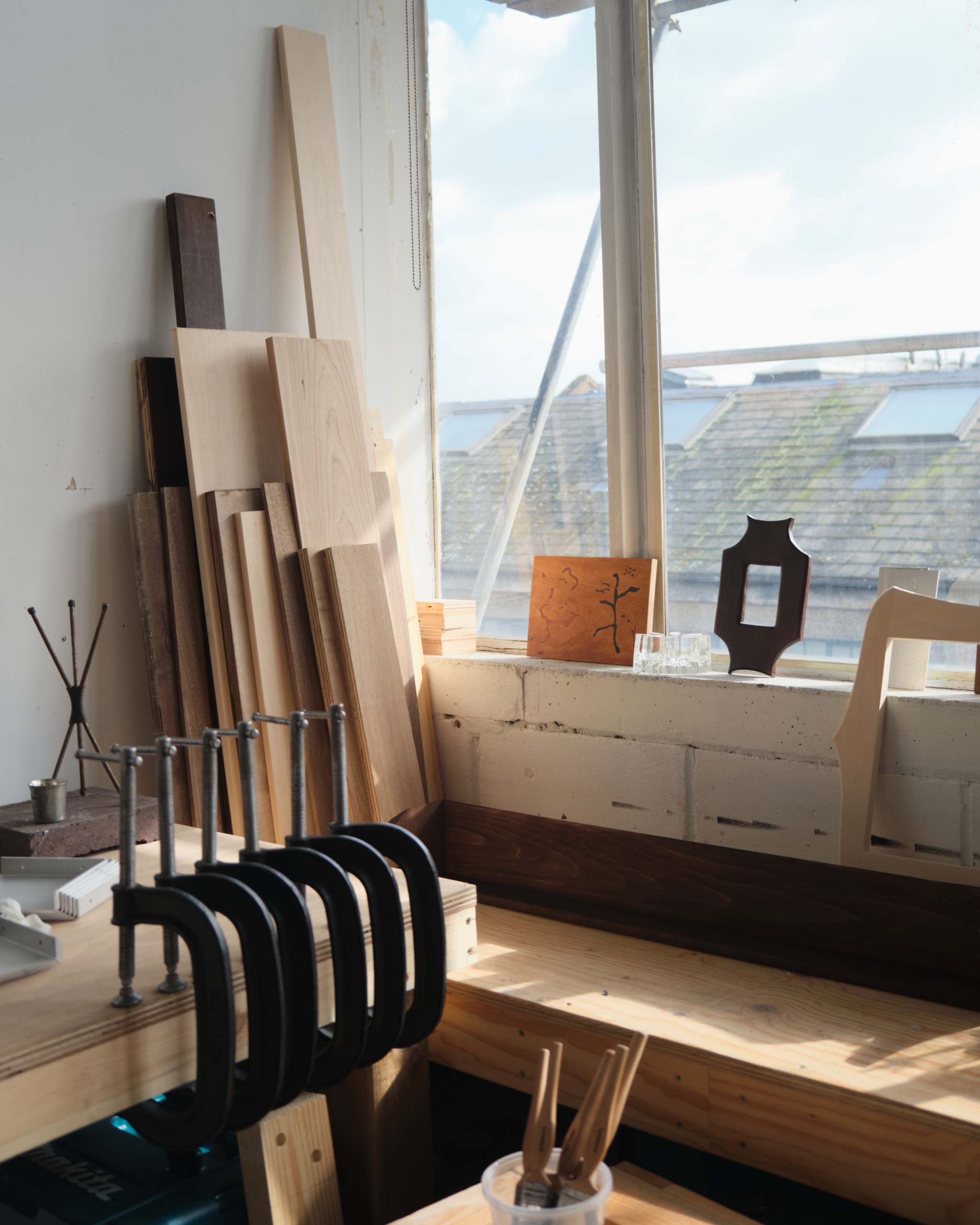
On a sunny morning in late March, Lewis invites us in, boils the kettle and explains that he moved to the building four years ago, initially to another studio down the hall. He had recently moved to London from Newcastle, where he grew up and studied industrial design. It was shortly after the pandemic and he had found good work making spatial renders for clients, including Frama and Oscar Piccolo (a practice he still maintains today through West Timber Court). With lots of time at the computer, Lewis says he “was losing my mind at home”, so took the decision to separate home and work life.
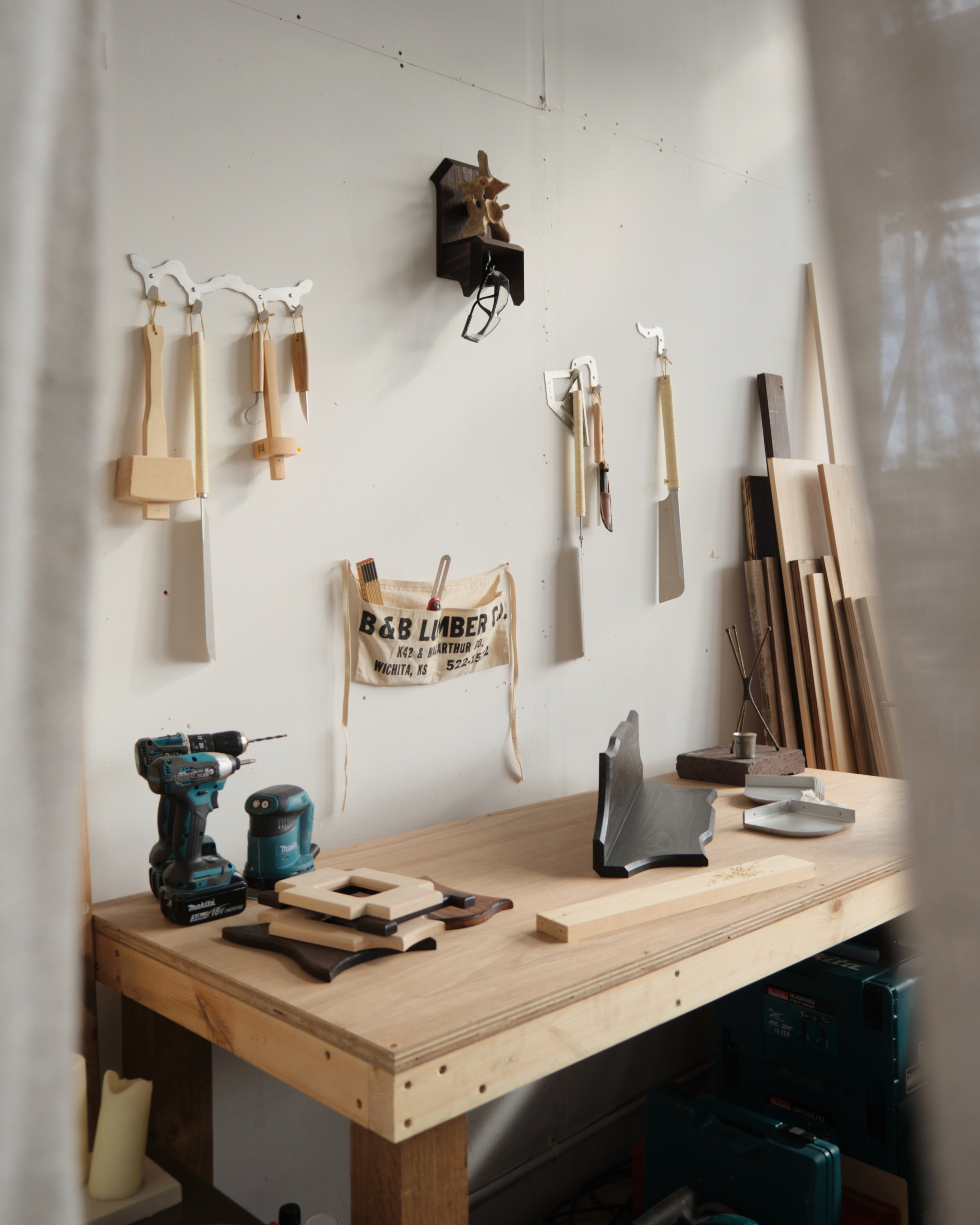
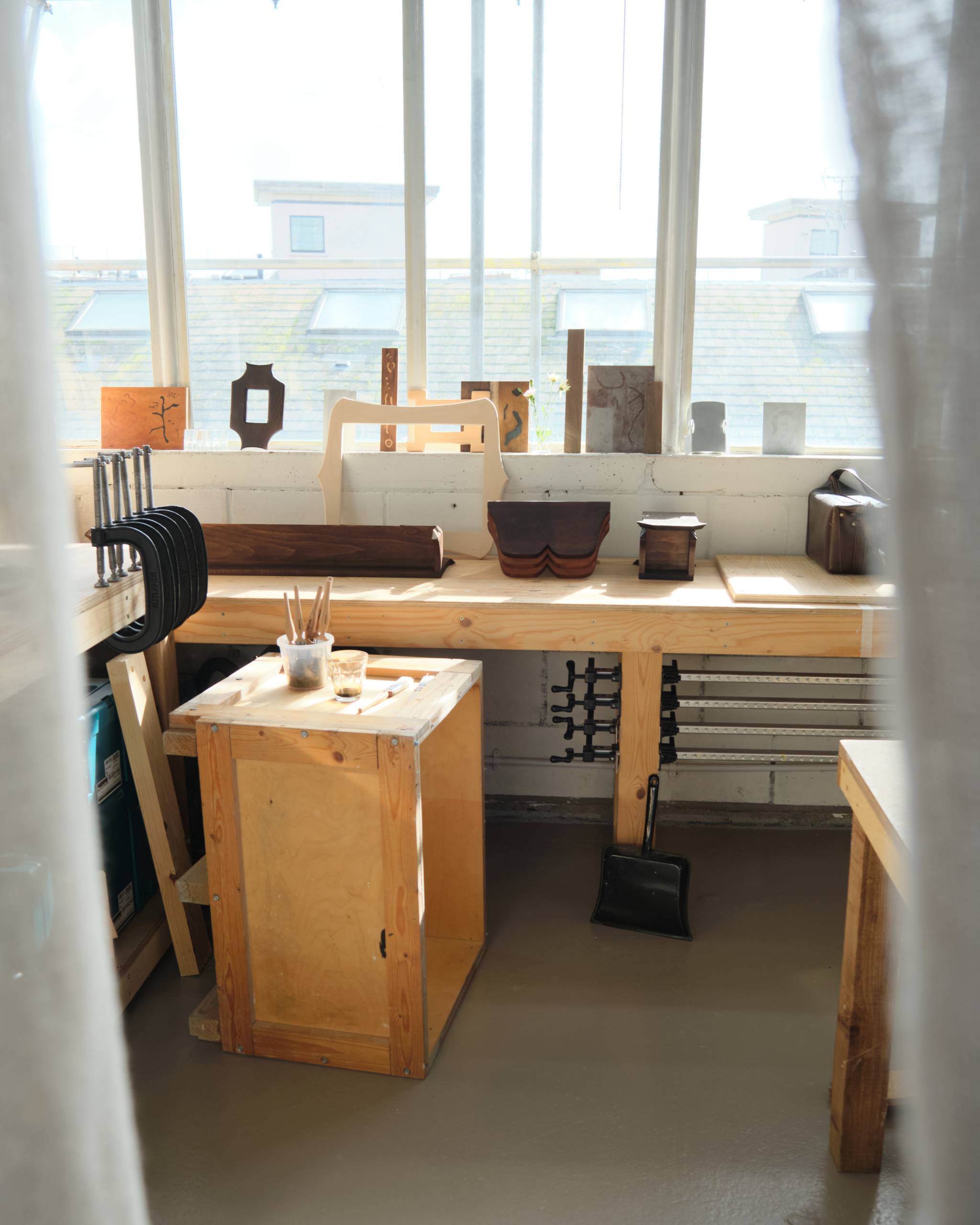
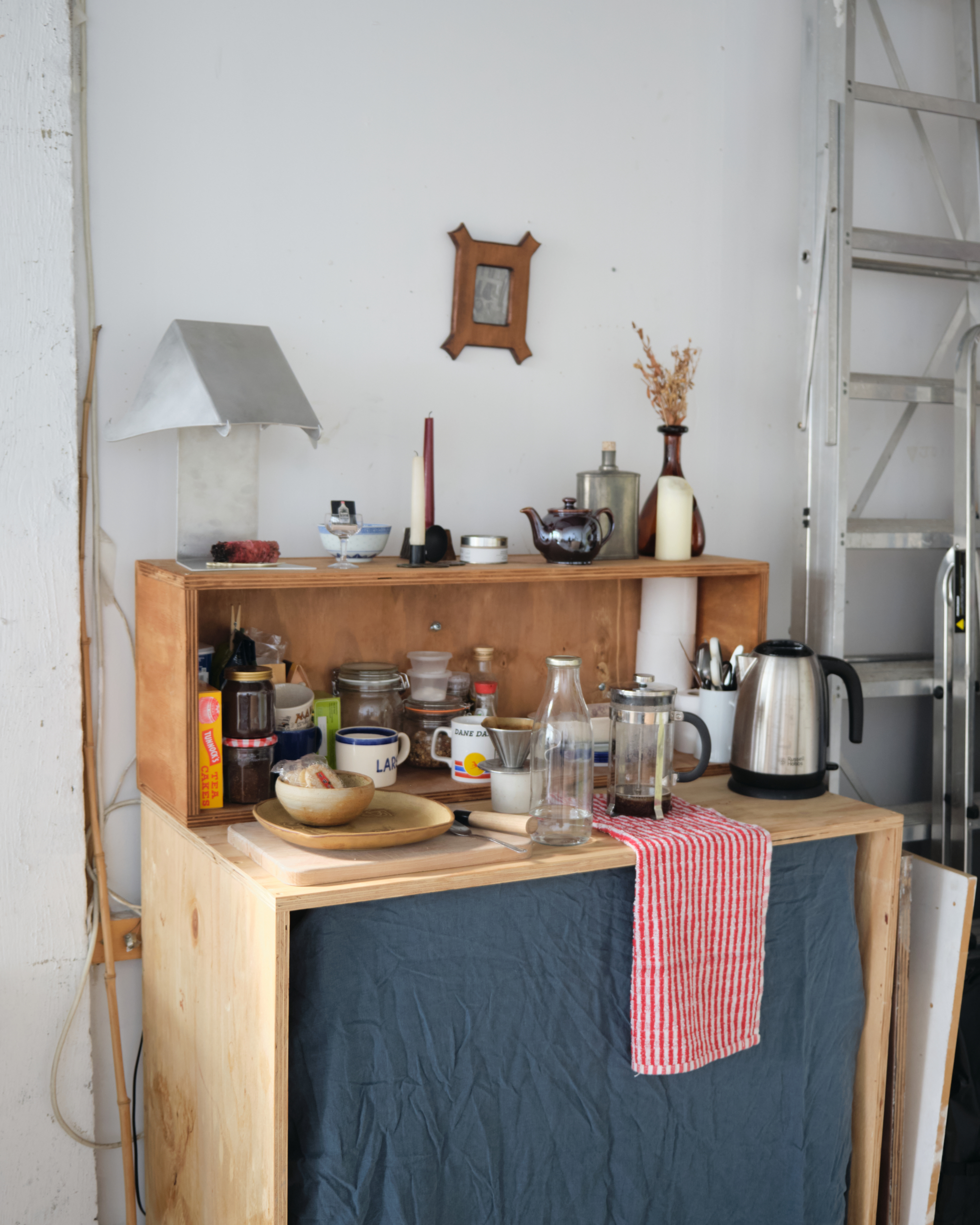
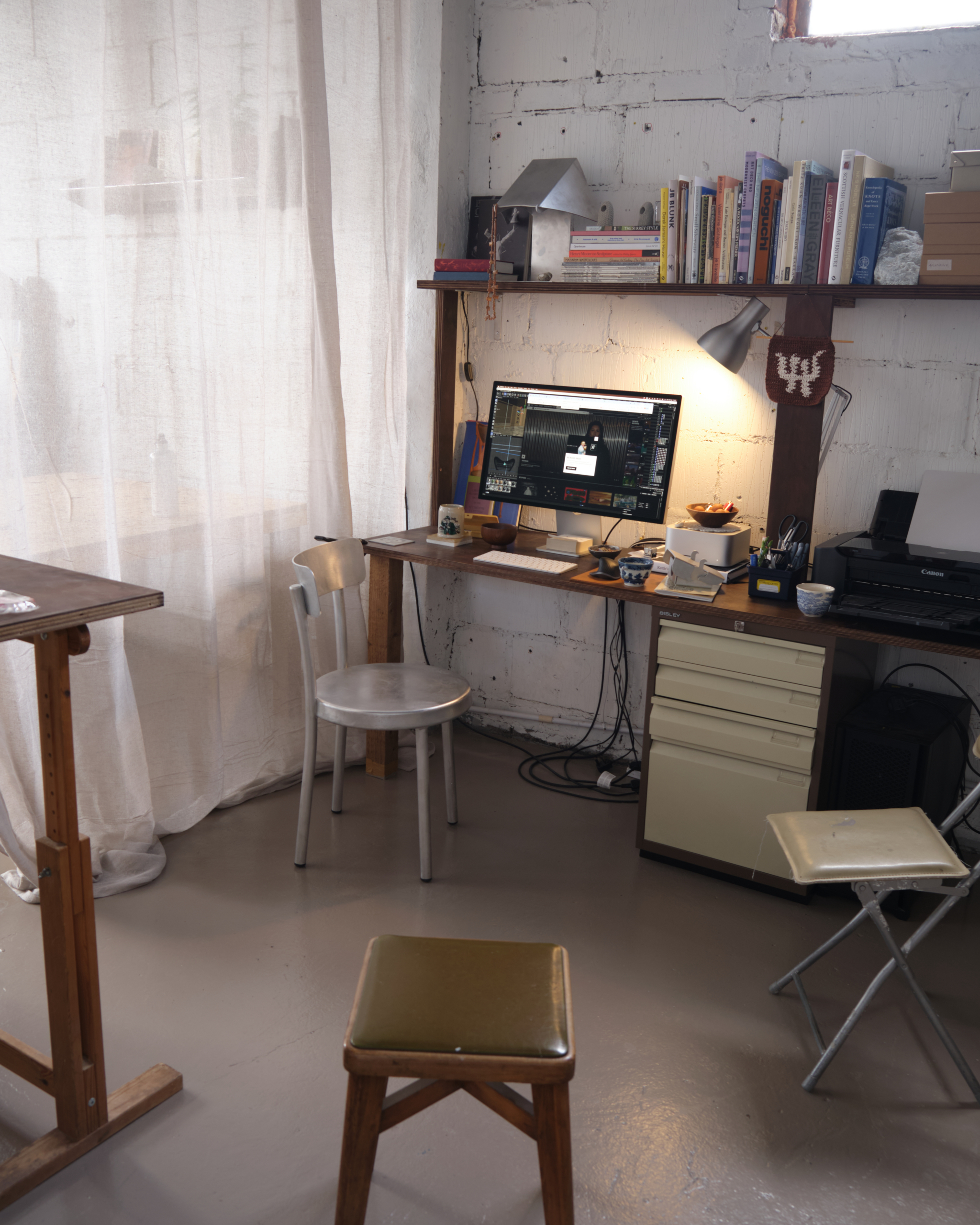
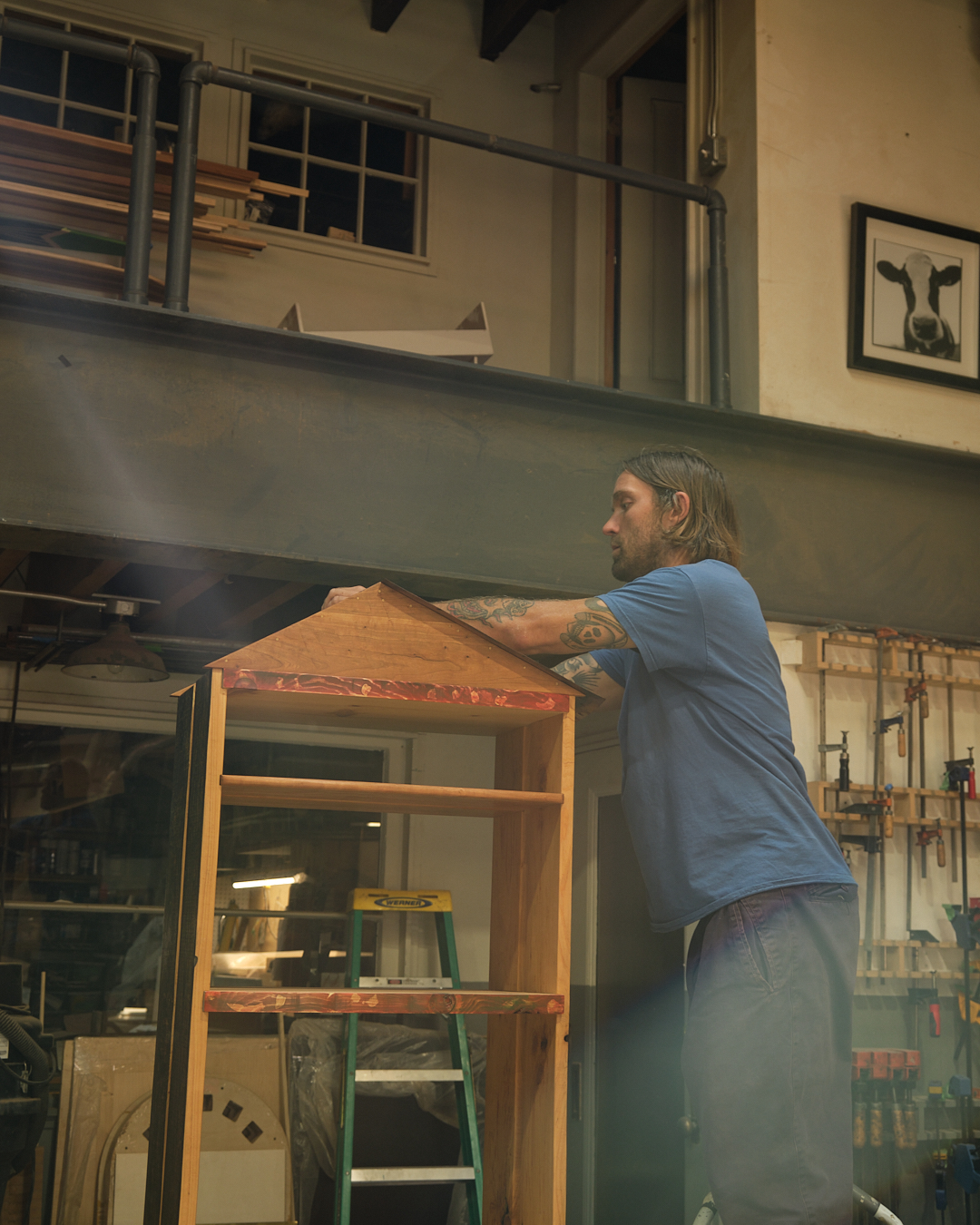
Lewis moved into the space he’s in now because his previous studio mates were doing a lot of dust-heavy making. “It’s funny because now I’m the one doing that,” he says, laughing. We’re standing in the workshop section of the studio, partitioned with dust-sheet curtains that diffuse morning light into the other two-thirds of the space, used mostly for desk work and model making, as well as Lewis’s studio mate, Tom Britt’s textile work. The set-up is new and reflects Apohli’s shift towards more bespoke making projects; “It’s nice to have our hands on our work, even if it’s just finishing some aspects of the production,” he says.
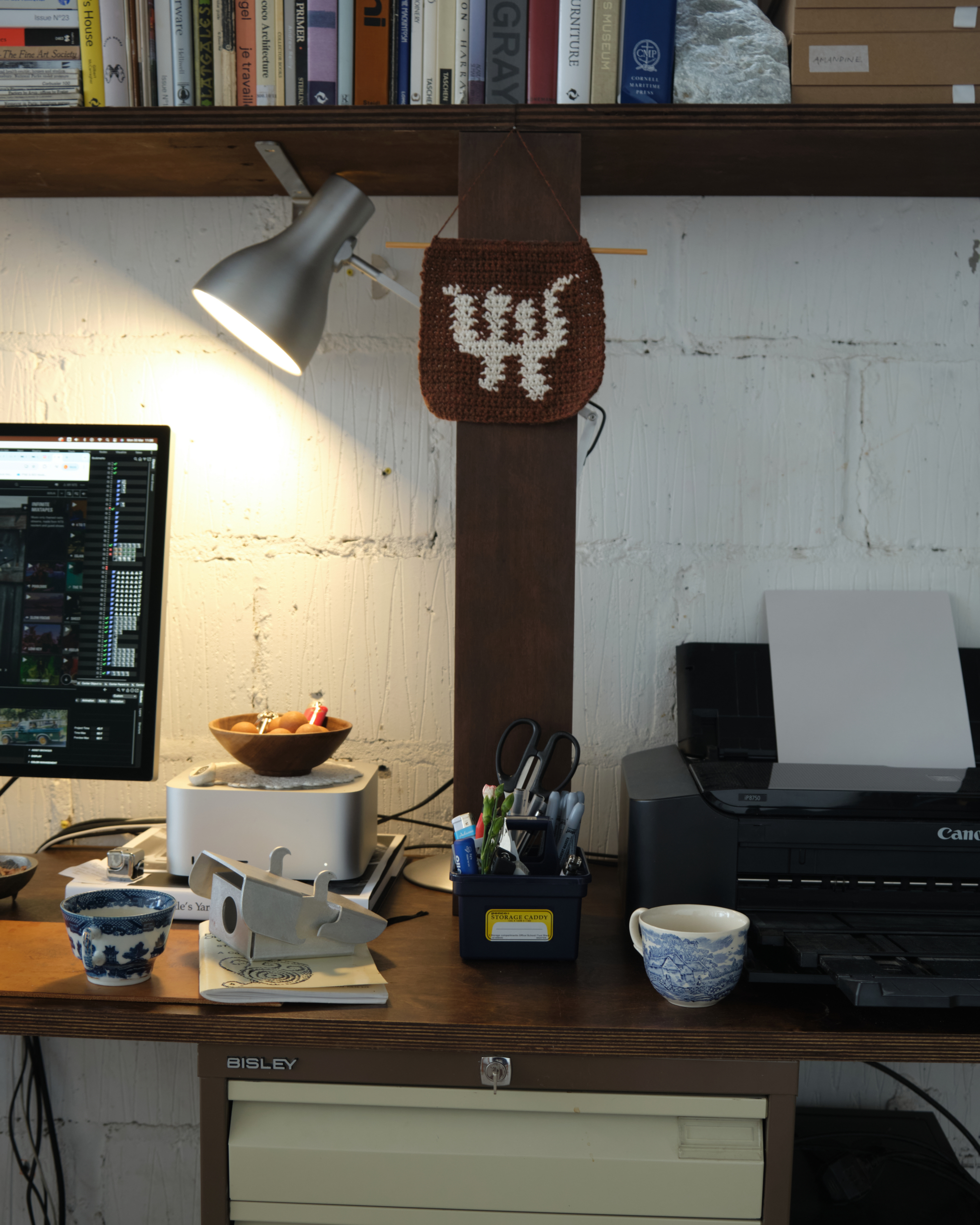
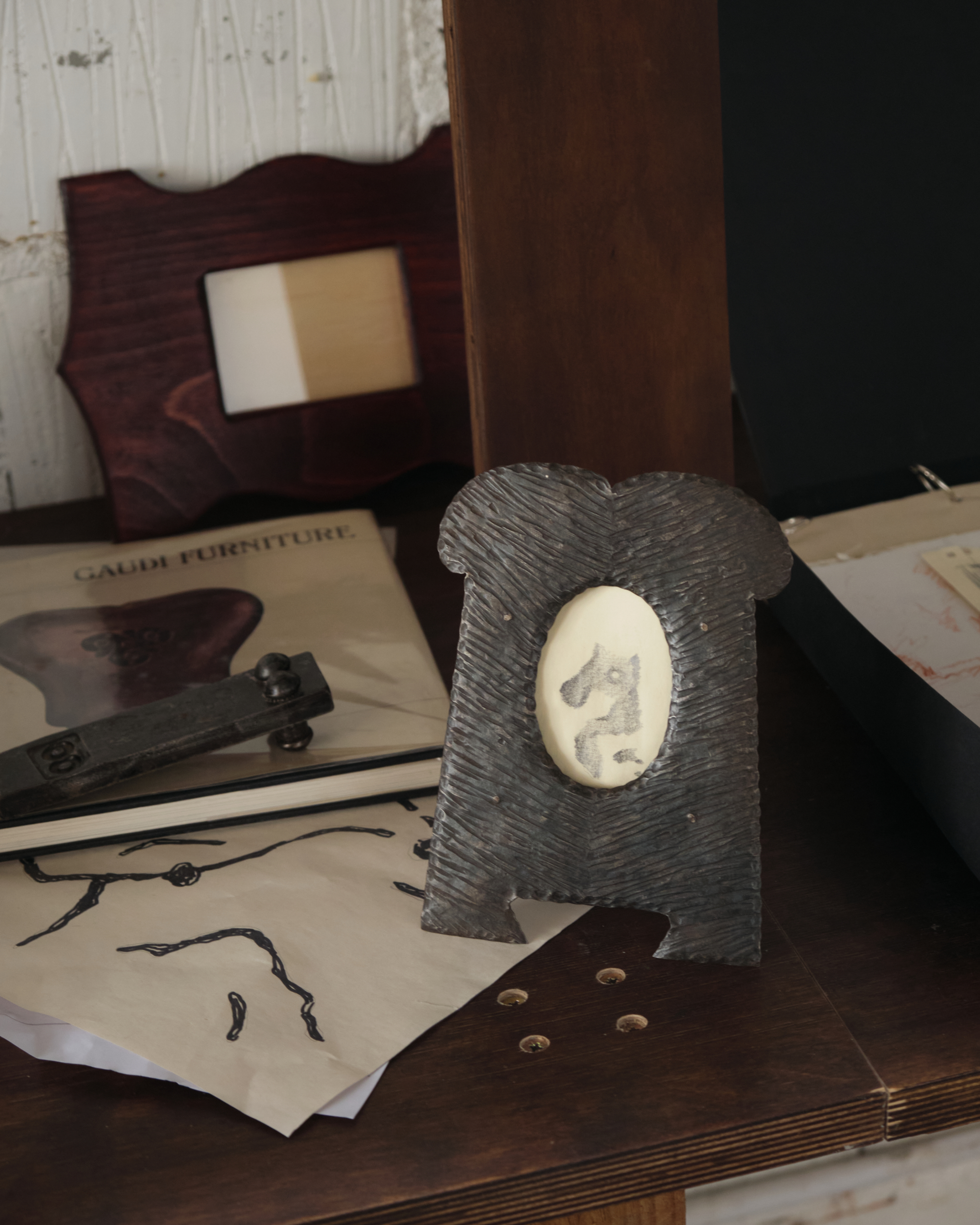
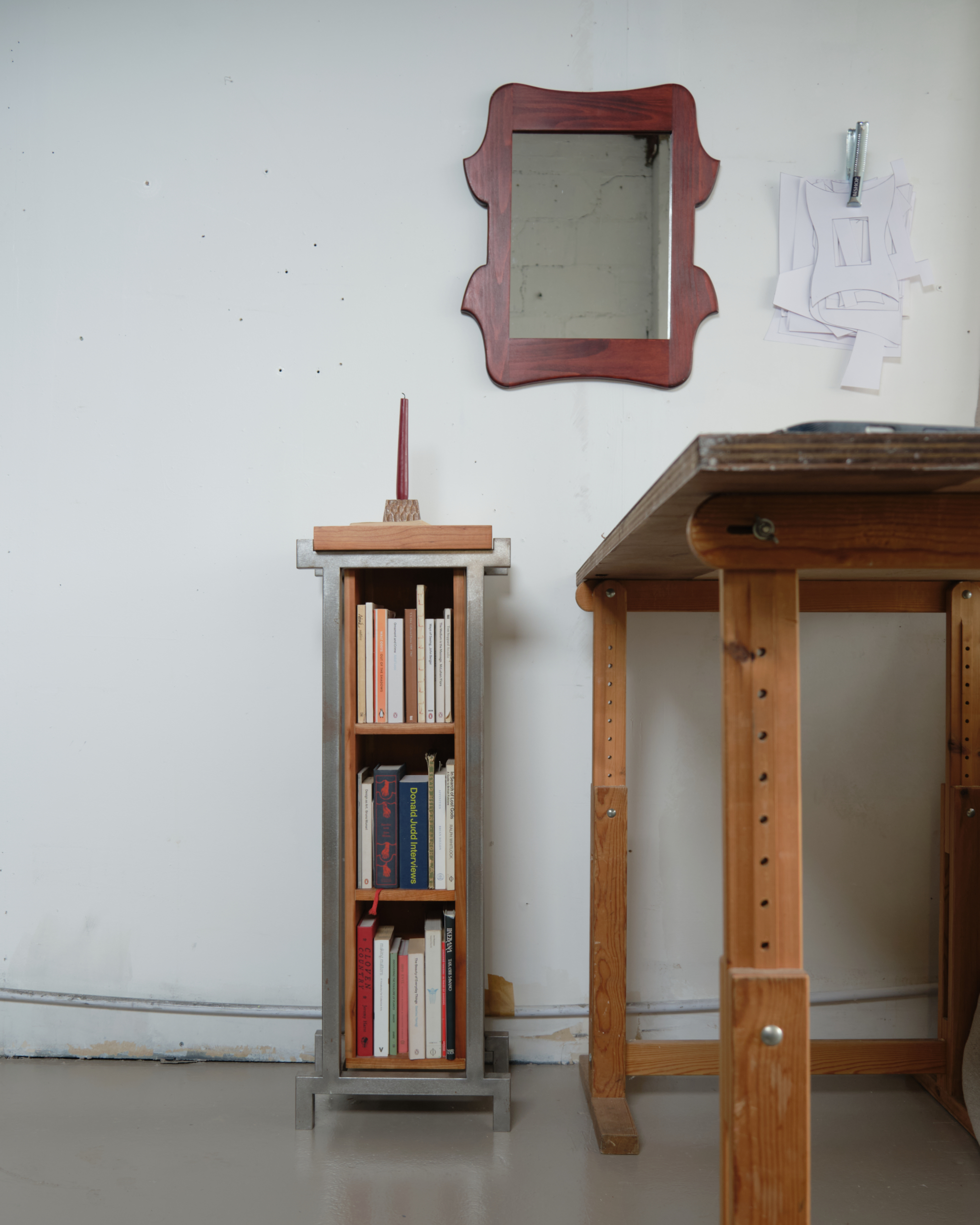
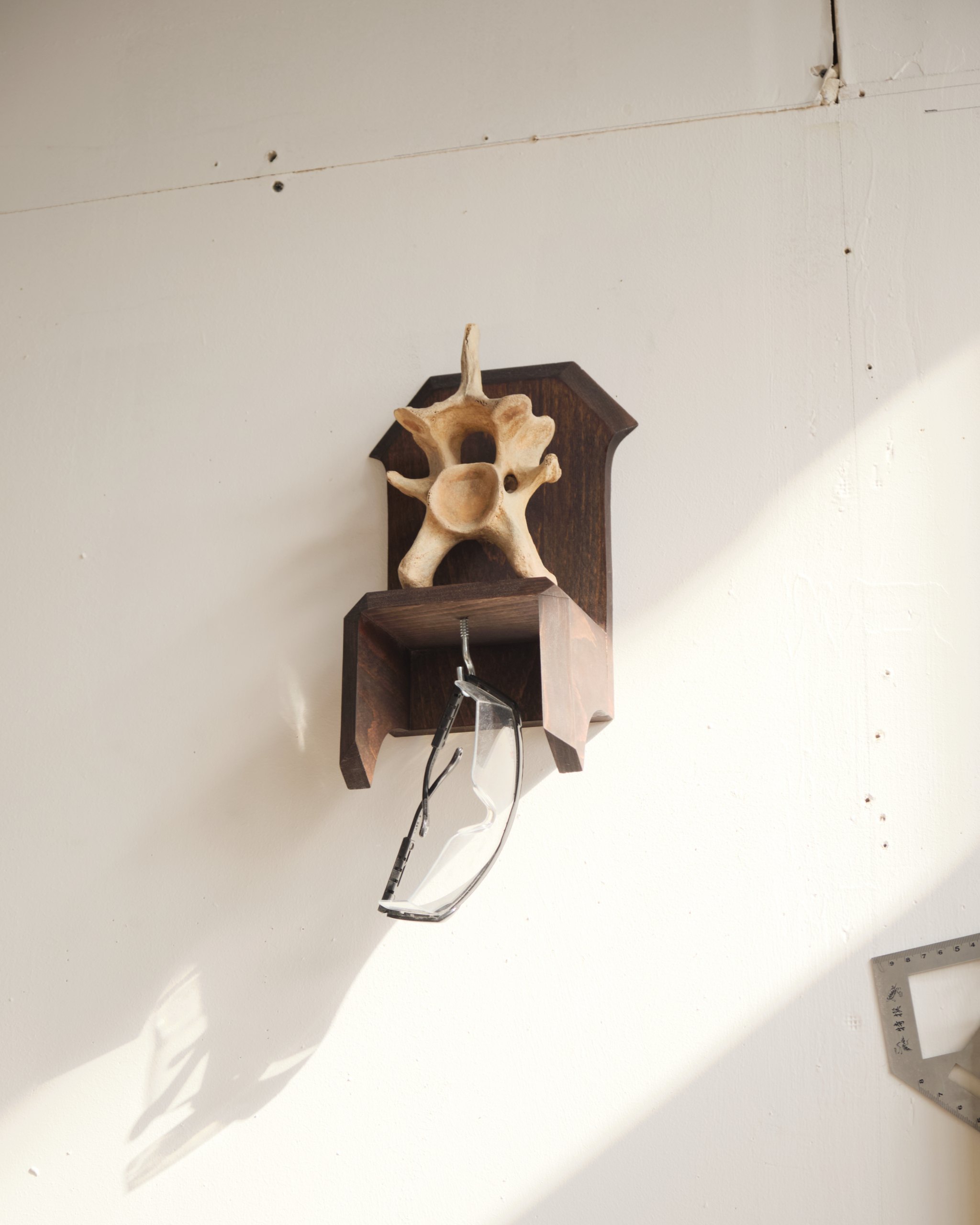
Apohli started in 2023 when Lewis and Martina went to her family’s country house in Italy for a “self-led residency”. The two had first met briefly at a design studio in Copenhagen, but kept in touch and hung out when Lewis began spending more time in the city, moving back and forth from the UK for freelance work. What started as an occasional overlap quickly became a close friendship, with the two regularly sharing references and ideas. “We can yap for hours about ideas,” says Lewis. It was during this period that they began imagining what would become Apohli, a line of thinking that eventually led to their time in Tuscany. There, the two established their distinctive design language largely through the act of making. “We just started building things,” Lewis explained when we visited Martina’s flat last year.
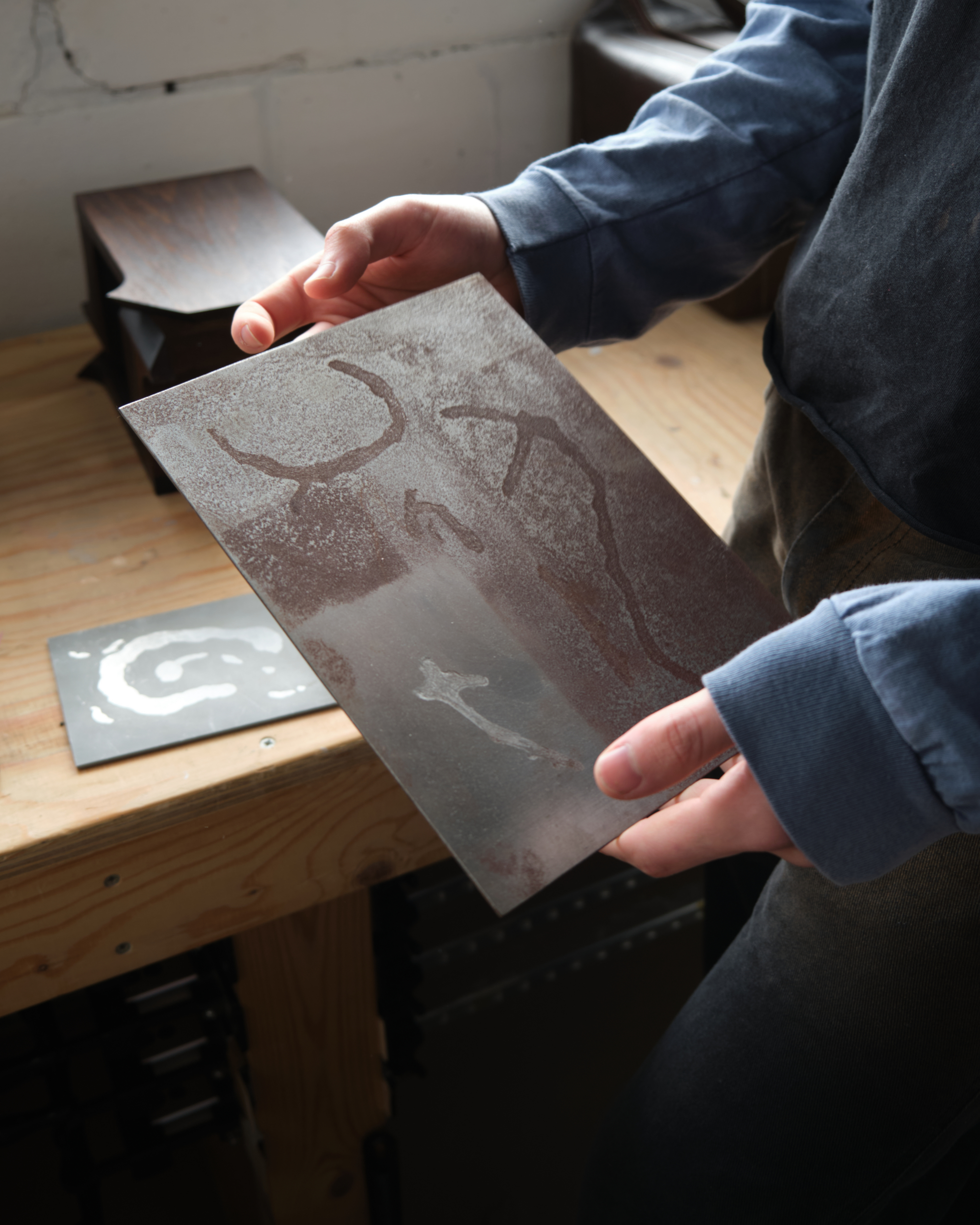
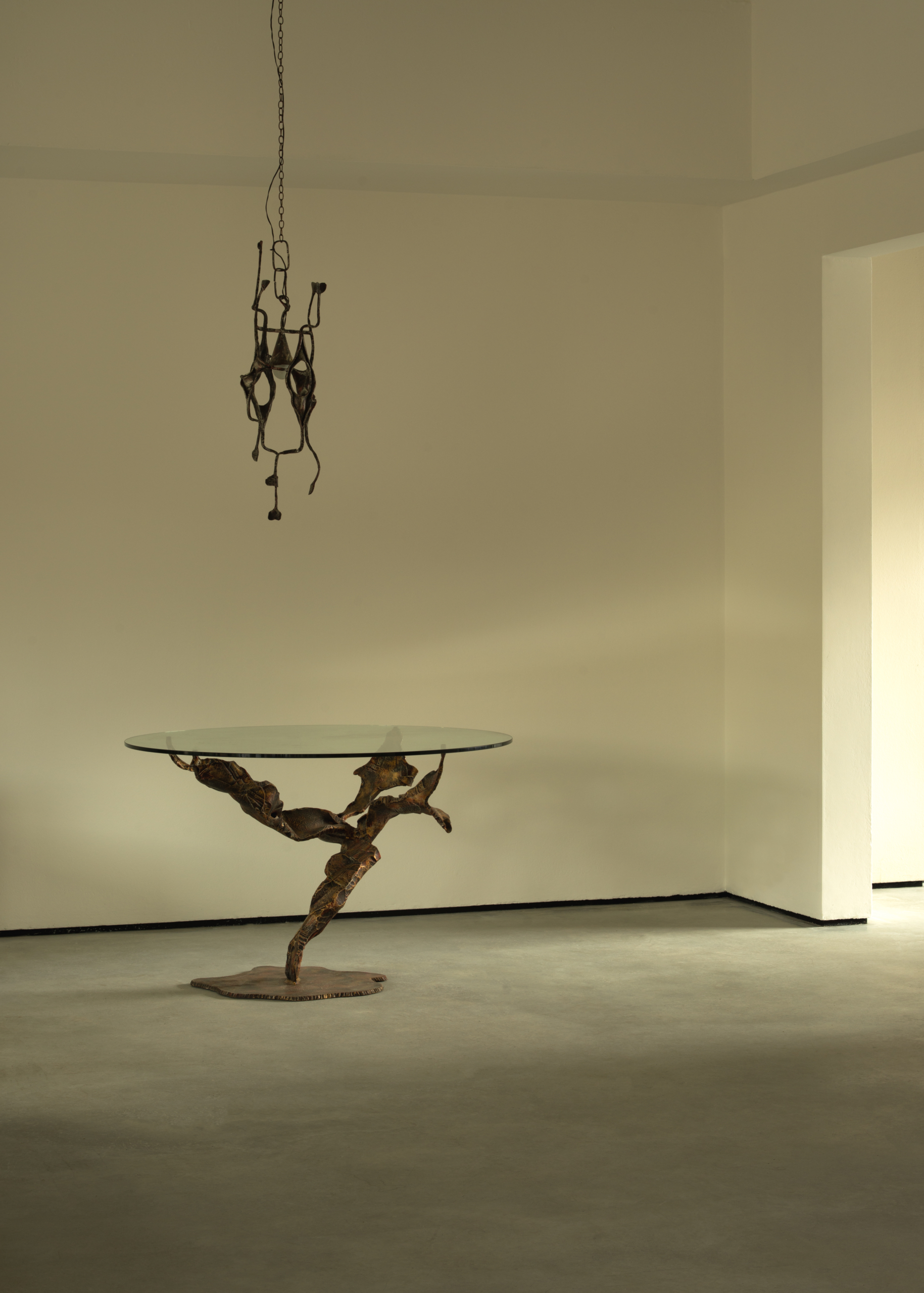
It’s said that life can only be understood backwards, and so it proves true in this case: today Lewis is able to see how things they first made together instinctively share some common themes. As he flicks through a book on prehistoric rock motifs, he explains that he was part of a young archaeologists’ club as a child, visiting stone circles and rock-carving sites in Northumberland with his mother, an academic with a background in anthropology and archaeology. These early experiences have resurfaced both explicitly – in pieces like a tea tray engraved with motifs informed by the area’s Neolithic rock carvings – and more generally, in a sensibility Lewis describes as “bringing together elements of primitive craft with contemporary production”.
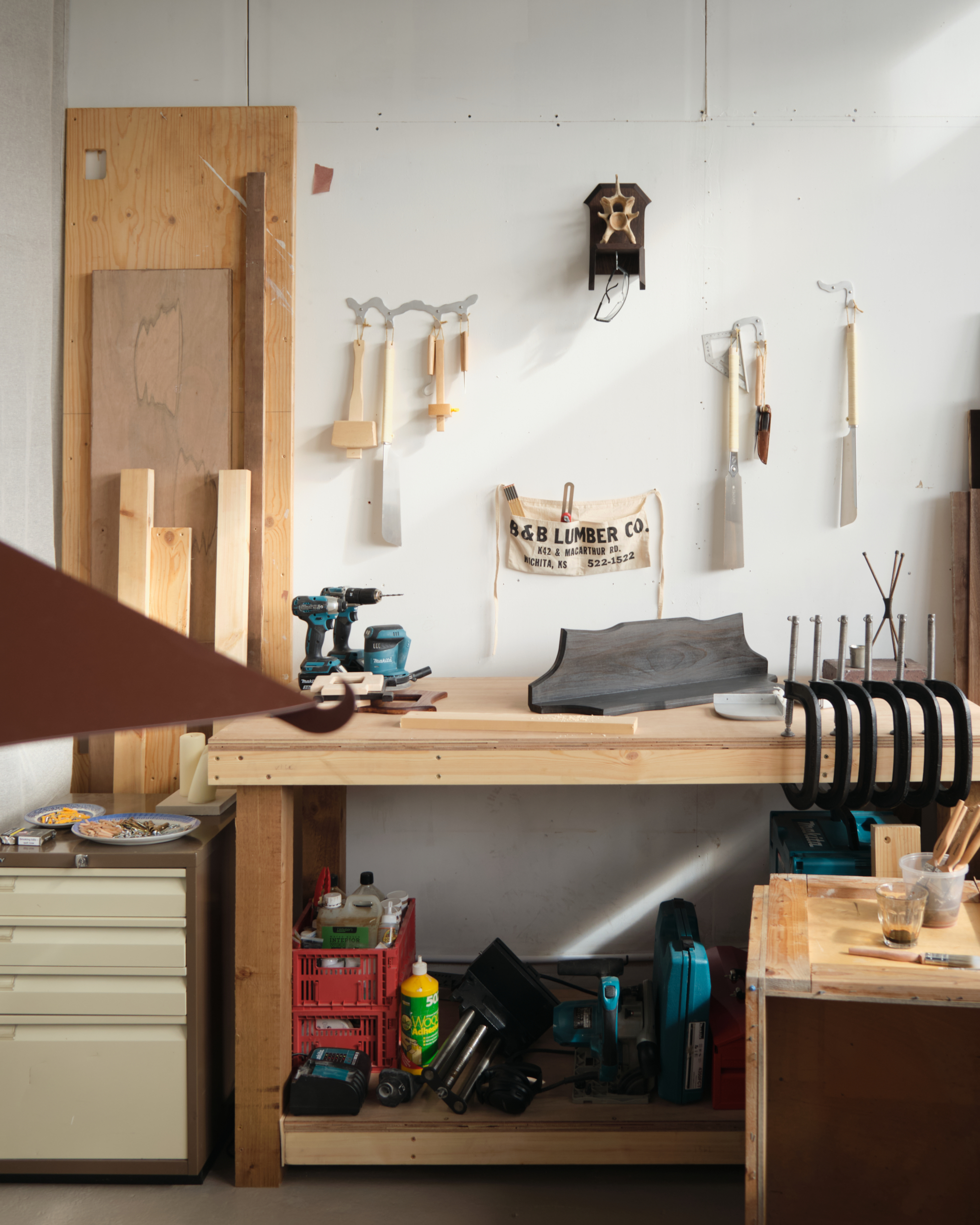
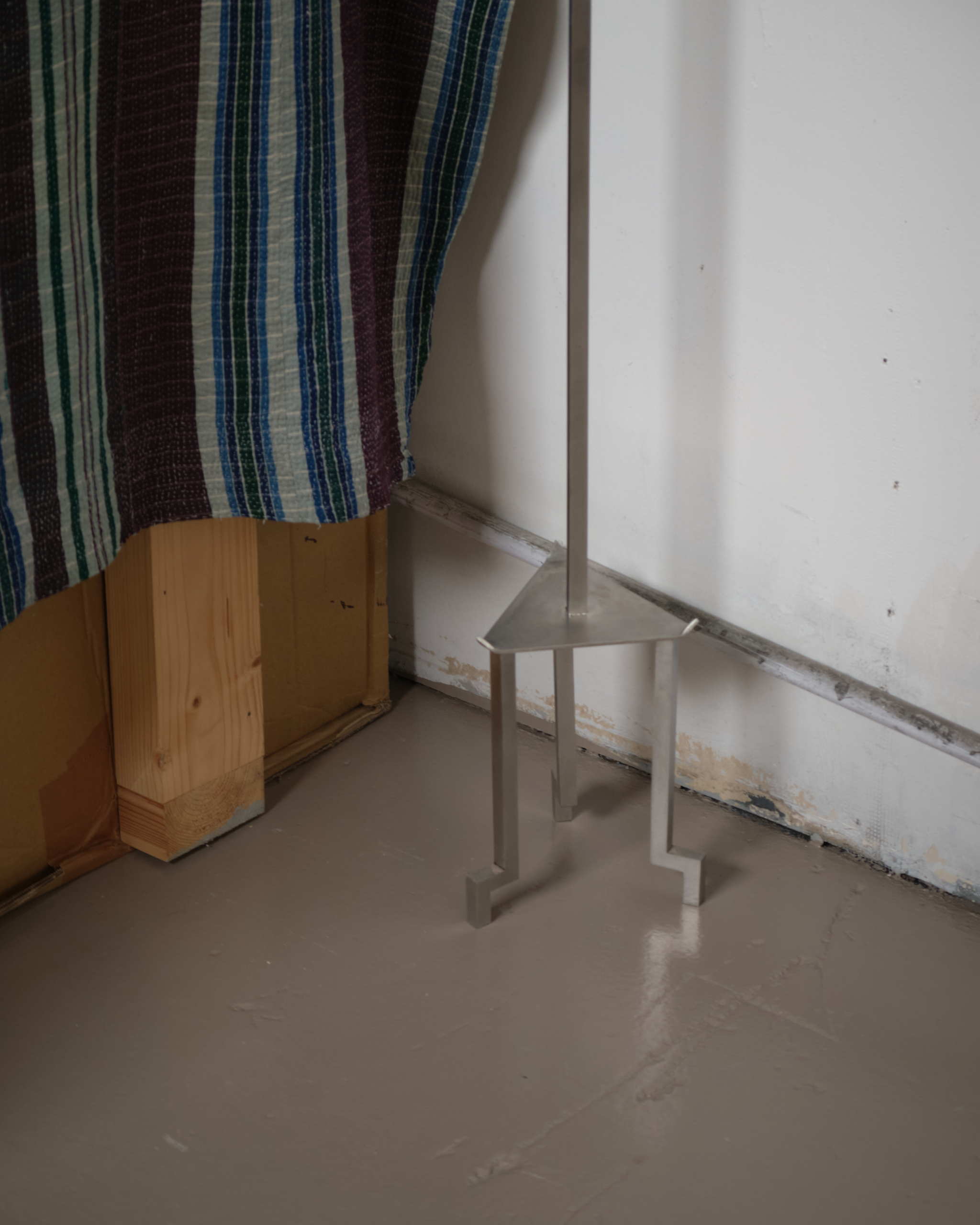
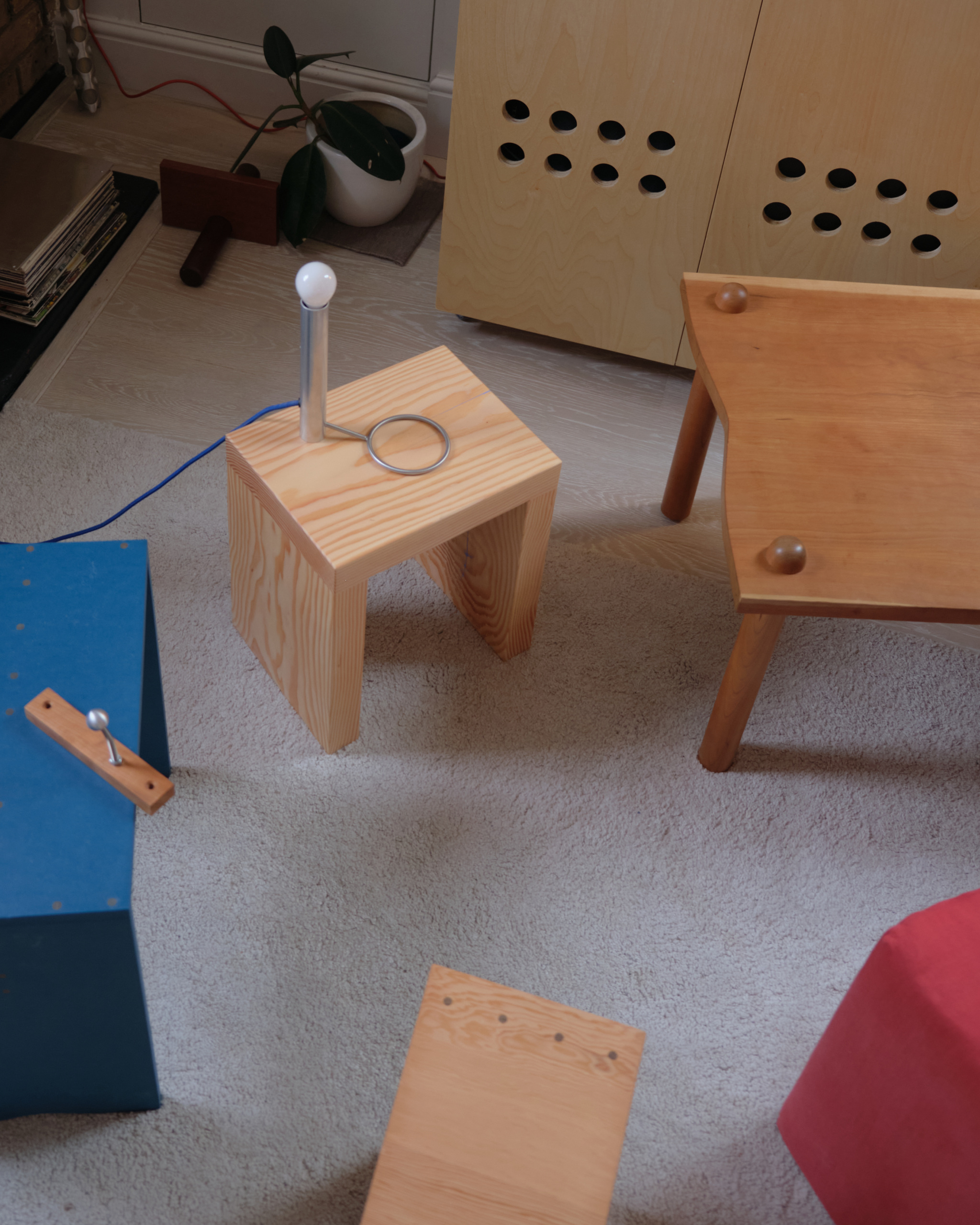
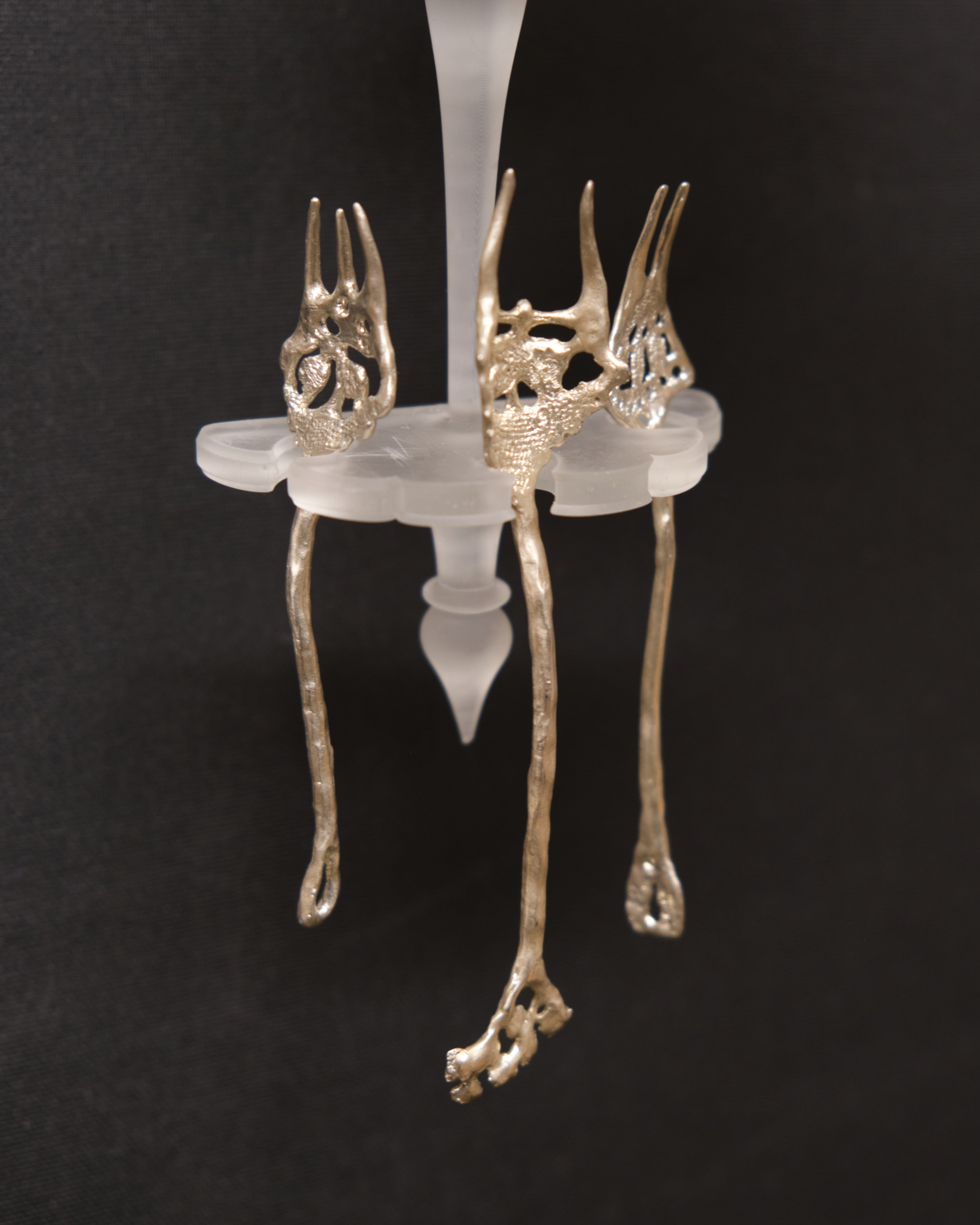
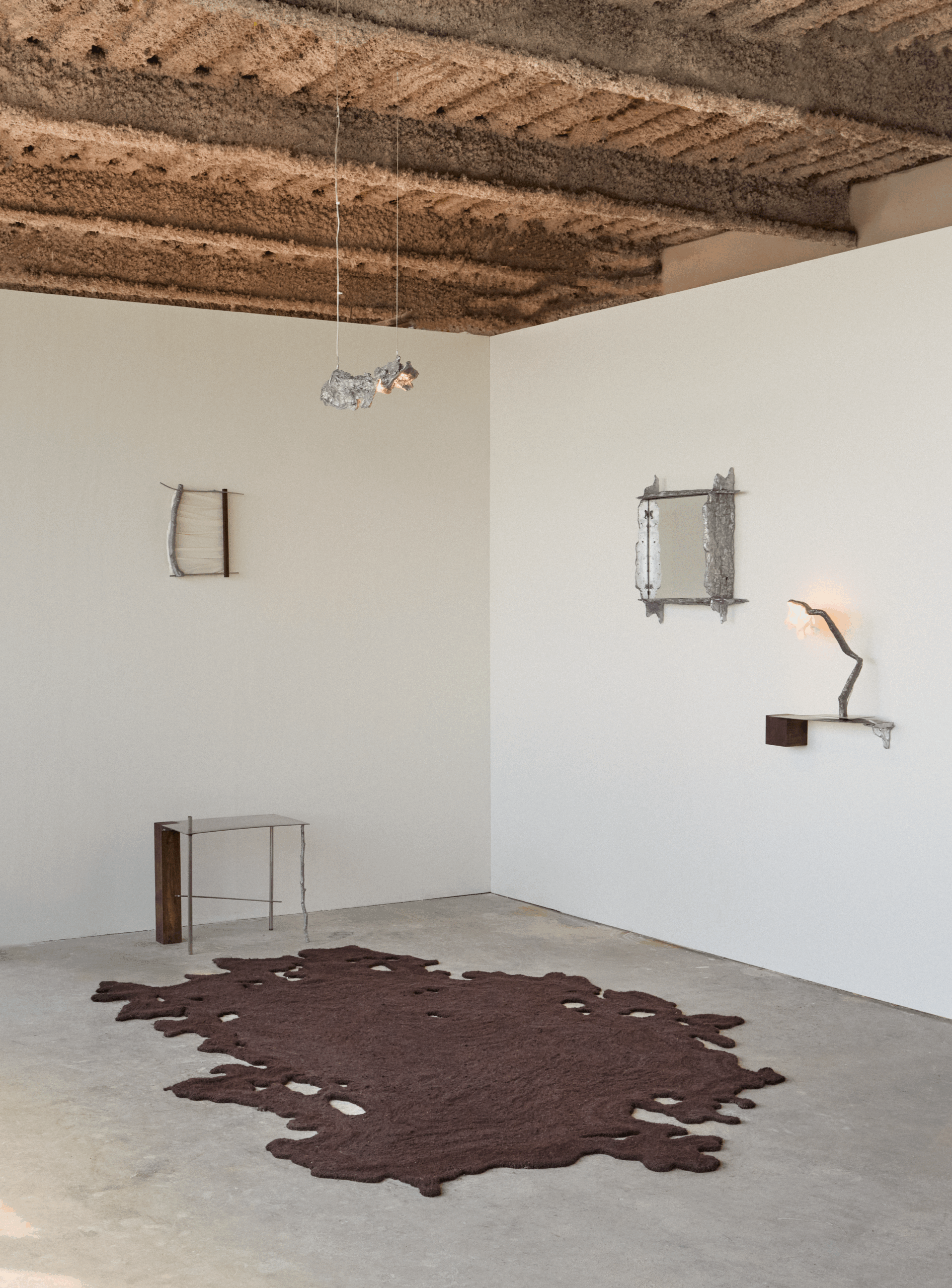
Through Apohli, his interests have combined with Martina’s to create work he says they wouldn’t have made on their own. One example is the horned lighting series, initiated by Martina as a riff on dragon-like wrought iron wall hooks she had noticed in Florence. “She designed the wall sconce, and I took that language into the table lamp, so the collection becomes a bit of both of us,” explains Lewis. Other pieces, like a tall candlestick holder designed by Lewis (recently exhibited as part of Flawk’s ‘Fret Not at This Narrow Room’ show at Alcova Milno), take a more rational, geometric form, but subtly continue the horned detail through upturned corners at the base. “We give ourselves the freedom to explore lots of different ideas and not feel too pigeonholed, because we both have independent ideas that we want to push,” he says. Do they ever disagree? “If we’re not on the same page, we just adapt the page.”
This creative freedom is what Lewis values most about Apohli. While he finds his 3D render work fulfilling when working with the right client, with Apohli, he and Martina “just do what we want. Our only requirement is that we are both happy with what we make”. Still, his digital work has proved useful, especially as the two begin to take on more spatial projects. “Something I think we’re both good at is composition – knowing how things fit visually, often in a slightly unexpected way,” he says.
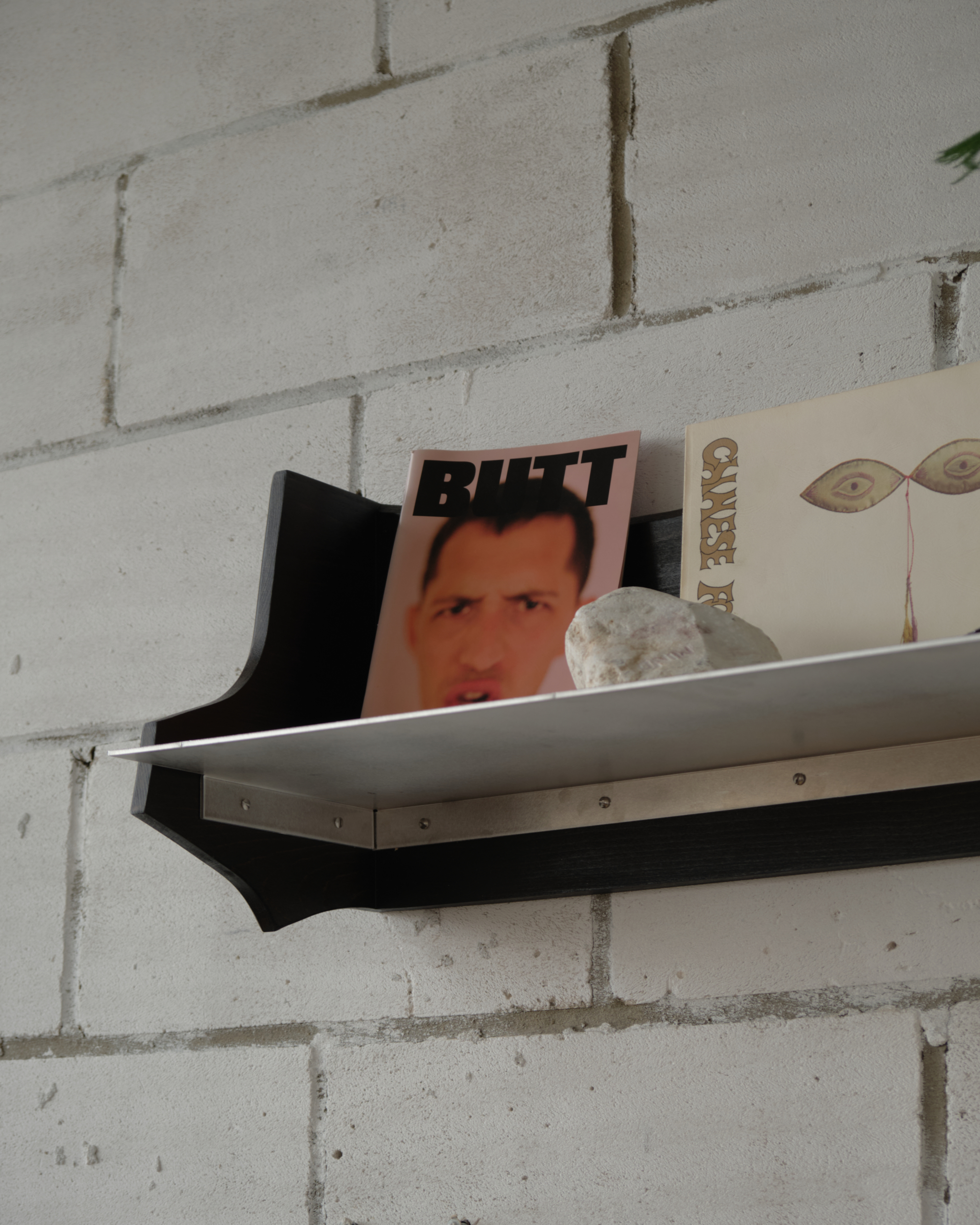
Their plans for projects that bring this to life are currently taking shape as an exhibition concept. “The idea is for a vignette of a dining scene, inspired by a restaurant we ate at every day in Milan during design week last year,” says Lewis, adding that the project will include new pieces across ceramics, wood and metalworks and hopefully go on display next year. “The great thing about working in a duo is that you divide and conquer,” he explains, showing us some shelving he’s been working on for a new guesthouse in Ireland while Martina has been focusing on ceramics for the dining project.
One day, Lewis would love to have a studio just for Apohli but, thanks to some recent alterations, this space is working well. He painted over the previous floors – “they were a very cold grey” – with a warmer tone; adapted a daybed into a tabletop; and created a workbench for the workshop as well as shelving above the desks. “I have a lot of books,” he says. The only thing he wants now is more space in the workshop for larger-scale making projects. Apohli has big plans, it seems. We couldn’t be happier to hear it.
Suggested stories
Filippo Muzi Falconi’s World Is Filled With Wonder, Naturally
Making Work – and a Home – Out of Restrictions, Remains and Resourcefulness
A Designer Finding New Forms in Ancient Traditions
A Collector Who Sells – and Lives With – the Things She Loves
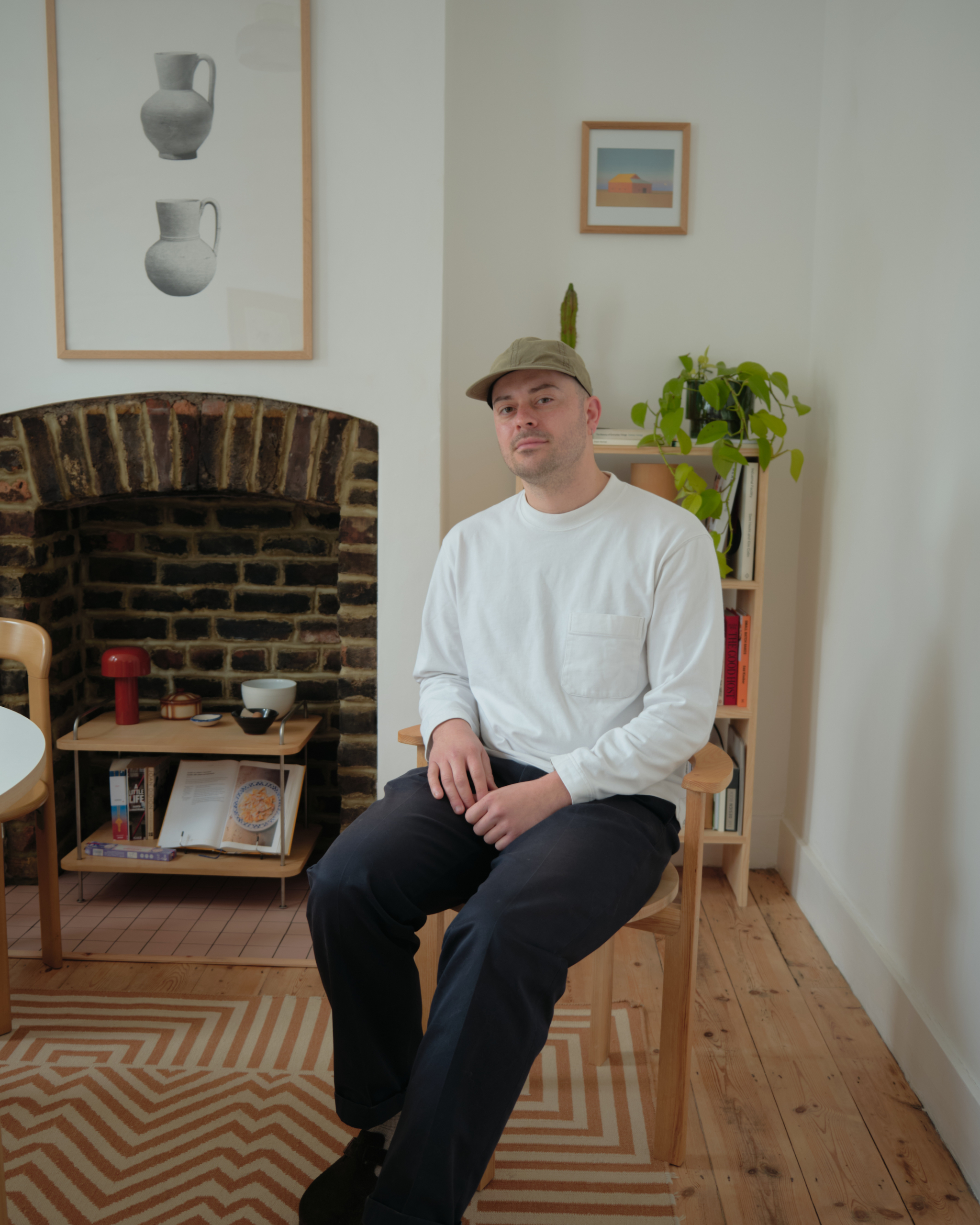
Functional Beauty: Jewellery Designer Helena Vieira’s Converted Warehouse Apartment
The State of Design? Designer David Searcy Has Thoughts
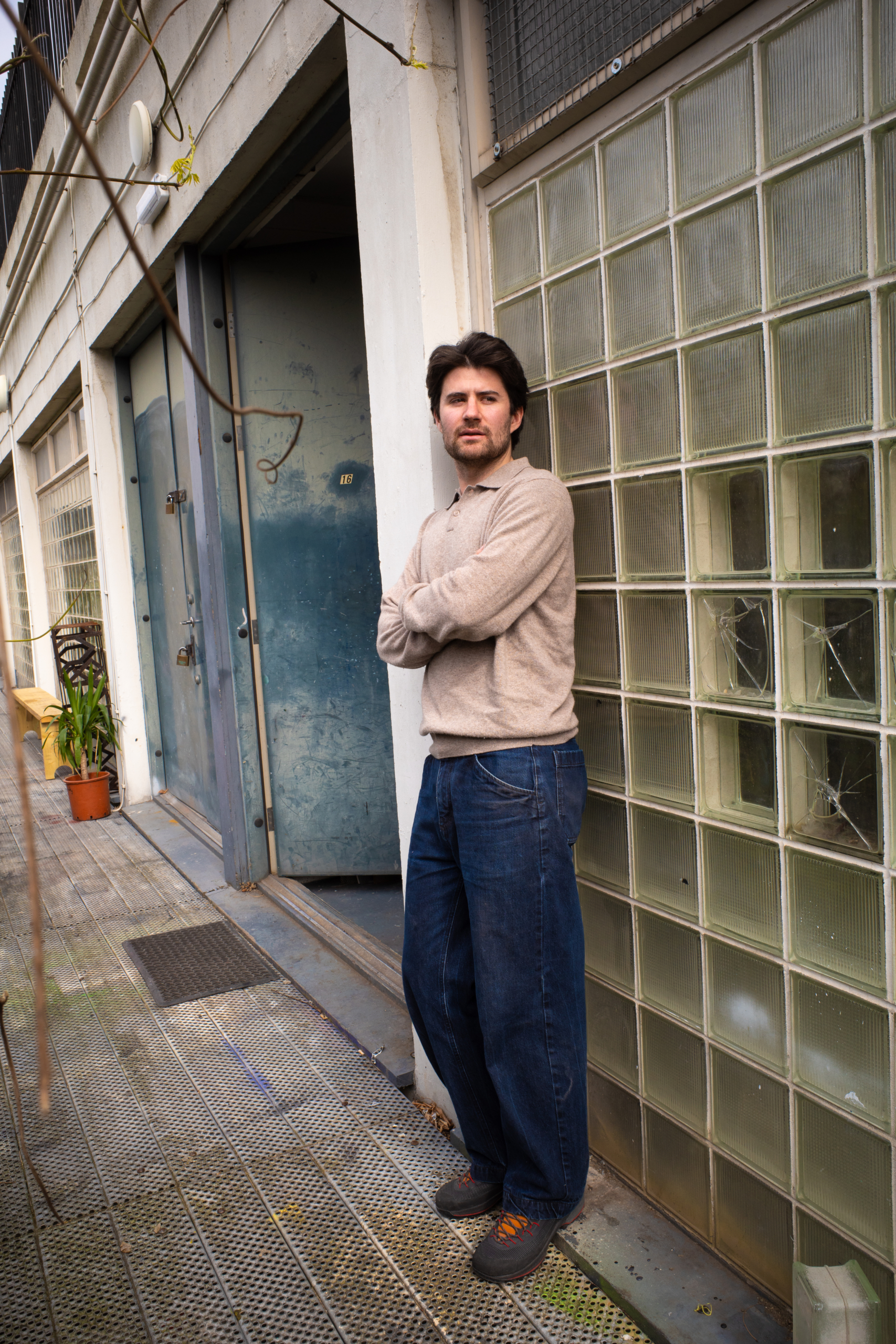
Inside Jesse Butterfield’s Studio
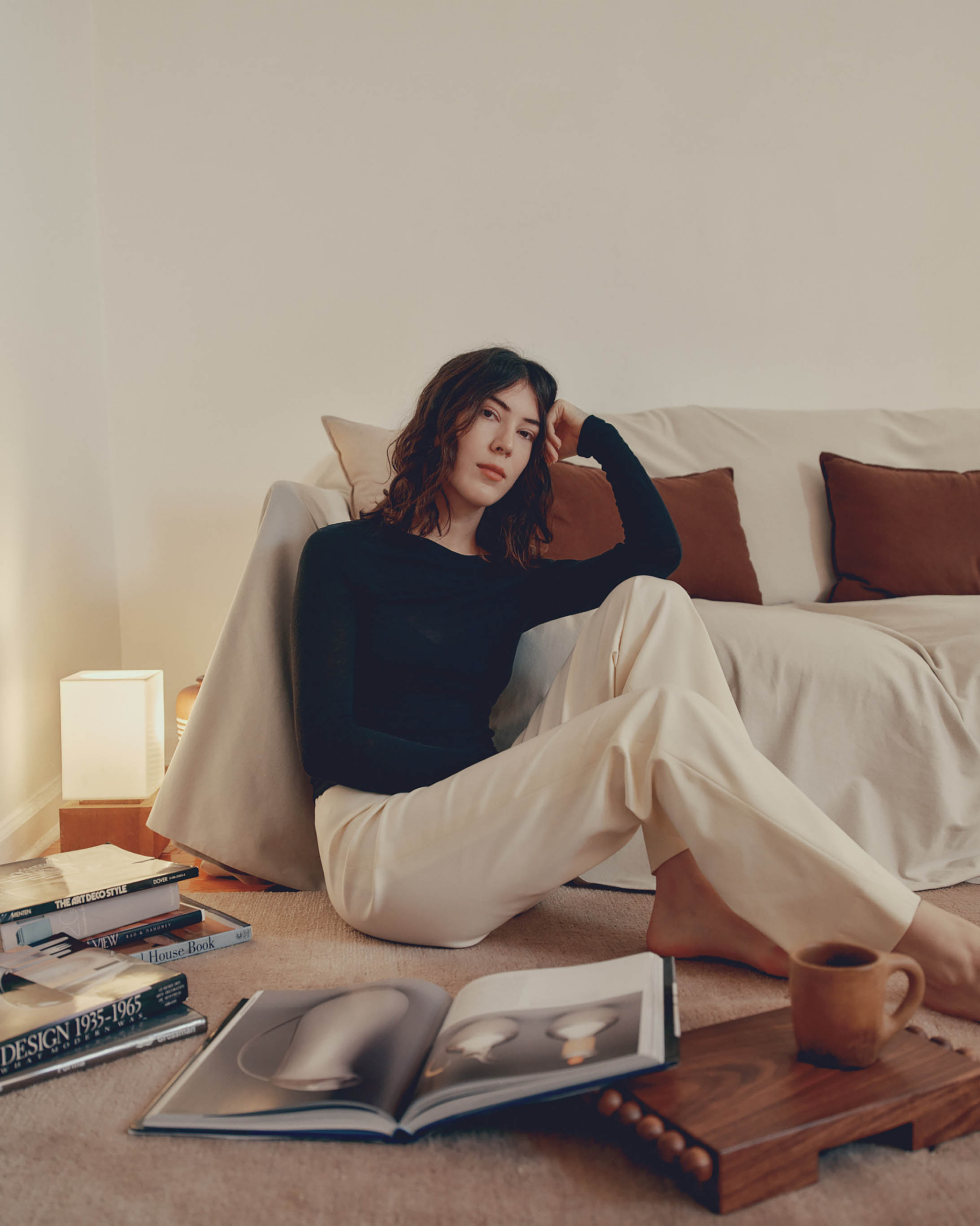
Jewellery Designer Jessi Burch’s Brooklyn Apartment is a Portal into her Mind
An Apartment With No Sofa But 50 Lamps
A Happy Family Collaboration in De Beauvoir
How “The Muse of Spirited Resourcefulness” Guided The Making of Glass Artist Juli Bolaños-Durman’s Edinburgh Home
ON UGLINESS WITH DAVID MICHON, AUTHOR OF FOR SCALE
The Home That Thomas Wheller Is Making
Designer Jake Robertson’s Home is a “Living Library”
Jewellery Shaped by Architecture, History and the Human Hand
THE SCURA GUIDE TO GOSPEL OAK & AROUND
Scura Selects: November 2025
Luke Malaney’s Work is Always in Motion
Going Global: Reflections and Recommendations from Flawk’s Show at Collectible NYC
The Fluent Creativity of Liyang Zhang
SCURA Selects: What to see at Open House & LDF
FRIENDS OF SCURA: ALEXANDRA ARIAS
What is Flawk?
A Design Duo’s Reunion with a Family Farmhouse in Alsace
The best eats in London under £20
Introducing the Flawk Shop: a new home for a family of objects
An Architectural Adventure in Finland’s Far North
Freddy Tuppen’s Flat Keeps Getting Better
A Slower Guide to Istanbul
Inside A Copenhagen Apartment Shaped By Instinct, Collaboration and Kerbside Finds
A Guide to Copenhagen, Curated by a Design Duo We Love
Step Inside Tom Golland’s Colour Playground
Picasso Chairs and Playful Precision: Josh Page’s Creative World
Ajay Larr on the Architecture of Food and Why Meals Matter
A Slower Guide to London
The Scura Guide to eBay
The Homespun Beauty of Textile Designer Isabel Farchy’s Patchwork Panels
NYC Design Getaways
Our friends: PPP LAB on crafting for simplicity and usability
Hidden Feasts: Jiaonest
Scura’s Guide to Independent Stoke Newington
Welcome to Scura