How “The Muse of Spirited Resourcefulness” Guided The Making of Glass Artist Juli Bolaños-Durman’s Edinburgh Home
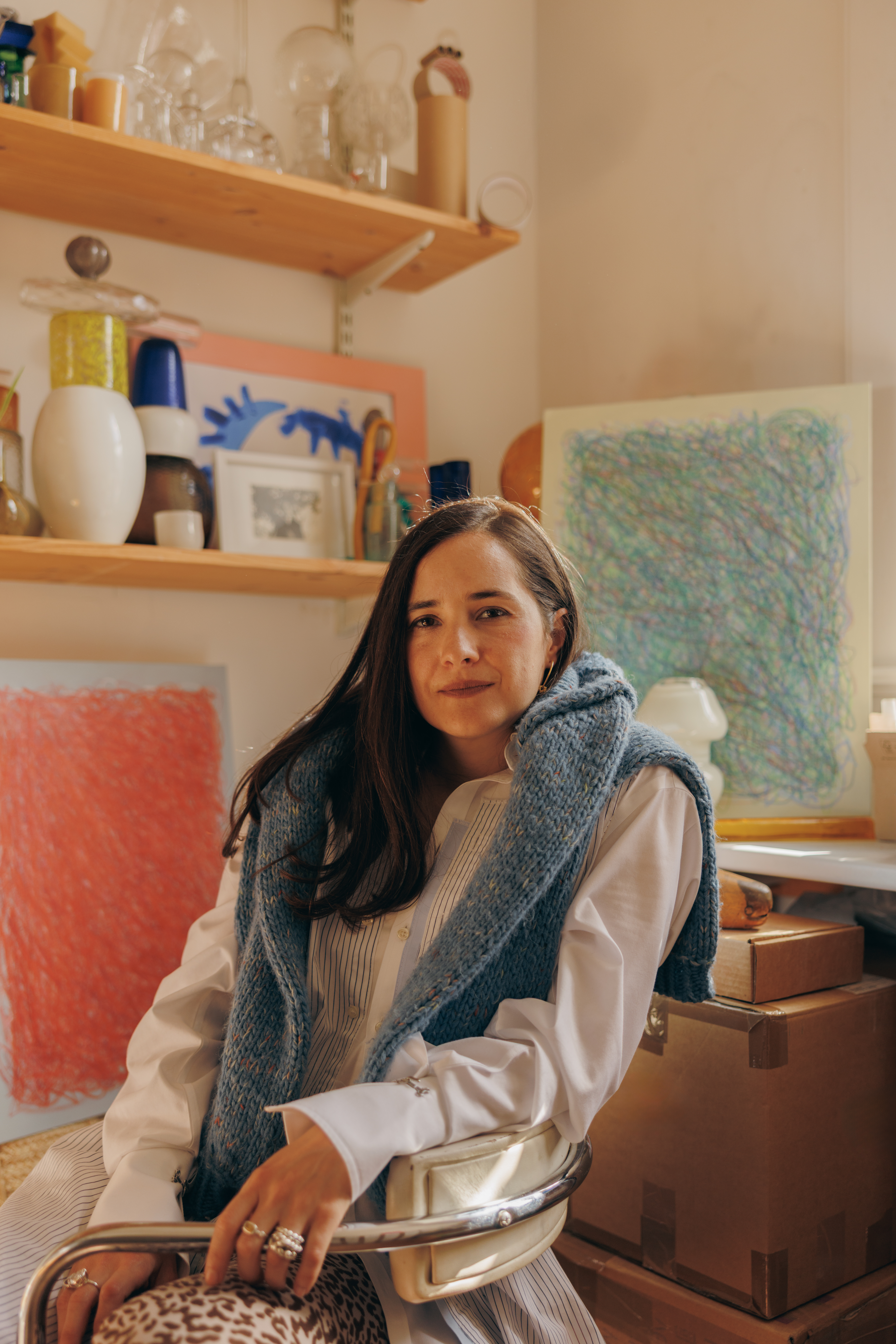
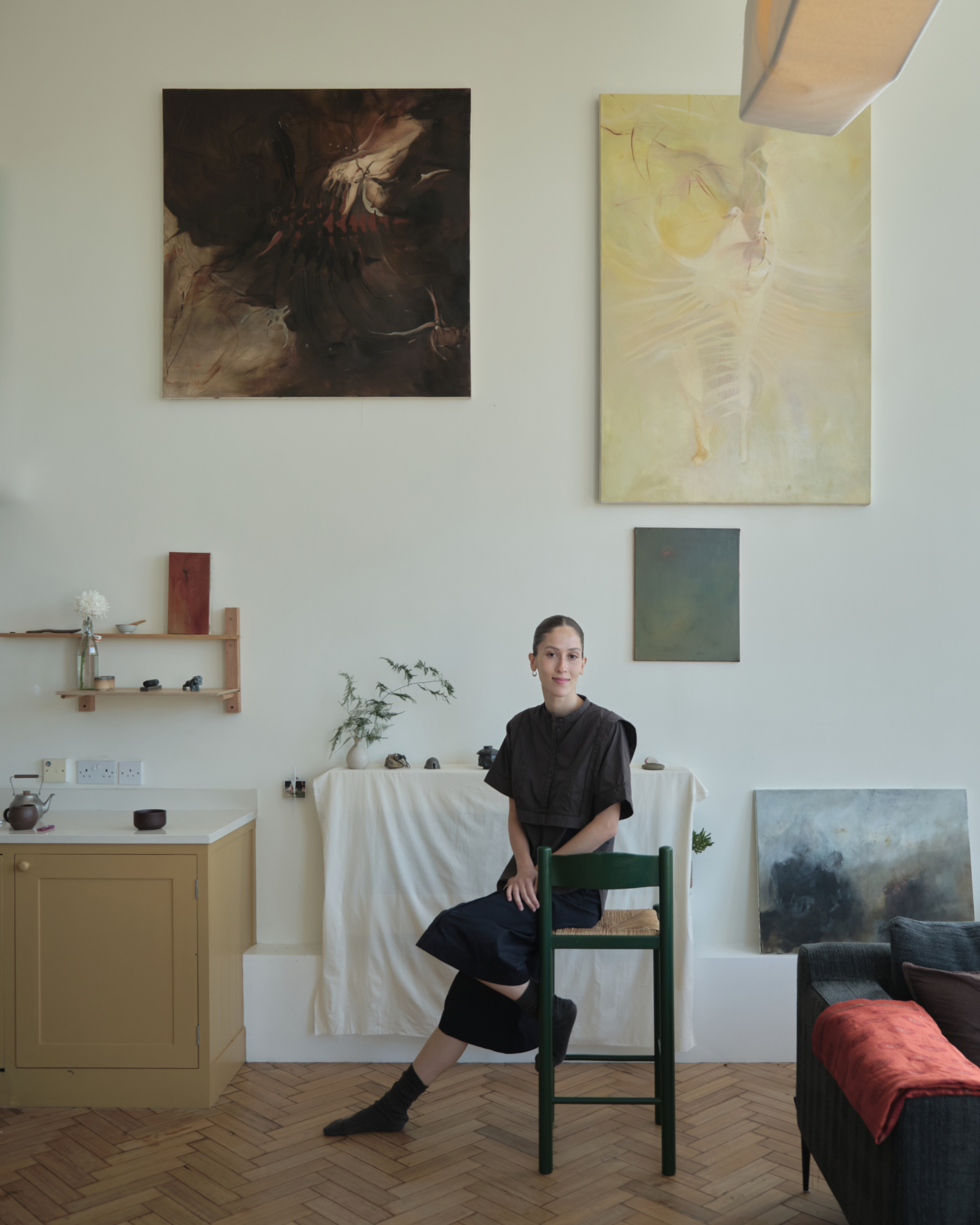
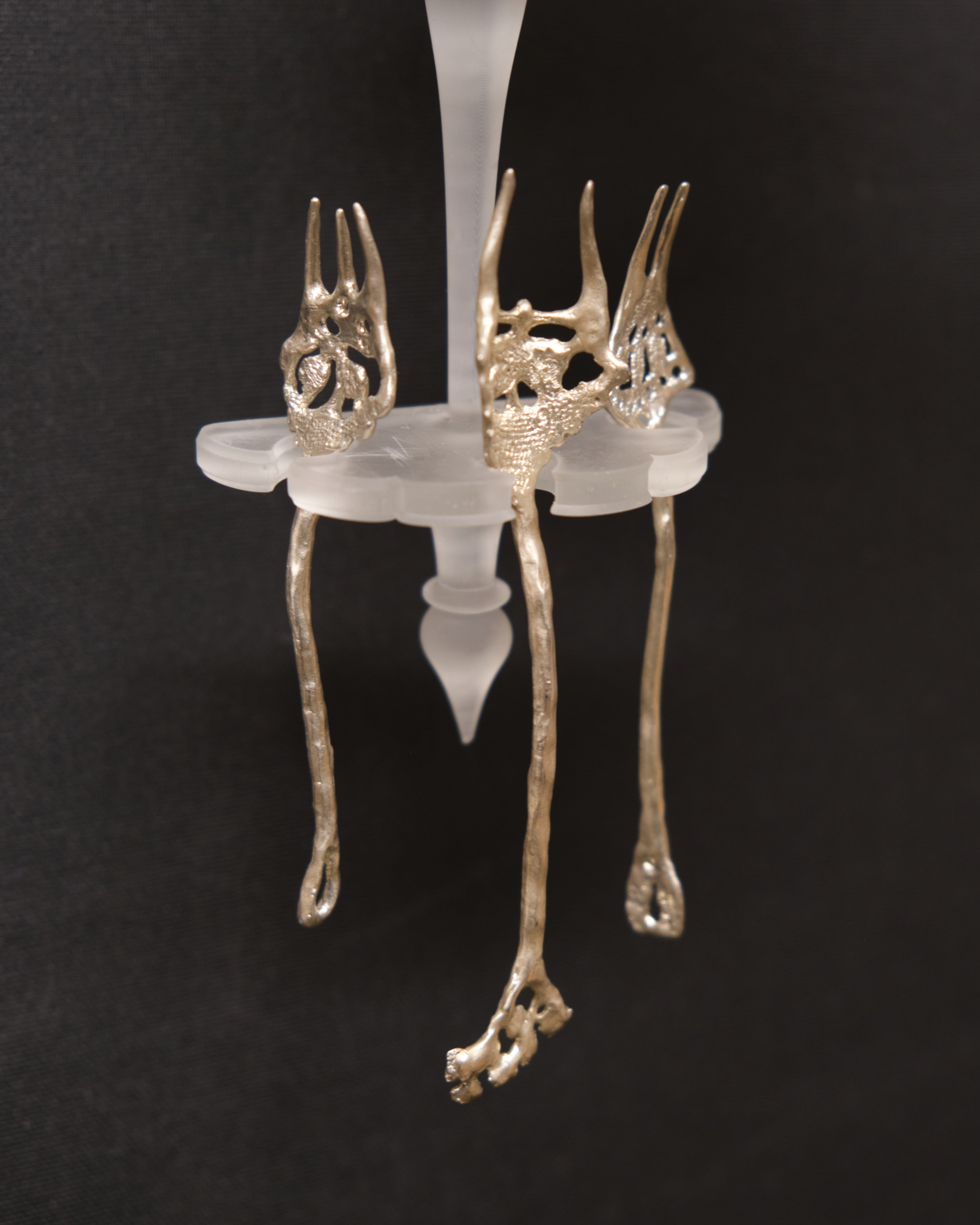
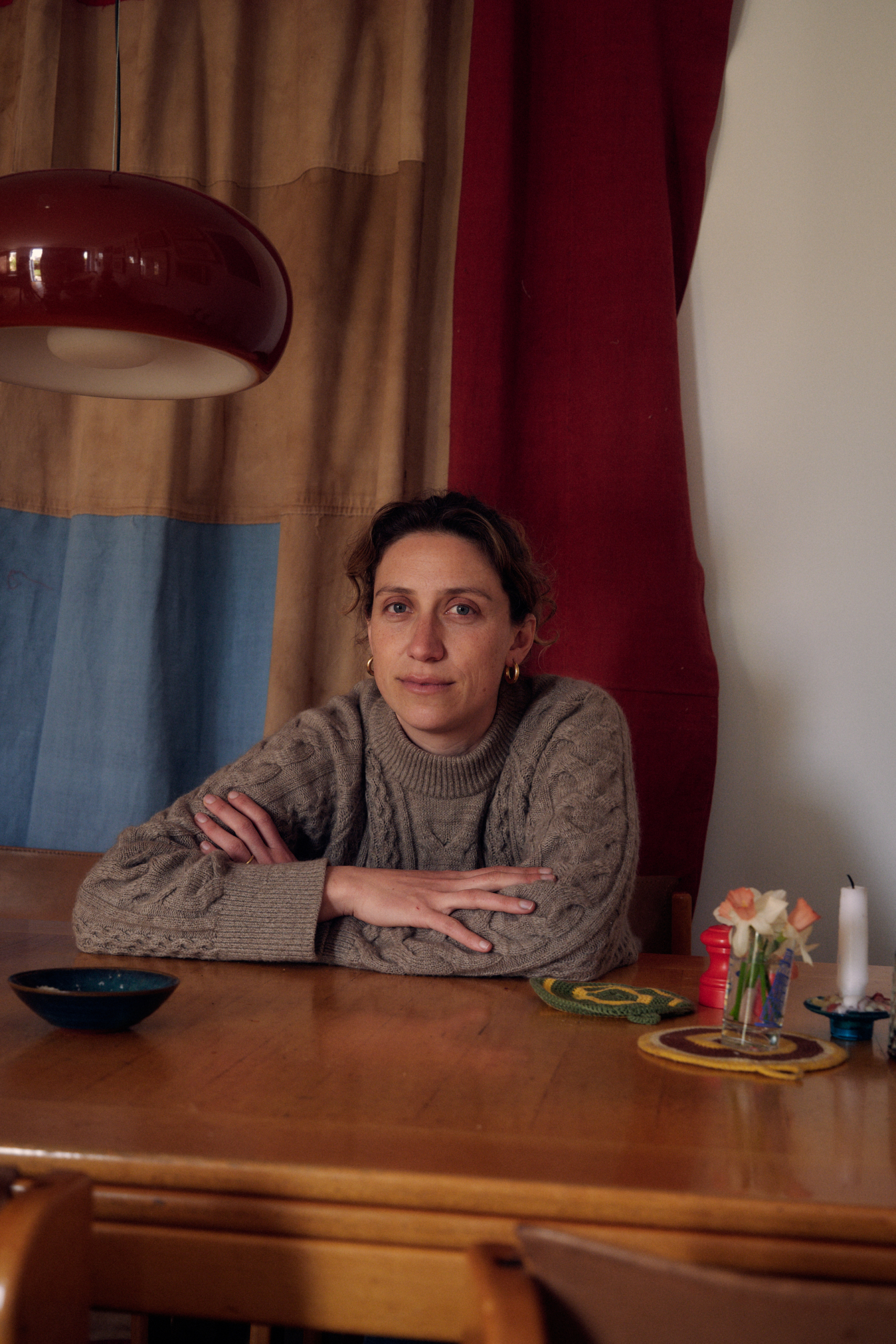
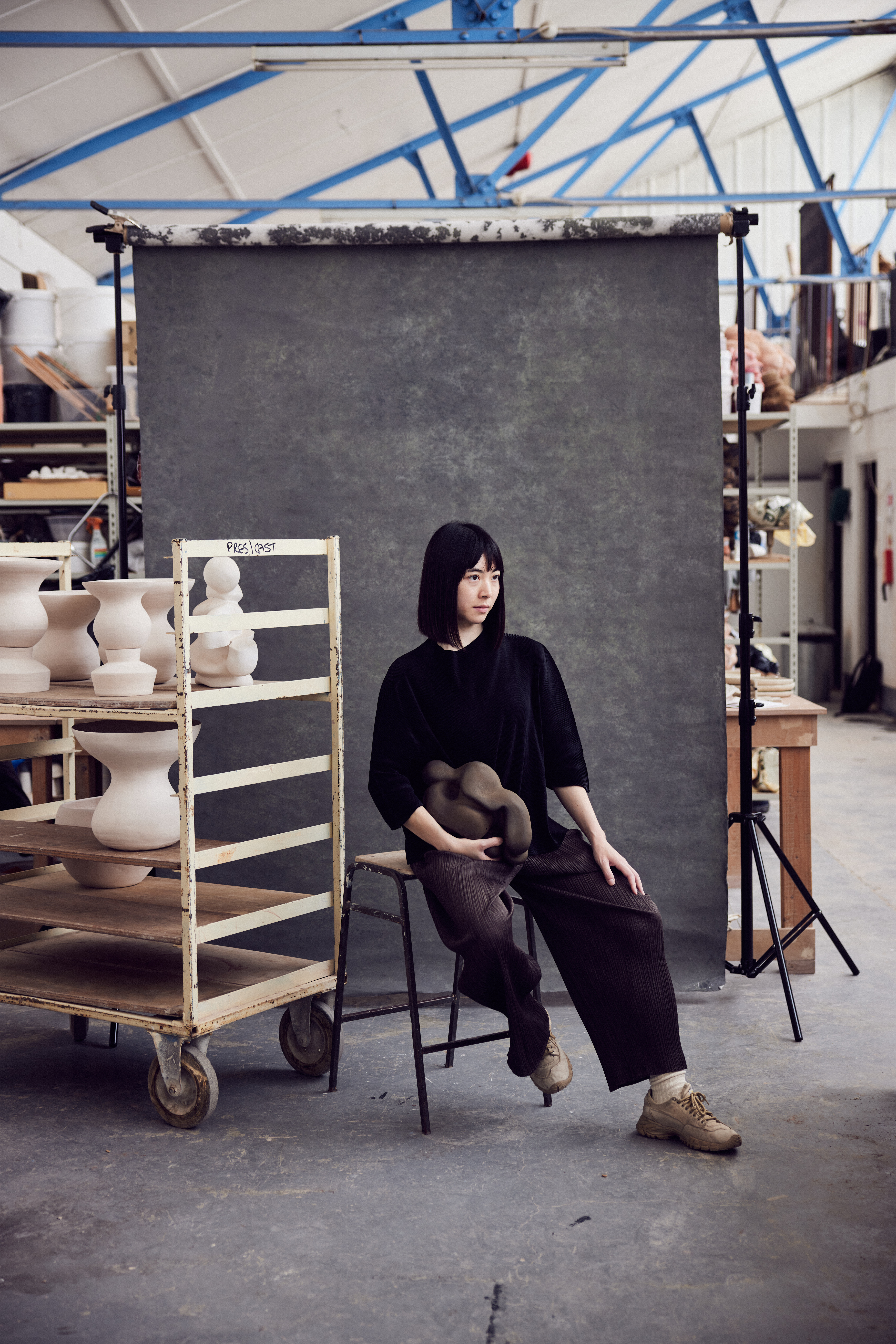
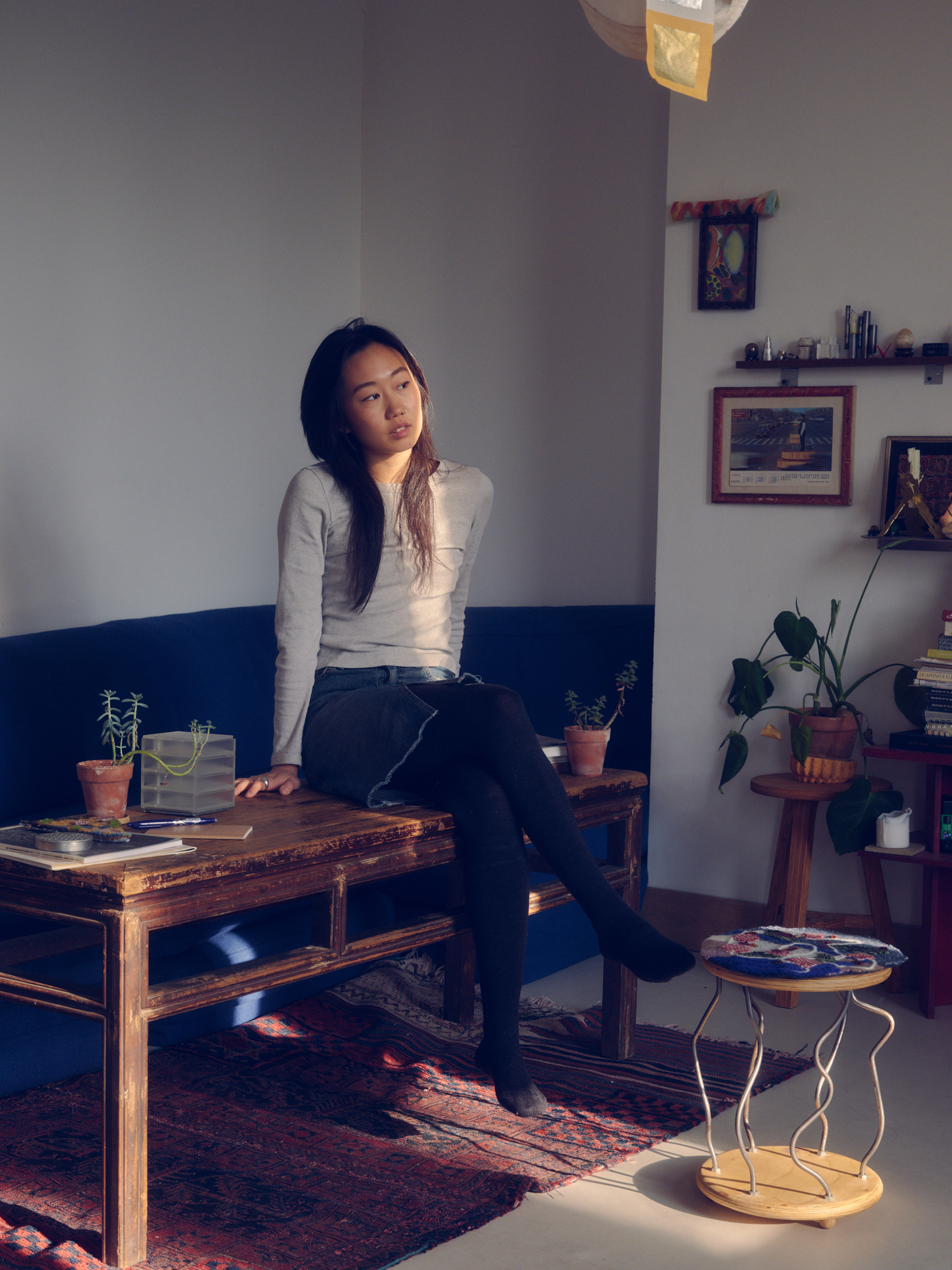
Costa Rican artist Juli Bolaños-Durman is well-versed at turning otherwise-wasted materials into uplifting and beautiful compositions. Her creative practice recycles glass into characterful and unexpected works that sometimes – such as her recent toilet roll series – have an explicit function, while others – see her recent collaboration with Ajeto in the Czech Republic – are more decorative, even sculptural. Whatever she is making, Juli deploys resourcefulness and experimentation as creative tools, allowing her pieces to emerge from what she has and can make or mend, rather than chasing a desired outcome.
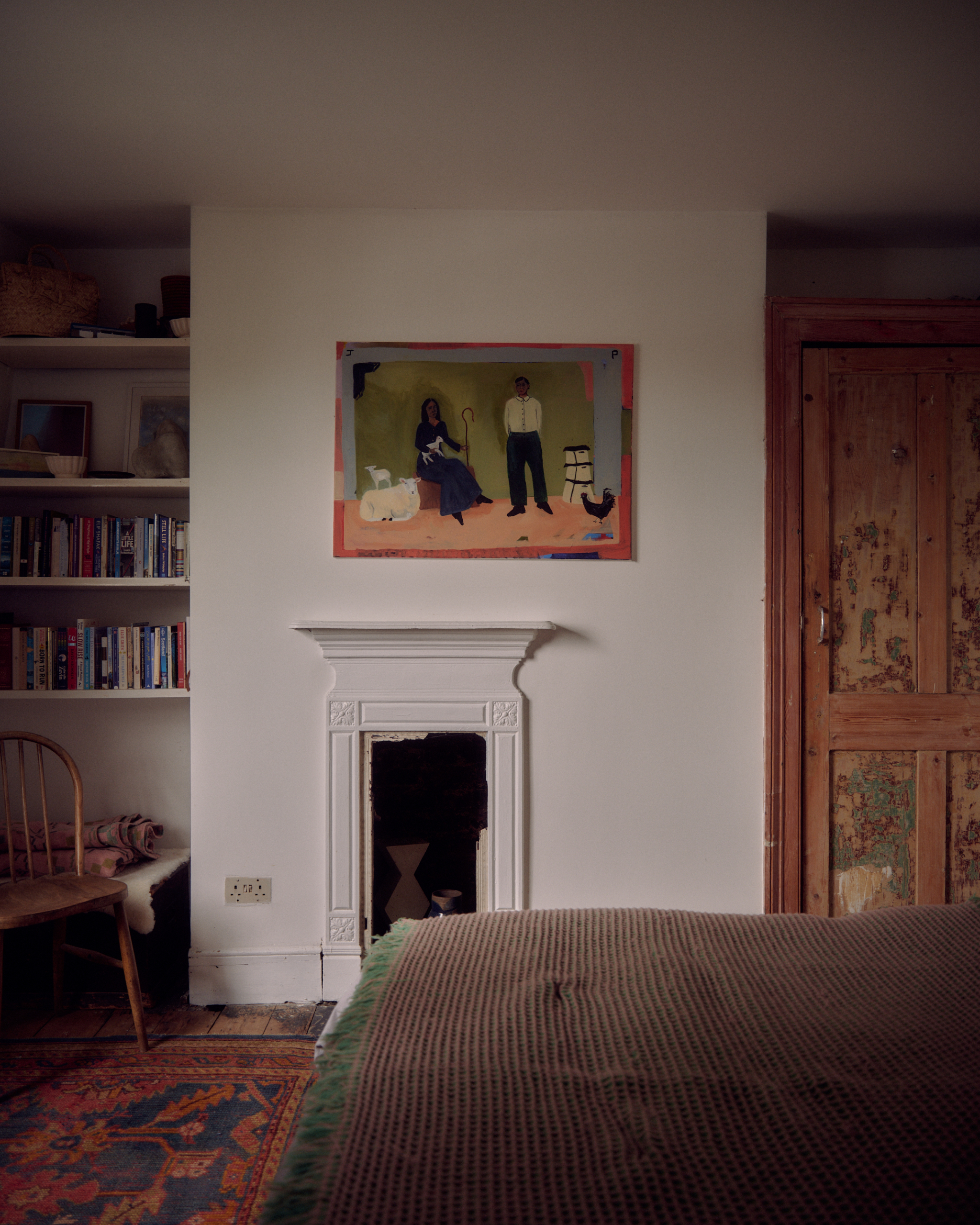

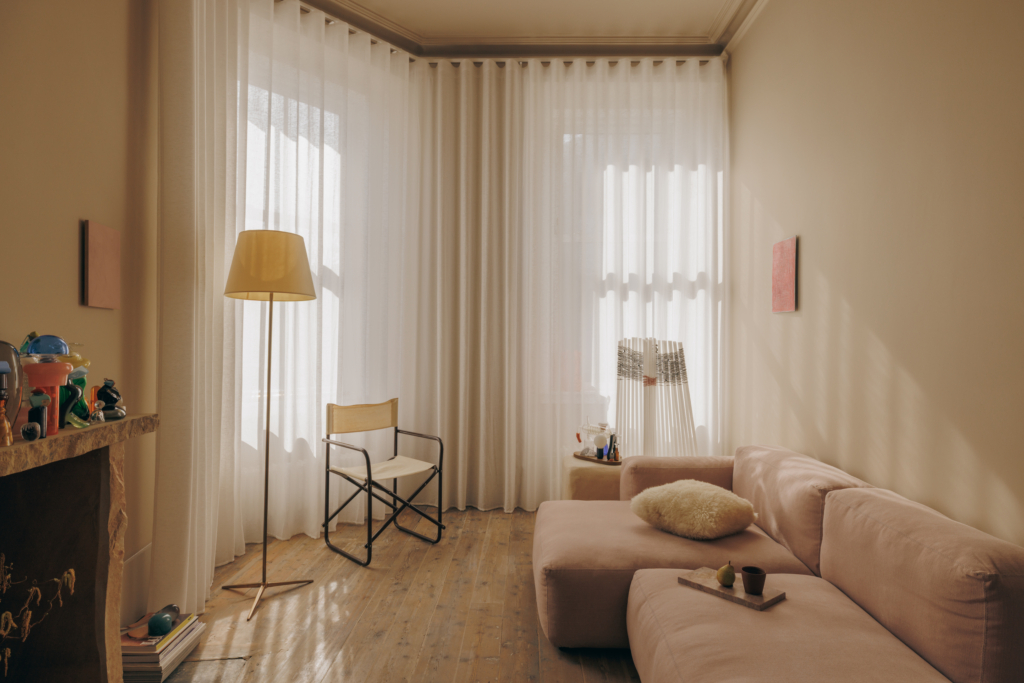
So, when she bought a first-floor apartment in a Victorian tenement in Leith, Edinburgh, she set about renovating it as she would go about creating one of her pieces: repairing where possible, collaborating with suppliers for salvage material, spending time rather than money and allowing beauty to emerge from what was on hand. It’s not just that she was on a tight budget: for Juli, the very act of using materials is today an inherently political consideration, one that she responds to in intelligent and inspiring ways in all aspects of her life.
Read on for our conversation with Juli, with touches on everything from how “the muse of spirited resourcefulness” guided the renovation of her flat, done in collaboration with Architecture Office; why she believes she is more persistent than talented; growing up in Costa Rica and how she ended up in Edinburgh; why the kitchen is the heart of her home and her advice on how you can embark on a renovation for less than you might think (spoiler: you’re going to have to roll up your sleeves)….
Let’s start at the beginning: what was it like growing up in Costa Rica?
We grew up in the outskirts of the capital , on a big plot of land full of mango trees where my mum’s two sisters also lived – there were three houses on one property. There were eight cousins, so we were like a little mob of children.
Our parents would say, “We don’t want to see you until dinner. Figure it out.” So we were bored, and that’s where ideas came from. We built bicycle ramps. We hung ropes from trees and used our mums’ blankets to make structures. A blanket would suddenly appear in a tree and become a treehouse.
I remember always designing things. I’d imagine making a bicycle for more people – how would the seat work? Or I’d find a small stone structure and imagine it as a house. It was about managing risk and building new worlds. The freedom was fundamental and so good for us. And the tropics are so lush: insects, plants, constant life. That’s mirrored in my work. I didn’t consciously decide it; it just came out.
We’d also get into fights. We’d mediate if someone was being too bossy or too mean. We had to manage conversations, manage conflict and work together. I read recently that this kind of play is actually the basis of democracy – it’s negotiation.
You always knew you wanted to be an artist?
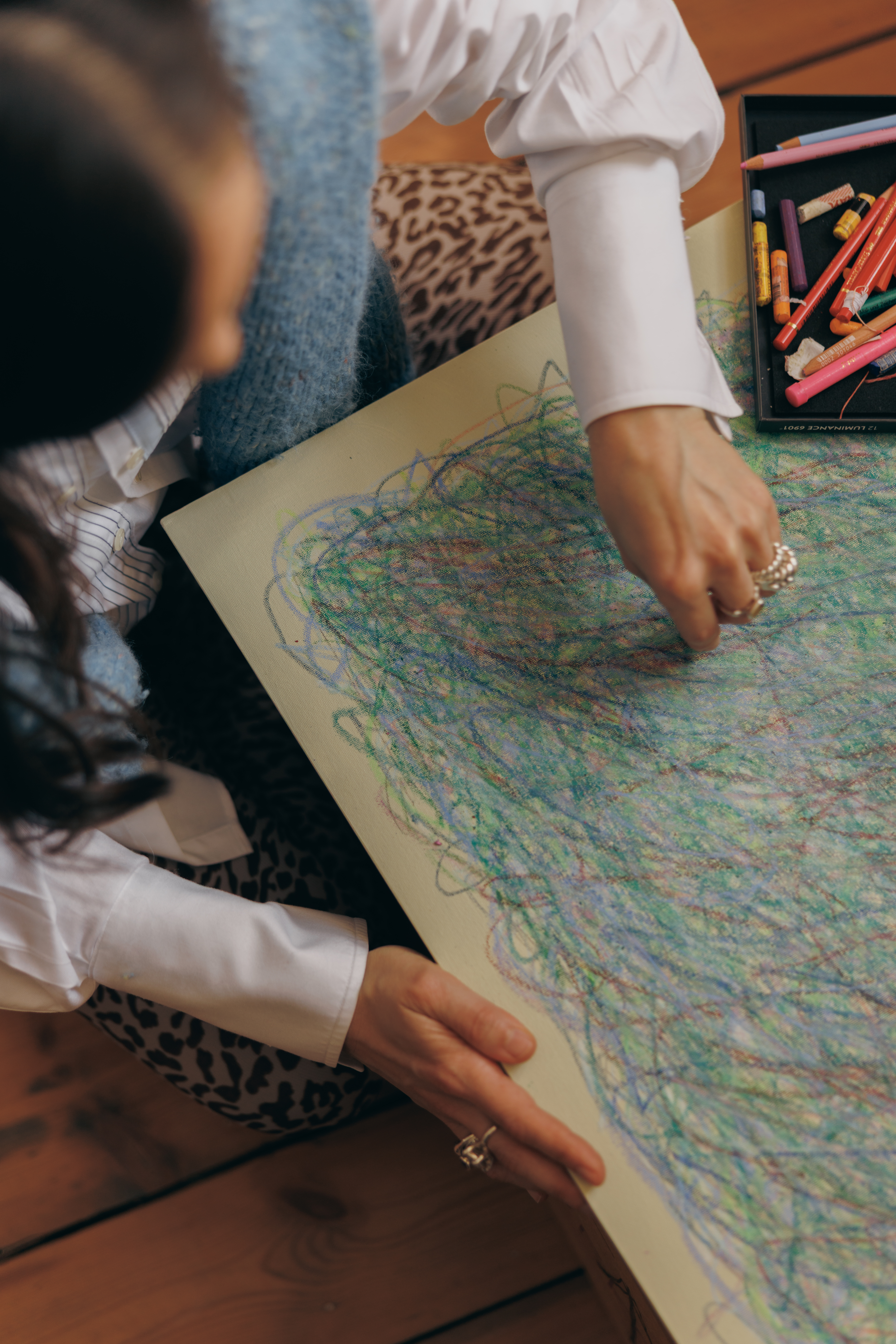
Since I was about five. But my parents were very clear: that’s wonderful, but you need to sustain yourself. So I studied graphic design in Costa Rica. Later, I went to New York for six months to the Art Students League, which is an incredible place. That’s where I was introduced to contemporary art. After that, I became mesmerised by glass.
I’m not very big on trends – it drives me crazy when everyone starts doing the same thing. Glass felt unique. In Costa Rica, it wasn’t widely practised because it’s expensive to import. So I looked internationally and came to the UK for my Master’s. That’s how I ended up in Edinburgh.
What is it about glass that resonates with you?
I love that it can be mended. With the hand-cutting technique I use, if something breaks it’s like a scar; you can mend it. It’s like kintsugi. Something breaks, but you reimagine it into something new.
Glass can be pristine – like crystal, the finest production in the world – or it can be a humble jam jar. I love that range. Even a jam jar, with hand-cutting, can become something special. It’s not just about repairing something to how it was; it’s about asking the object what it wants to become and, with compassion, facilitating the transformation into something new.
When I was 11, I went to a summer camp focused on nonviolent communication. We did an exercise where we drew things we loved with classical music playing. Then we passed the drawings on, the teachers played heavy metal, and we were told to destroy what was in front of us. Children cried. Then we passed them again and were told to mend what was broken. It was a way of explaining war. There is no perfect thing – it’s a made- up concept. But how can we, as community members, leave something better than we found it?
That methodology extends into my practice. I’m always asking, ‘How can I leave the material better than I found it?’
That idea of working with what you have feels central to your home too. How did you find the flat?
I looked at 60 flats before I came to this one. It was a rough gem: there was filthy white carpet around the toilet; tar on the walls; the kitchen was nonexistent; there was a hole in the shower, and 30-year-old carpets full of filth. And I thought: amazing.
It was the most affordable flat I’d found in an interesting area. That meant I could invest in transforming it. It needed plumbing, electrics, a new boiler – everything. I had to move out of my previous flat, so I had six months to do it all, but I knew I couldn’t do it alone, so I approached Alexander Mackison of Architecture Office, a studio based at Custom Lane, a creative hub in Leith, where my studio is. I’ve admired Alex’s practice for a while and was so excited when he agreed to join me on the project. It was a true collaboration.
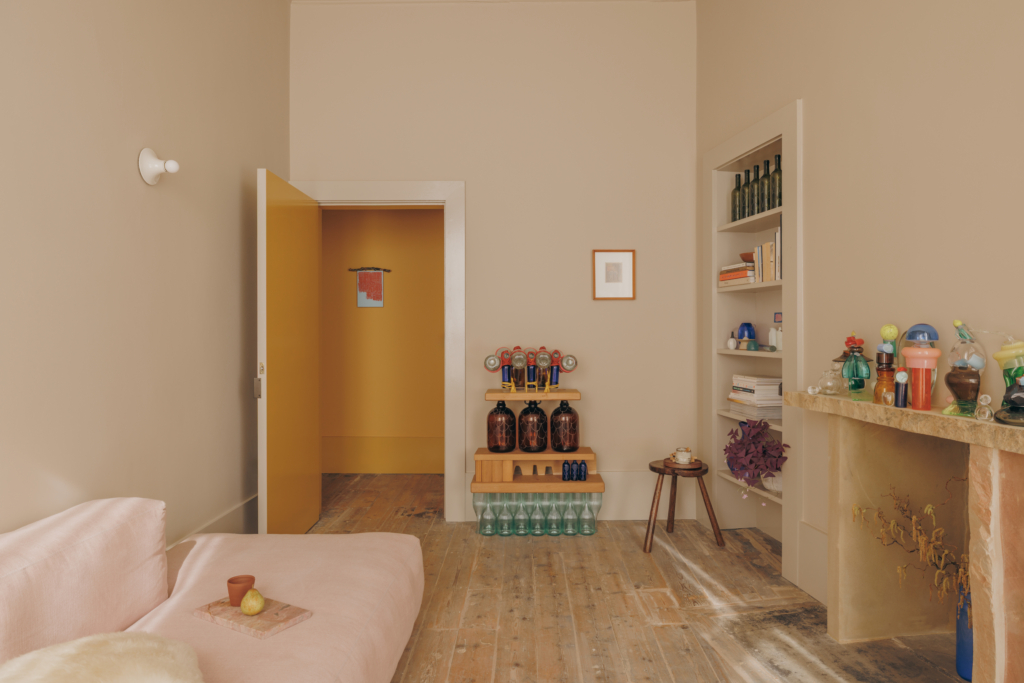
We kept the wonky floors. There were black glue marks that wouldn’t come out, but we embraced that as patina. Where there were holes, we intentionally patched them with salvaged wood, making it almost like kintsugi for wood. Even if I’d had the budget to replace them, I wouldn’t have. The roughness adds a layer.
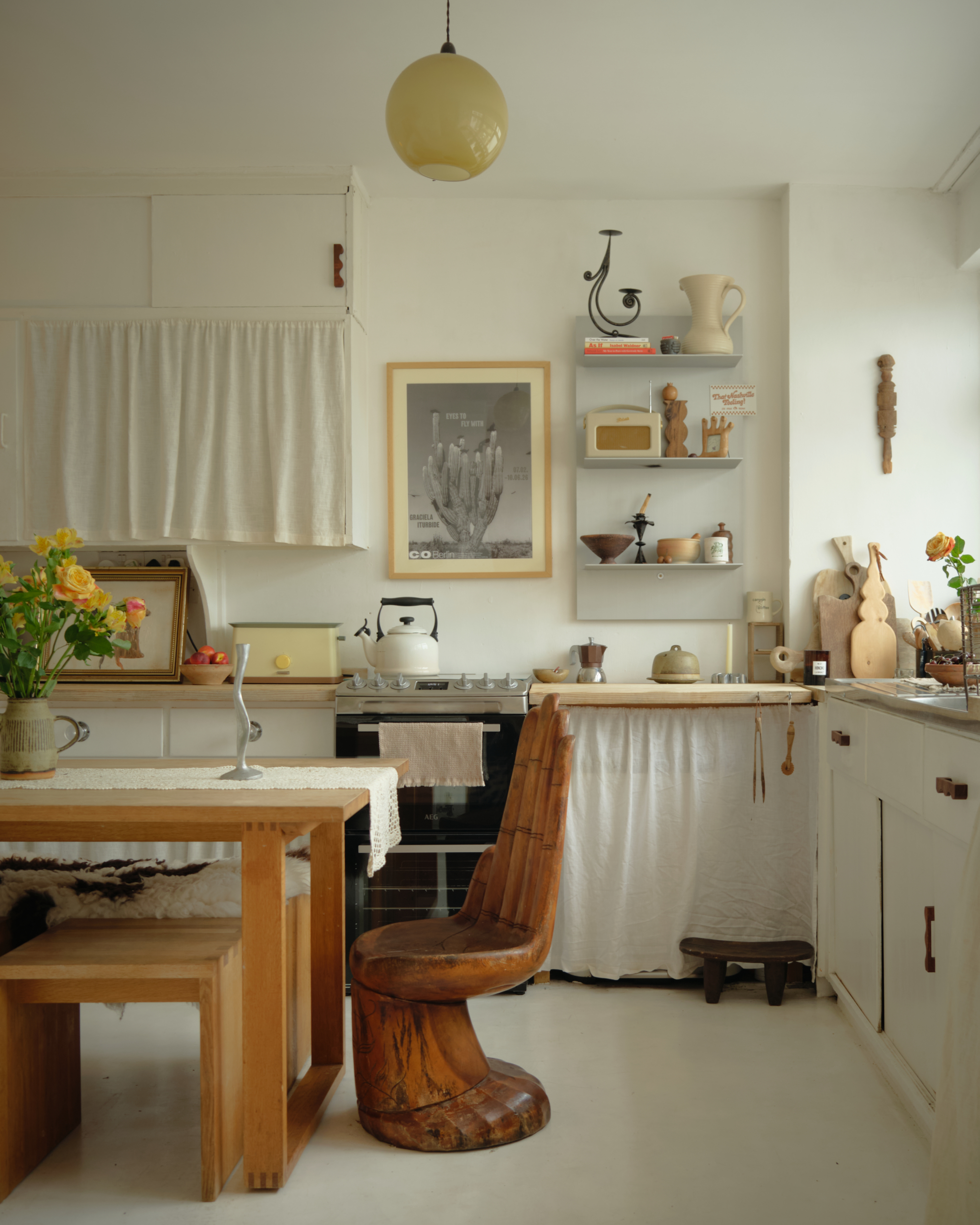
The kitchen feels like the heart of the flat.
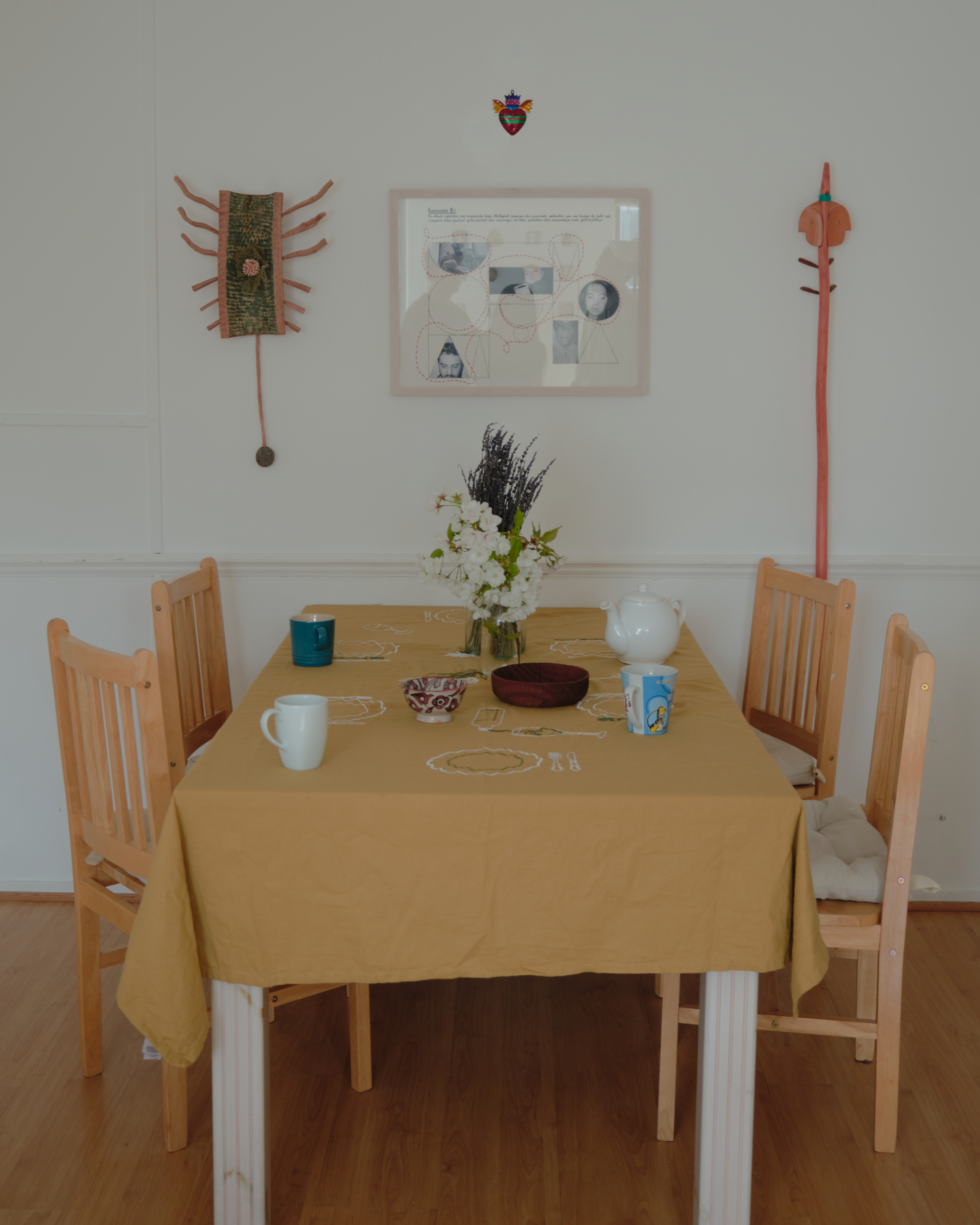
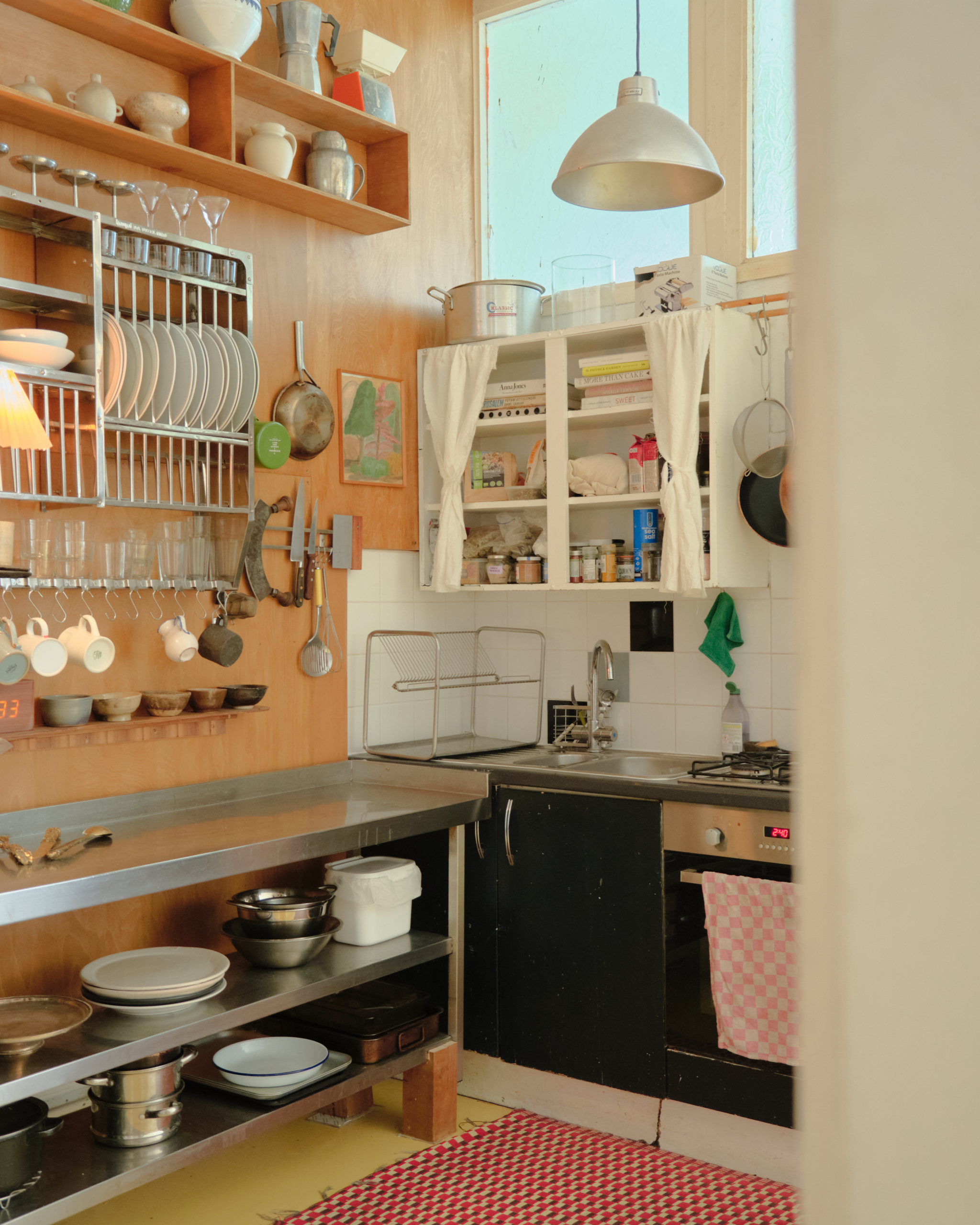
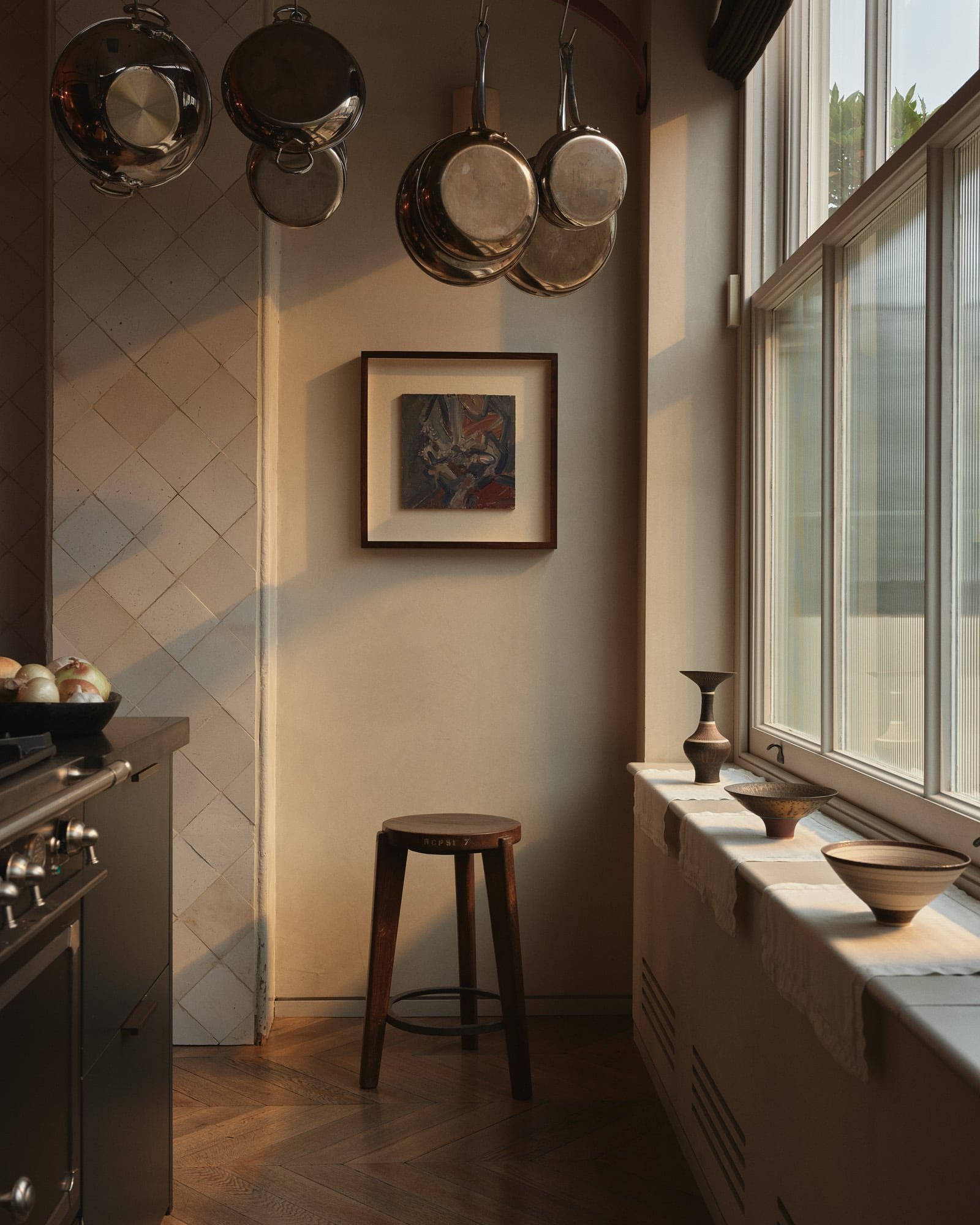
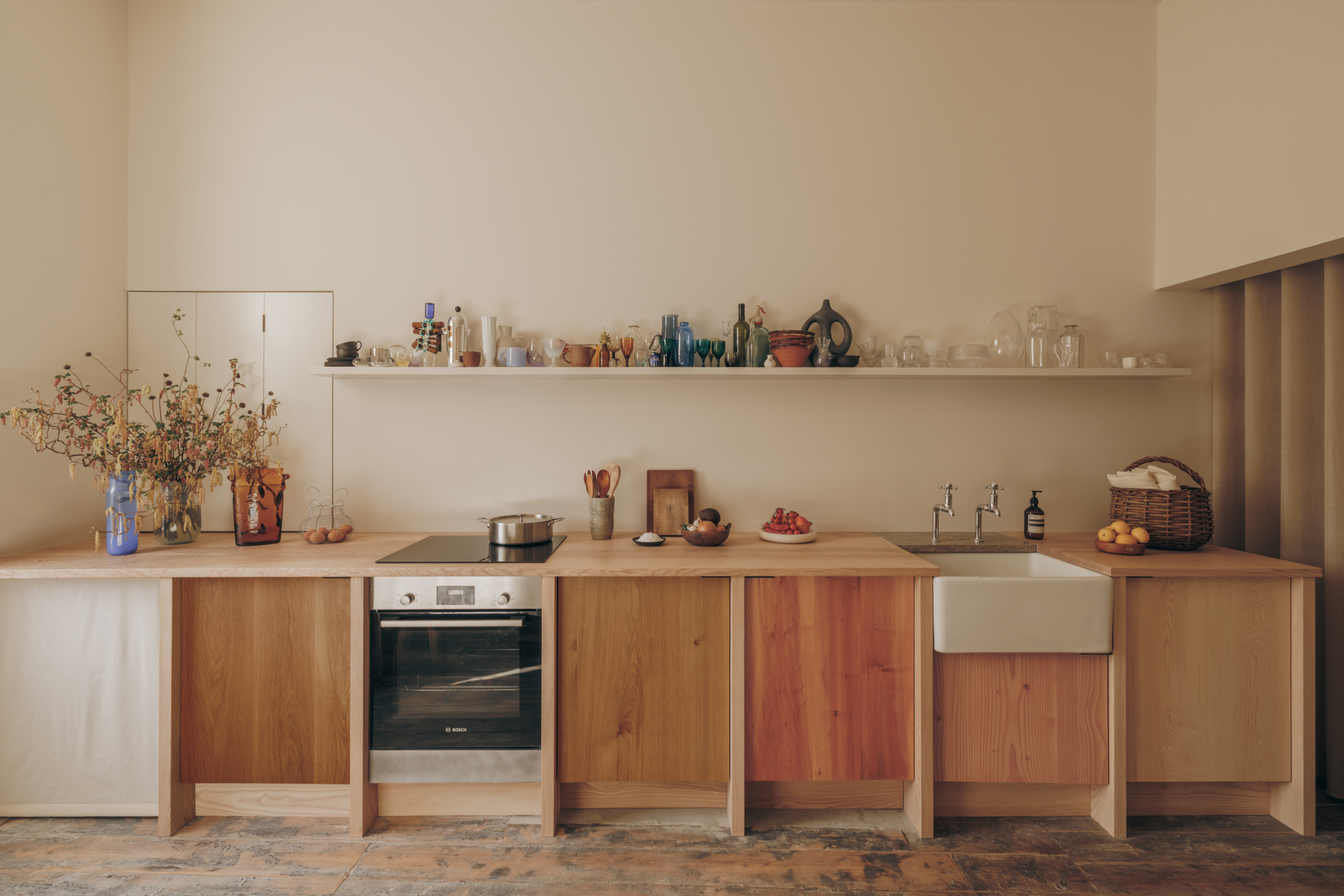
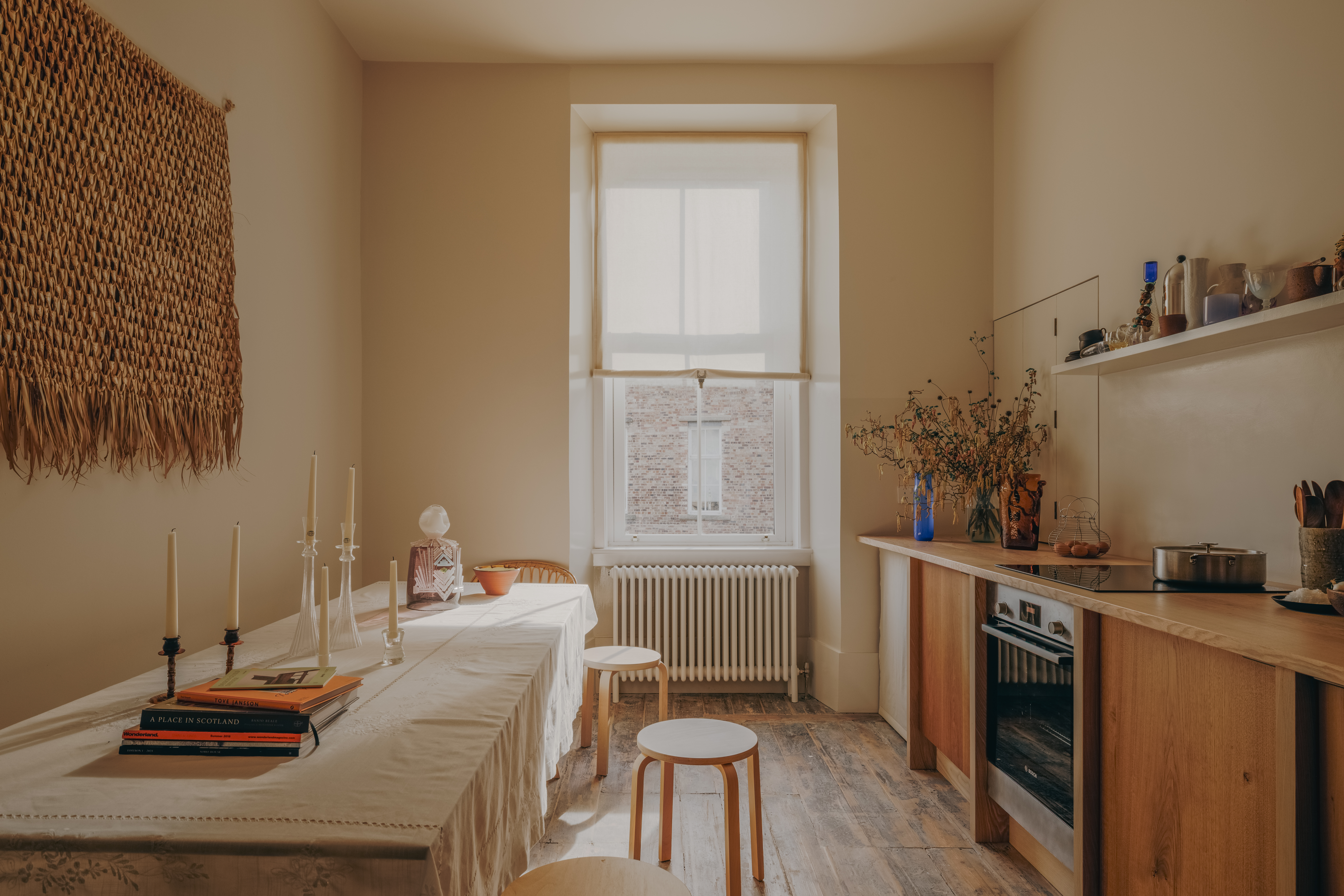
It is. I’m Latin and, in my culture , we gather. Even if it’s just 40 minutes on a Tuesday lunch break, everyone who can pops in. We designed the kitchen along one wall with a long table for gathering. Since I trust Alex’s vision, I told him that I didn’t care what it looked like as long as it was made from waste material.
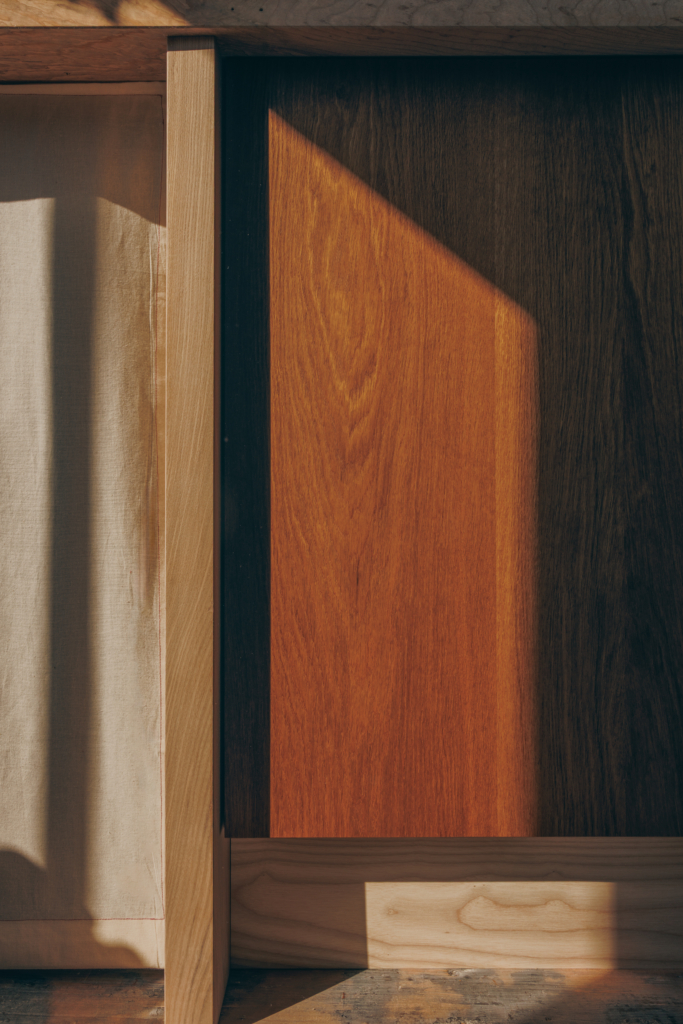
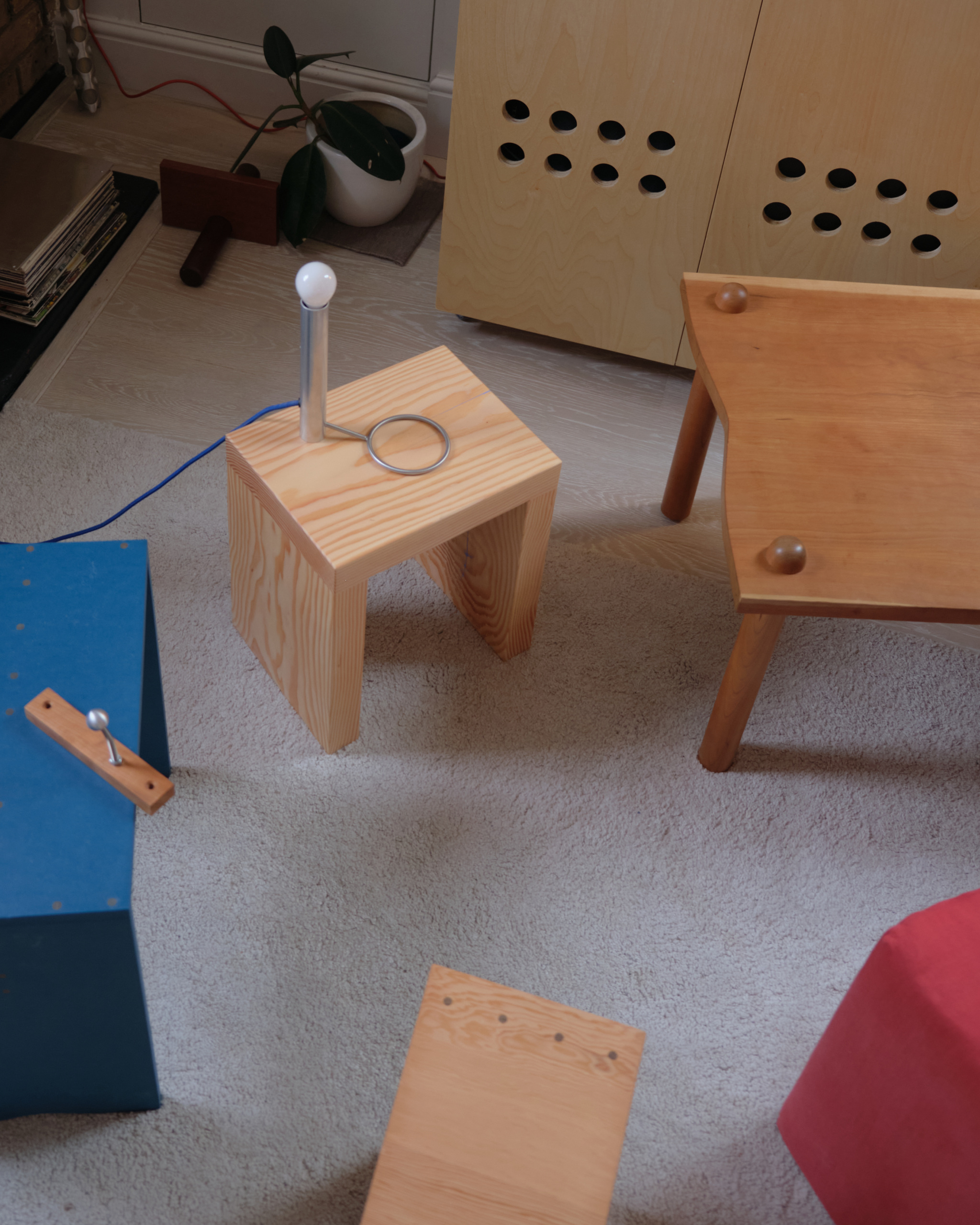
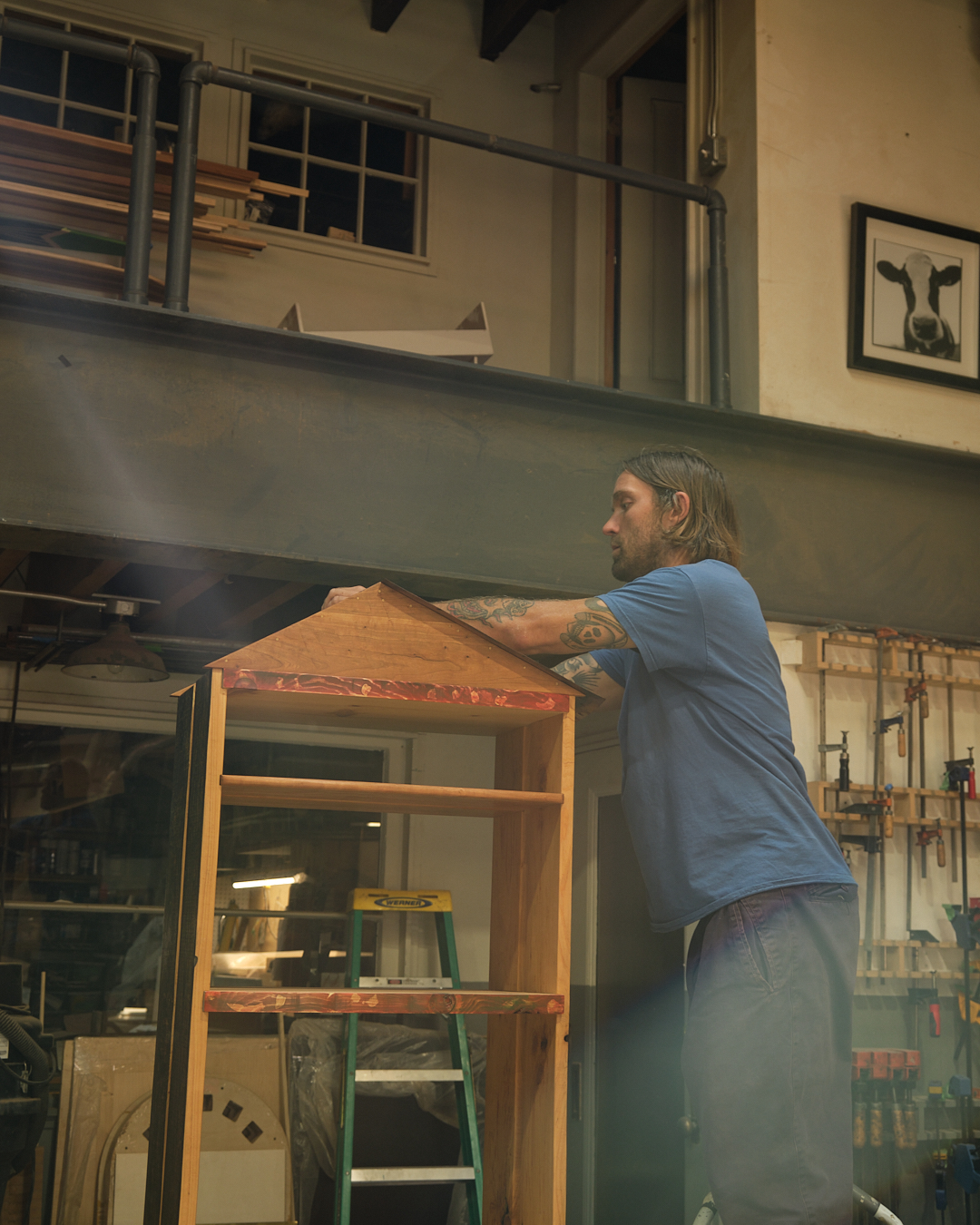
Alex designed it, and Silvan Studio made the cabinets. They only used offcuts from past projects – even the orange Valchromat for the interiors came from leftover planks from a bookshop project they worked on near here. They couldn’t use them for another job because the batch wouldn’t match.I love that contrast – oak or cherry next to Douglas fir next to the Valchromat. I am so humbled that I get to interact with those beautiful materials every day. And to cook in something that is the result of good craftsmanship, really good attention to detail is humbling too. It feels timeless, which is important for me when I create anything – it’s never just for the sake of creating, or for the ego.
There are so many small details, it’s hard to know which to ask you about first. Let’s take the mantelpiece!

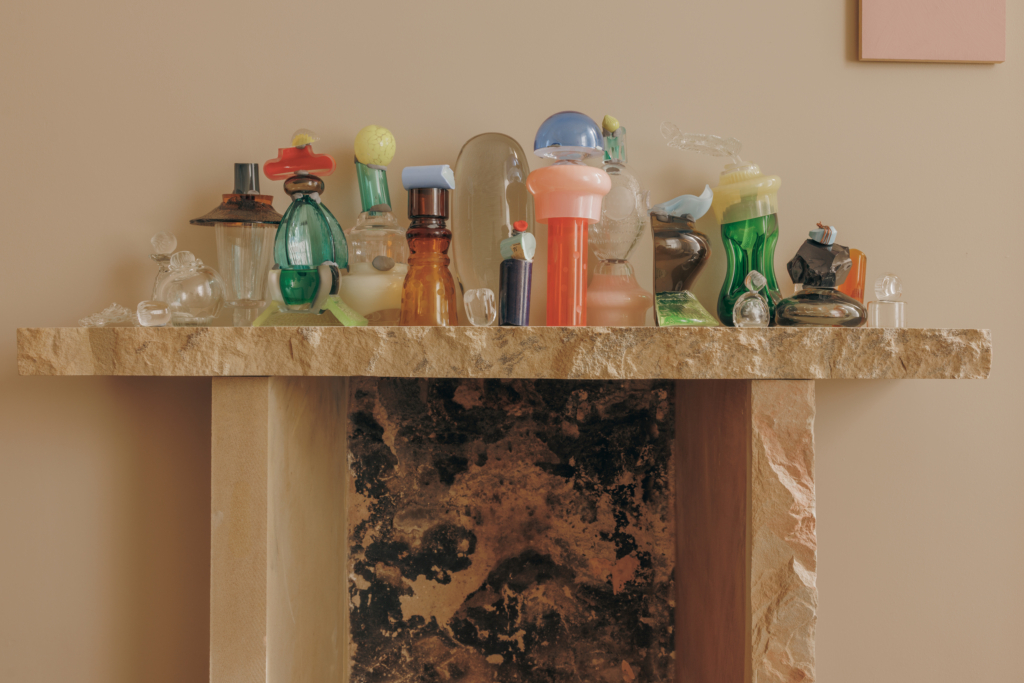
It came from questioning where materials come from. When the Romans built incredible structures, they used what was around them. Even here in Edinburgh, stone from Arthur’s Seat was taken to build. That connection is visible: the city comes from the land.
So for me, it was about that same idea: in real time, how do we forage from our locality? How do we connect to a community and have those conversations? I wanted the flat to be a product of our time and our place, so we narrowed the materials down to what was available in the UK.
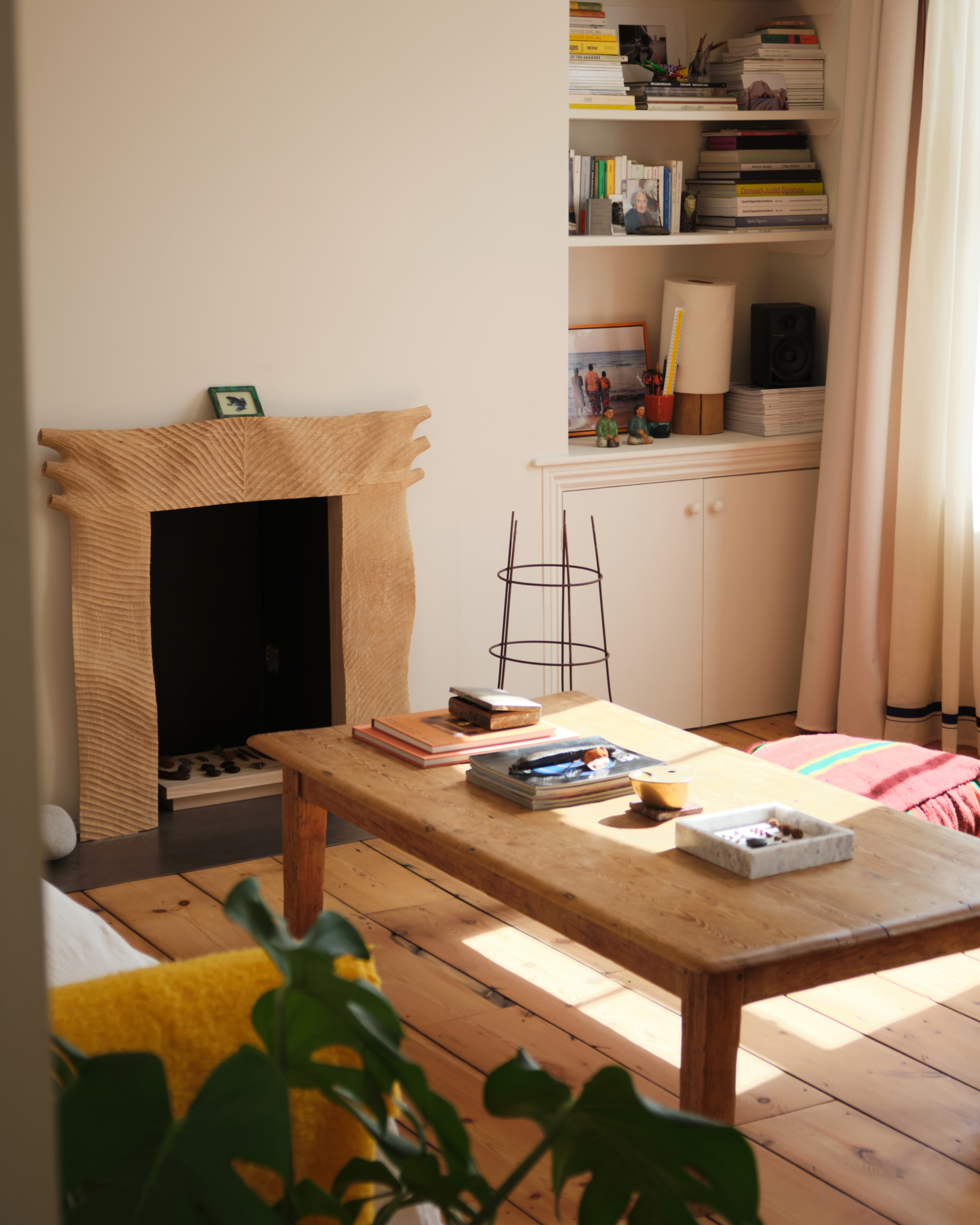
The stonemasons who made the mantelpiece are the same people who cut stone for building exteriors. If you look closely, the top and bottom right-hand sides of the slabs have rough edges. The other slab was going to be rough too, but it felt too contrived – like roughness for the sake of roughness. So we decided to flip it and keep one edge straight. Alexander plays the bagpipes, and we talked about how music needs silence. The straight edge is the silence. Placing it next to the roughness makes it sing. Not everyone will notice it. But those small decisions are powerful. It’s like in a symphony – or in a conversation – when you pause for a moment longer than expected. That space opens something up and draws you in.
And the yellow hallway?It’s inspired by a tree in my hometown called Cortez Amarillo. In January and February, it paints the mountains yellow with its flowers. As a Costa Rican in the UK, where I’m always cold, I wanted warmth. When you walk in, it’s like a little jewel box because all the detailing is high gloss, so light bounces around. We used Little Greene’s recycled paint for that.
You’ve said you’re “more persistent than talented.” What do you mean by that?
People think I must have had loads of money to do this. But I’m more persistent and stubborn than talented. The mantelpiece, for example, was cheaper than buying one ready-made. I walked into the stonemason’s workshop and asked, and he said yes.
It’s also about time. If you spend time instead of just spending money, things open up. Ask your community for help and always approach it as an exchange, rather than a transaction. Don’t be afraid to reach out, but ask what you can offer them. For example, the marble in the bathrooms comes from Britannicus Stone, who I wrote an email to explaining the project, who I was working with, who was shooting it, and they very kindly believed in the project and offered some offcuts. And now I’m talking about them here!
You’ve put so much time and attention into this place, why? What does home mean to you now?
Being abroad, this is my base. If I were sick in Costa Rica, I’d go to my parents’ house, and they’d look after me. I don’t have family here, so where I’m living becomes very important as my foundation – a safe haven.
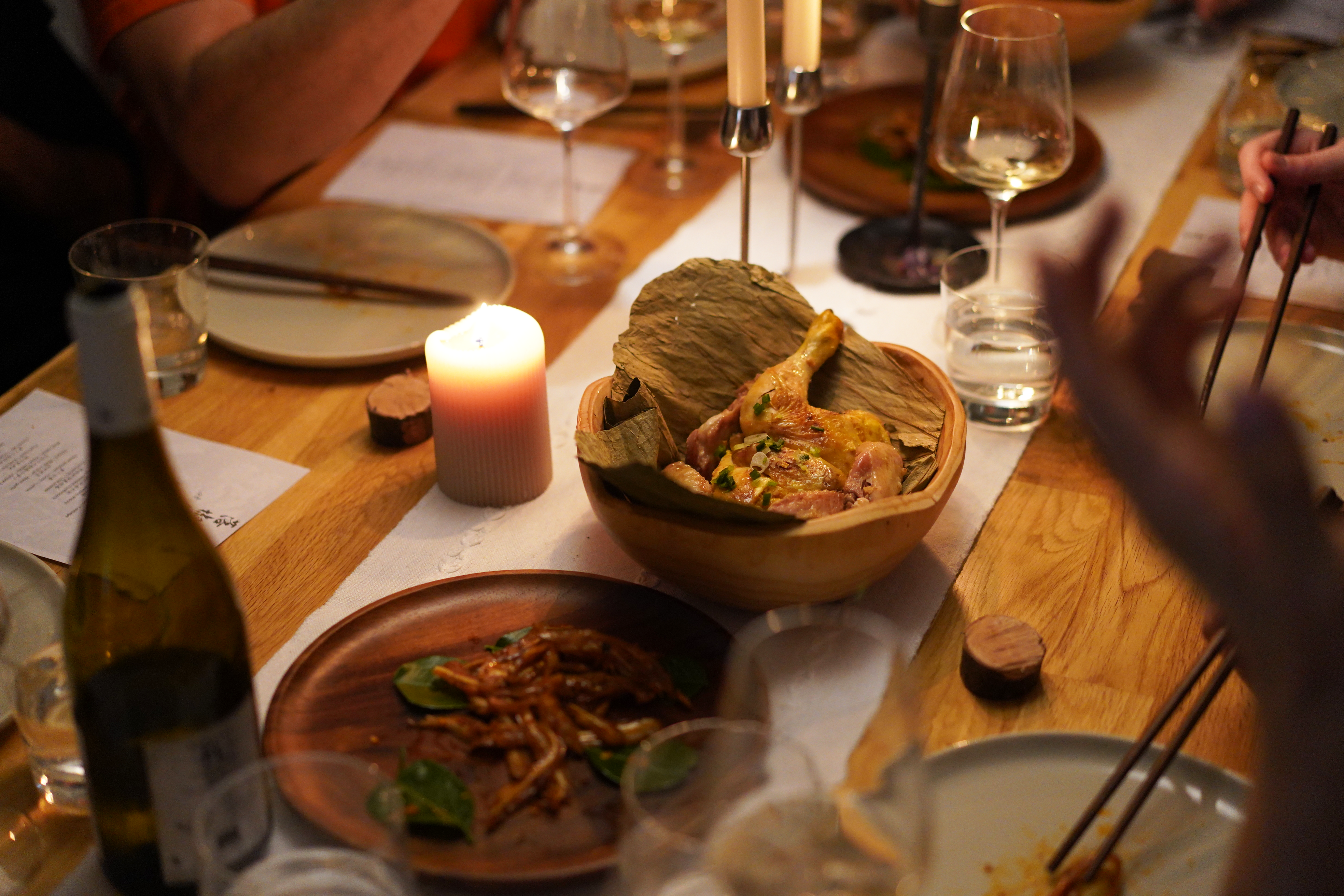
I cook a lot and I invite friends over. It’s expensive to go out, so we’ll cook or order pizza and gather. It’s emotional comfort, like going to your granny’s house and she makes your favourite soup.
It’s also a safe haven for creativity. I’ll bring sculptures home from the studio to live with them. Sometimes work needs to simmer. My studio is wonderfully full, visually noisy. At home, pieces can breathe. I can see how the light hits them at different times of day. It’s an ongoing dialogue – a space that is very much alive and in constant change.
What advice would you give to someone renovating?
Don’t assume doing something yourself is more expensive. Ask, knock on doors, strike up conversations. If you have time, be daring to make it your own and have fun! .
And think about responsibility. We can’t keep extracting raw materials and expect regeneration. How do we build better, for longer? When something breaks, how do we reimagine it rather than throw it away?
I’m not perfect. But as a designer, I have a responsibility. The flat is specific in what it wants to say. Some people might not like it and that’s okay. But it was guided by what I call the muse of spirited resourcefulness – working with what is there, trusting the process, and allowing beauty to emerge from constraint.