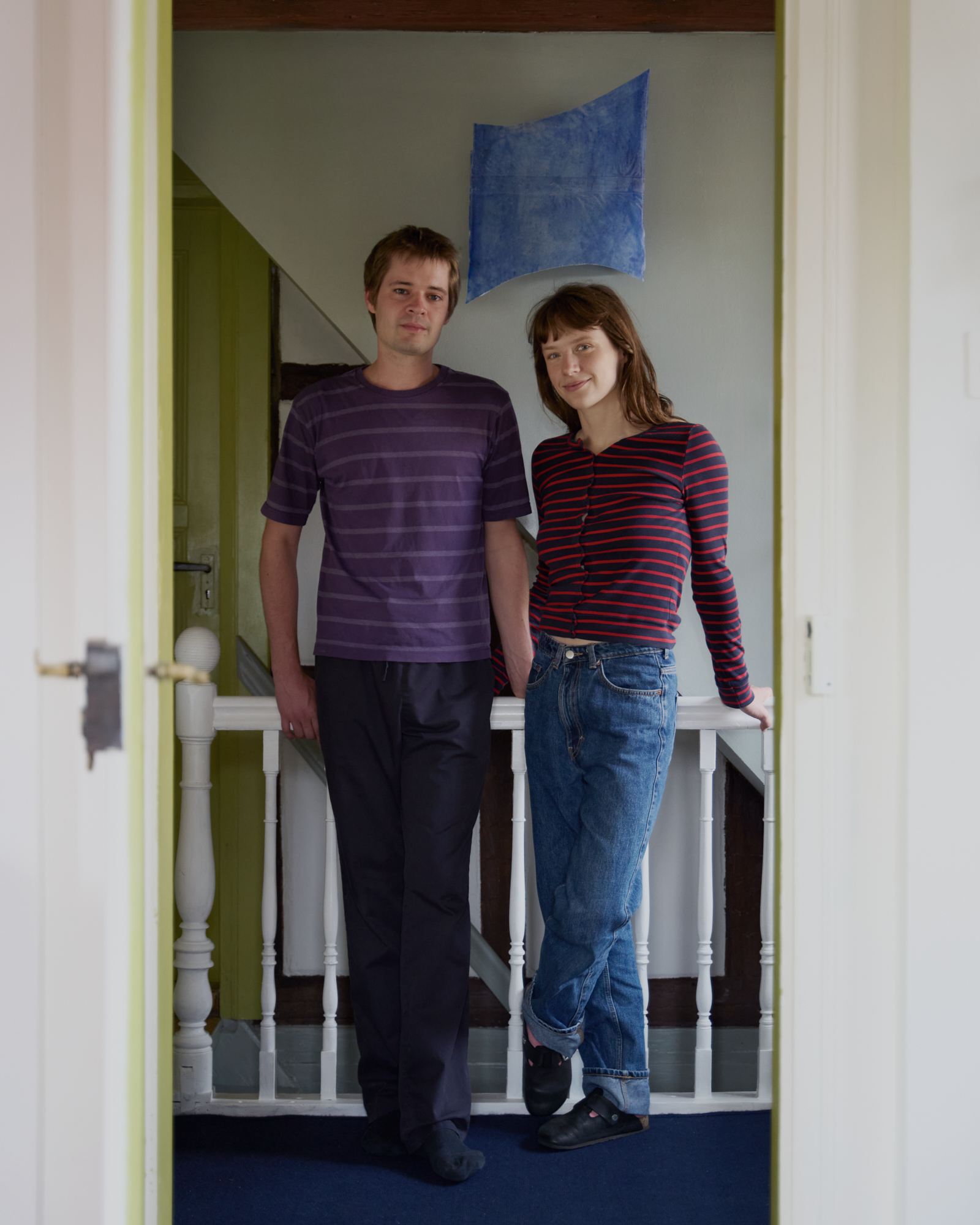
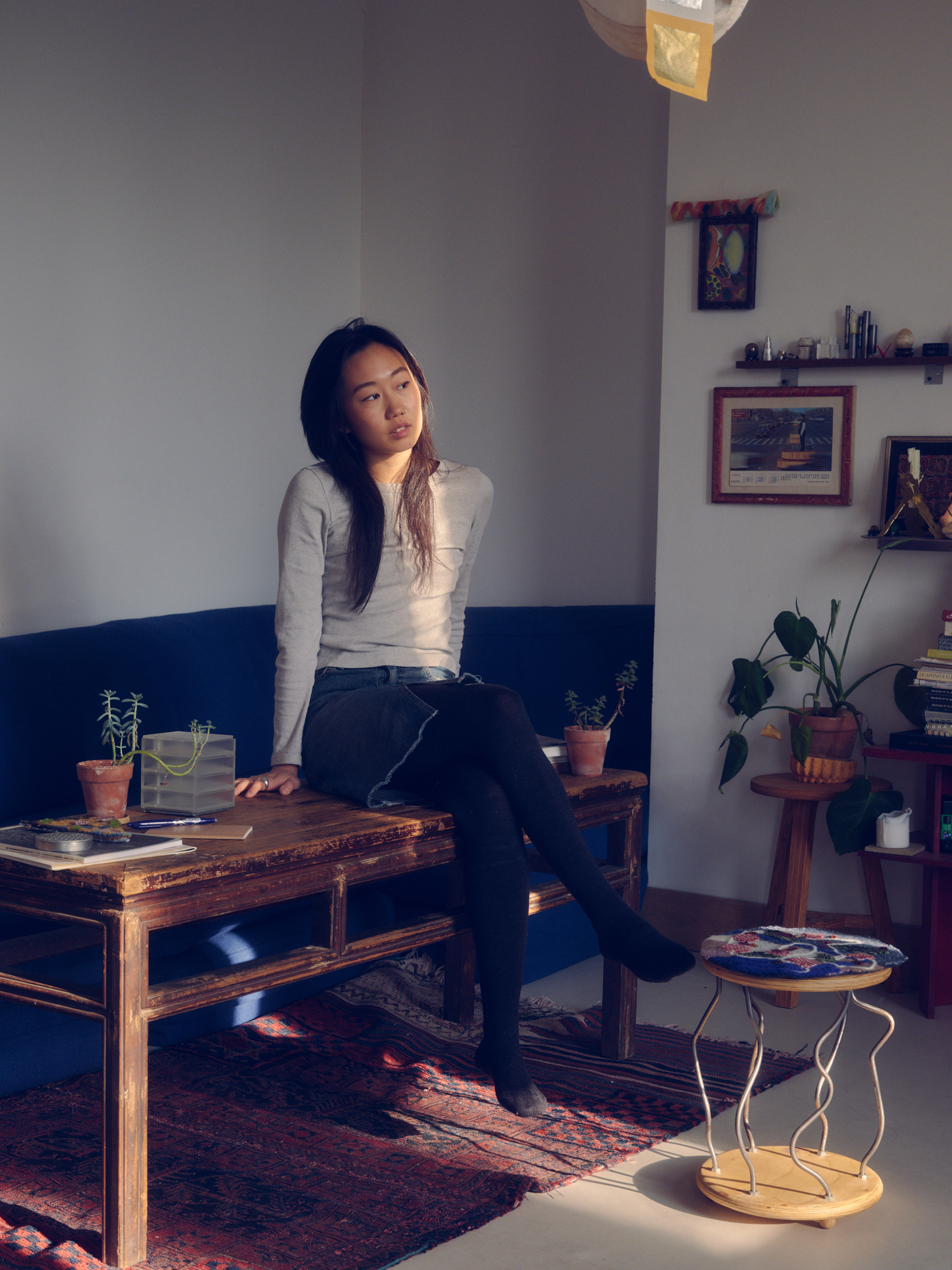
Margherita Zompa & Filippo Muzi Falconi
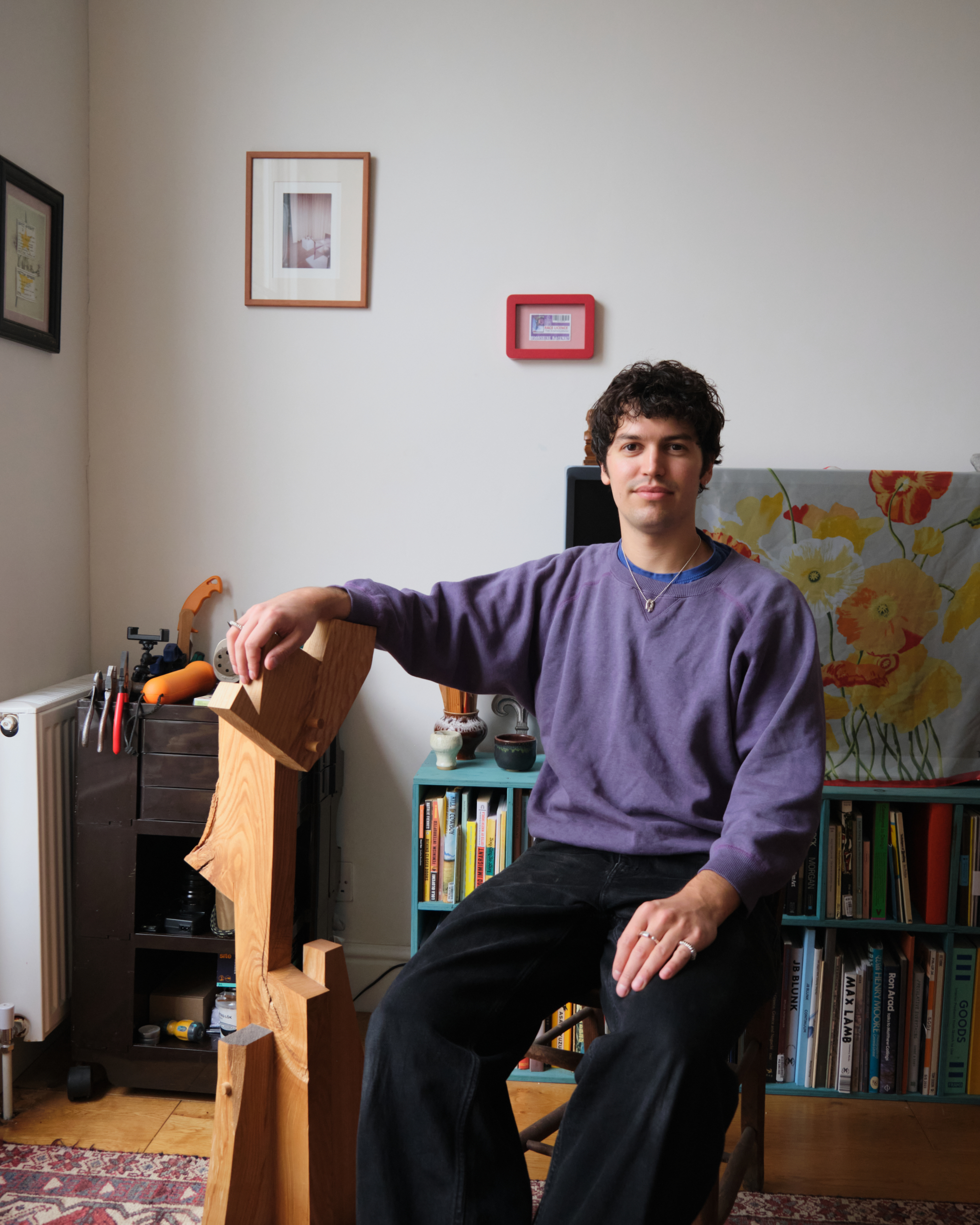
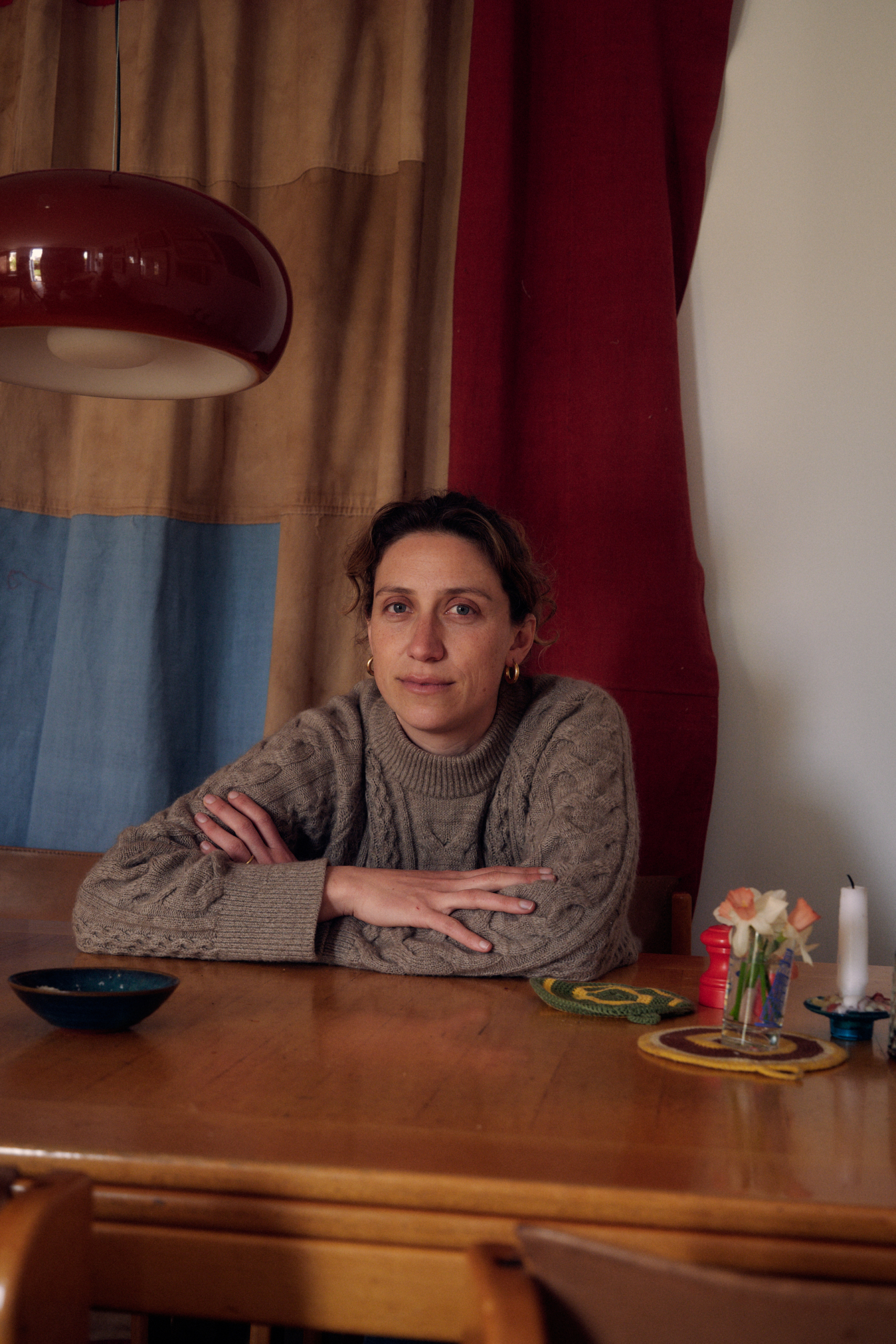
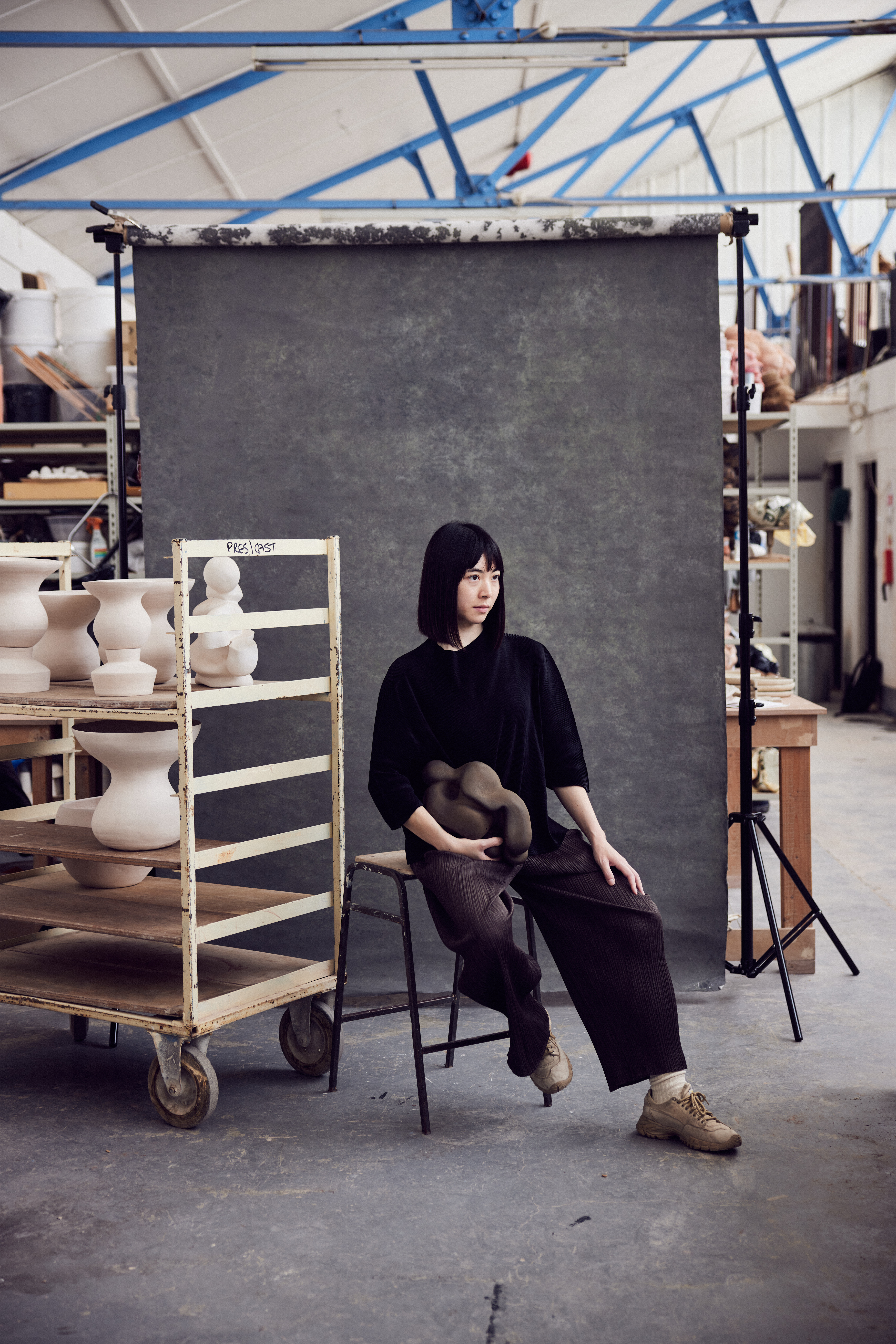
Imagine working with one of your in-laws on your home renovation: inviting them to have a say in key details, contribute to the decoration and even select furniture for you. For most people, it would be a shortcut to a full-blown family domestic. But for architect Margherita Zompa and her brother-in-law, the artist/designer Filippo Muzi Falconi, working together on Margherita’s apartment has not only been an argument-free affair, it has also resulted in spaces where the clarity of her architecture is only sharpened by the more organic textures and forms of Filippo’s nature-inspired works.
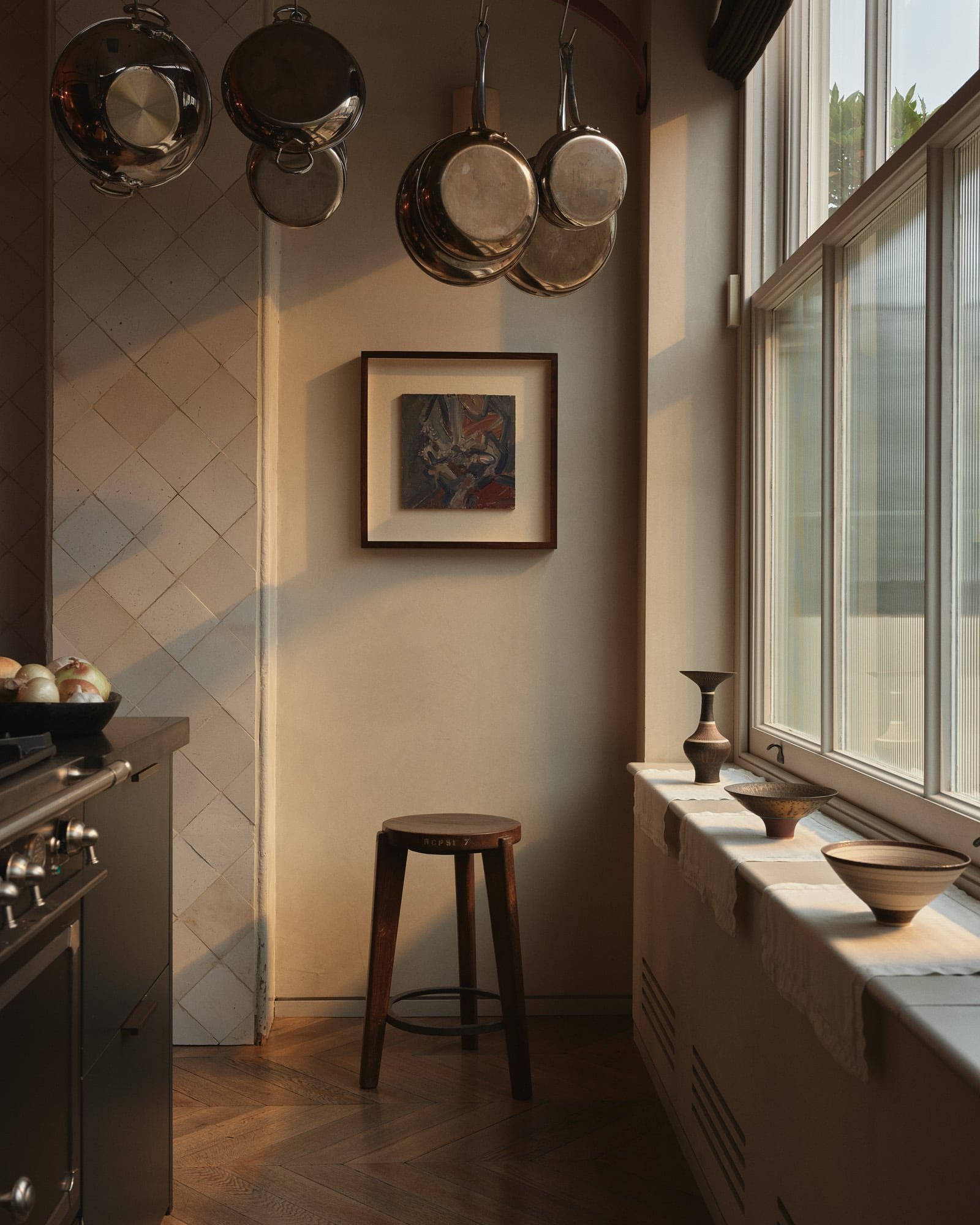
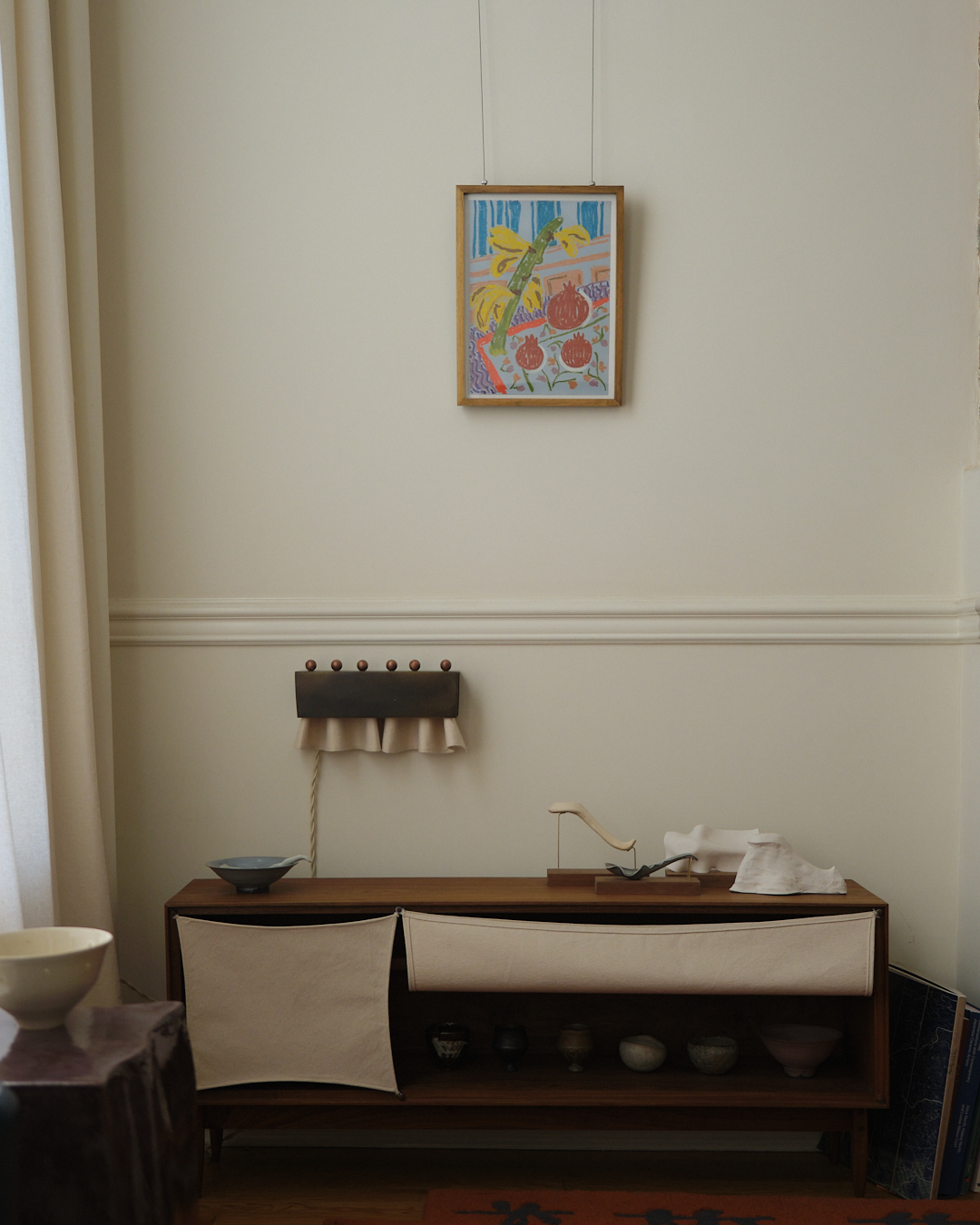
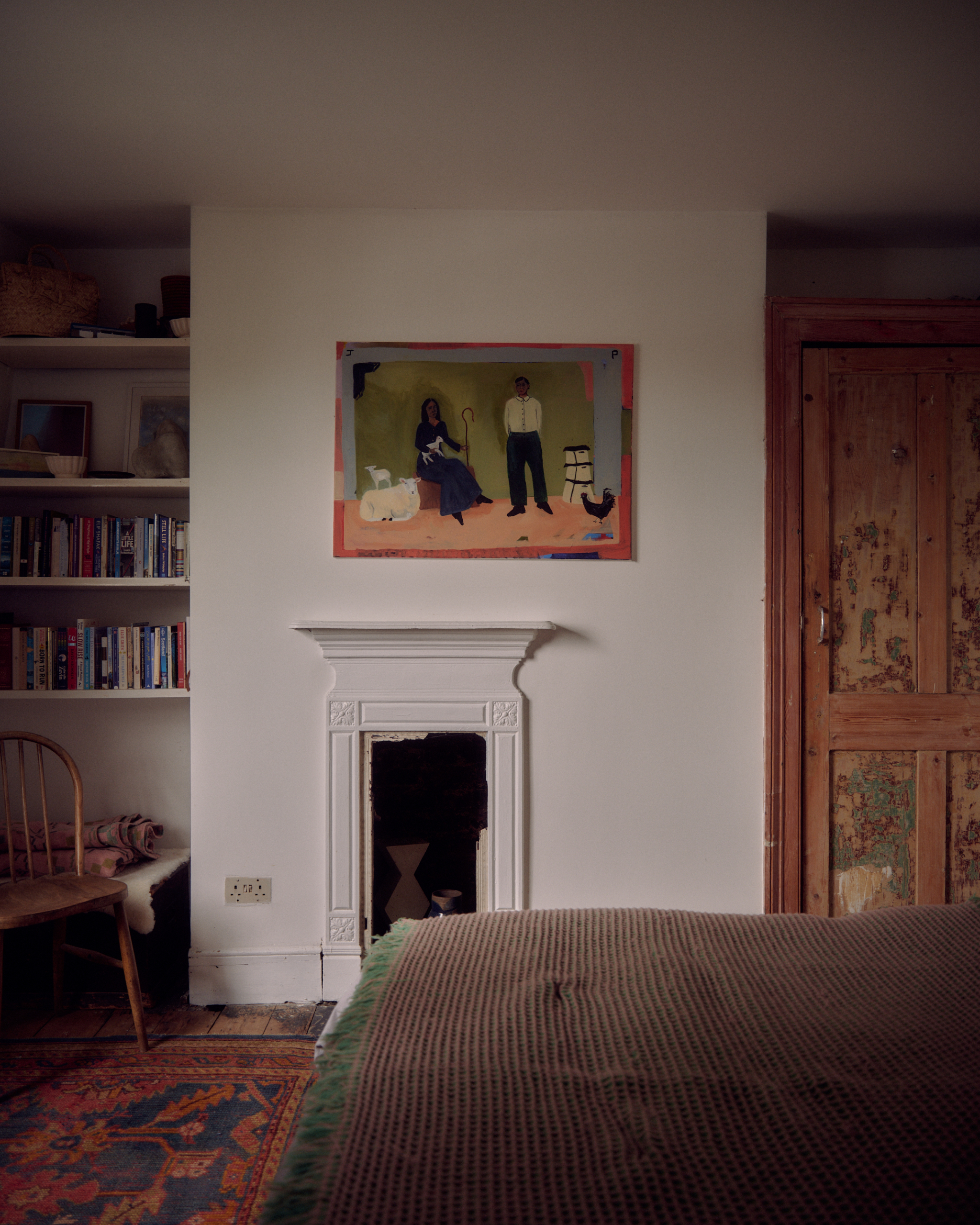
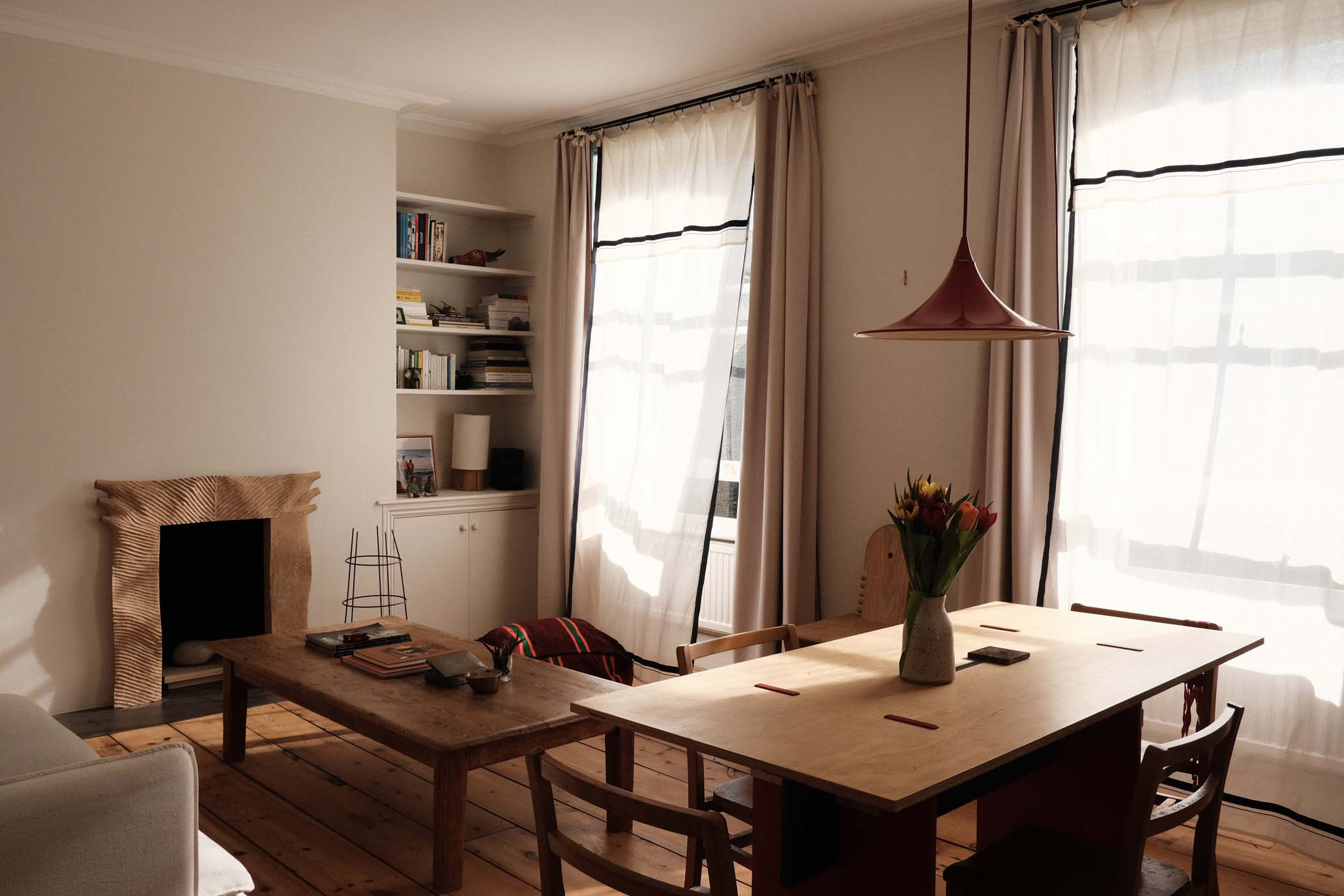
The one-bedroom flat in a Victorian townhouse in De Beauvoir, north London, has been home to Margherita and her husband, Oliviero Muzi Falconi, for one year now. “It took three months to do the works,” explains Margherita, who recently set up her own practice, Zompa Studio, after working for the likes of William Smalley and David Chipperfield. Although she wanted to keep things “quite minimal,” there was work to do to peel back the layers of less successful renovations. “There was carpet all over, lino in the kitchen, a heavy cast iron fireplace and an awkward utility cupboard that took up some of the living room,” she explains. “We wanted to bring everything back to its bones.”
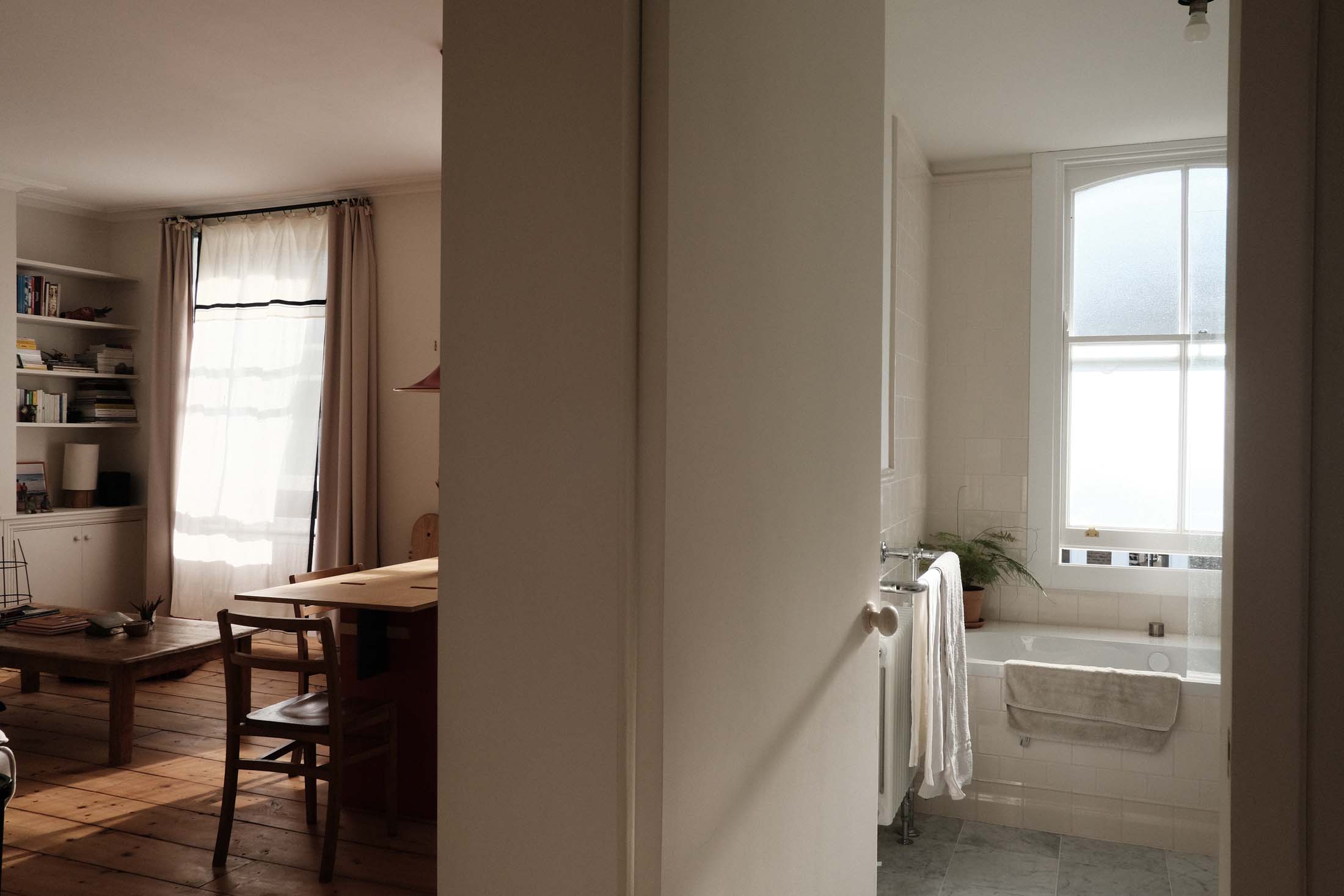
Perhaps Margherita’s most transformative interventions are the ones that seem the simplest. The entrances to the bathroom and kitchen had been positioned at 45 degrees to each other, but were recessed and straightened during the renovation, creating space for a laundry closet. Doors to the kitchen and living room were then removed entirely, so that the mirrors that conceal the laundry cupboard reflect light from the south-facing living room through to the central hallway and renovated kitchen beyond.

The space is now bathed in light, cooled by cross-ventilation in summer and flows freely – something enhanced by off-white walls and wide reclaimed pine floorboards used throughout the hallway, living room and kitchen, creating a sense of continuity. The new bathroom, meanwhile, is tiled, and the bedroom – now with enhanced storage – has been carpeted in sisal. “I think it’s the nicest feeling. It’s not the softest, but it kind of massages your feet if you walk on it. It also creates a nice difference to the rest of the house,” says Margherita.
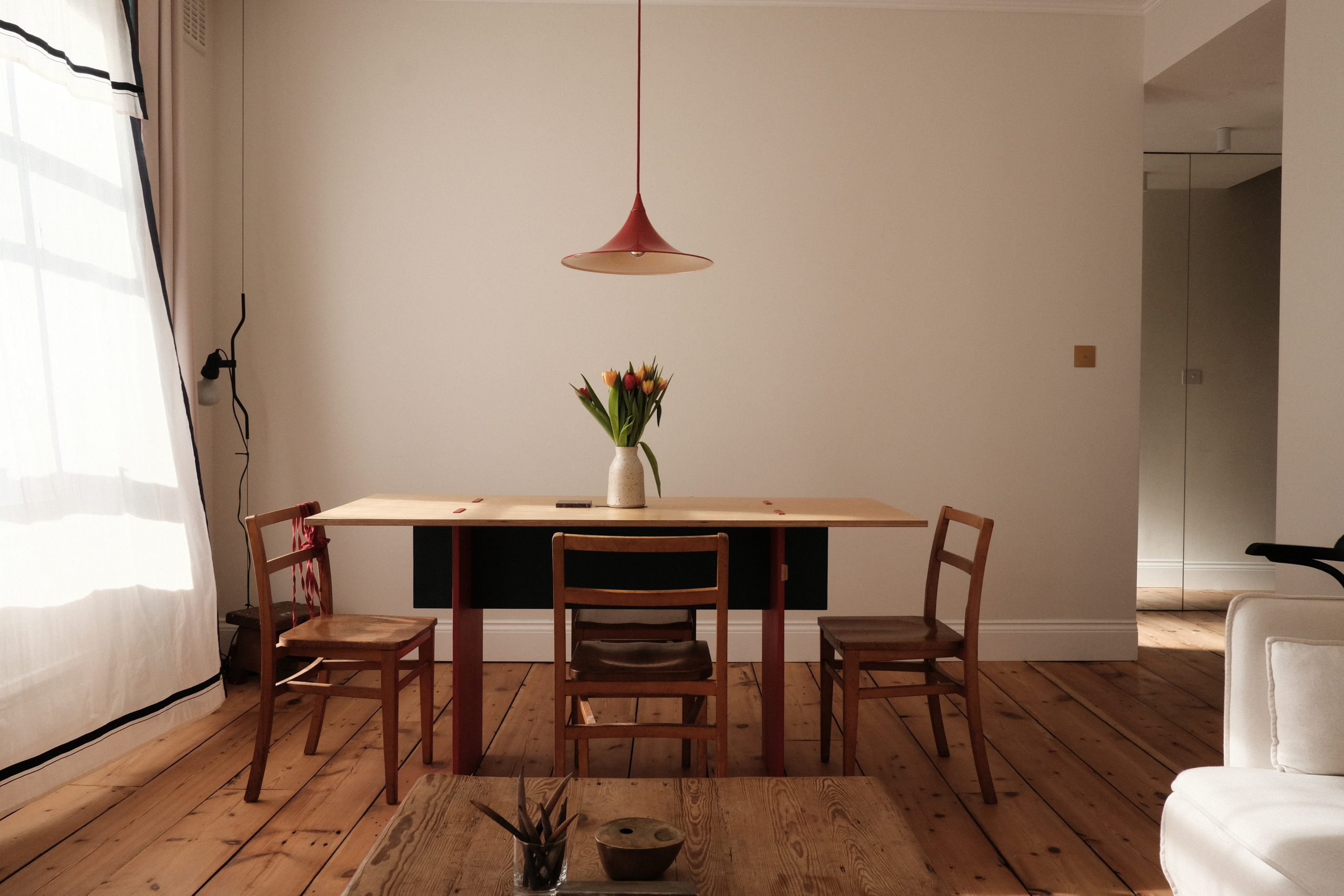
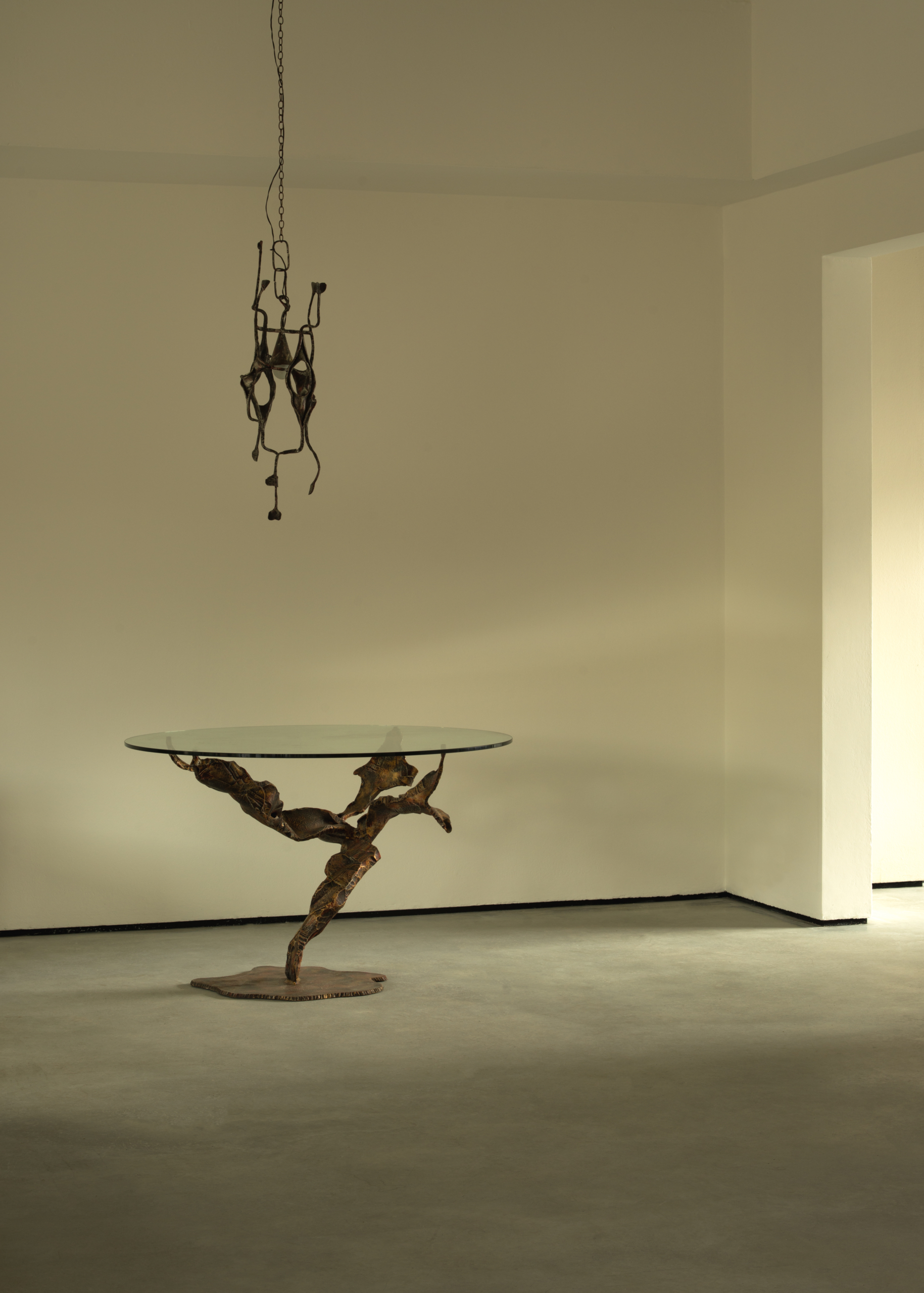
With the architectural framework in place, Margherita turned to the furnishings. Having commissioned Filippo to create a much-loved dining table for her last home (a piece that made the move here), the chance to collaborate together again was compelling. “With my work, I try to work with light and space, but I also collect old things and source reclaimed materials to incorporate into my projects,” says Margherita, who partners with skilled artisans and craftspeople in her architectural commissions. “I tend to like raw materials too, and that’s something Filippo and I share.”
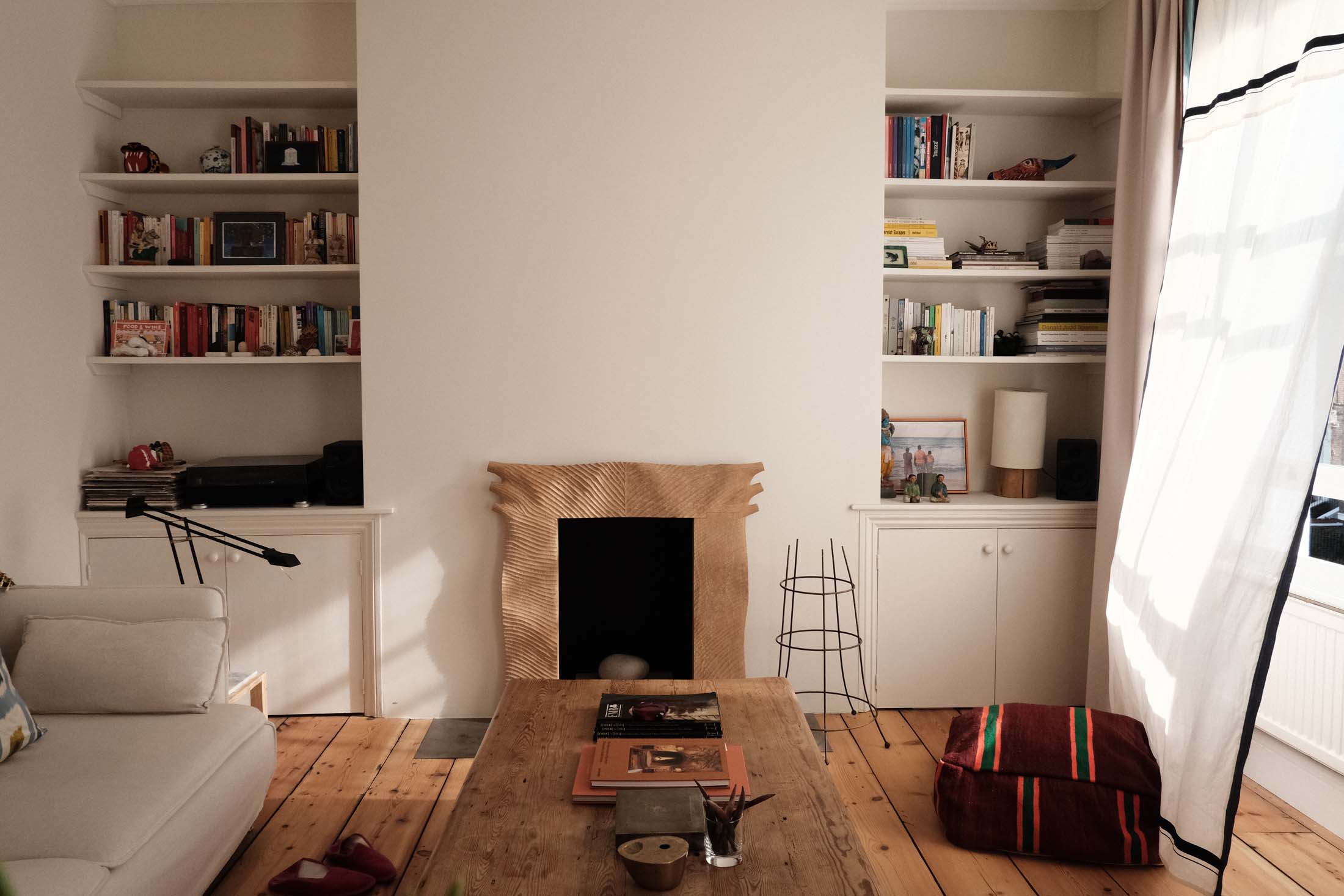
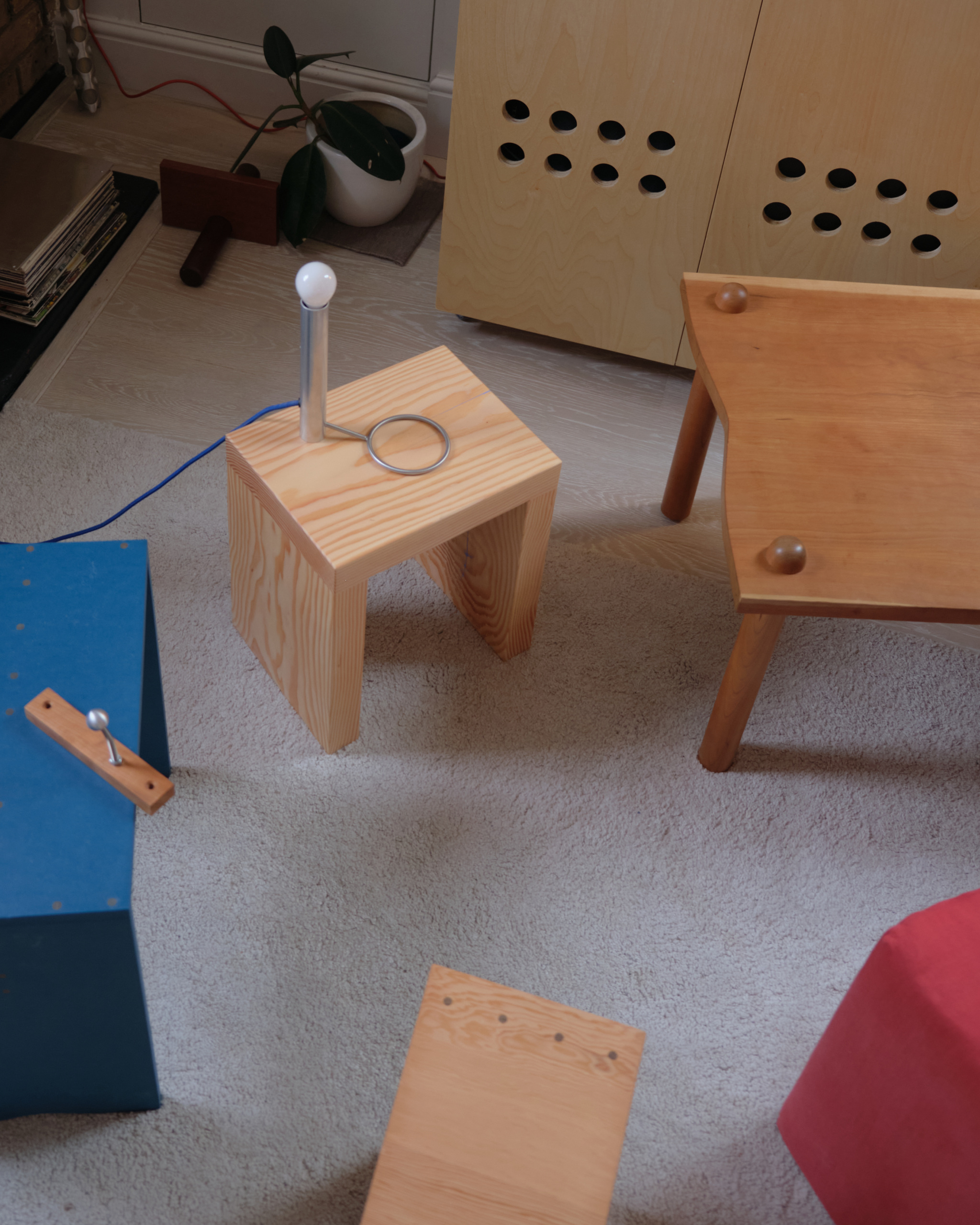
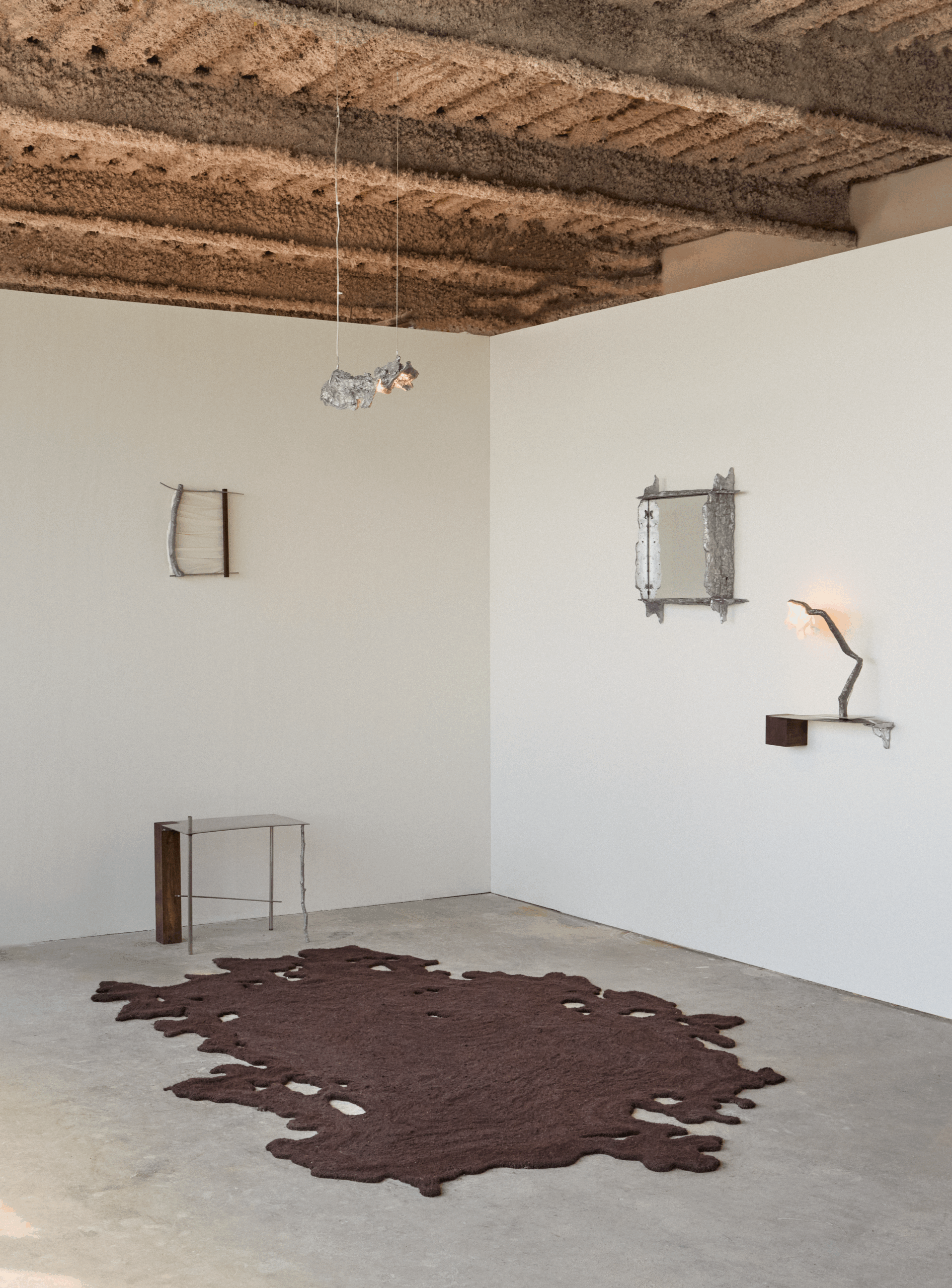
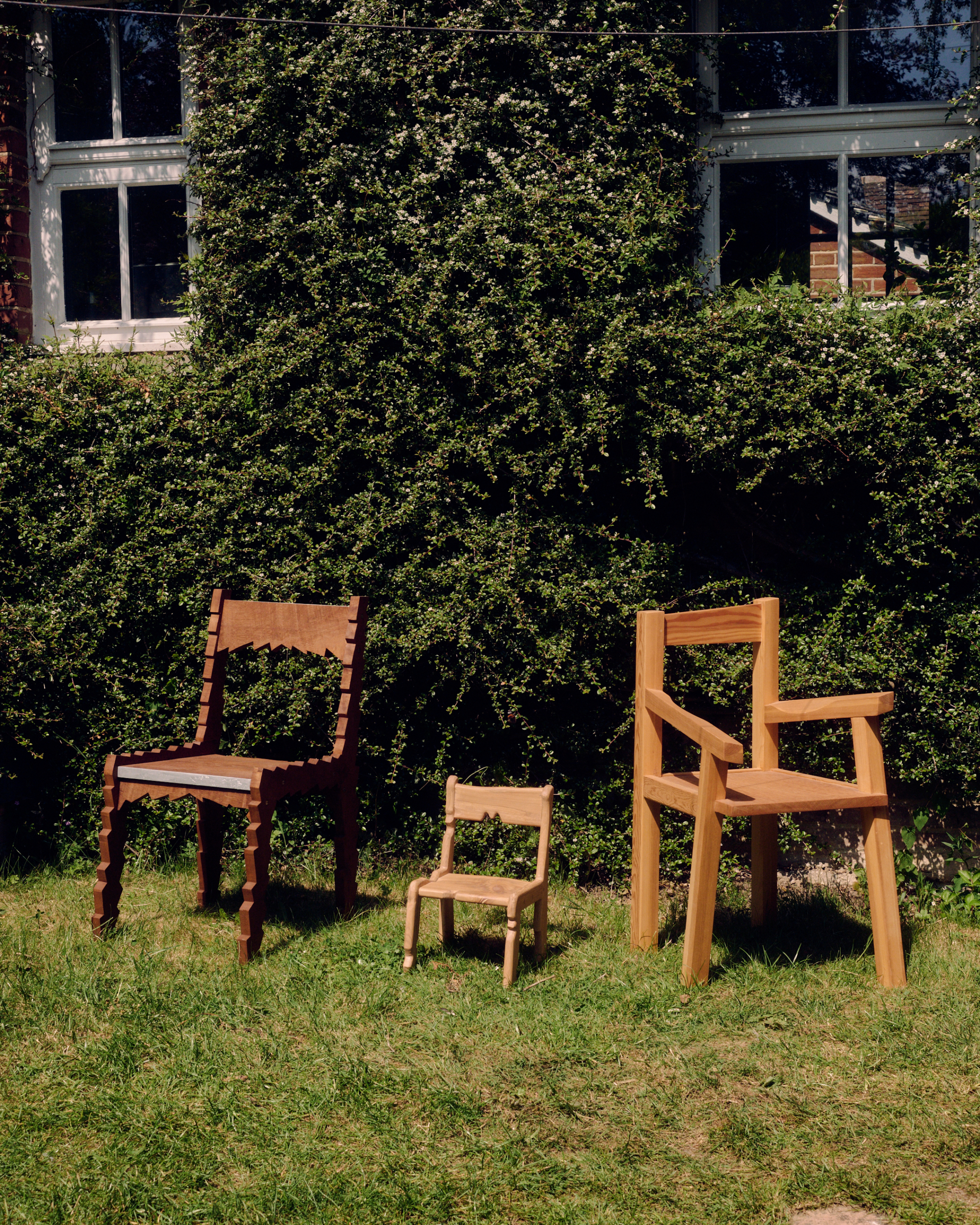
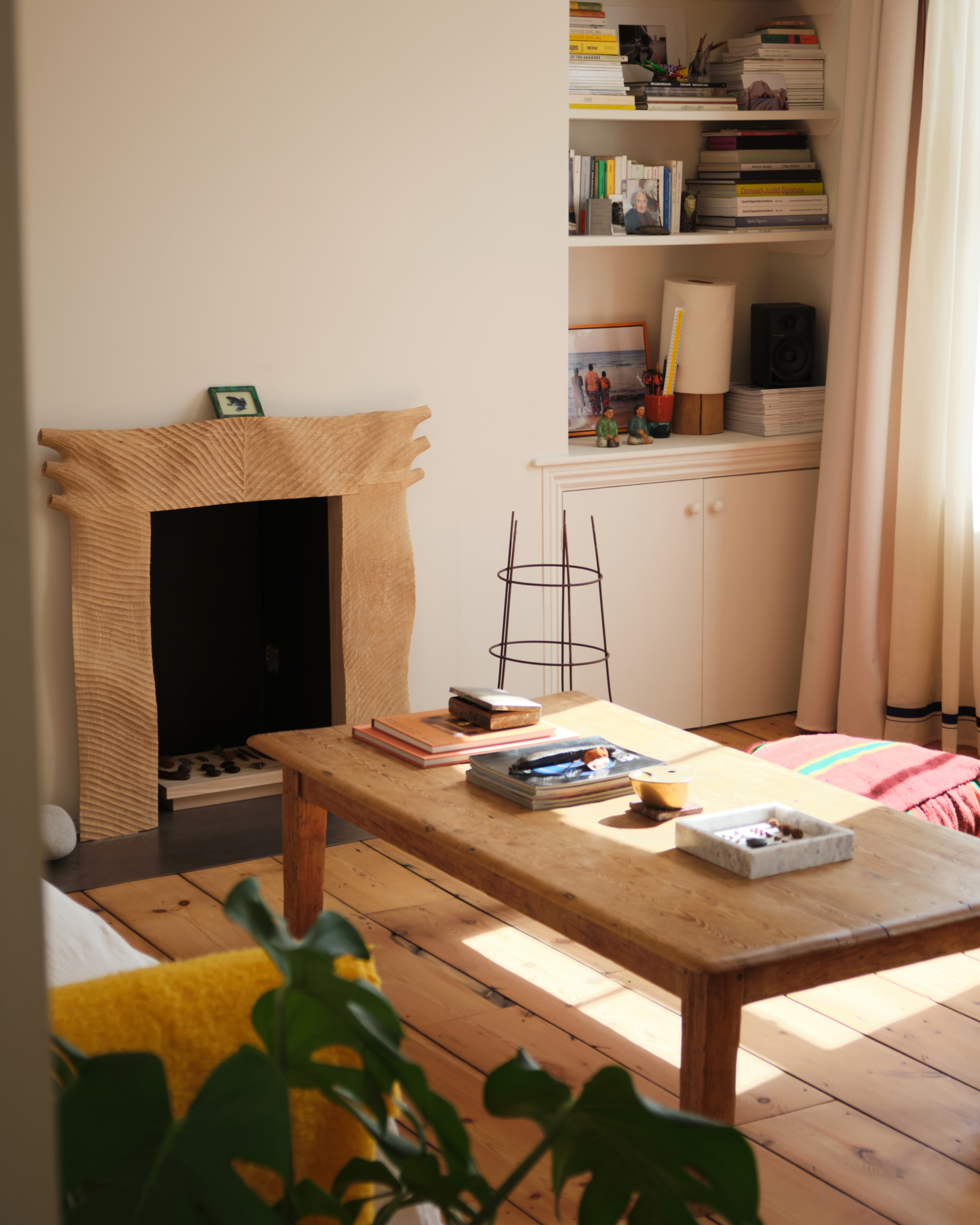
The collaboration came to life through three pieces: a sculptural fireplace surround, a monumental chair and an artwork for the wall, all found in the living room. “They have similar things in common,” explains Filippo. “Their organic shapes are inspired by archaic artefacts. The backrest for the chair, for example, stems from a figure of Janus, a two-faced Roman god.” The starting point for the fireplace, meanwhile, was Margherita’s collection of seeds and stones. “We were talking a lot about fertility, and I had an idea that the fireplace surround would feel like it had a life of its own. The form is inspired by the movement of waves and the pipes that come from the sides give it a sense of anthropomorphism,” explains Filippo, who also made a small wooden altar to sit in the now-closed up fireplace to showcase Margherita’s collection. “It becomes something else, like a portal to another world,” she explains.
As it turns out, the dining table that Filippo made for Margherita and Olviero’s last place, with its structural elements stained red and blue, perfectly matches the curtains Margherita had made from some saris she found in India. “It was completely by chance,” she says, explaining that the colours on the fabric are subtle, something she likes. Other textiles, like a white linen sheet found in Rome, now draped over the sofa, are more muted still, allowing more concentrated moments of colour to pop: a volcanic red Semi pendant lamp over the dining table and a carpeted floor cushion picked up in the Atlas mountains, which is “part of a wider collection of found objects that have caught my eye over the years, each from a different place and moment in time,” she explains.
Margherita’s previous experience of collaborating with family was with her father, who is also a designer. “It’s very difficult working with family, especially when it’s something based on aesthetics and design,” she reflects about that process. Here, though, collaborating with Filippo has been only rewarding and satisfying. The ultimate proof? The two still want to hang out now that the work is complete. “Filippo lives just five minutes away and also works from home a lot, so he often comes here to be my work buddy,” says Margherita. A happy outcome indeed.