The Home That Thomas Wheller Is Making
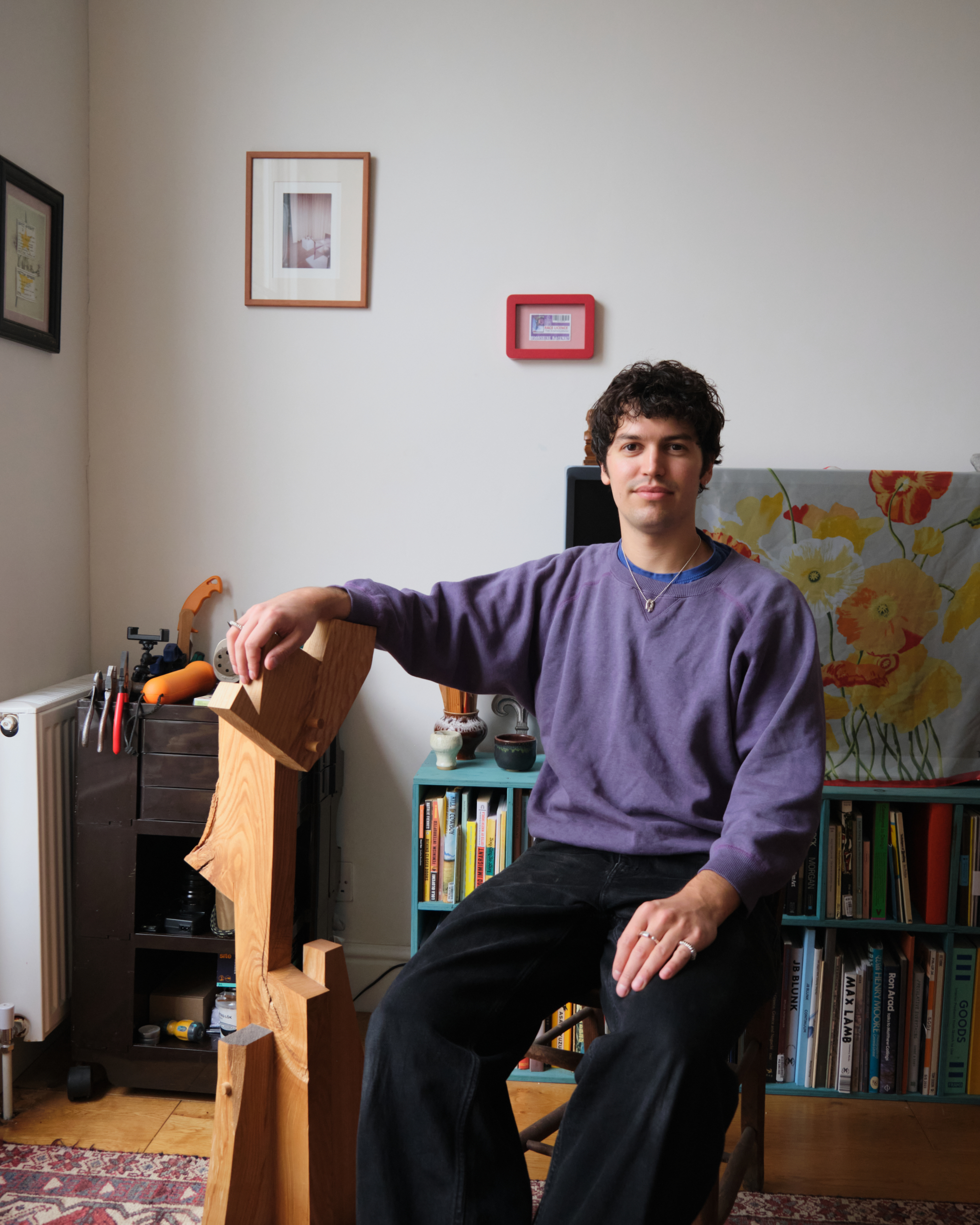
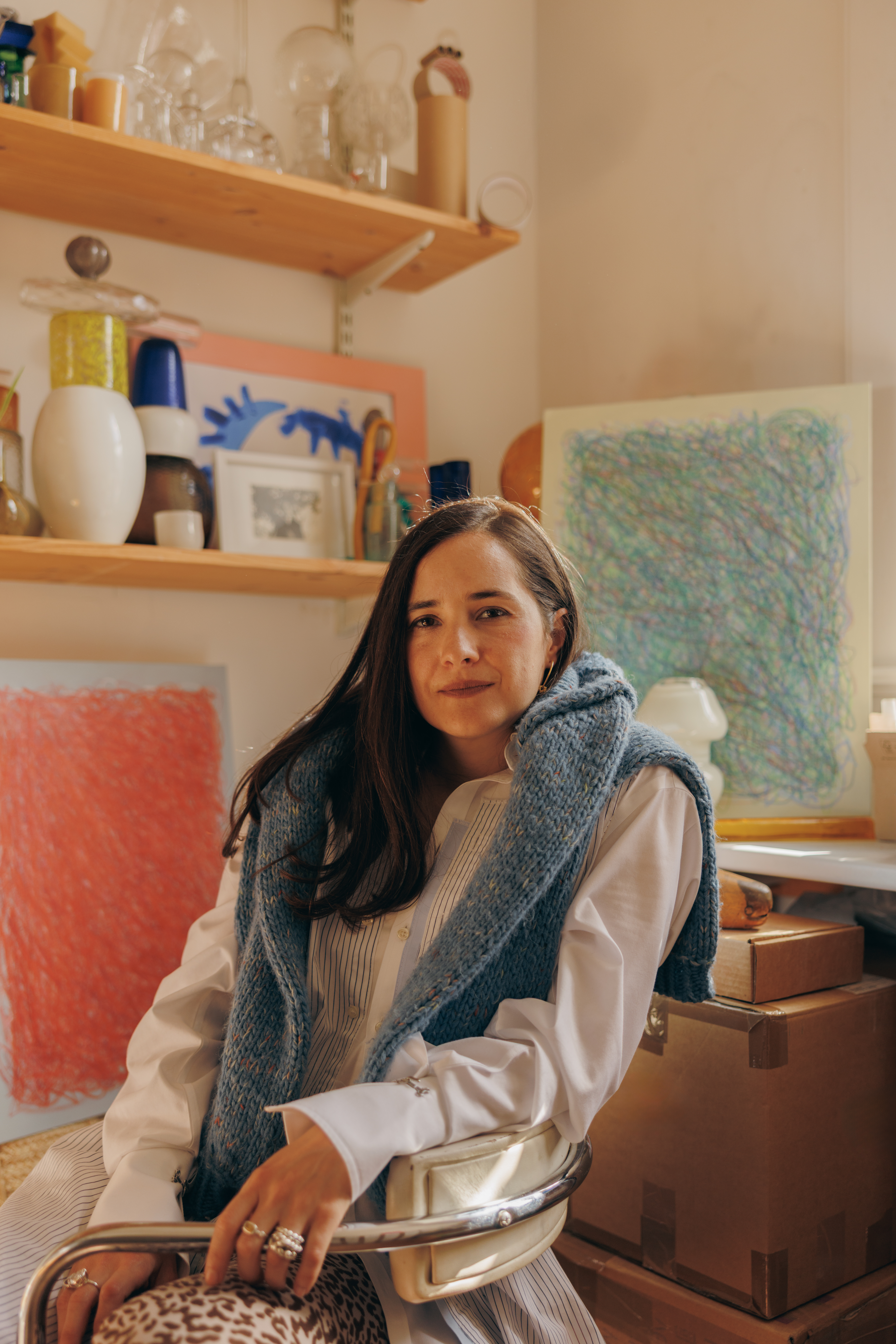
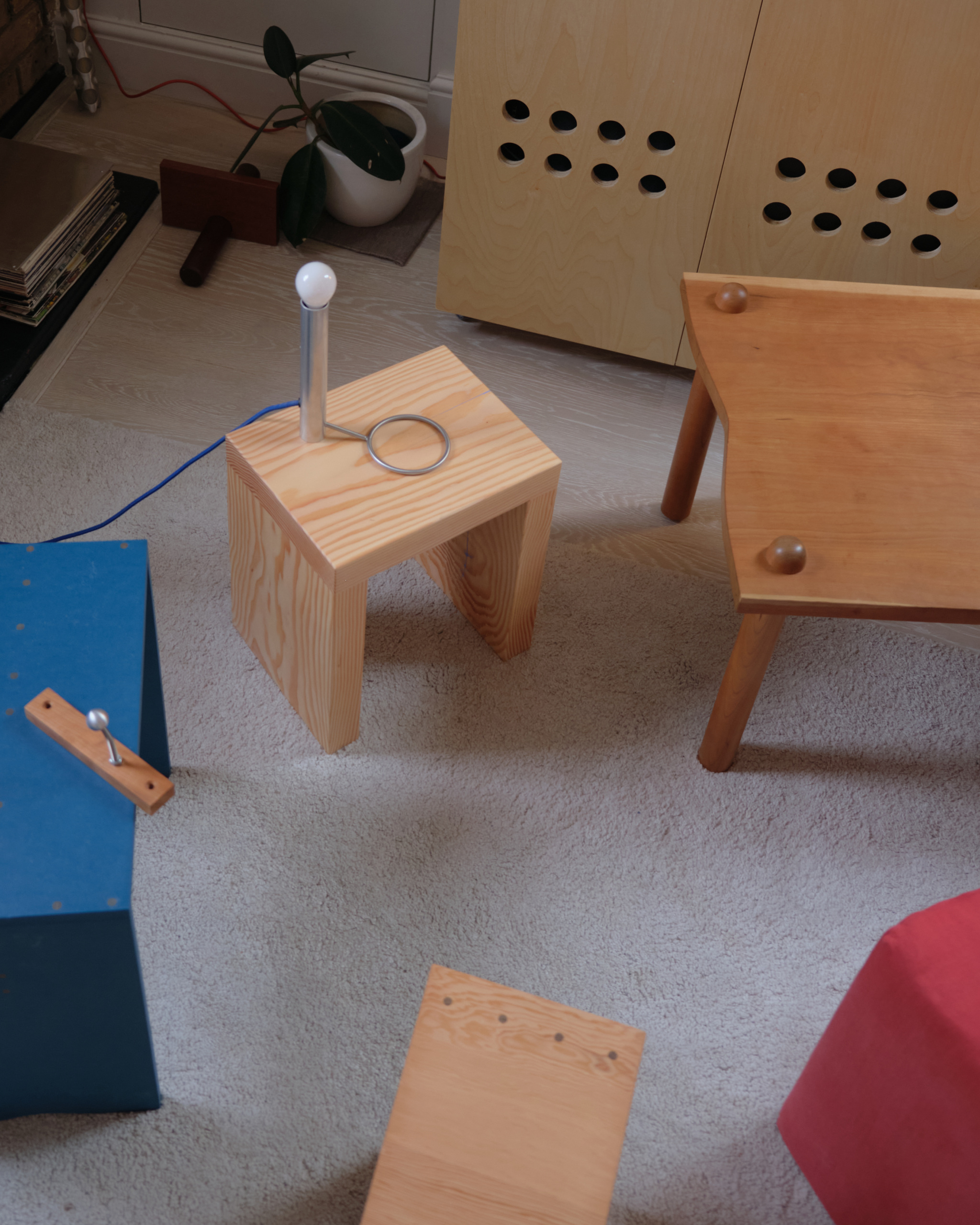
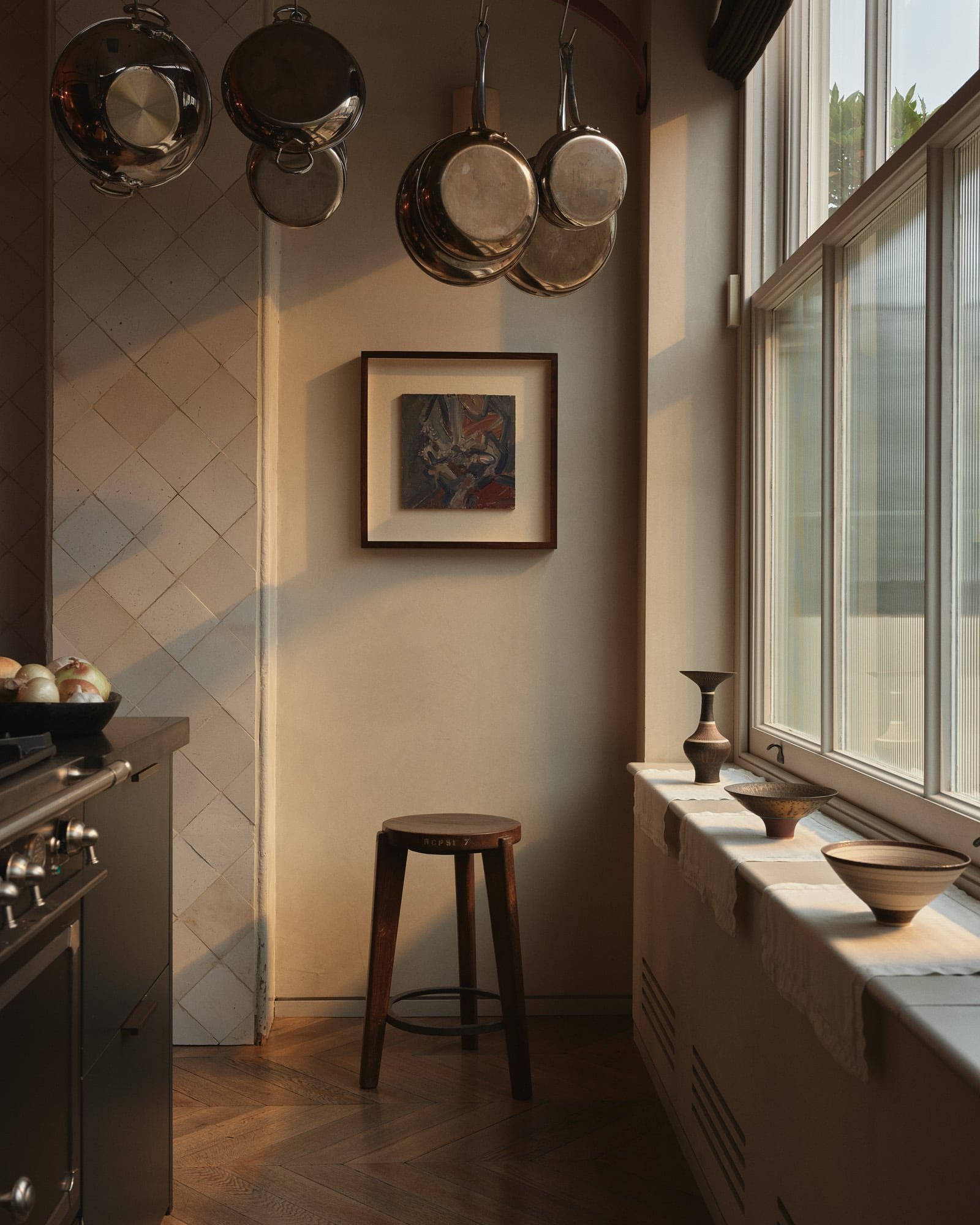
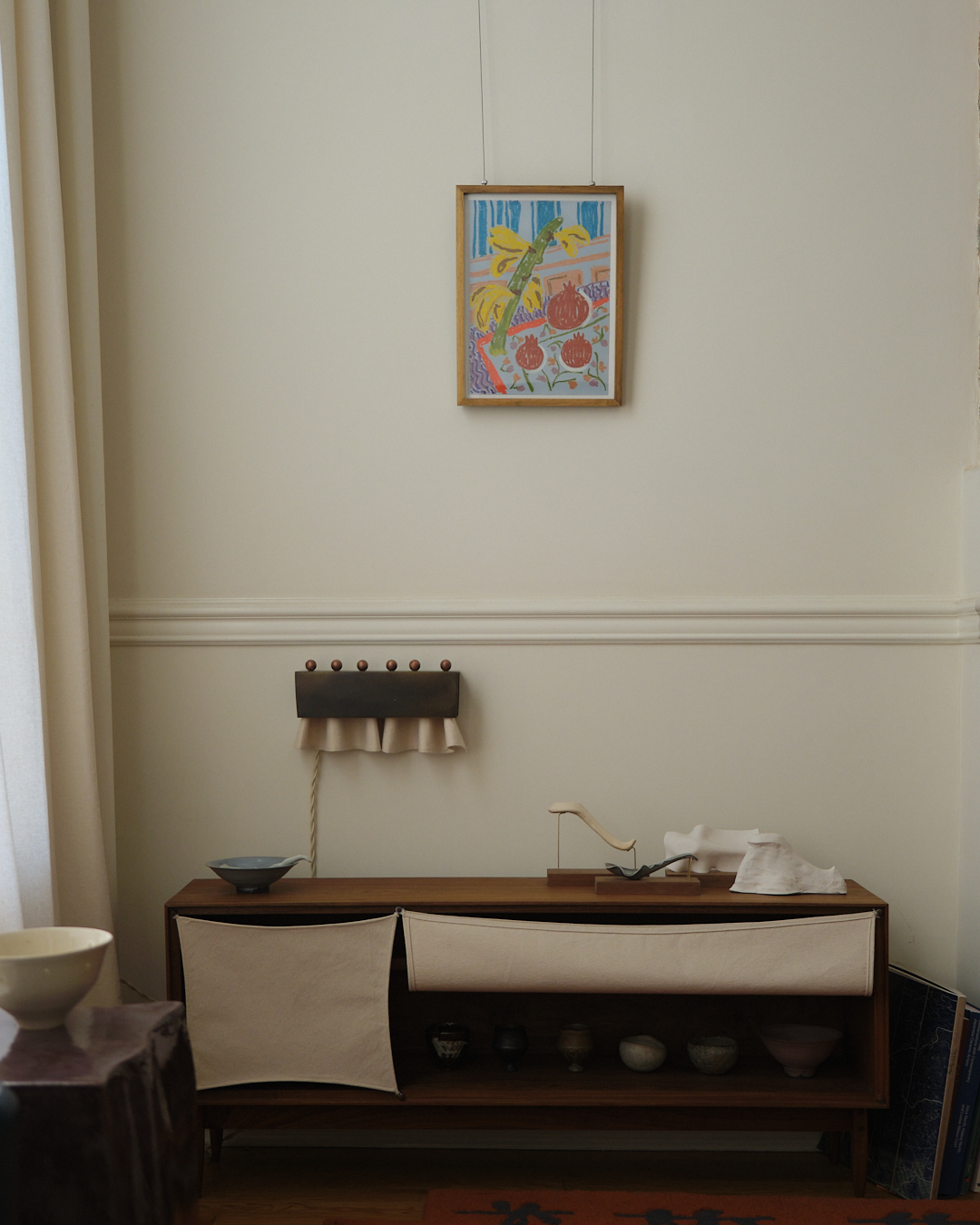
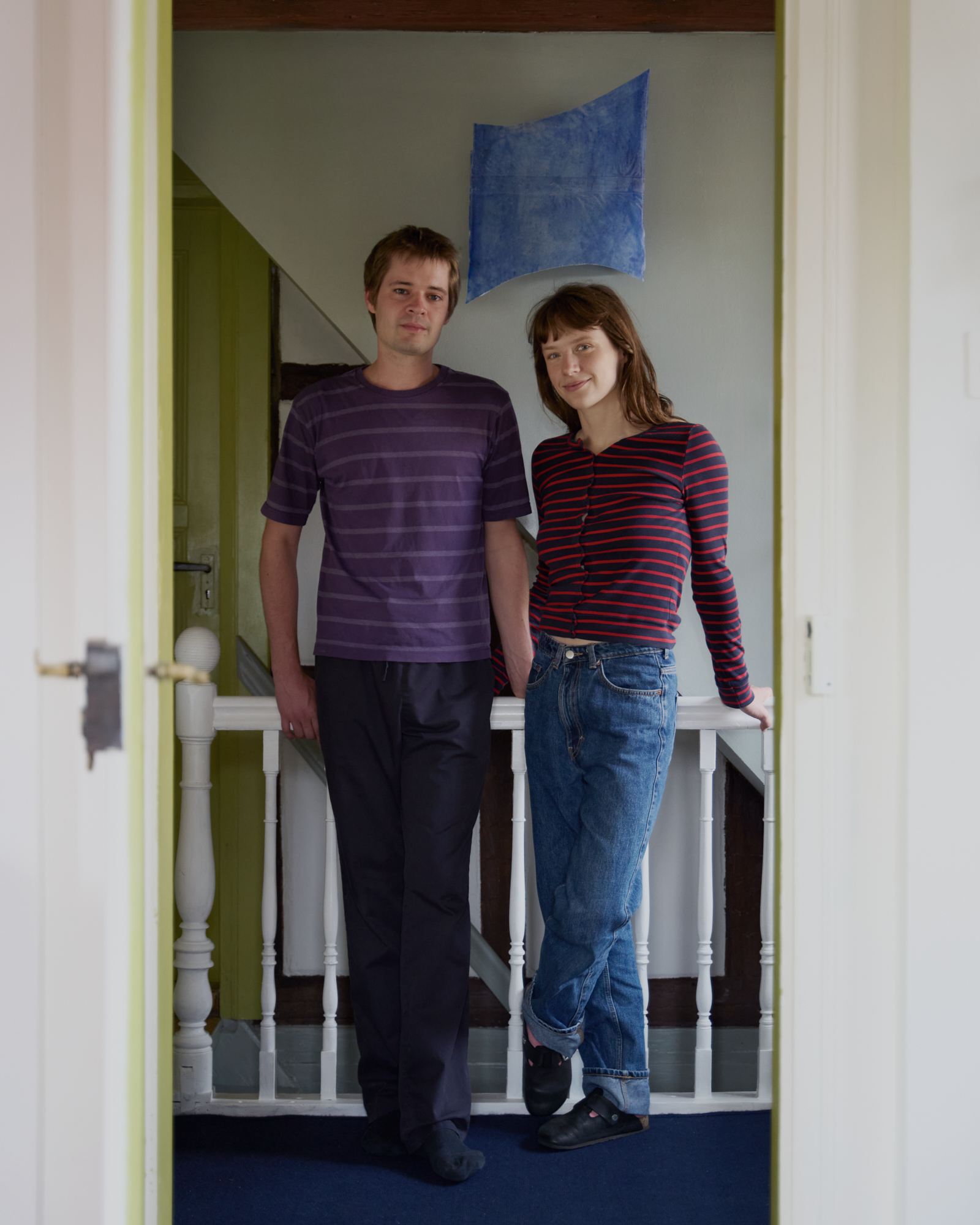
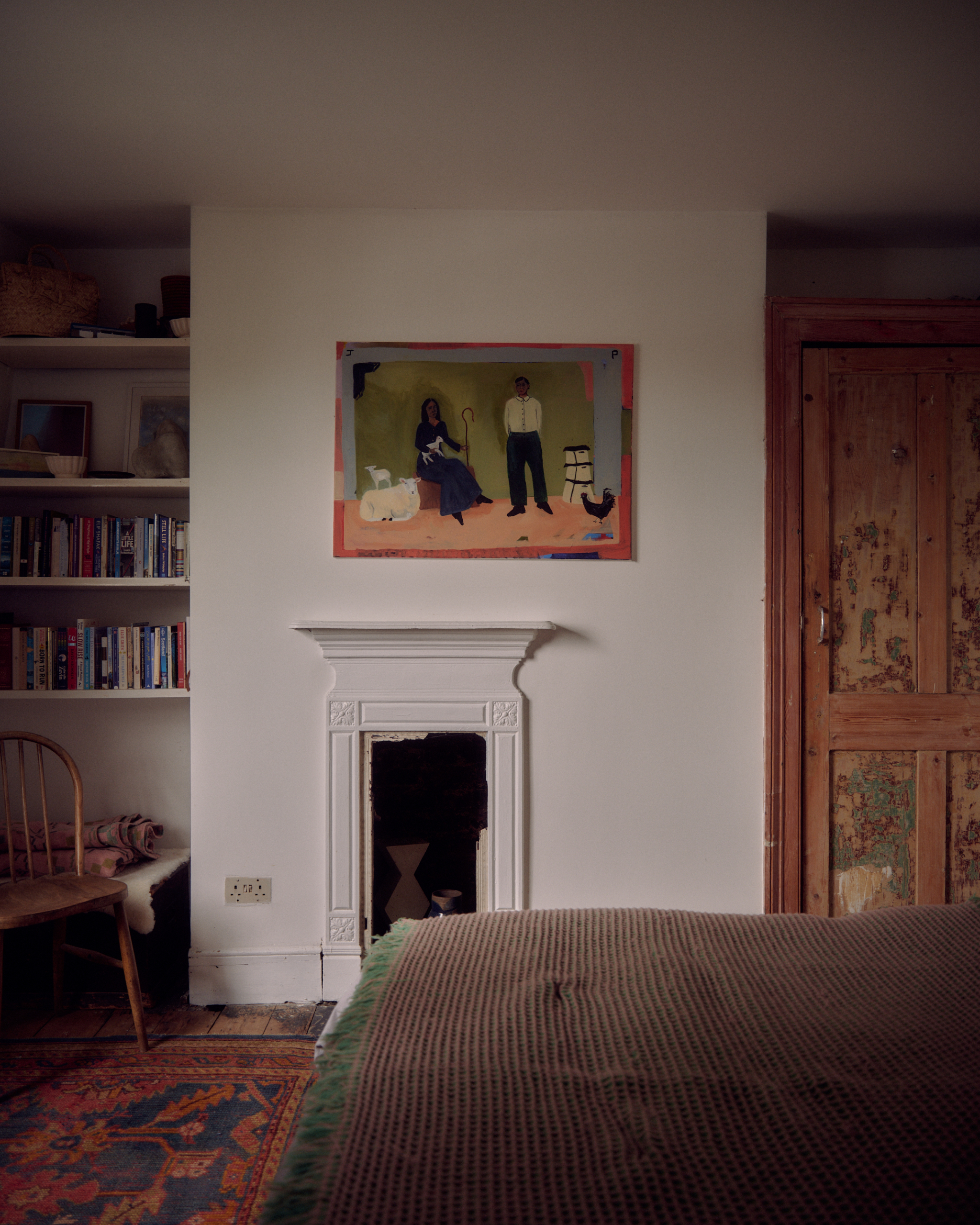
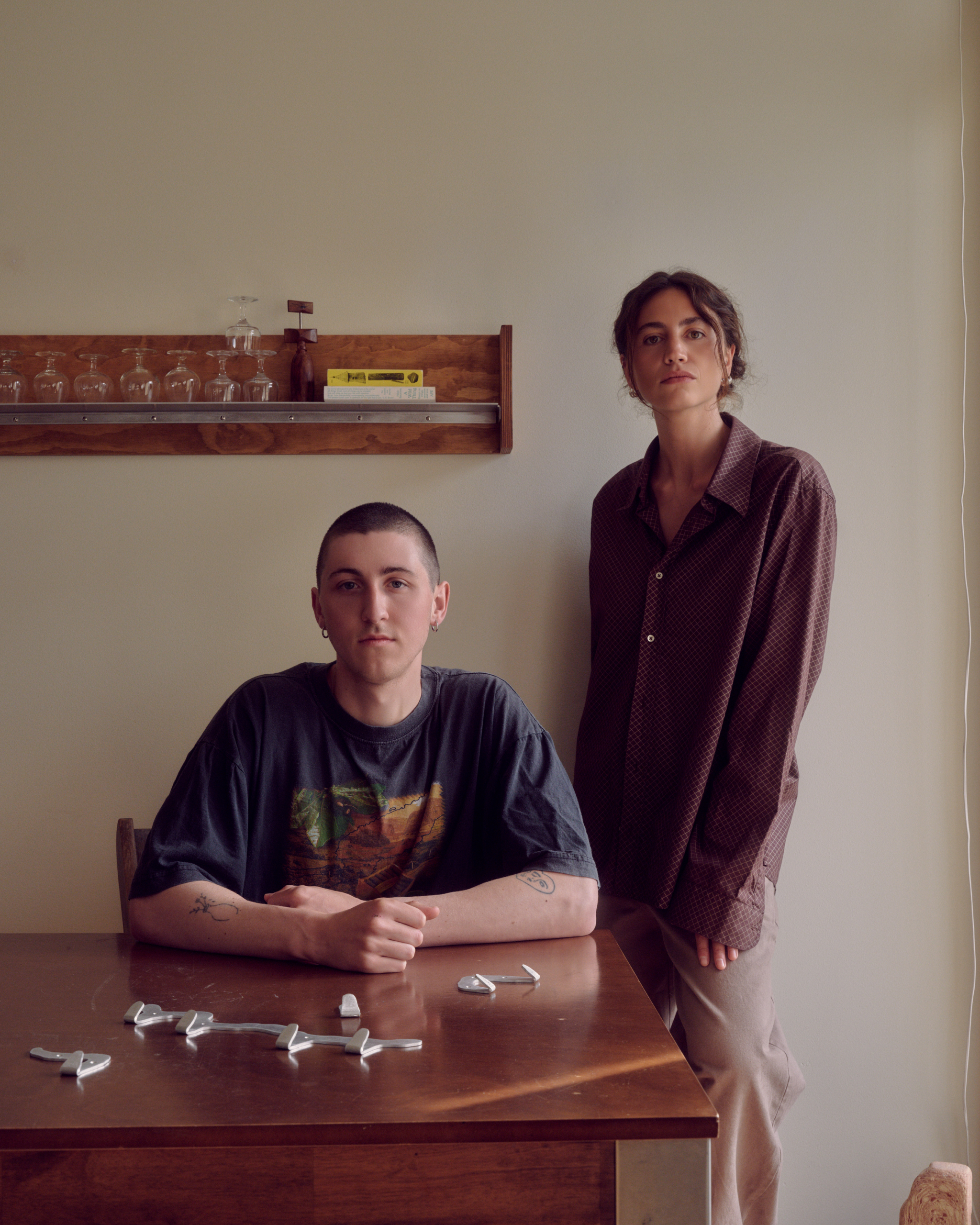
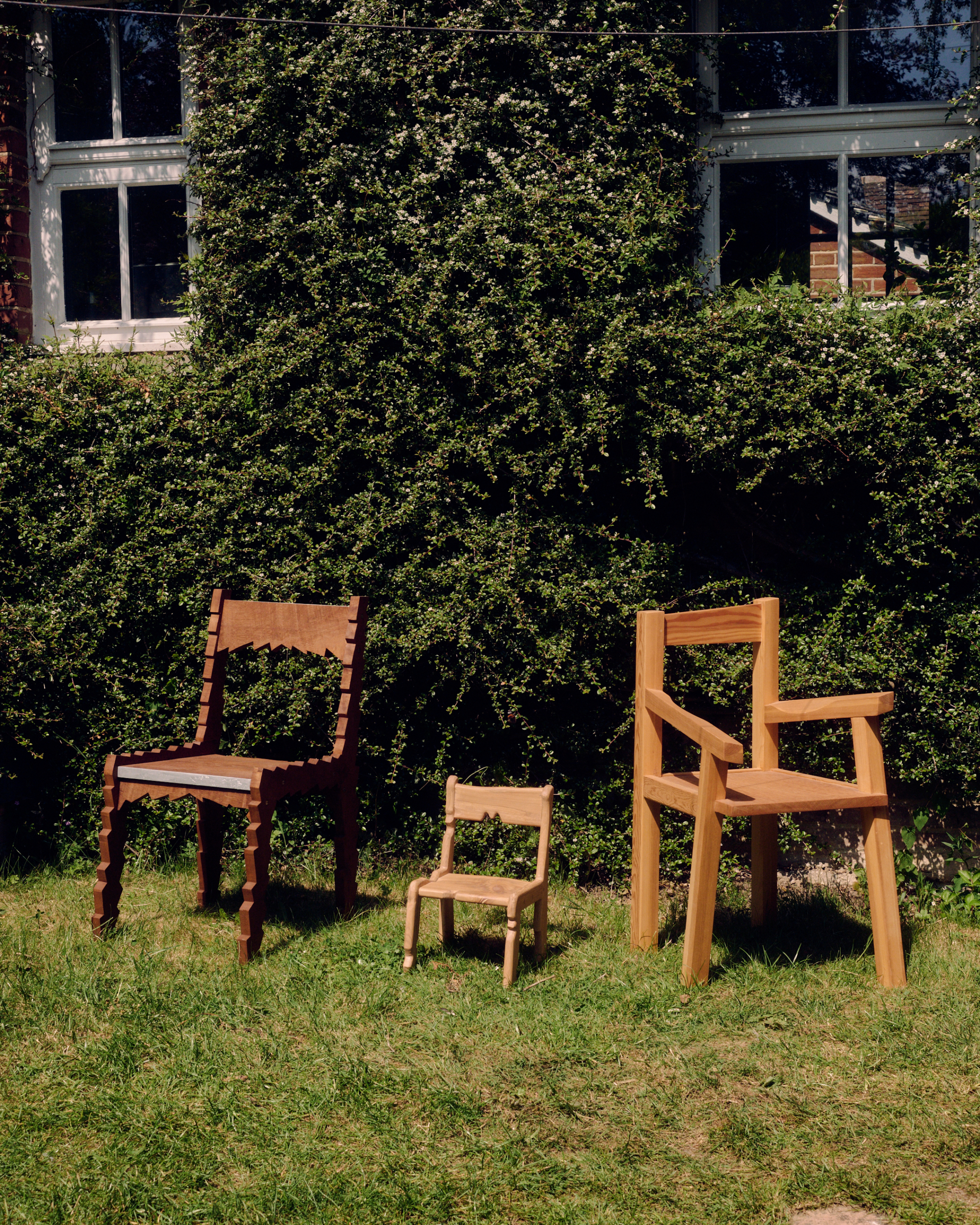

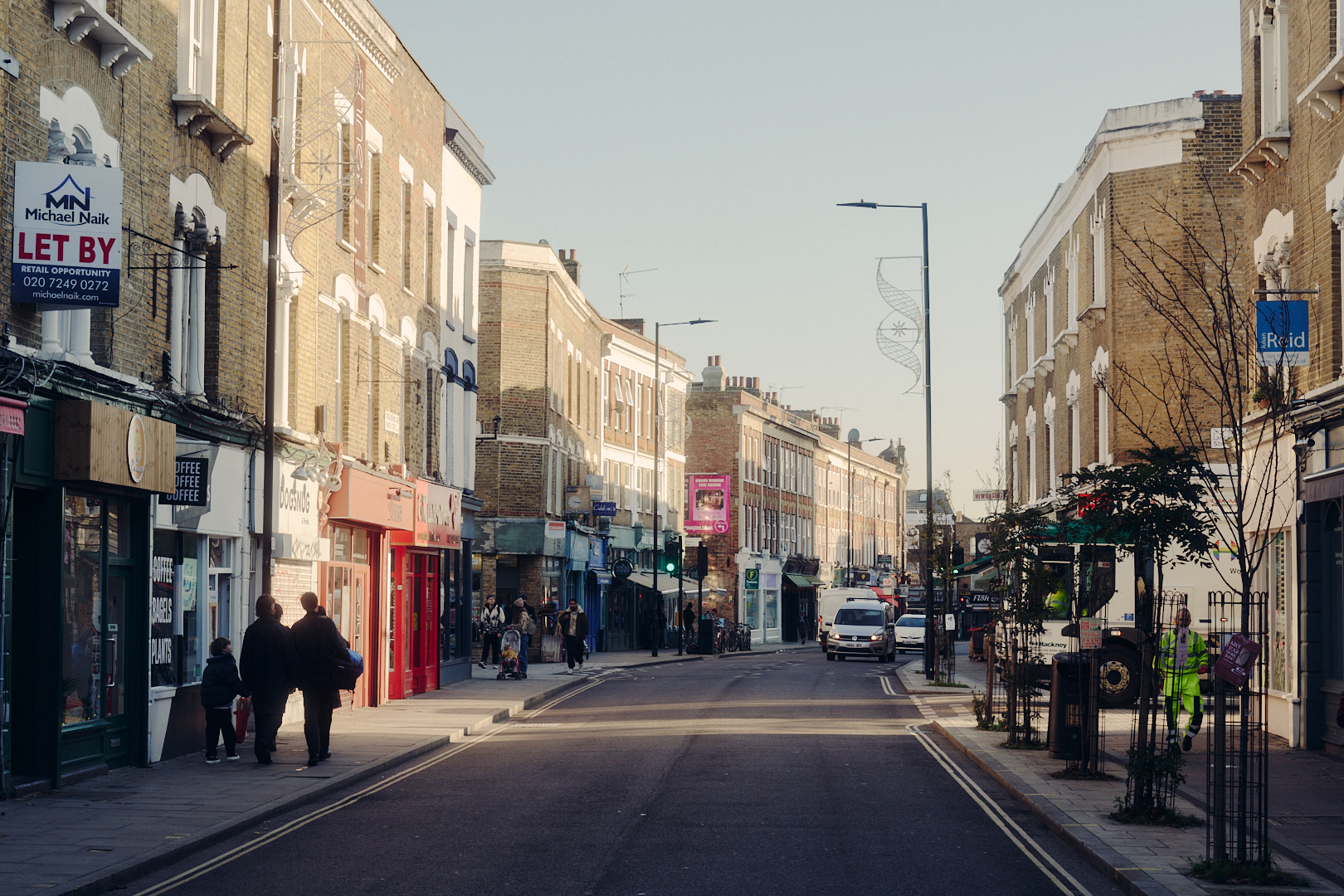
When most of us say we’d like to build our own house one day, we use ‘build’ in a non-literal way that implies a heavy – if not total – amount of outsourcing. What designer Thomas Wheller means when he says he wants to build his own house is quite literal, and extends far beyond the walls themselves: the structure, the furniture, the pottery, even the clothes inside it. “I just want to make everything,” he says, standing in the kitchen of his current home. Despite being his first rental – shared with his partner for just two years – the flat in Peckham, south-east London, already clearly conveys that intent, full as it is of furniture, objects and designs that reflect his interest in growing as a maker.
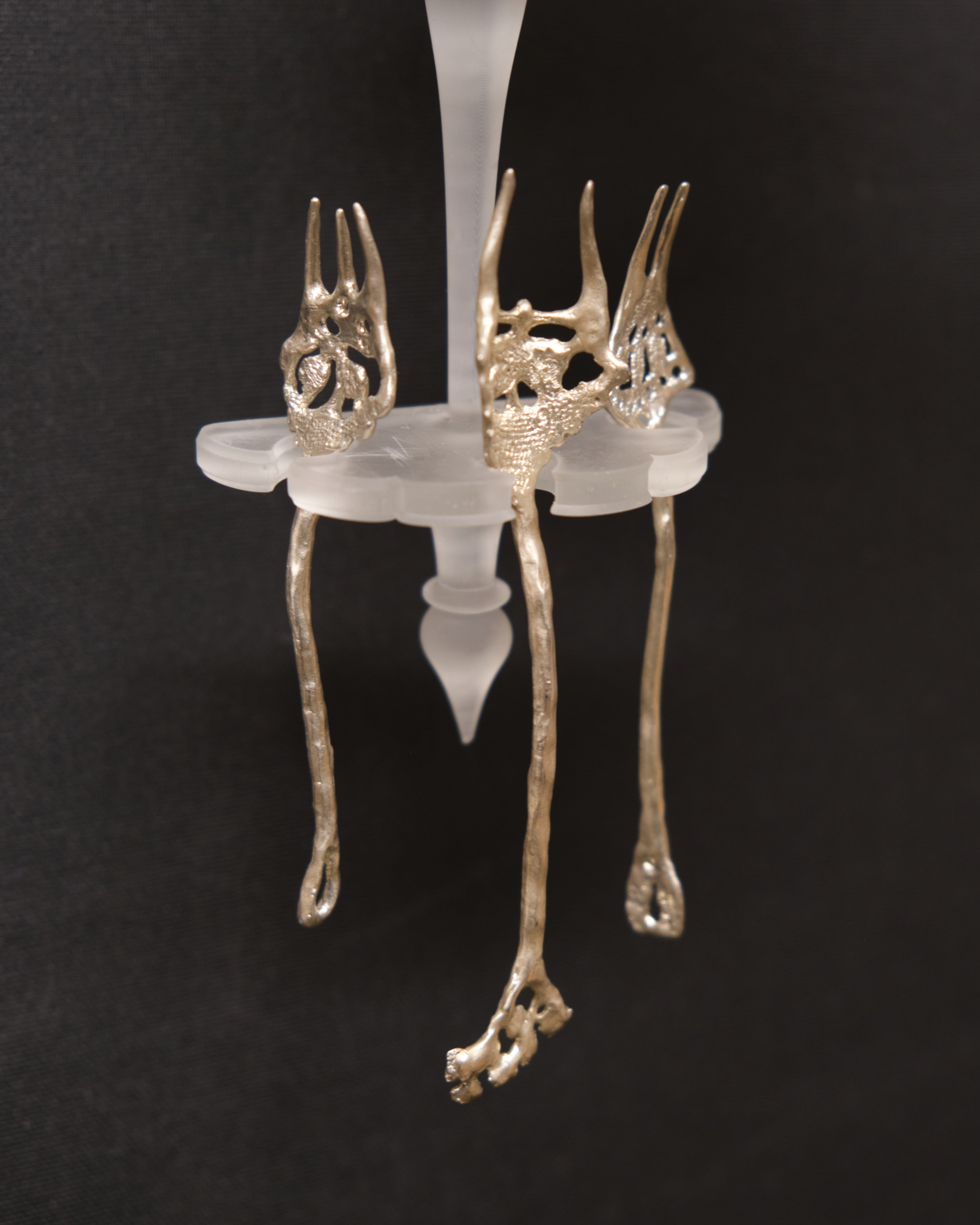
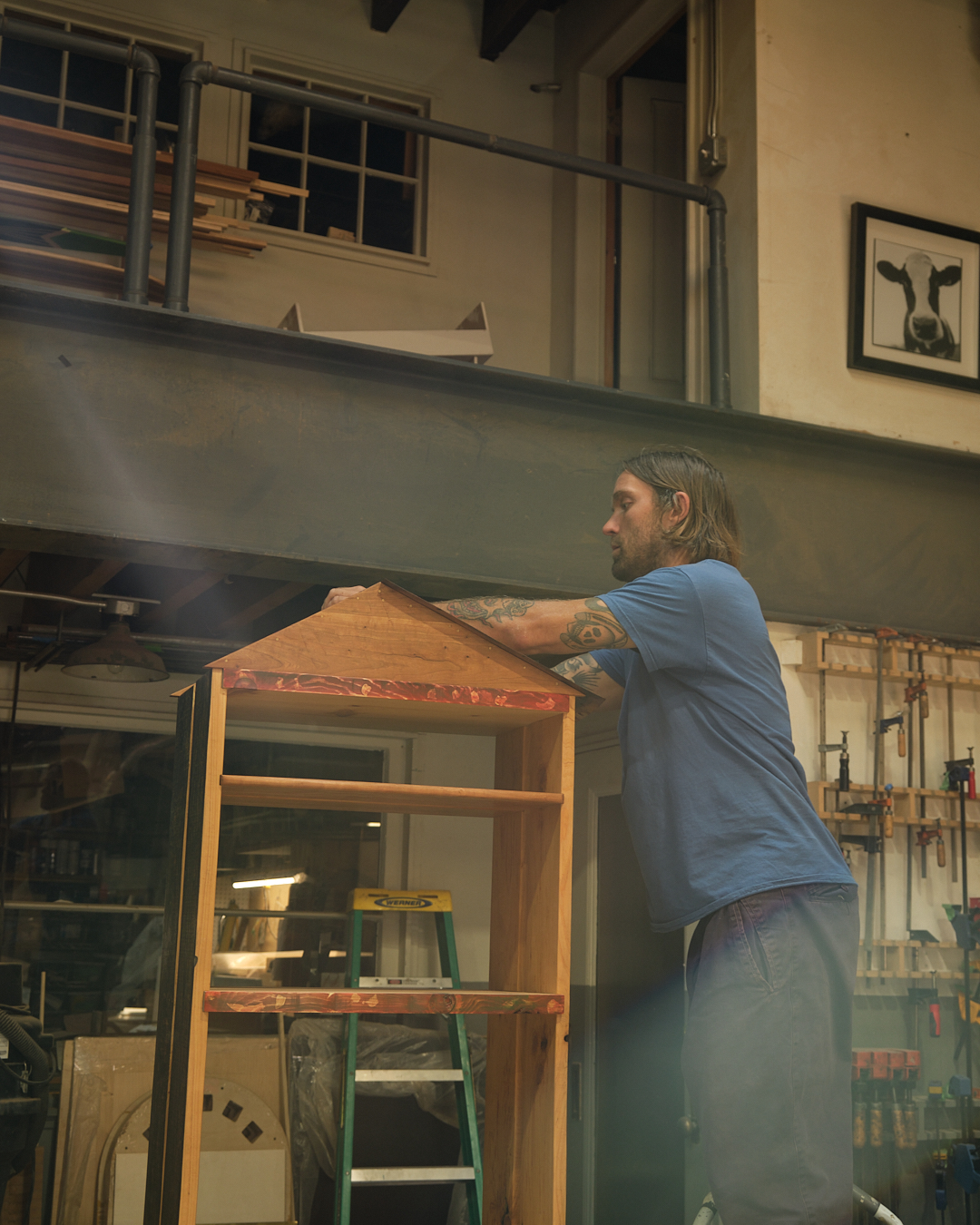
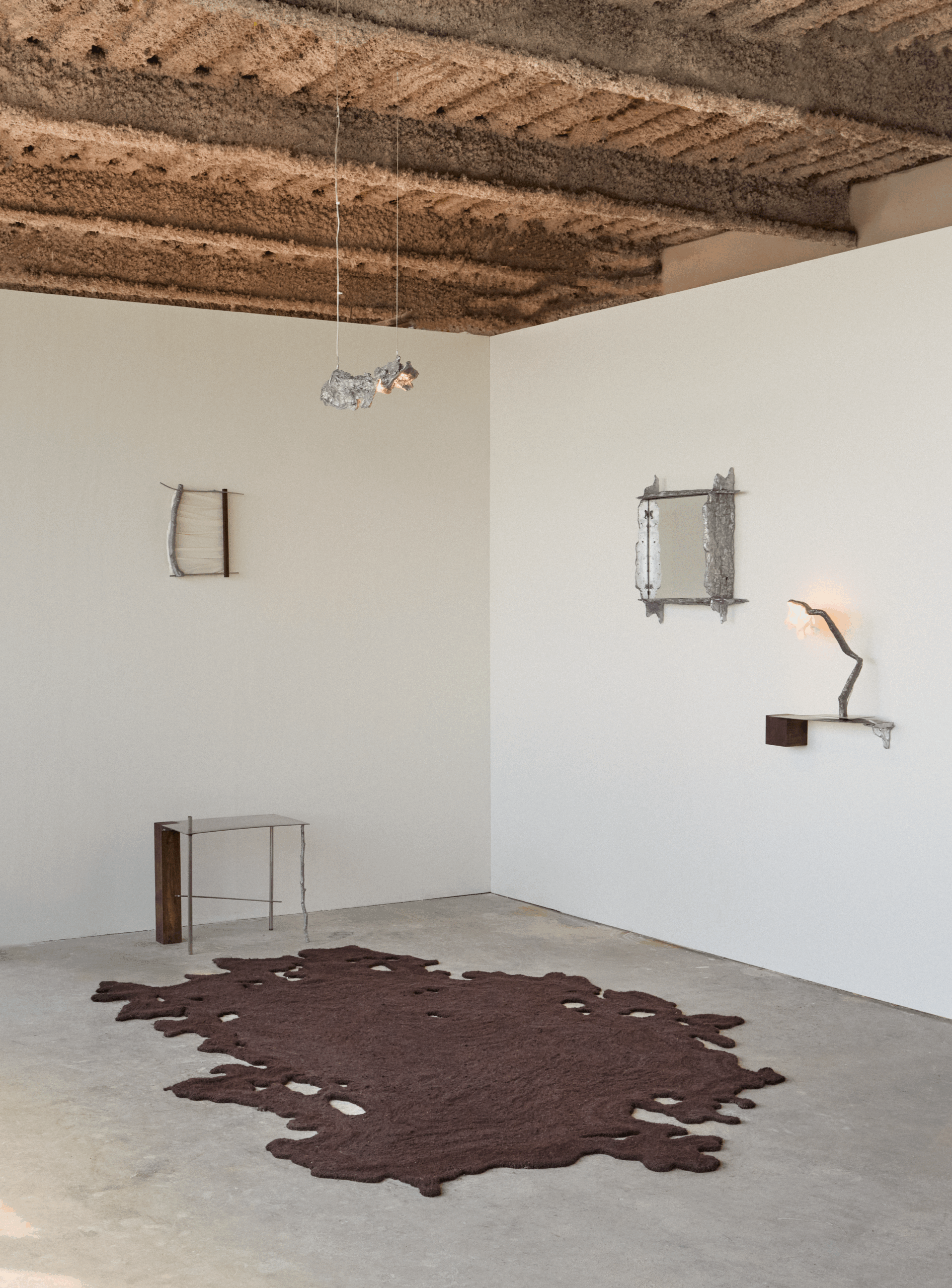
As with his home, Thomas’s personal work of furniture, jewellery, and objects – that sit somewhere between utility and sculpture – grows from a desire to sharpen his skills and test his ideas. After graduating in industrial design in 2019, he stepped away from the rigour and technical specificity of his education and towards a looser, more intuitive way of working. Now, he is able to carve wood, bend and cast metal and free-form ceramics with few constraints beyond deciding which processes he wants to refine, the ideas he’s curious about, or, at times, the simple impulse to make something new.
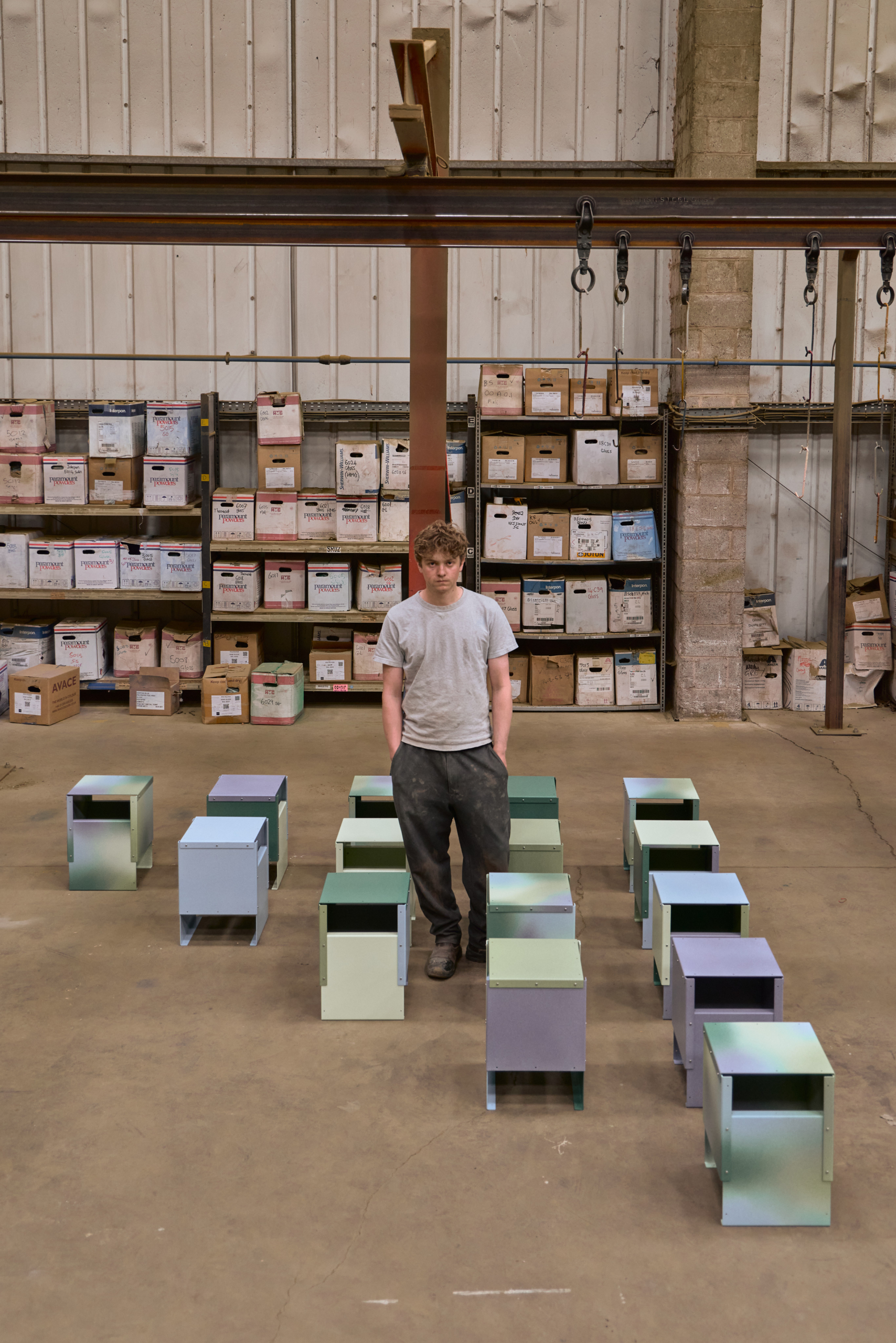
After a few years of ‘having fun and doing things for myself,’ as he puts it, that instinct-led approach seems to be paying off. When we visit Thomas at home, he has just completed his largest commission to date: a set of 12 modular desks for a branding agency in Shoreditch. Read on to discover more about Thomas’s life, work, and the ever-evolving home that serves as the stage for both…
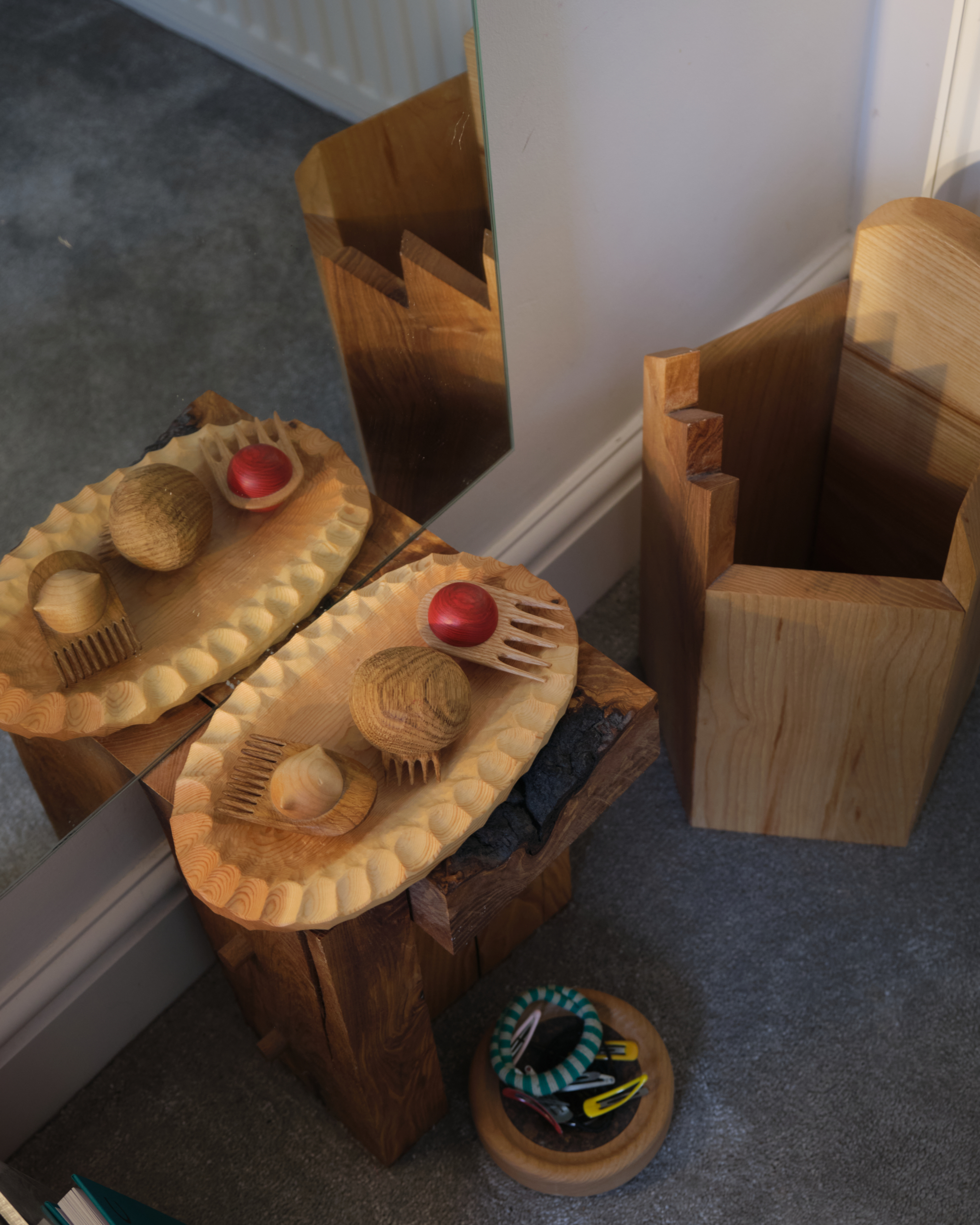
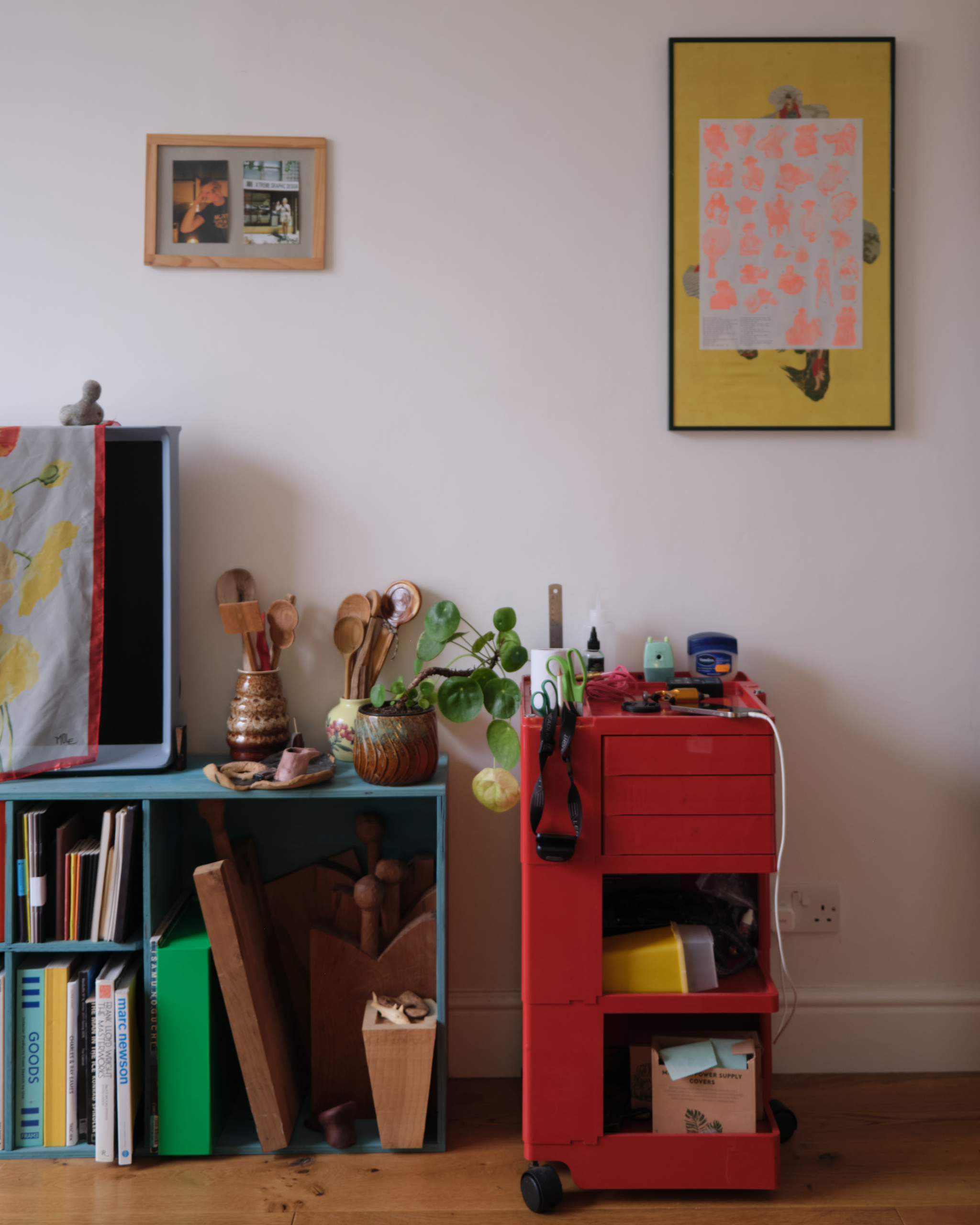
Scura: Hey Thomas, thanks for having us. Can you talk us through your home, and how you use it day to day?
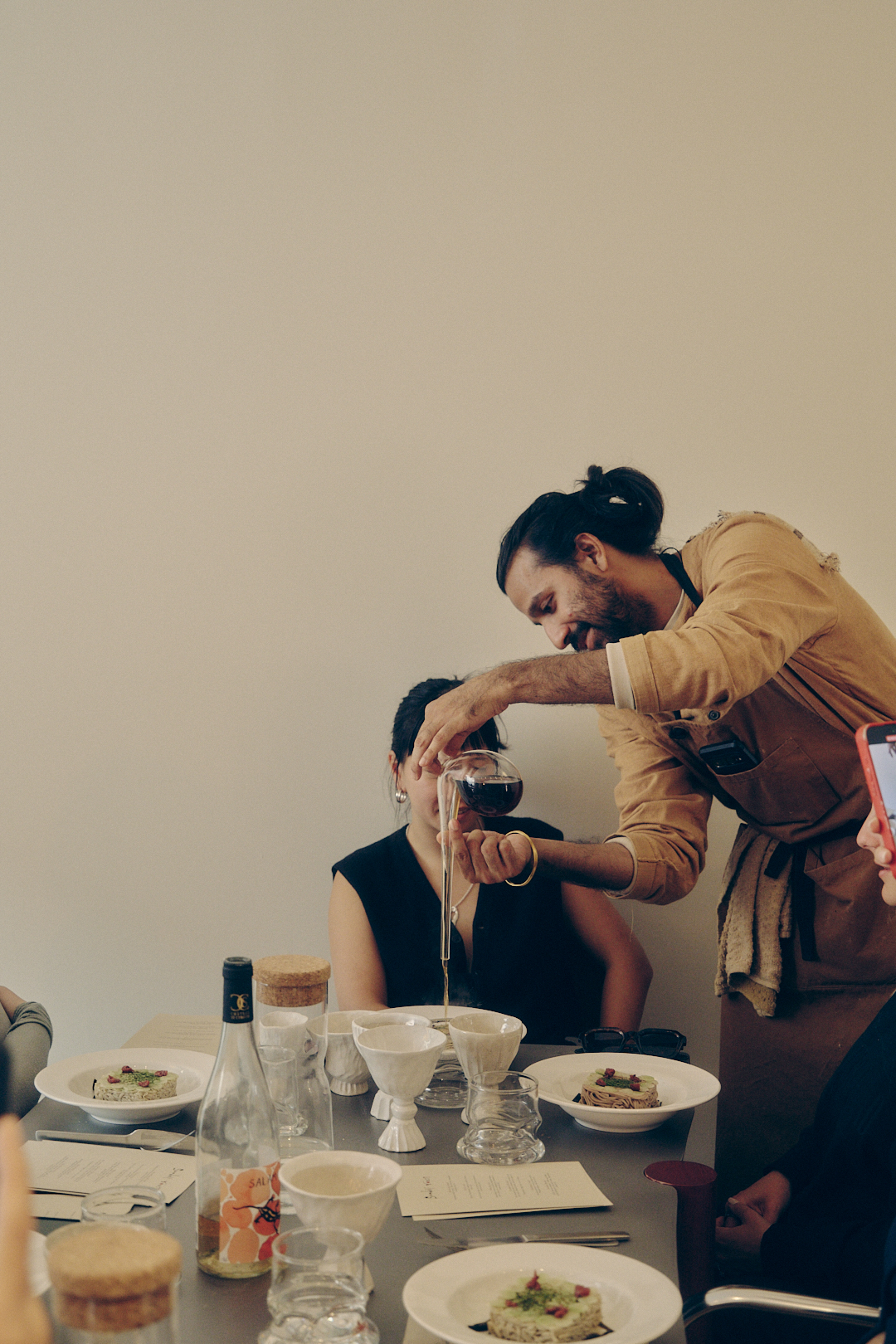
Thomas: This is basically home base for making. I’m not the most massively social person. Well, I’m actually hosting friends for dinner tonight – I’ve made Mexican food – but I tend to use this place mostly for work.
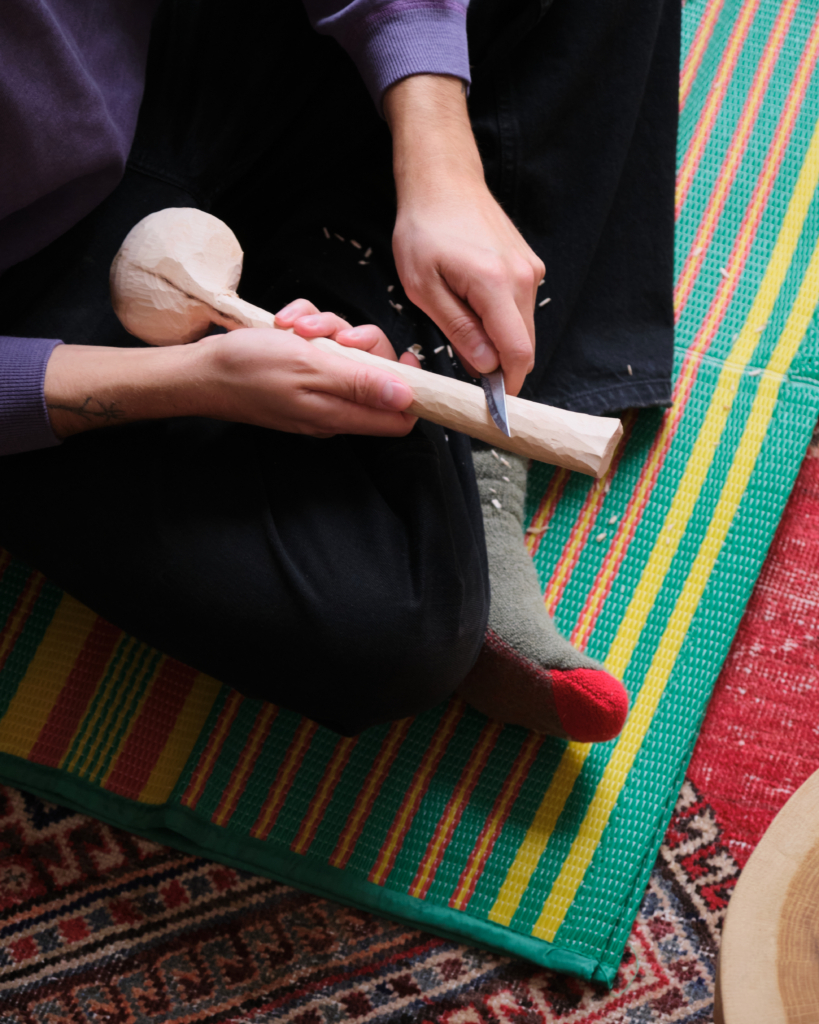
I was living with my parents until about two years ago. I used the money I saved in rent to buy tools and bits of machinery. My parents also have a tiny bike shed at the bottom of their garden and I sort of took that over as well. I built an even smaller shed behind it for the bikes and filled the original one with stuff I needed to work with wood. I still go there to do some stuff, but mostly I’m here sanding, carving, making models or working on my laptop. I’ve got this little roll‑out rug and I sit on that in the living room with a film on and just carve away, making spoons or wax models.
Scura: You studied industrial design, which feels quite different from what you do now – what was that journey and how has that background informed what you do now?
Thomas: Yeah, I studied industrial design at Loughborough, but I don’t know if I’d make the same decision again. I always loved furniture, but I thought it was better to get a broad design education. I was terrible at school, in the bottom sets for everything and then suddenly I got into a a well-respected course at a great university – it felt like validation of something.
The course itself wasn’t very creative. Everything had to solve the biggest problems in the world. It couldn’t just be a chair; it had to be a chair that solved a larger issue. Nothing could exist just because it was nice. I think that’s why, afterwards, I was drawn so strongly to carving.
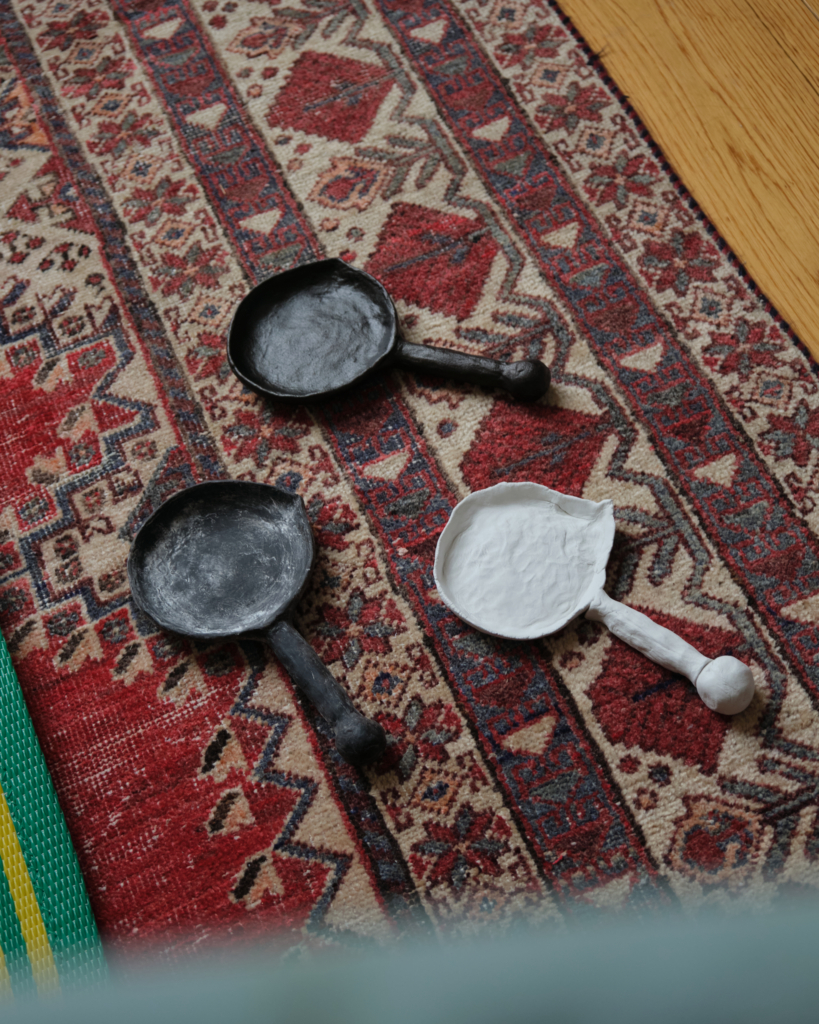
I nearly failed uni. Afterwards, I was feeling pretty lost without really understanding why. I was living at home in the pandemic and found a discarded pallet while walking my dog one day. I took a piece home and carved it into a spoon. Then I made a weirder one, and stranger and stranger things after that. It was a lot of fun.
Scura: How did you go from early experiments in carving spoons to making your Primary Stool, which was shown at SEEDS Gallery?
Thomas: Completely by accident. My dad was cycling home one day and noticed some old wooden bollards stacked up in Richmond Park. He told the people who were there to dispose of them that I’d be interested, so I cycled straight over and did a few more trips back and forth with these really nice chunky bits of wood.
I made a stool from the reclaimed timber and put it on Instagram. Around the same time I was trying to buy a fleece on Depop, which was linked to my Instagram account. The deal fell through, but the person messaged me afterwards to say she liked my work. She showed it to her boss, who ran SEEDS Gallery, and they asked if I wanted to show the piece.
That led to being included in a show at Chelsea Harbour. Both stools sold before the show even opened. At the opening, my current boss, Jan Henzel, who I work for during the week, was there showing his own work. I already knew the studio and ended up chatting to him. I emailed the next day asking about a job, and when he went to look for my work, it had already sold, which I think impressed him. It was a mad chain of events.
Scura: Wow, that’s amazingly fortuitous. Your work also feels very free-form and intuitive – is that intentional?
Thomas: I get tired of planning. With my own work I might do one sketch, sometimes none at all, and then just start. My day job involved lots of CNC work, so technical drawings, models, programming – there are lots of steps. When I’m carving, I can just grab a block and go.
A lot of my personal work is playful and loose. I’ve made combs that barely work, or cast one in bronze, even though it patinas as soon as you touch it. I like objects that sit somewhere between useful and slightly absurd. I don’t enjoy making sculpture for sculpture’s sake – I want things to function on some level, even if that function is compromised.
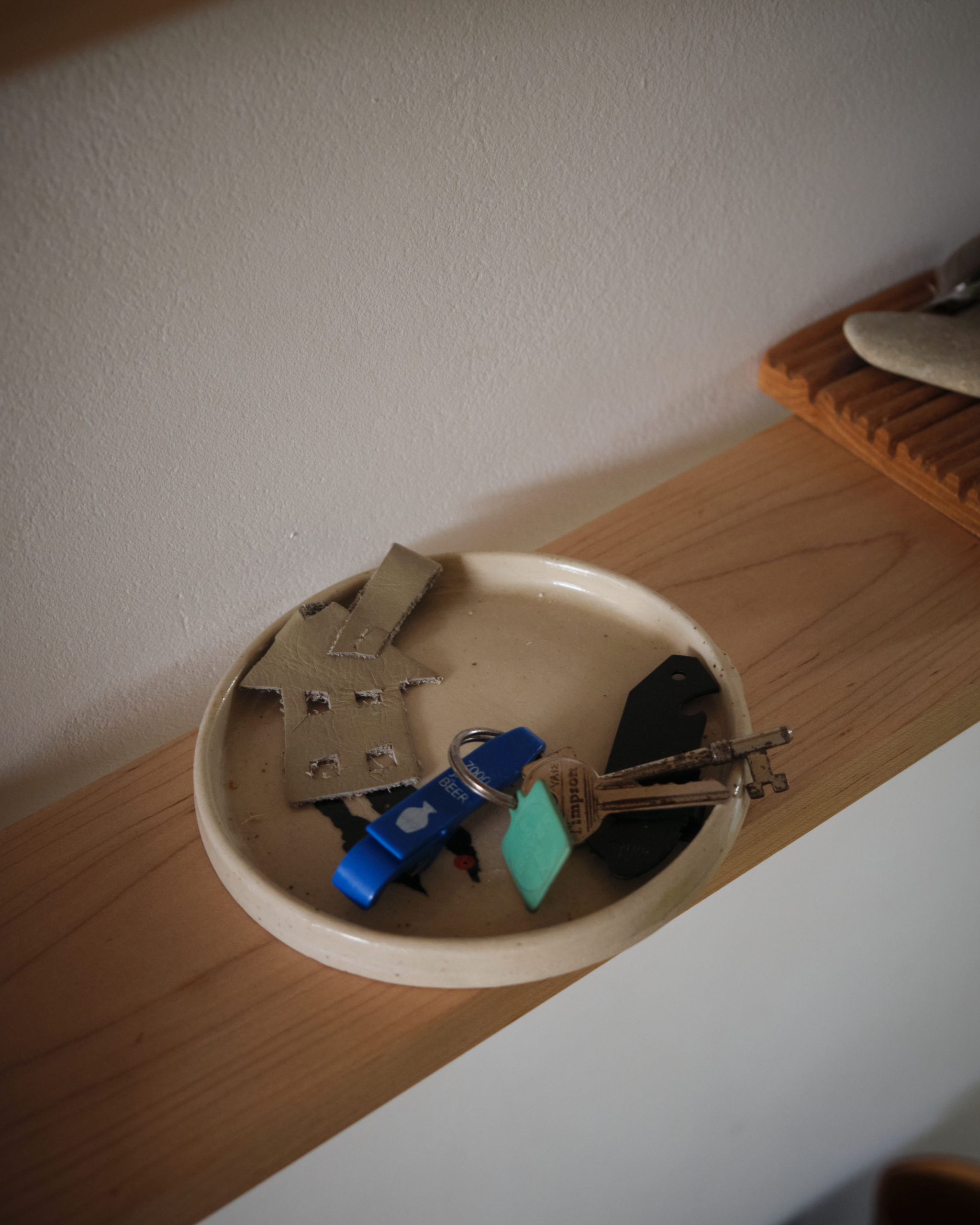
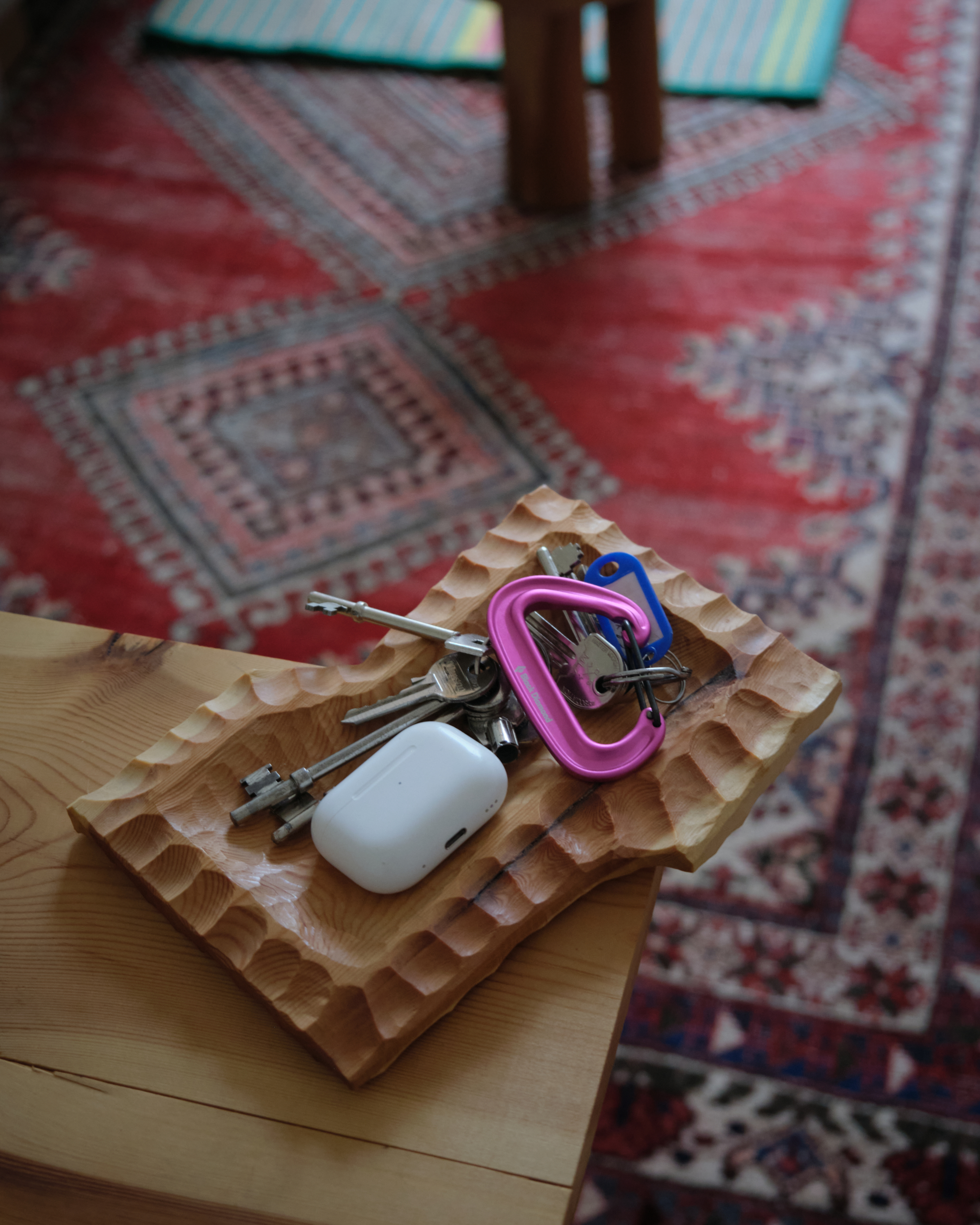
Scura: Looking around your place, there seems to be a theme you respond to in other designers’ work. Who do you find yourself returning to and why?
Thomas: I definitely go through phases. When I was younger, I was obsessed with that late 20th-century moment — Marc Newson, Ron Arad, that whole world where design felt a bit outrageous and optimistic. I actually own the Newson torch — the bright orange one I call the dildo torch — and it’s a perfect example of that era. It looks amazing, but it’s also kind of useless. The case barely opens, the torch doesn’t really work properly. I bought it because I’d wanted one for years, and then almost immediately I was like, right, this is ridiculous. But I don’t regret that phase. I think those designers gave me permission to enjoy excess, humour, and things being a bit absurd.
In general, I just find it hard to buy someone else’s designs. I don’t have loads of money or space, but I can make the time. Even if what I make isn’t perfect, I’ll learn something and probably get a new tool out of it. Making things for myself gives me objects I need, and pushes my work forward. It’s a win-win in a lot of ways.Some designers are different. Enzo Mari is one of them; I appreciate him in a more fundamental way. I made the wardrobe and the table from his Autoprogettazione. I love the idea that you don’t need to be a master craftsman; you just cut things to length, screw them together, and you have something that works. Noguchi is one of my heroes too – I’m happy to spend money on his furniture, like the table I have in the kitchen.
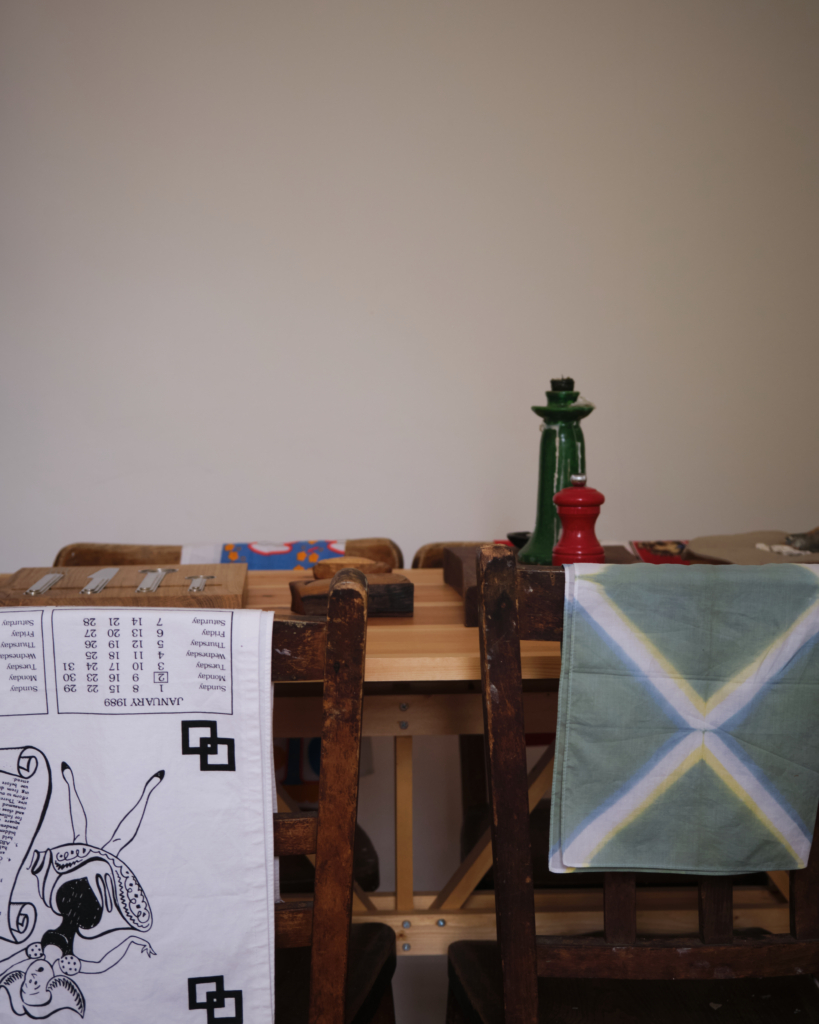
Scura: How do you think about colour? It seems like it’s playing a bigger role in your work now.
Thomas: I was very black-and-white when I was younger. Literally, that’s all I wore. I think I held off on colour for a long time because I didn’t feel confident enough to use it properly. Once I started to understand proportion and form a bit more, colour felt like something I could lean into rather than be scared of.
Now I like colour when it’s unapologetic: vivid blues, strong reds, things that feel slightly too much. I’m not very interested in subtle accents. If I’m going to do it, I want to really do it.
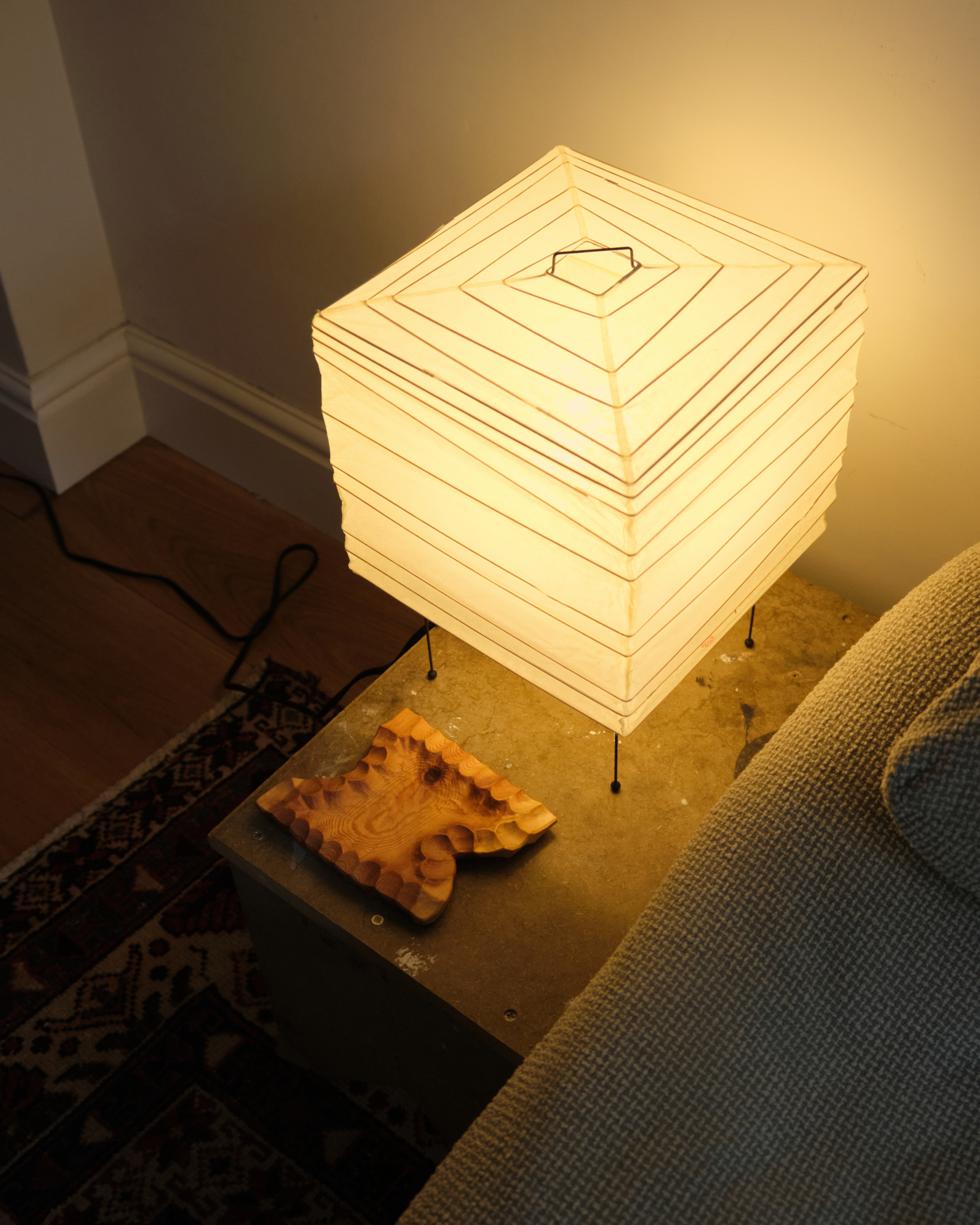
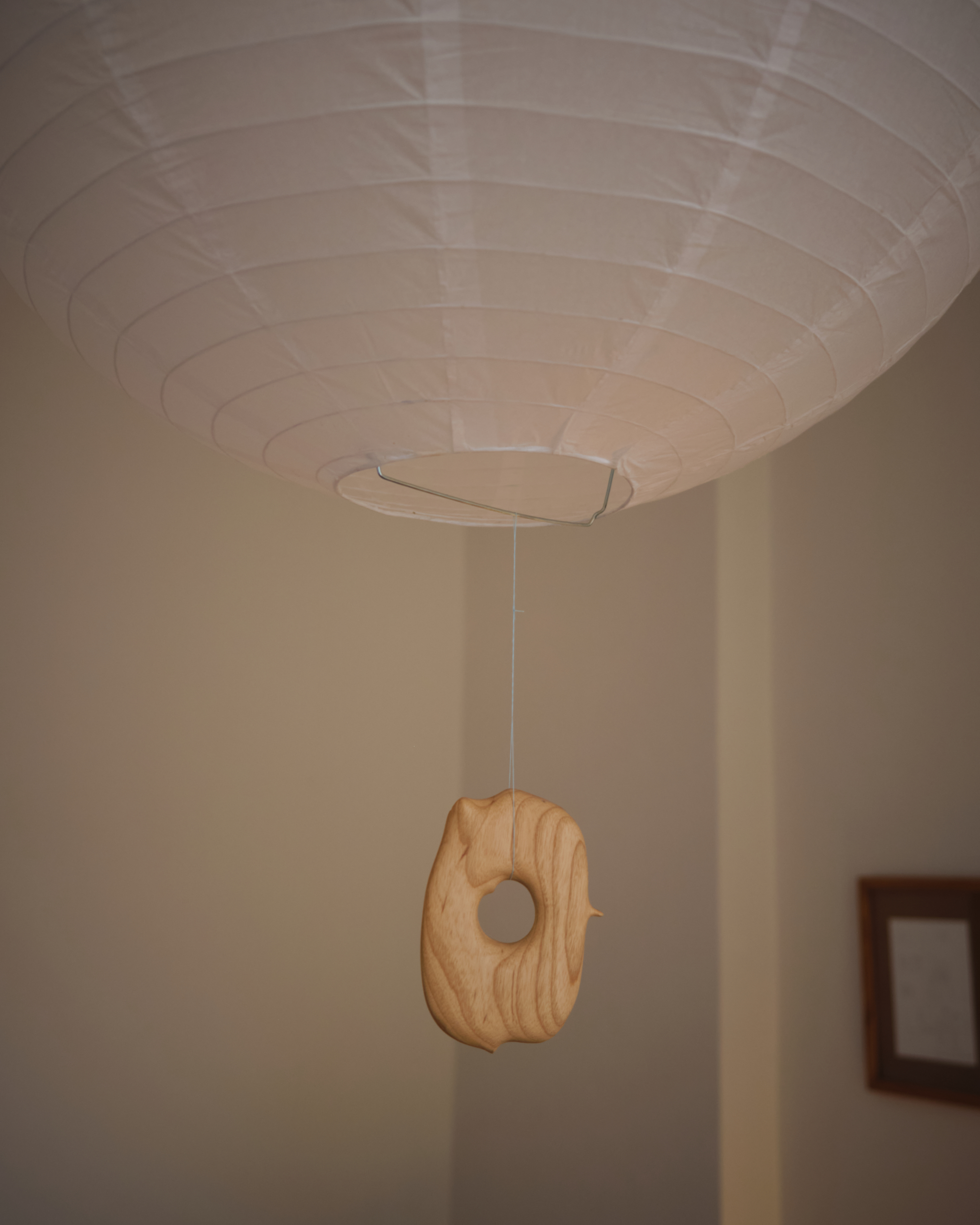
Scura: Do you see yourself as a maximalist?
Thomas: In life in general, I’m quite extreme in my tastes. I don’t really do moderation very well. If something’s worth doing, I want to push it to the edge of what feels sensible.
That shows up a lot in how I make things. With the ceramics, for example, my glazing approach was basically: more is better. I didn’t thin it out properly, I just piled it on. I wanted it super red, super intense.
It’s the same instinct across everything. I’d rather overshoot and pull something back later than play it safe. I think that extremity is part of what keeps things interesting for me. It’s about seeing how far something can go.
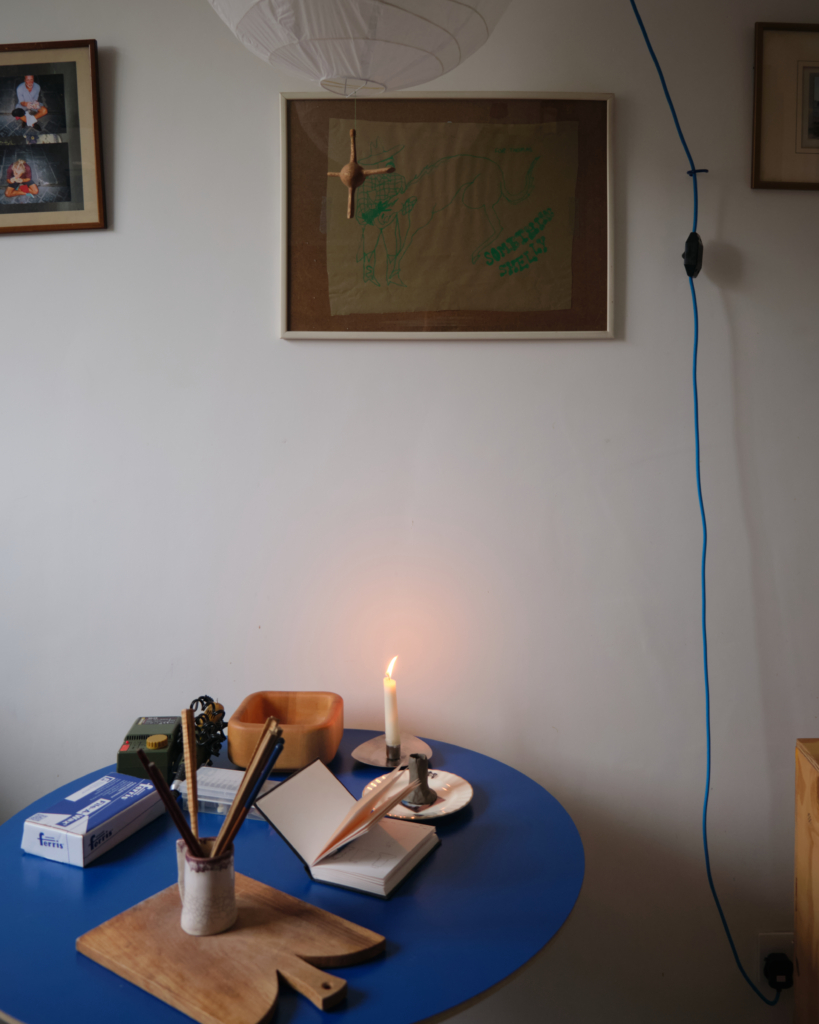
Scura: Do you feel pressure to define a clear aesthetic or direction?
Thomas: I see people whose work is instantly recognisable, and part of me wants that. But I don’t want to limit myself too early. Right now it feels like the time to stay instinctive and let things emerge naturally. If something coherent appears later, that’s great. For now, I just want to keep making.