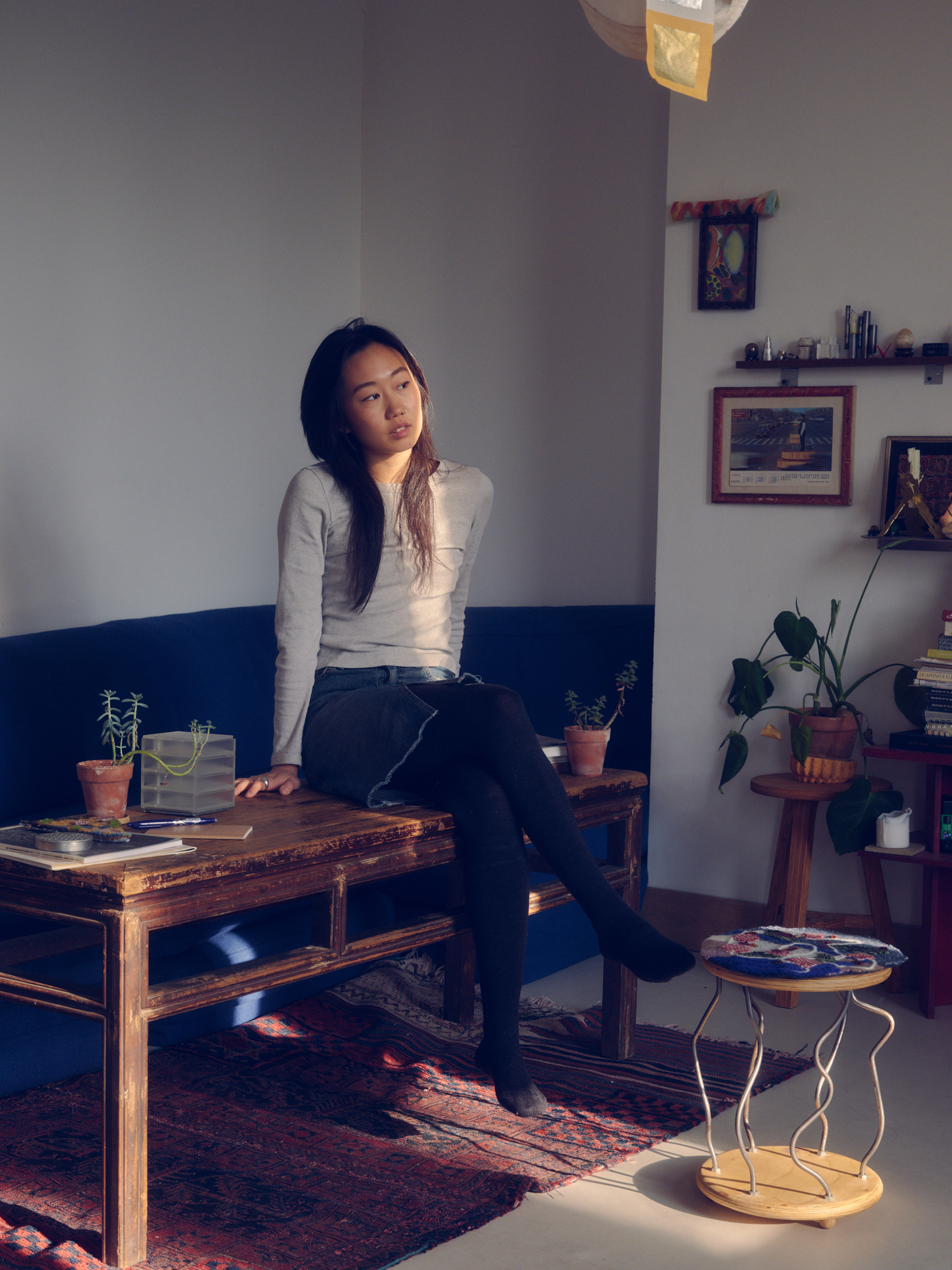
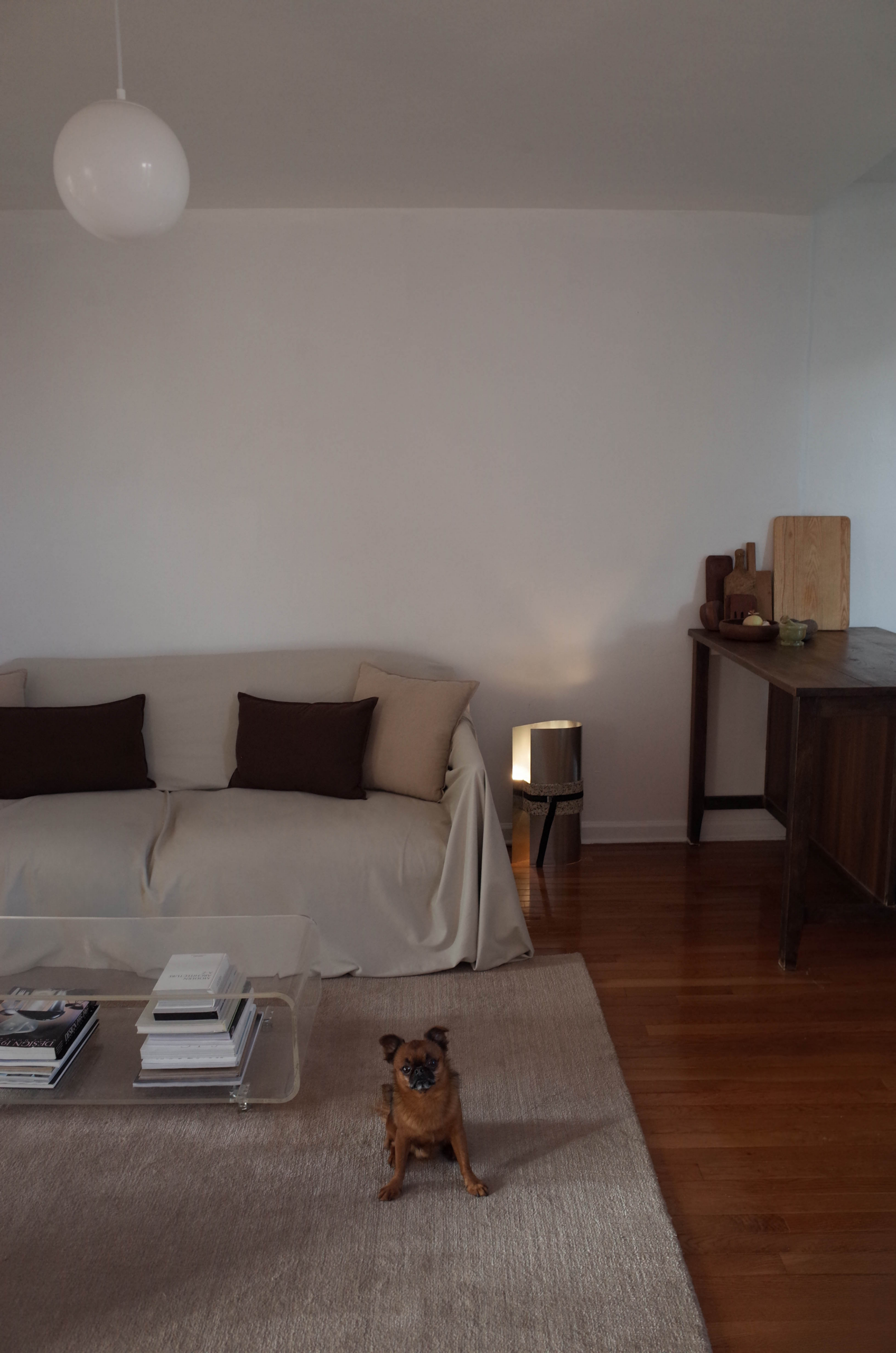
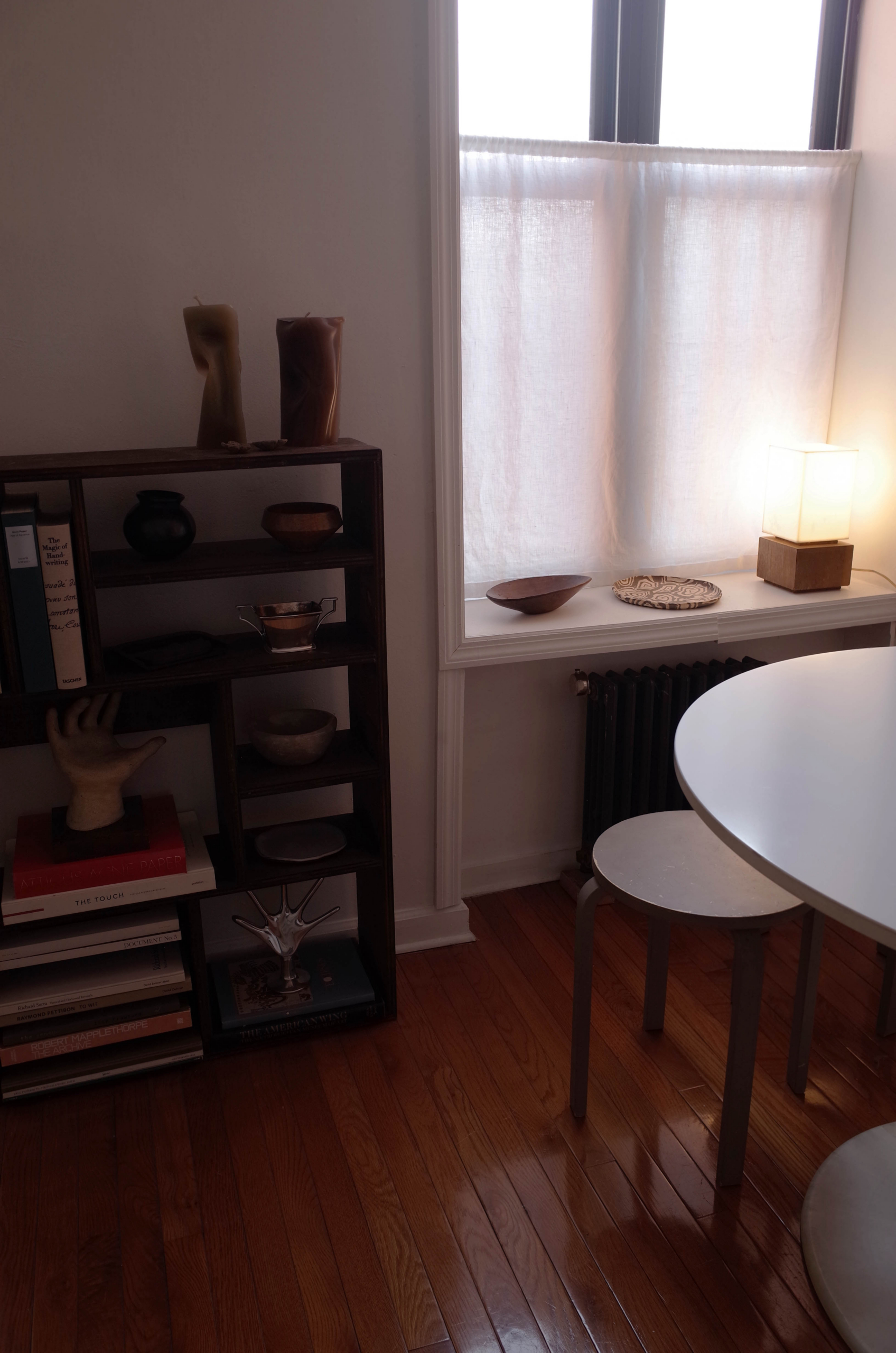
“I am very affected by my space,” says jewellery and homeware designer Jessi Burch, speaking to me from her apartment in Williamsburg. “Even if I’m staying somewhere for a couple of nights, I’ll move things around – you can make a big impact with small changes.” It’s a belief that was put into practice when she moved back to New York from Mexico City in 2024, settling into a “classic New York” apartment block with loud pipes and sloping floorboards. But the space also had the elements that allowed Jessi to see its potential: wooden floors, cast-iron radiators and tall ceilings.
Guiding her vision for a minor renovation project were experiences in Europe, including eight months in London in 2023, as well as exposure to Californian modernism and Mexican design. “I’ve always had a drive and passion for interiors, but living in different countries and seeing different eras and styles of design has changed my taste a lot,” she says. Much of that exposure comes through seeking out architecture and studio visits while travelling. Not that these references have been translated directly. It’s more, as Jessi explains, that she “hasn’t designed the apartment in one style”. Instead, she planned the space around her pieces, rather than imposing a look. “That would be very limiting to me,” she reflects. “I prefer a more eclectic approach.”
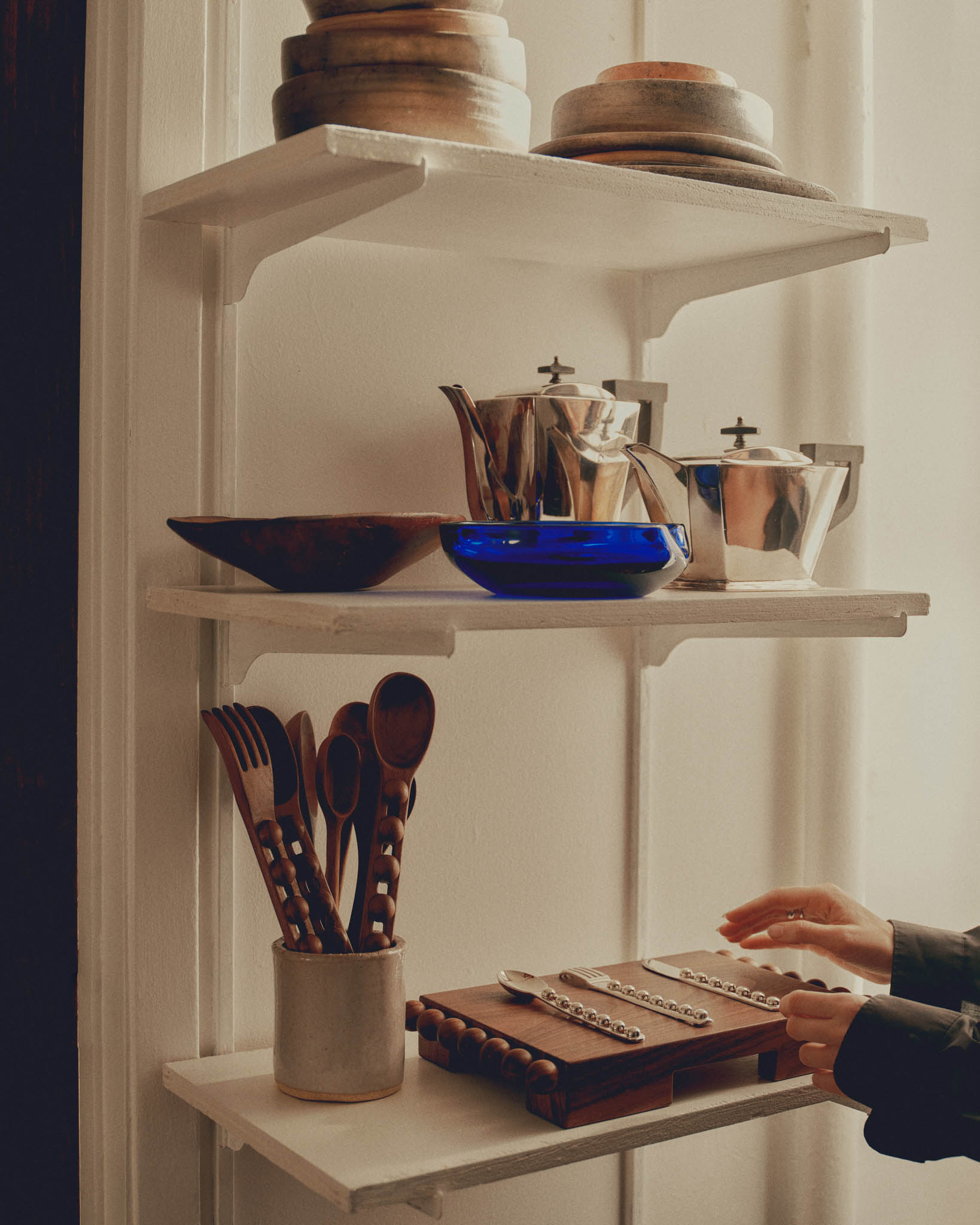
Filling the space is a collection of objects, books and design pieces picked up around the world. There is a model of a hand that Jessi found in Mexico City, which happened to be inscribed with ‘December 1st’: her birthday. Lamps, books and rocks have also been known to make it into the extra suitcase she checks in for hauling the city’s flea markets. Visits home to California end with Jessi taking small things back with her – “My mum has a very similar sensibility to me, so I’m like ‘that’s coming with me’ when I go home! Just little trinkets,” she says, holding a ceramic ring dish to the camera, which her mum handmade herself.
It’s all set against a calming backdrop, which Jessi created through simple but high-impact projects: staining the wooden doors in a walnut hue, sanding down and painting the cabinets and some of the furniture white, as well as the walls. The inherited sofa, meanwhile, was too big to get out of the door, so Jessi draped over a piece of upholstery fabric she picked up in the city’s garment district. “I think it shows you can add a new touch to pieces that you have to live with – that you can revamp them to your own personal style,” she says.
Now that she has “a good stable foundation of a more muted, serene palette,” Jessi has bigger plans. Her mornings start with coffee and scrolling Facebook Marketplace – one of her “passions”. Right now, she’s also working on a bench that will form a kind of breakfast nook. “It’s always evolving; I can never sit still with a space,” she says.
The role of her living space as a source of creative experimentation doesn’t just extend to the interiors, though. Moving back to New York in 2024, Jessi was brimming with inspiration and ideas, prompted by her experiences in Europe – “I saw Brancusi in Paris, then Barbara Hepworth and Henry Moore in England,” she recalls. Having only ever worked on jewellery before, exposure to these sculptors’ work coincided with a move into her apartment, sparking the idea of working on a different scale. “It was kismet,” Jessi says. “I was immediately able to launch into my new idea.”
Those ideas took form in Jessi’s first homeware range, the Seven Ball series. Inspired by a Josef Hoffmann chair of the same name, Jessi saw the piece at the Neue Galerie in the Upper East Side, admiring it for its ability to “take components from around it through the negative space and add something,” she says. That idea first took shape in a cutlery range, with seven silver balls suspended in negative space forming the handle of each piece, so that, in Jessi’s words, “they’re both a solid object on the table and something that integrates into the space around.”
The balls have become the leitmotif in a collection that now comprises a comb and a cutlery range in wood, as well as a series of wooden trays – her first foray into working with the material. “Integrity and materials are really important to me. I never want to do synthetics, I never want to cut corners, it’s always solid wood, solid gold or silver,” Jessi says, adding that “It’s very important to me to honour the material and the medium. It’s why I’m so drawn to eras that craftsmanship was at the forefront and why I go to the past a lot to look for inspiration,” citing Art Deco, Danish minimalism and Japanese design as current interests, which she researches at the New York City Library.

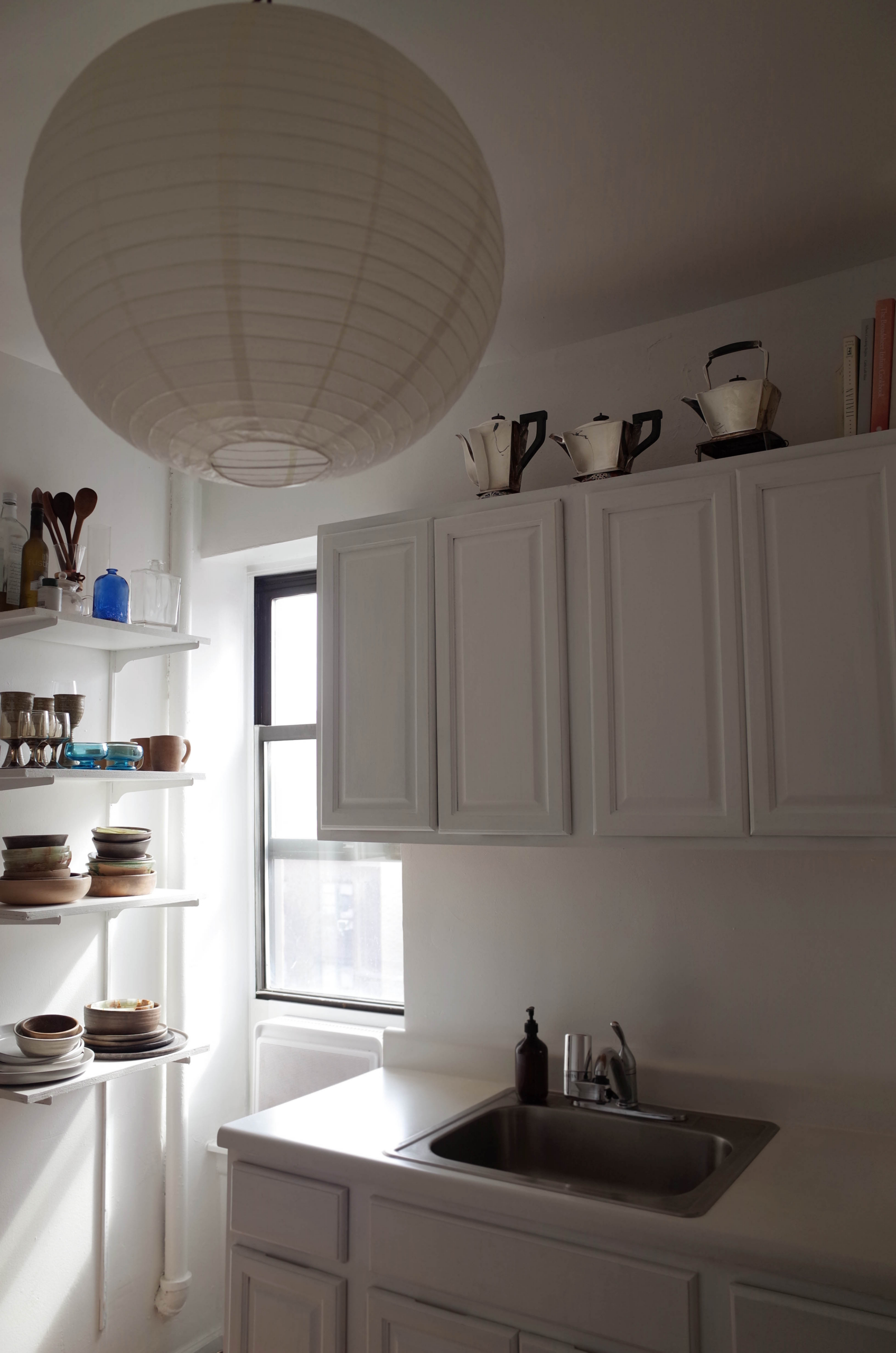
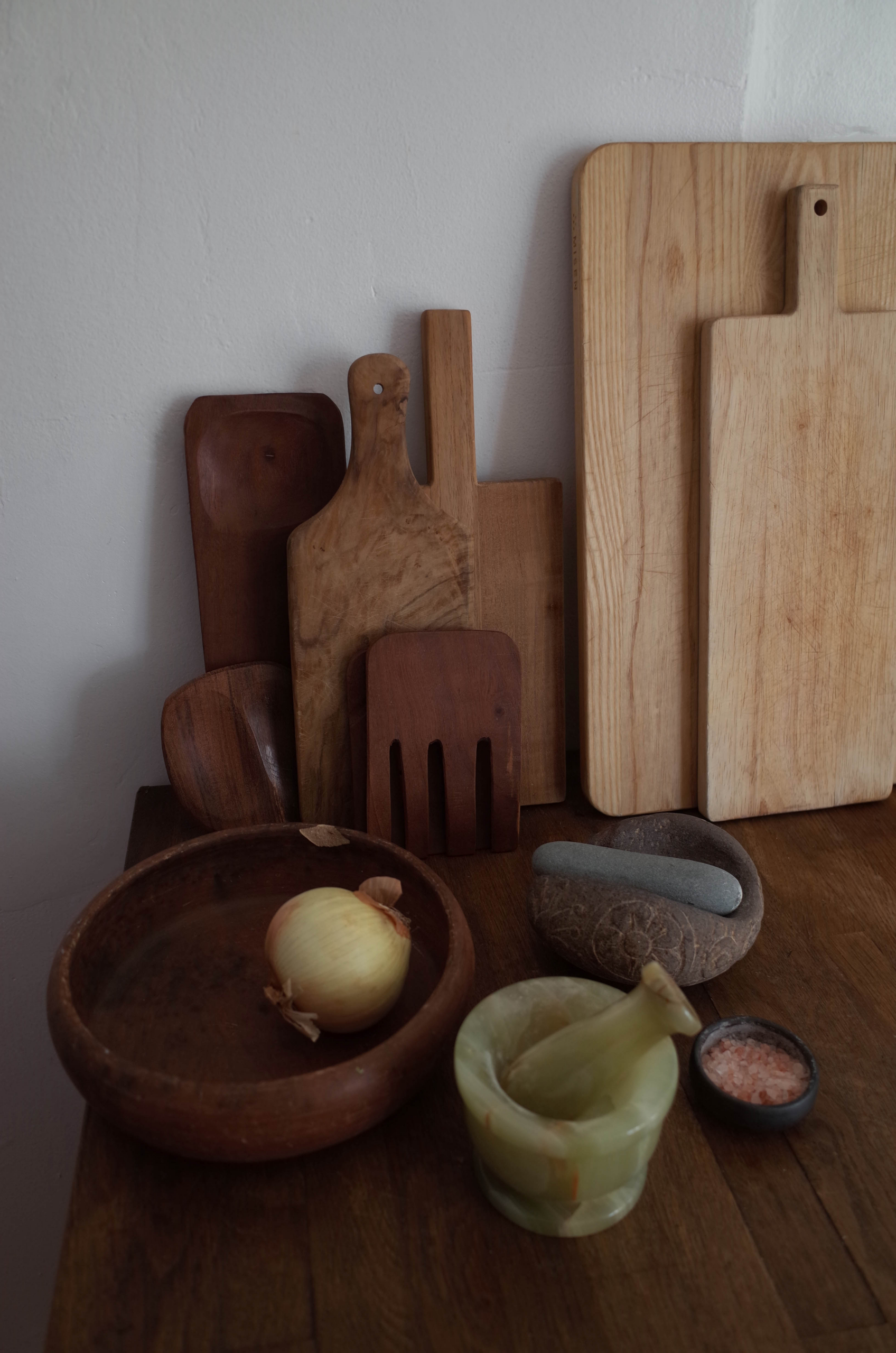
Jessi thinks of both her jewellery and homeware creations as sculpture – one of the body, the other for the home. “I make jewellery through lost wax carving. I don’t do 3D, I don’t do CAD, I don’t even do a lot of sketches, so they are small-scale sculptures,” she says. The same thing applies to the larger pieces, “I think about them as larger-scale sculptures,” Jessi says; “it’s just where you put the pieces relative to your life.” For Jessi, that means she gets to see her cutlery being used when she hosts friends for dinner, something she loves doing in the winter, when the New York weather can be tough. “An integral part of keeping your sanity is to have people over to have warmth, comfort, good food, candles and a sense of family,” she says. During those dinners, she loves seeing her pieces used. “It brings me joy to see the serving sets get olive oil on them and be thrown down in the midst of chaos and friendship,” she says.
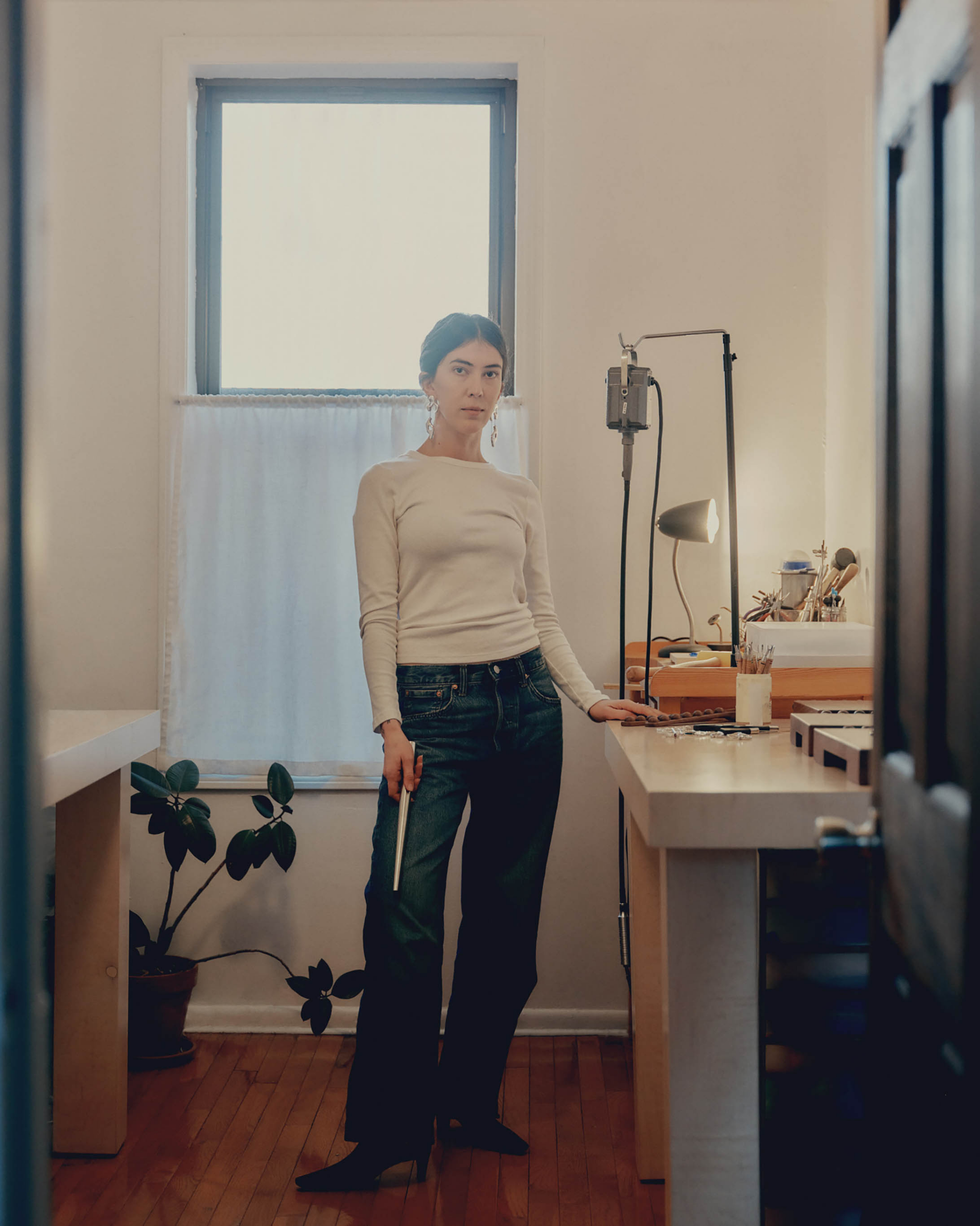
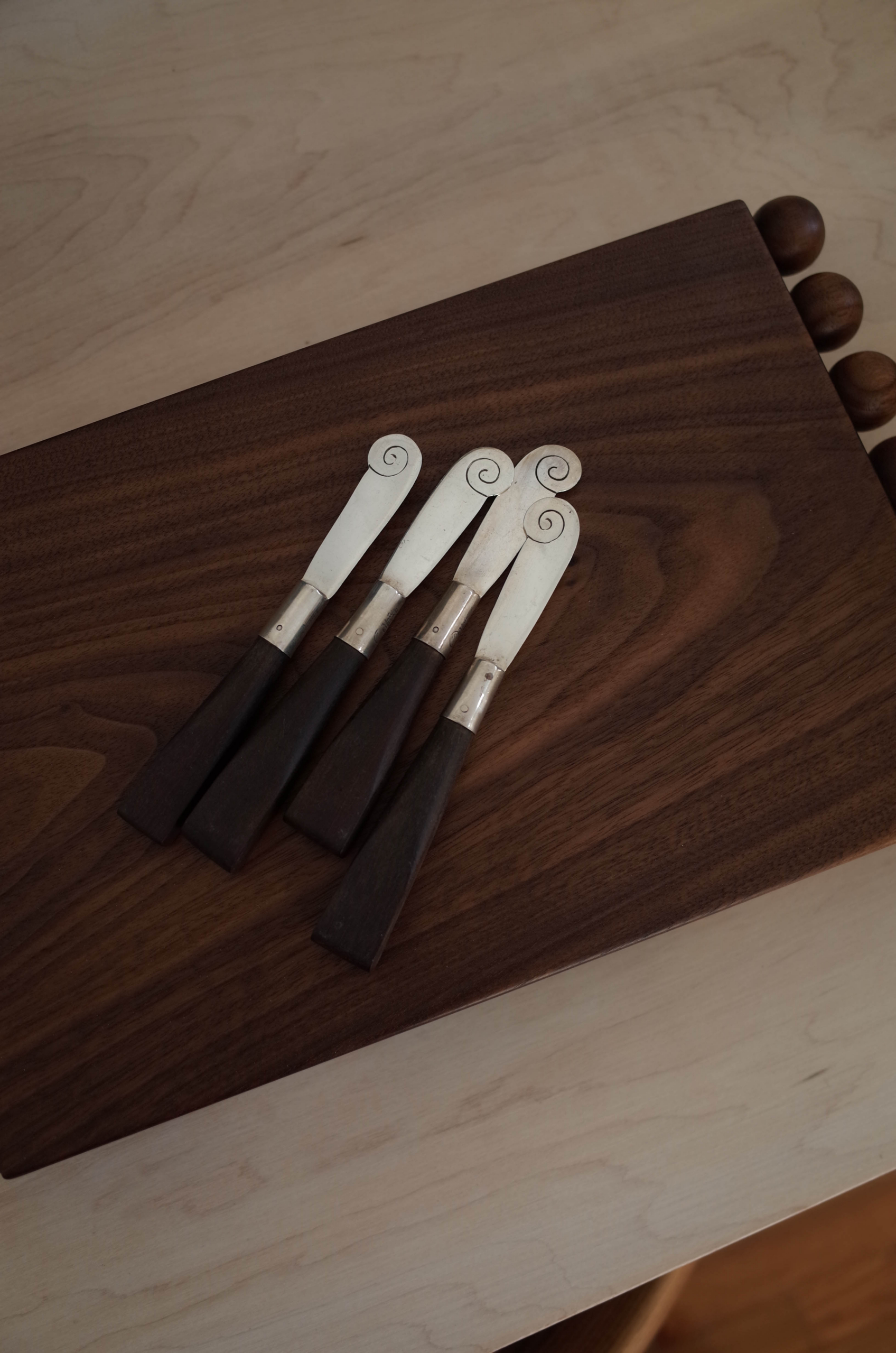
And when it’s just her, life and work bleed into one another throughout the day. Developing her homeware has meant living with it in a very literal sense: testing pieces in situ and adjusting them in response. “The studio is living with me, it’s all meshed together in here,” she says. That proximity is balanced by time spent at her bigger studio in Clinton Hill, working on larger soldering projects. Others take her into the city, moving between the diamond district, the garment district, or wherever a specific component might be found. “New York is magical for that reason, so I really look forward to days where I have to kind of venture out and be a part of the veins and arteries that make the city work,” she says.
Still, she’s aware that her work-life overlap has its limits. “This is actually the first time that I’ve had a home studio,” she says, describing the occasional friction of working and living in the same place. In time, she imagines something both more defined and more open: a showroom and studio in one, where visitors can encounter her work in situ, within the context in which it was made. For now, though, that merging happens here, on a smaller scale, with life, work and home intertwining into new ideas for more homeware and, perhaps, one day, a furniture or lighting. Ironically, it’s the very fact that the space isn’t definitive that gives it its clarity. As Jessi puts it: “When you come into my space, you’re able to see what goes on behind the scenes in my mind, my inspiration – it’s like a portal into how I think and what I like.”
Suggested stories
Going Out, Staying In With Dan Pope
Filippo Muzi Falconi’s World Is Filled With Wonder, Naturally
Making Work – and a Home – Out of Restrictions, Remains and Resourcefulness
A Designer Finding New Forms in Ancient Traditions
A Collector Who Sells – and Lives With – the Things She Loves
Functional Beauty: Jewellery Designer Helena Vieira’s Converted Warehouse Apartment
The State of Design? Designer David Searcy Has Thoughts
Inside Jesse Butterfield’s Studio
How “primitive craft” and “contemporary production” come together at Lewis Graham’s studio
An Apartment With No Sofa But 50 Lamps
A Happy Family Collaboration in De Beauvoir

How “The Muse of Spirited Resourcefulness” Guided The Making of Glass Artist Juli Bolaños-Durman’s Edinburgh Home
ON UGLINESS WITH DAVID MICHON, AUTHOR OF FOR SCALE
The Home That Thomas Wheller Is Making
Designer Jake Robertson’s Home is a “Living Library”
Jewellery Shaped by Architecture, History and the Human Hand

THE SCURA GUIDE TO GOSPEL OAK & AROUND
Scura Selects: November 2025
Luke Malaney’s Work is Always in Motion
Going Global: Reflections and Recommendations from Flawk’s Show at Collectible NYC
The Fluent Creativity of Liyang Zhang
SCURA Selects: What to see at Open House & LDF
FRIENDS OF SCURA: ALEXANDRA ARIAS
What is Flawk?
A Design Duo’s Reunion with a Family Farmhouse in Alsace

The best eats in London under £20
Introducing the Flawk Shop: a new home for a family of objects

An Architectural Adventure in Finland’s Far North
Freddy Tuppen’s Flat Keeps Getting Better

A Slower Guide to Istanbul

Inside A Copenhagen Apartment Shaped By Instinct, Collaboration and Kerbside Finds
A Guide to Copenhagen, Curated by a Design Duo We Love
Step Inside Tom Golland’s Colour Playground
Picasso Chairs and Playful Precision: Josh Page’s Creative World

Ajay Larr on the Architecture of Food and Why Meals Matter
A Slower Guide to London
The Scura Guide to eBay

The Homespun Beauty of Textile Designer Isabel Farchy’s Patchwork Panels
NYC Design Getaways
Our friends: PPP LAB on crafting for simplicity and usability

Hidden Feasts: Jiaonest
Scura’s Guide to Independent Stoke Newington
Welcome to Scura