Inside Jesse Butterfield’s Studio
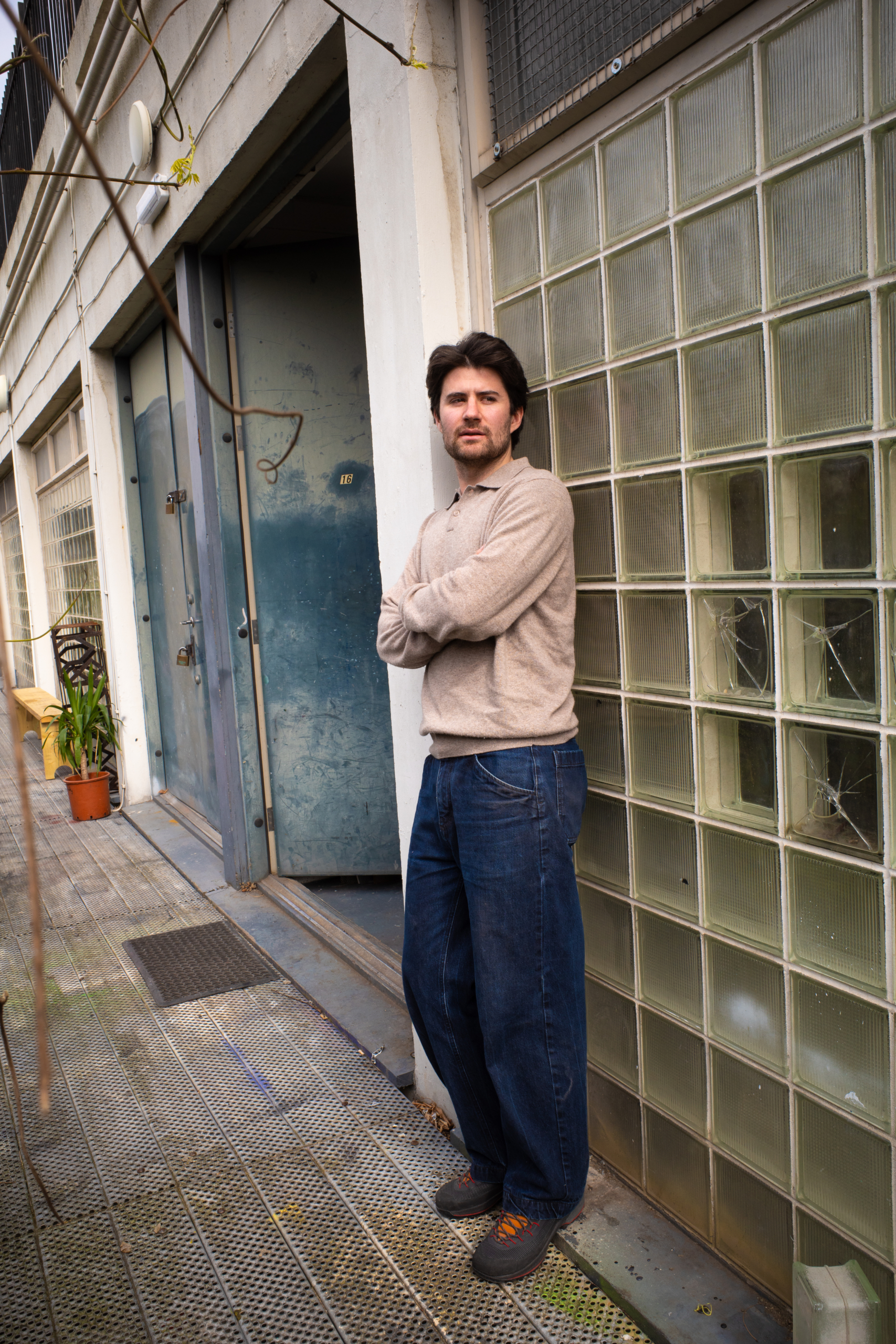
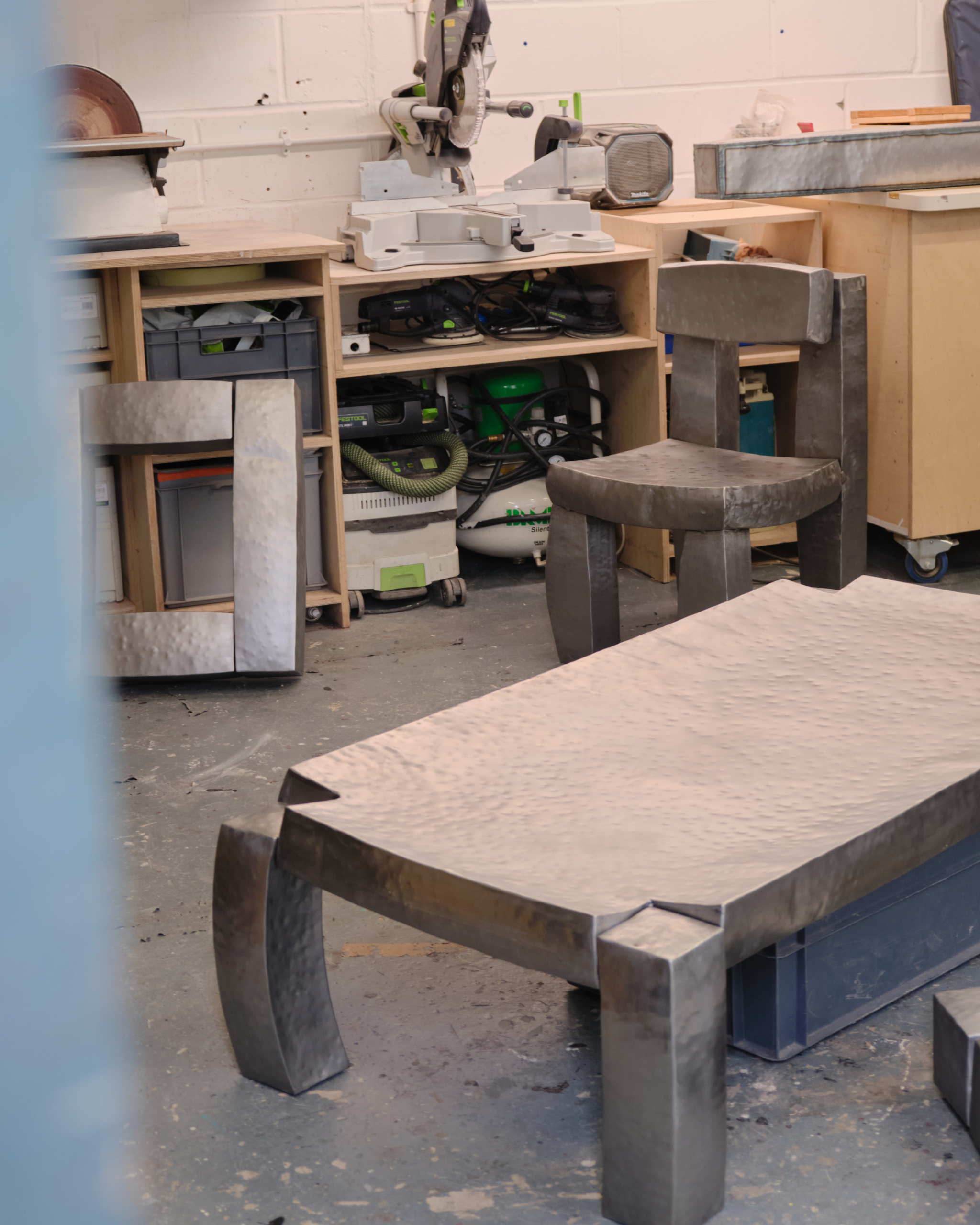
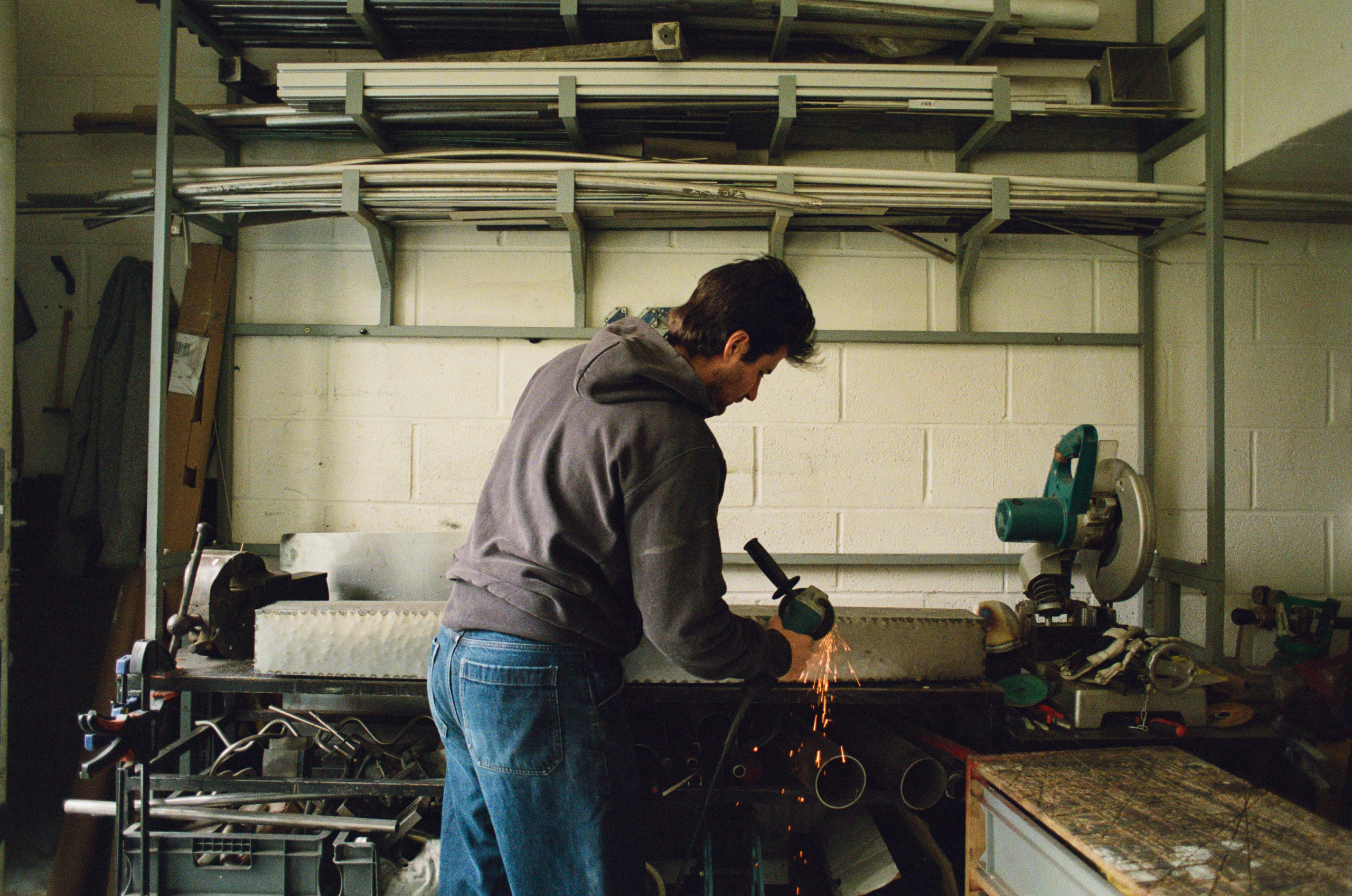
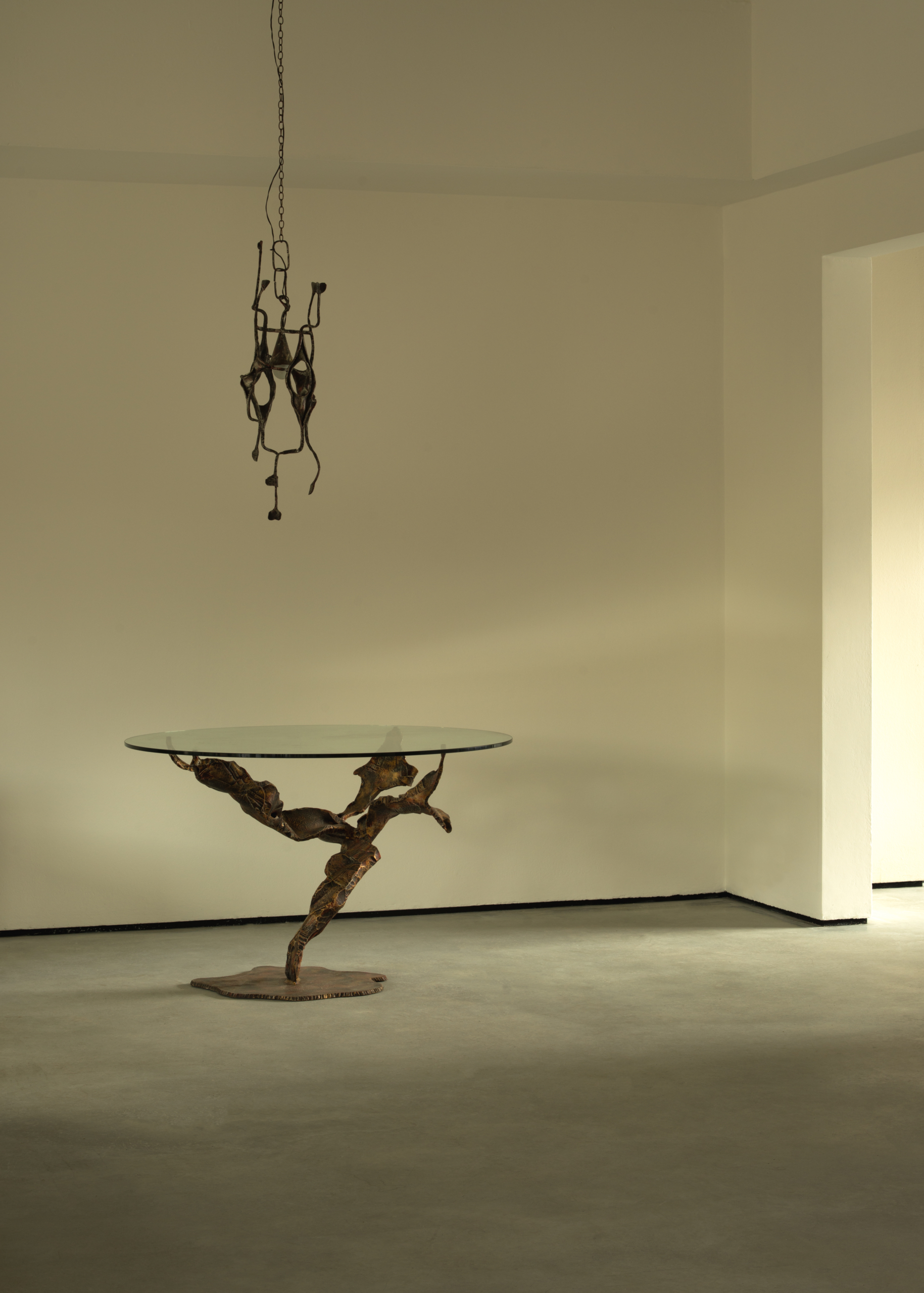
When we visit Jesse Butterfield at the studio he shares with fellow designers Andu Masebo and Charlie Humble-Thomas, preparations for Milan Design Week are underway. Paper maquettes, sheets of steel and almost-finished pieces of furniture fill the space as the Utah-born designer develops a growing body of sculptural furniture and lighting that translates the immediacy of folded paper into hammered metal forms.
Since graduating from the Royal College of Art in 2022, Butterfield has been steadily building his practice, creating objects that sit somewhere between furniture and sculpture, often with what he calls “cartoonish proportions”. Speaking to Scura, he reflects on teaching himself to weld, building a creative life in London and how his earlier interest in speculative, research-led design continues to shape the way he thinks about objects today.
You grew up in Utah. What was that like?
I’m from a small ski town called Park City – where the Sundance Film Festival is. It was a very outdoorsy, wholesome upbringing. Skiing every year, lots of hiking and biking. It was dreamy, really. You don’t realise how good you have it until you leave.
And then you moved to London?
Yeah, for my Master’s at the Royal College of Art. Before that I’d done my undergrad at the University of Utah in Design Products, though it was initially more research-based. Moving to London was the first time I’d ever left the US. It was a huge contrast, literally the complete opposite. I’d never lived in a major global city before, so coming here was really eye-opening.
London gave me access to a level of cultural stimulation I never really had growing up in Utah, and I’ve fallen in love with that. I graduated in 2022, so I’ve been here almost six years now.
At the same time, recently I’ve started missing the outdoors a lot. I’m trying to figure out how to bring more of that back into my life somehow. I haven’t really explored the UK countryside properly yet. Scotland has been on my list for ages, but the trains are always so expensive that I end up flying somewhere like Spain or Italy instead.
What first got you into design?
Honestly, I kind of stumbled into it. In America, a lot of people spend the first year doing general courses before deciding what they want to study. I was bouncing around between accounting, material science, biology – all sorts.
Then I needed to take an art class, and there was a design studio available. I signed up for it and the teacher was incredible. It was the first time I’d seen someone speak with that much passion. Everything else was huge lecture halls, but this was a studio with maybe 15 people in it.
At that point I didn’t even really know what design was. I barely knew what architecture was beyond “building buildings”. But I just thought: this is sick. I want to be around people who care this much about something. So I switched over and have been doing it ever since.
What kind of work were you making at the RCA?
At first I was very interested in speculative design: using design and visualisation to spark conversations around political or social topics. But it can become very academic. My professor always used to call things “raise awareness projects”, which is often what they end up being.
My final RCA project was about nuclear power in the UK. I created this fictional football league made up of teams from nuclear sites around the country. I travelled to these places recruiting five-a-side teams and visited local makers to create football memorabilia – scarves, trophies and things like that.
The idea was to hold an actual tournament, but it became too expensive to bring everyone together, so the project remained speculative. But I liked the idea of talking about nuclear power through football, through culture rather than directly through politics.
How did your practice evolve from that into furniture and objects?
After graduating I realised I didn’t really have the practical skills to make things yet. At the same time, I was applying for loads of research grants and funding opportunities and just not getting anywhere. There isn’t much support in the UK for long-term research-based projects.
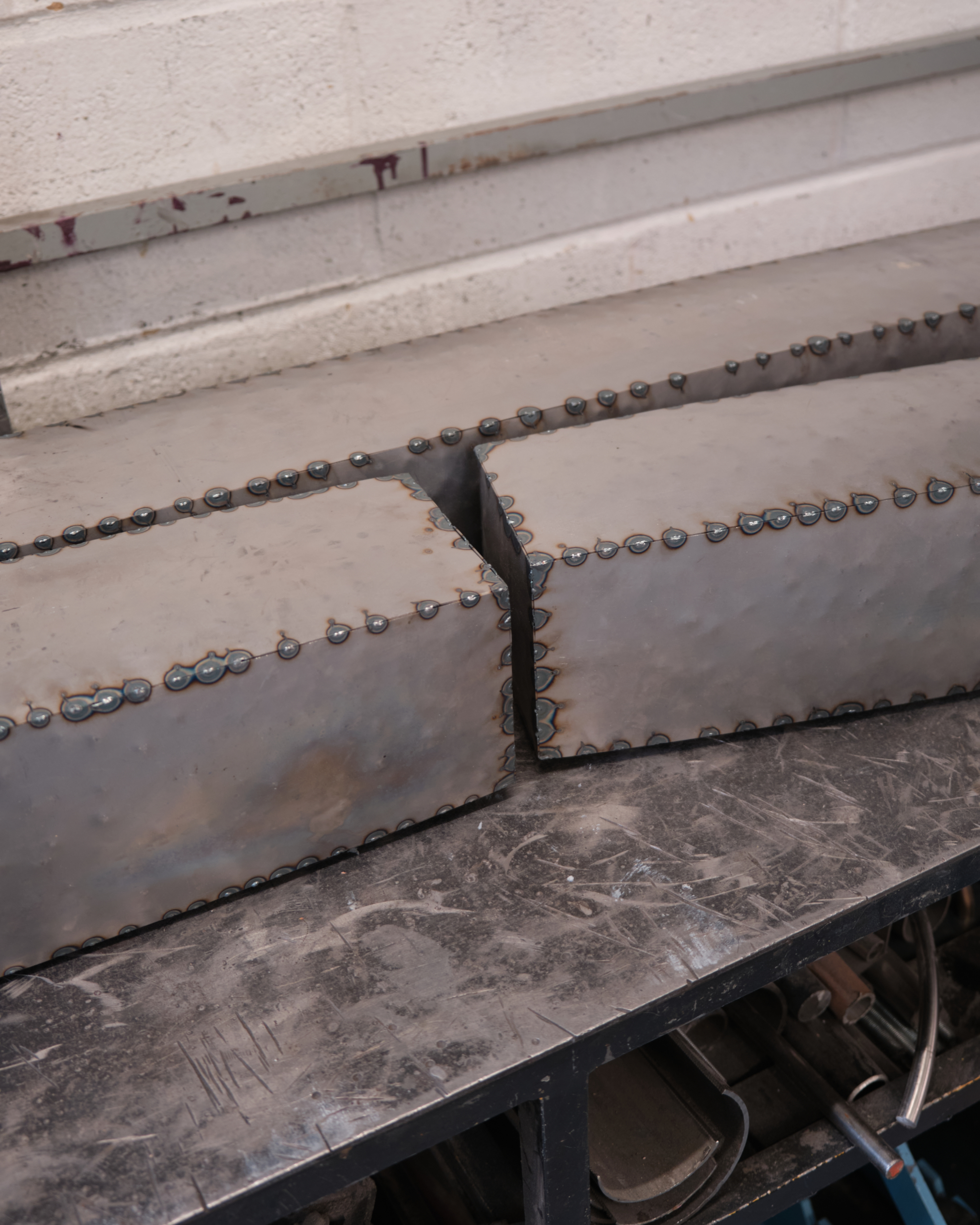
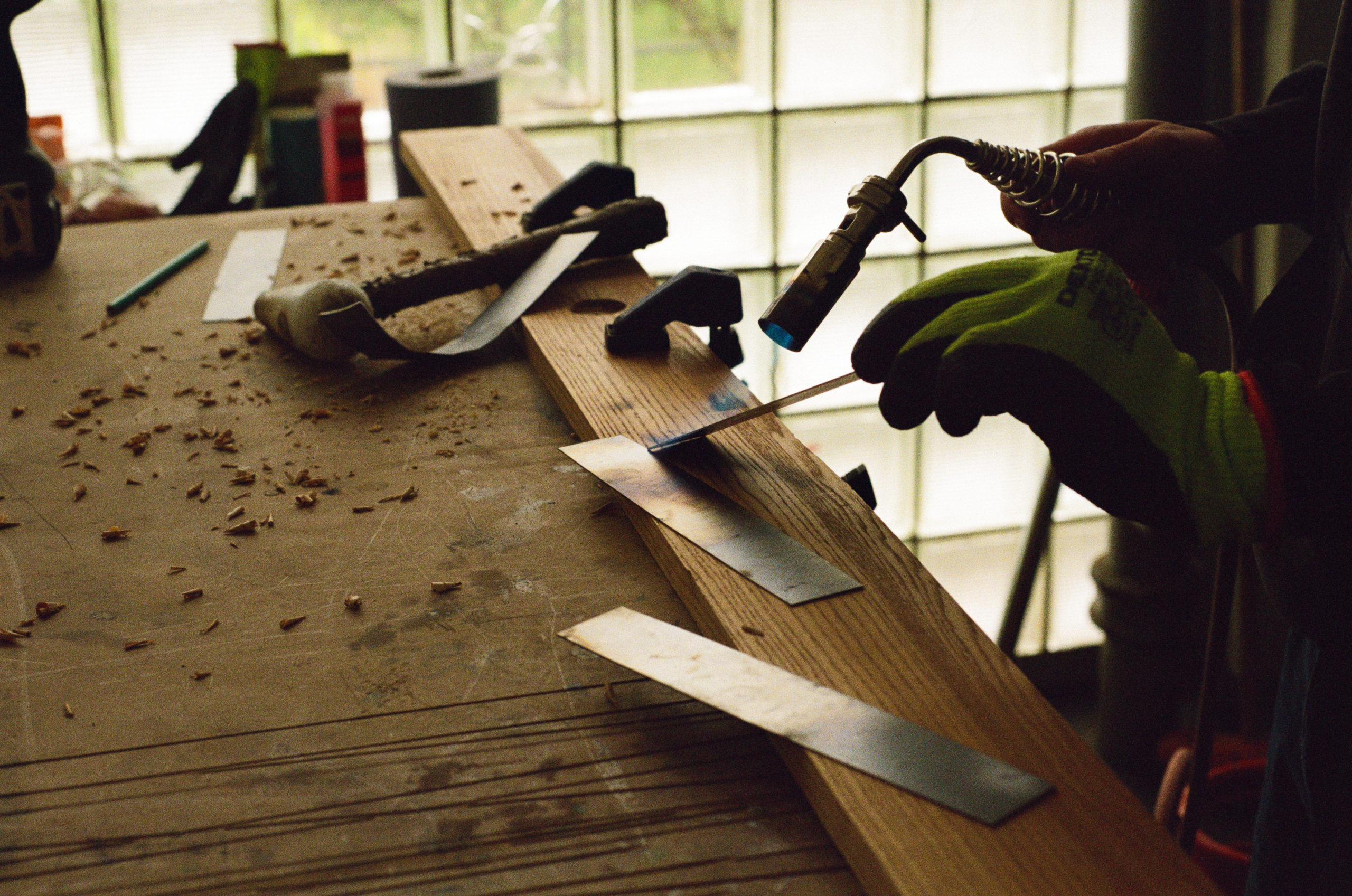
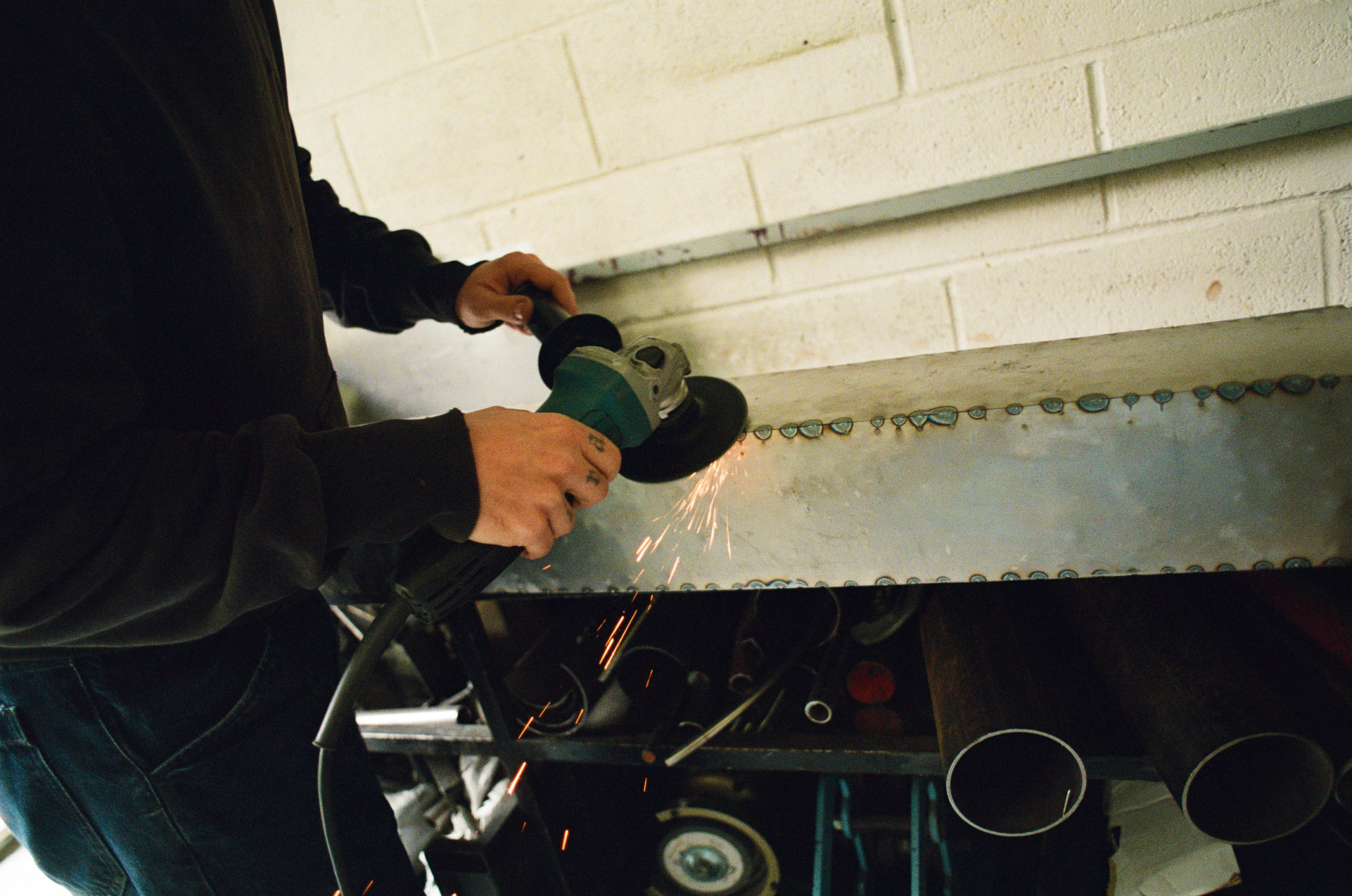
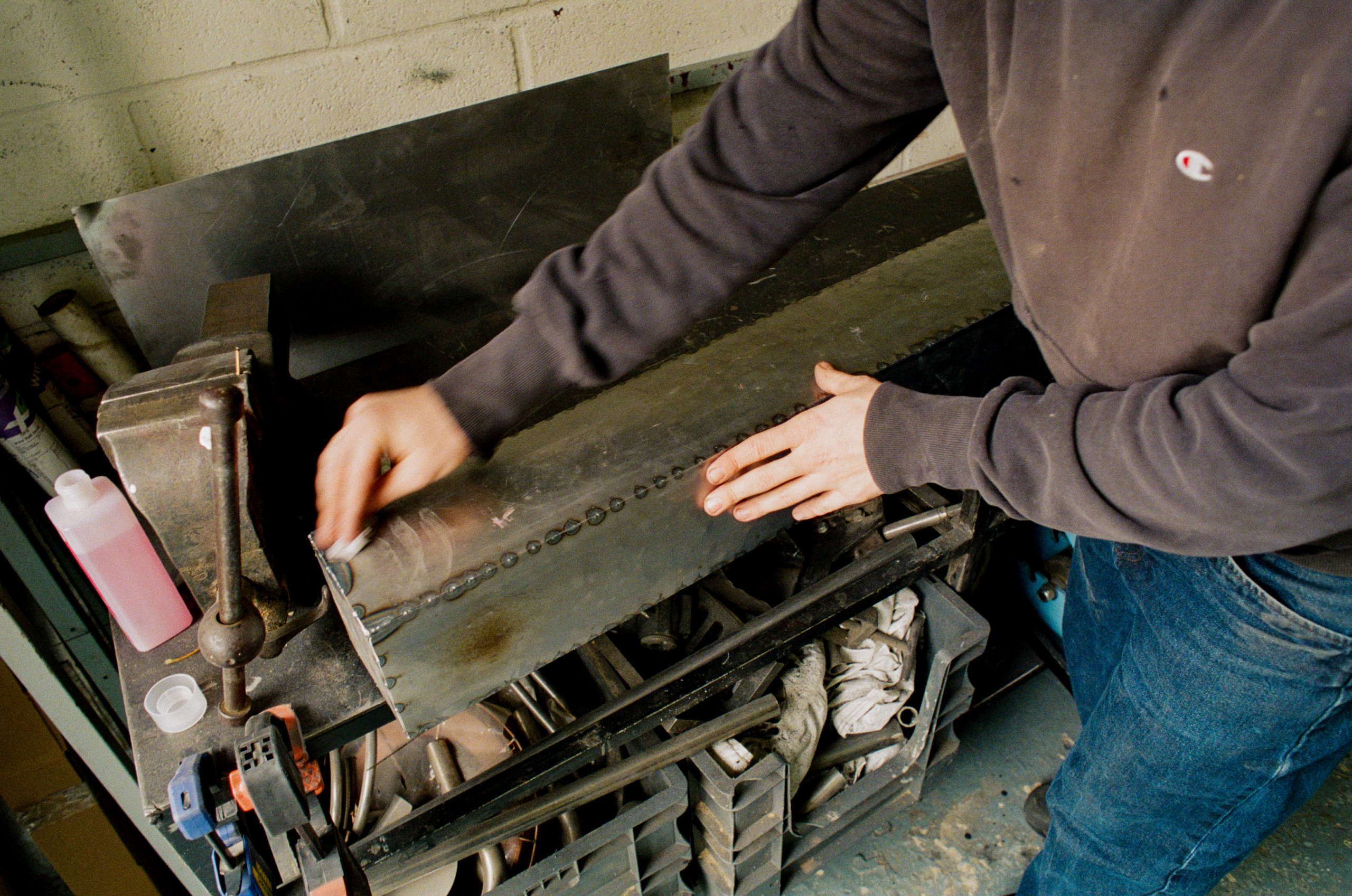
So I started teaching myself how to make things. I learned to weld, made a stool and started setting myself little briefs to develop a visual language.
It was around then that I started working at Jane Withers Studio two or three days a week. It’s a curation studio where I do research, some design and a bit of curation. Jane’s speciality is water, so we work on exhibitions around water systems, bathing culture and environmental issues. We recently did a big exhibition in Germany called Water Pressure, looking at how artists, architects and designers are responding to the water crisis.
What’s nice is that I’m not designing there directly, so it doesn’t drain the same creative energy as my own work. I still get exposure to loads of interesting ideas and exhibitions, but it leaves space for my practice as well.
The rest of the time is spent here in the studio trying to build my own work through exhibitions, commissions and collaborations.
You share this studio with two other designers. How does that dynamic work?
It’s me, Andu Masebo and Charlie Humble-Thomas. We all met through the RCA. Andu and I are more hands-on makers, while Charlie works more in industrial design and tech.
Originally we all shared one room, but it became chaos. I’d be welding, Andu would be woodworking and Charlie would be trying to take Zoom calls. So eventually we got another room downstairs.
But sharing a studio is amazing because we constantly give each other feedback. There’s complete honesty between us and a lot of trust. We all want the best for each other’s work.
And practically it’s useful too. Andu recently made a huge wooden bench for the new V&A East project and it completely took over the studio, so we all ended up helping with parts of it.
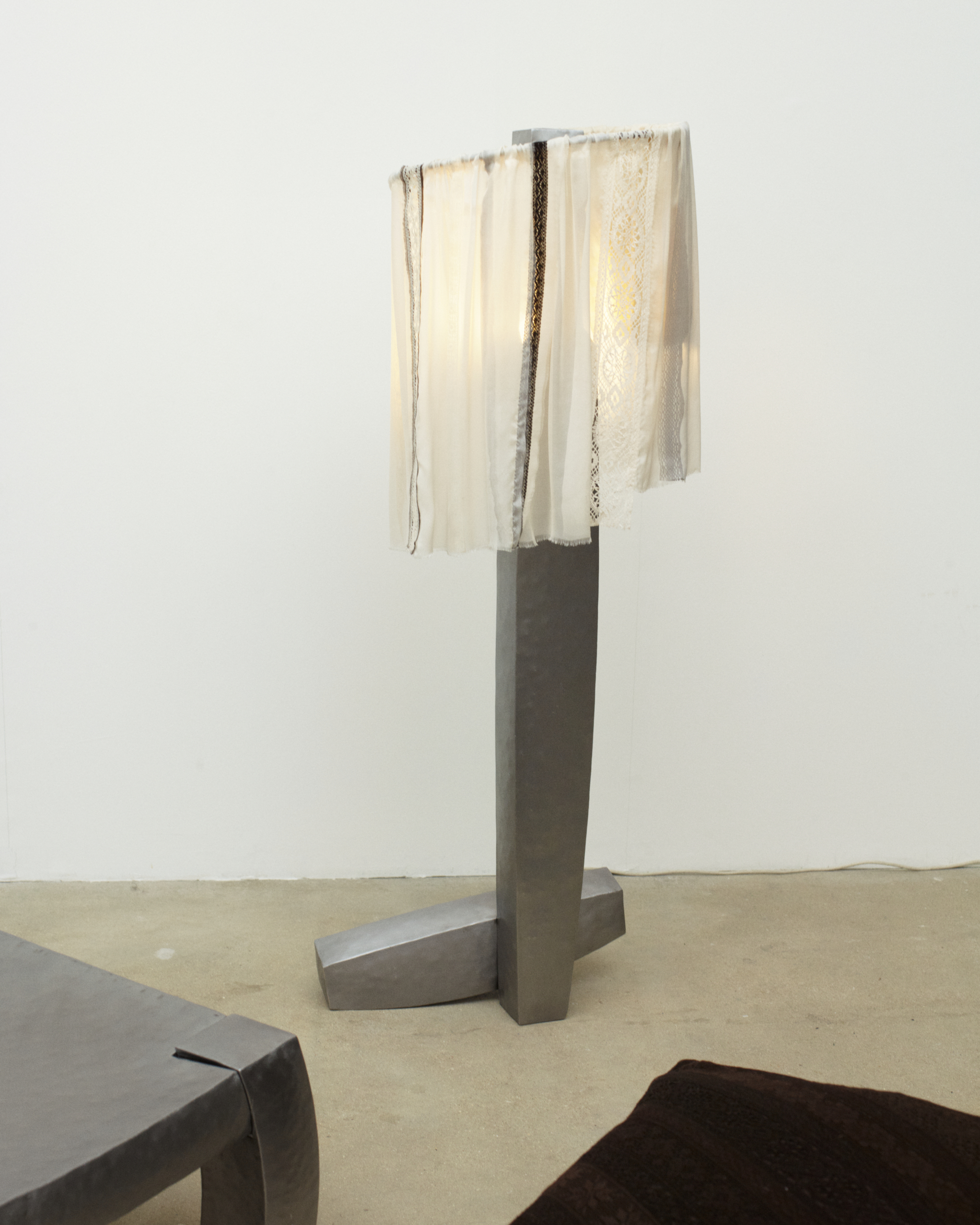
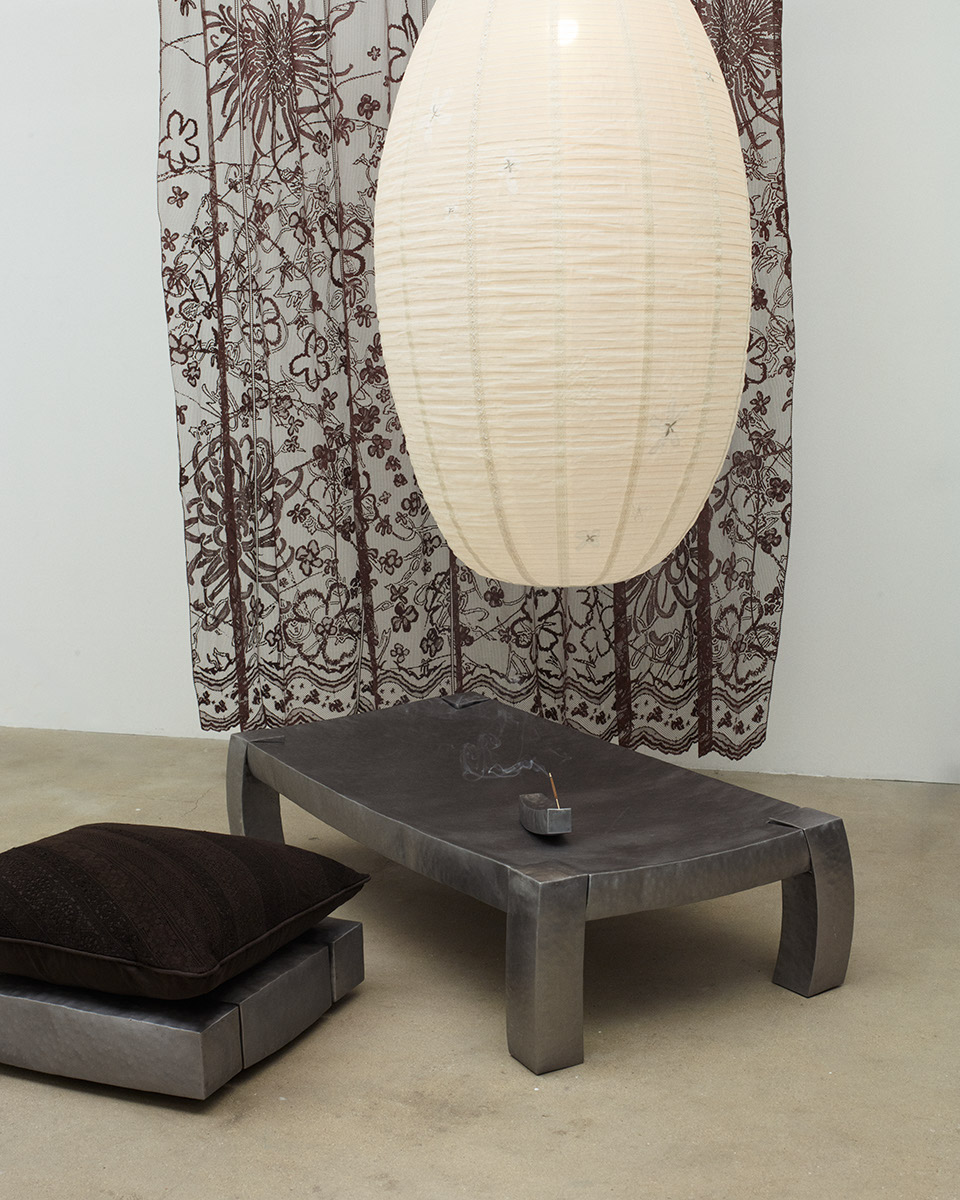
Can you talk about the metal furniture and lighting pieces you’re developing now?
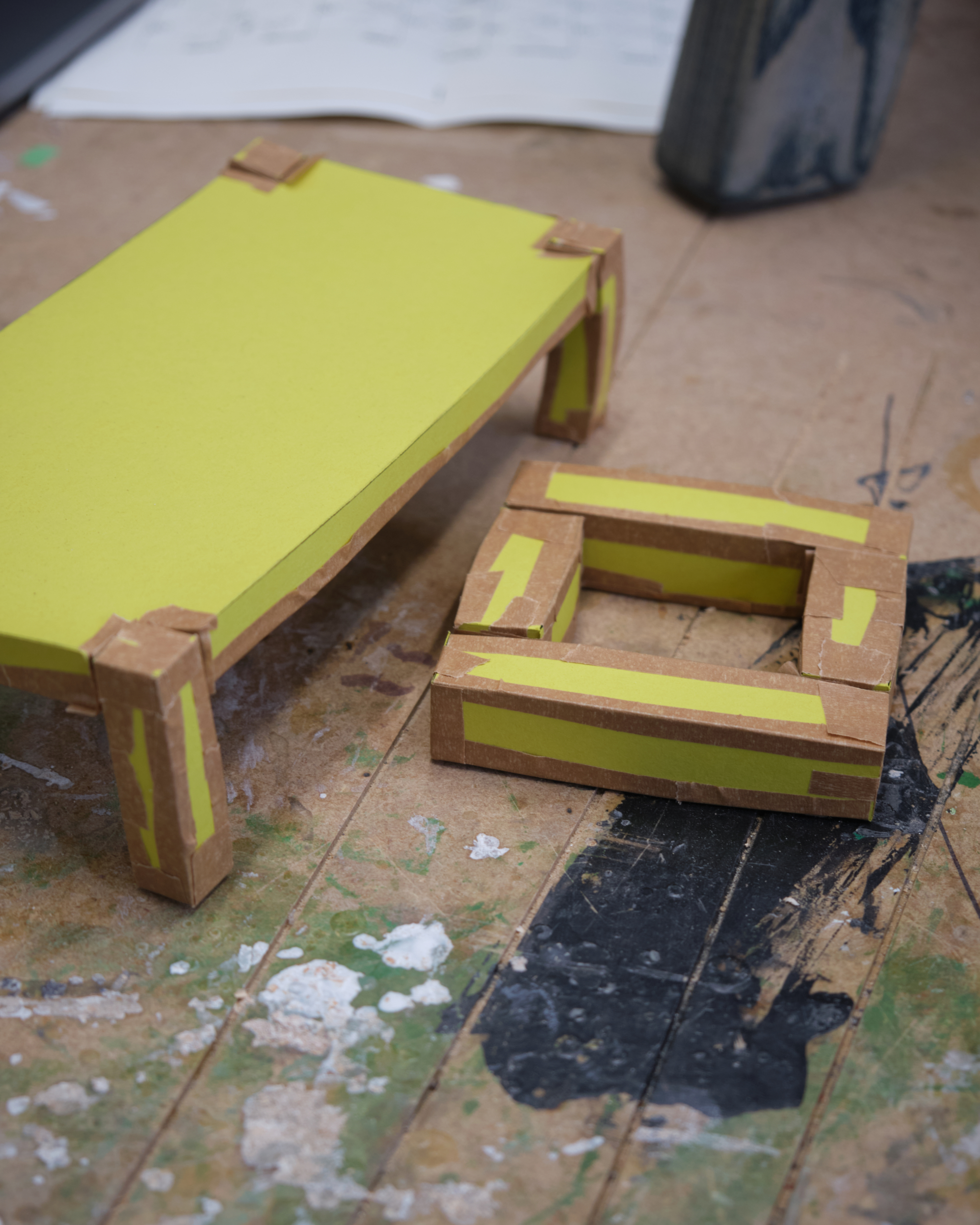
The whole thing actually came from a limitation. I was trying to design a lamp in Rhino, but I’m terrible at 3D modelling. So instead I started making paper maquettes.
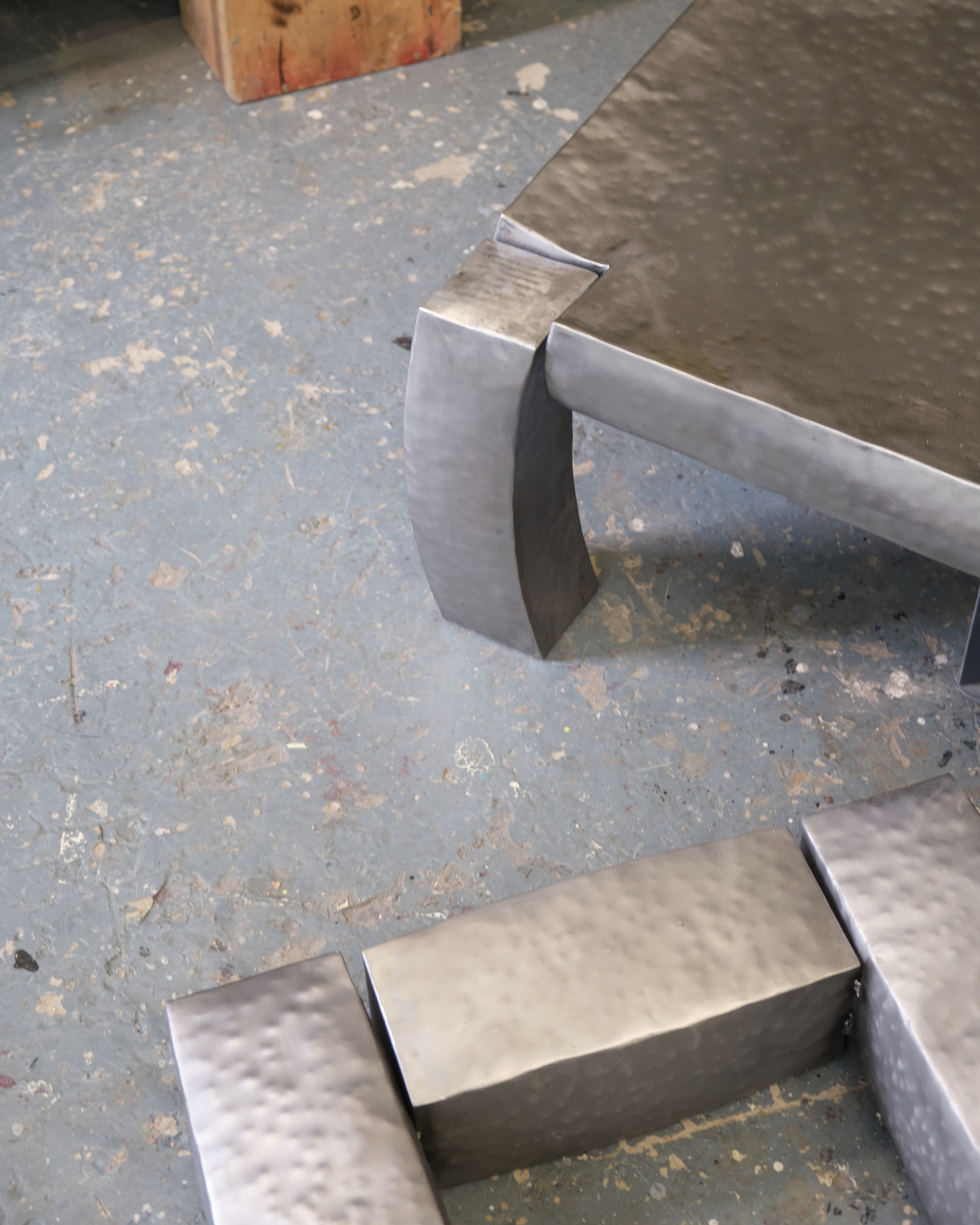
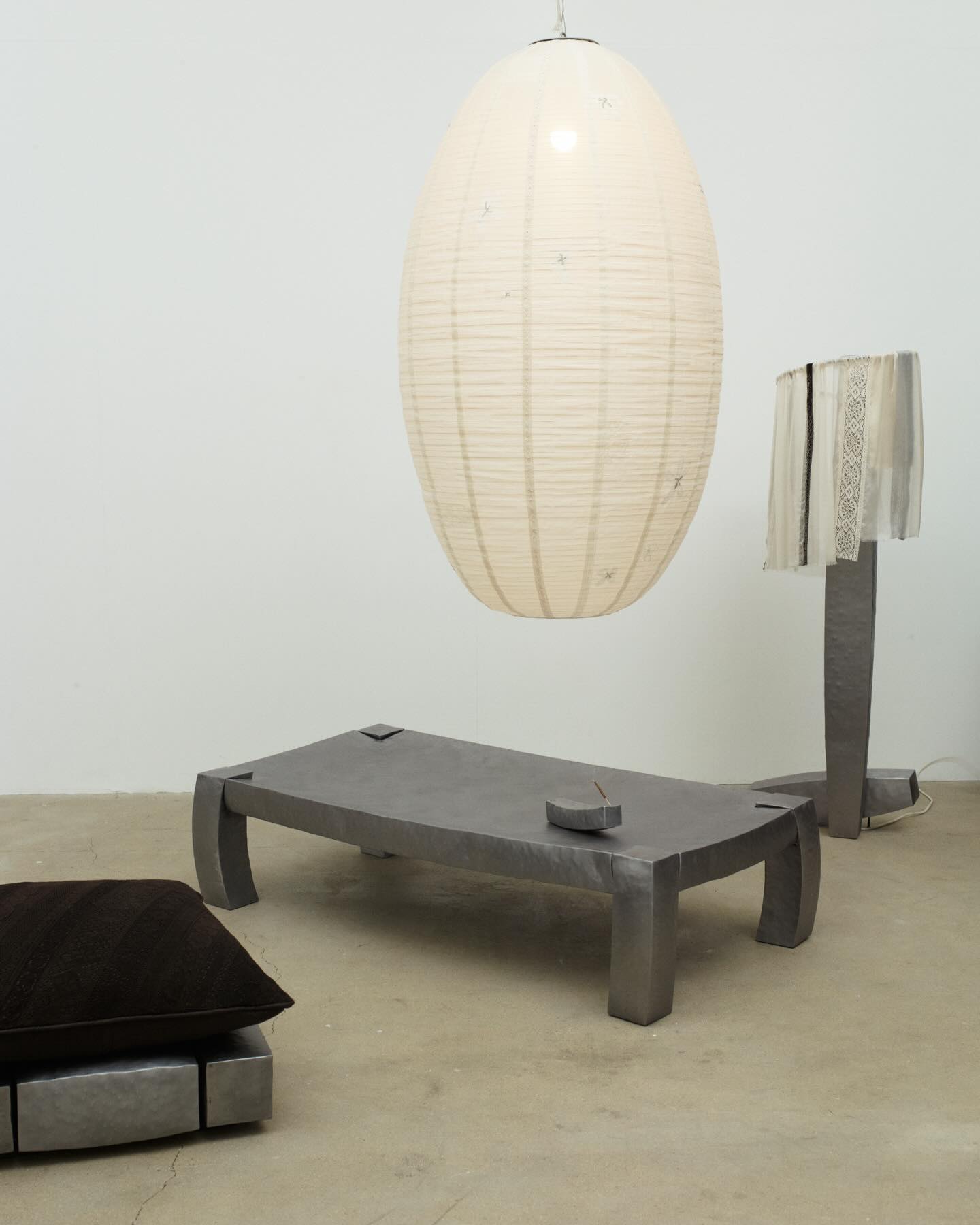
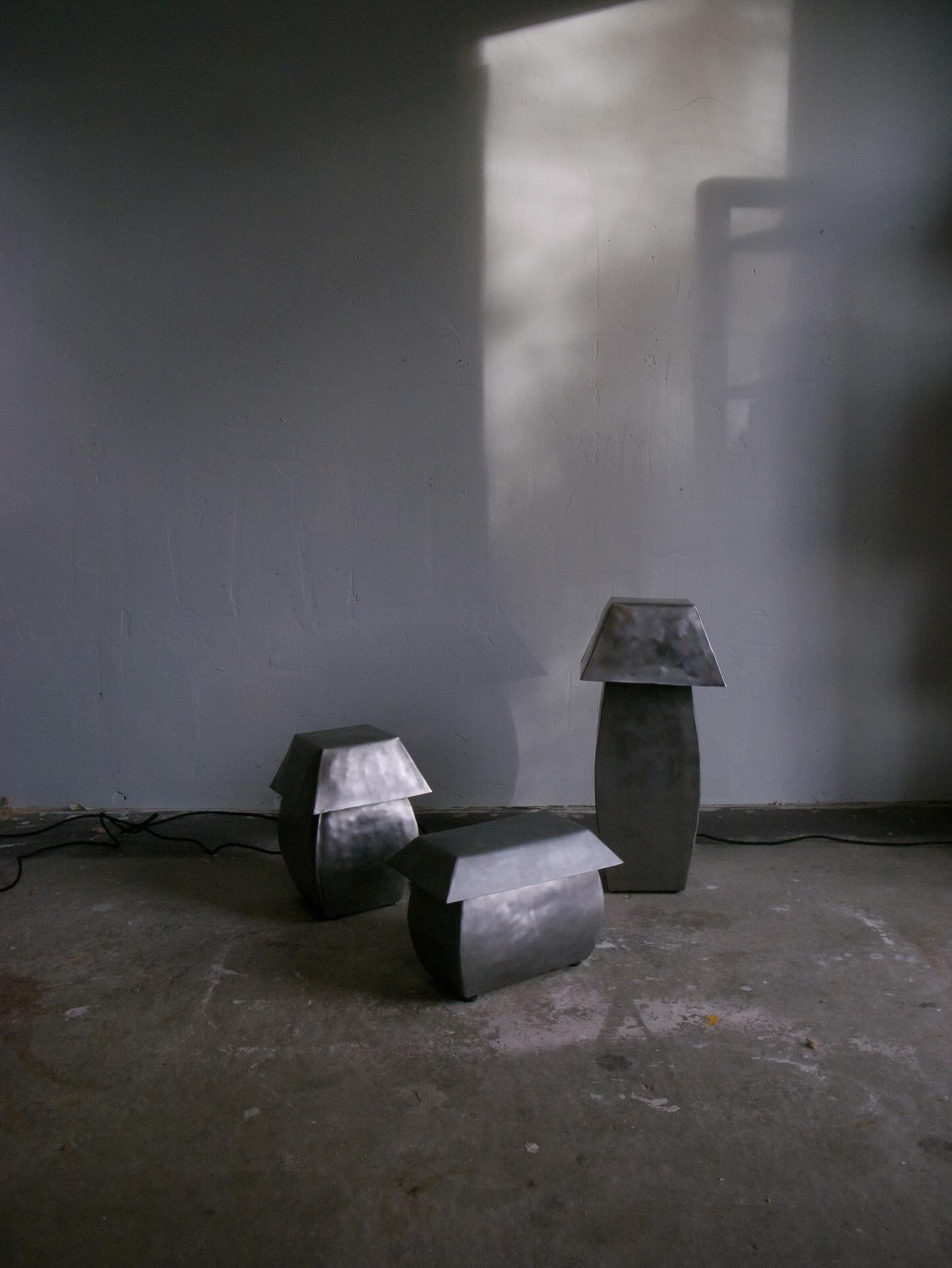
Once I moved into metal, I realised sheet metal behaves very similarly to paper. The curves happen naturally when you hammer it. It became this process of building things in paper and then translating them into metal.
I really liked how intuitive it felt. The forms almost look cartoonish – like scaled-up maquettes. When I made the chair, I realised it didn’t really look like a normal chair, but it felt true to the original paper model. I liked that slightly exaggerated quality.
There’s a softness to them despite the material.
Yeah, exactly. The metal almost behaves like folded paper. It creates these very natural curves.
I’m continuing to develop that language now through mirrors, floor lamps and smaller objects. I’ve also been experimenting with introducing textiles – draped silk, for example – into some of the lighting pieces.
How have you found the creative community in London?
Honestly, it’s felt very seamless. Most of it started through the RCA, then friends of friends become your friends and it expands naturally.
I feel really lucky because I have close friends across architecture, textiles, product design and curation – all these overlapping creative worlds.
I think moving to London through school made a huge difference. If you move to a big city without that structure, it can be difficult.
And I just love the access here. I try to see as many exhibitions and shows as I can.
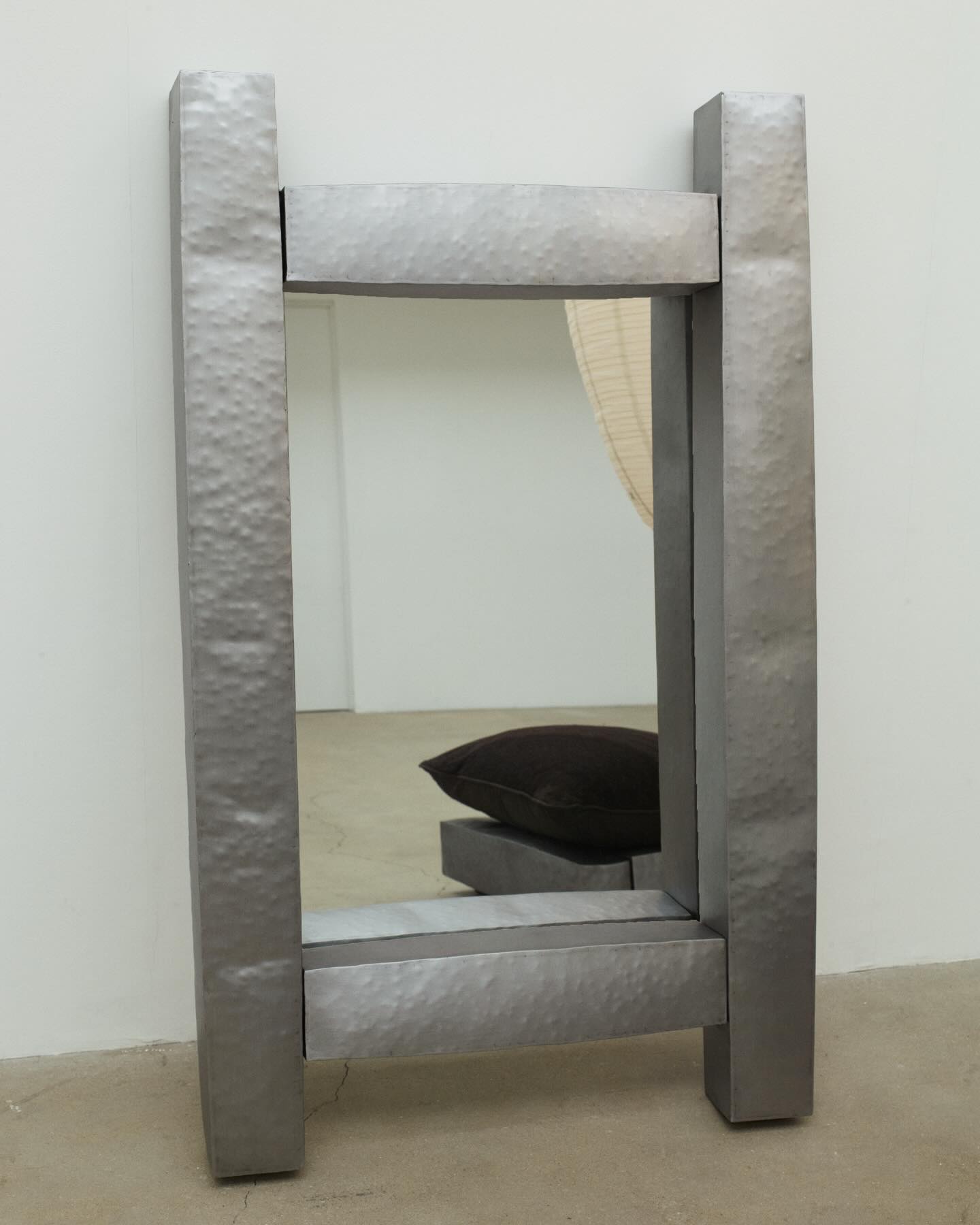
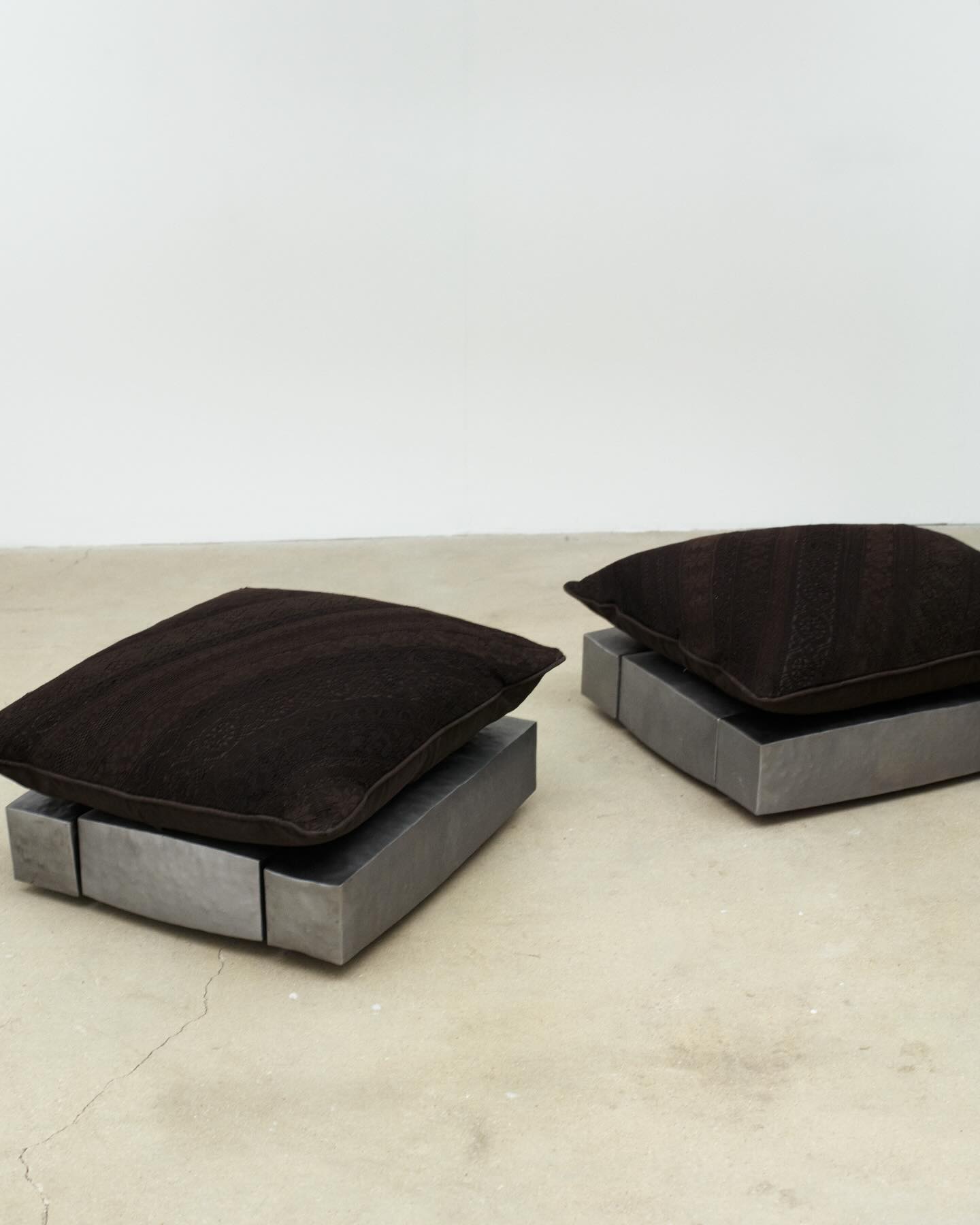
You seem incredibly disciplined with work.
Yeah, I try to be in the studio every day that I’m not at my other job. Usually six days a week, with Sunday off.
I work best with quite a strict routine. The more time I spend here, the more space I have to think properly.
But when I’m away from work, I really need to disconnect completely. My girlfriend brings design books on holiday and I absolutely can’t do that. I want to be at the beach reading trashy novels or classics or just anything unrelated.
Your girlfriend is also a designer?
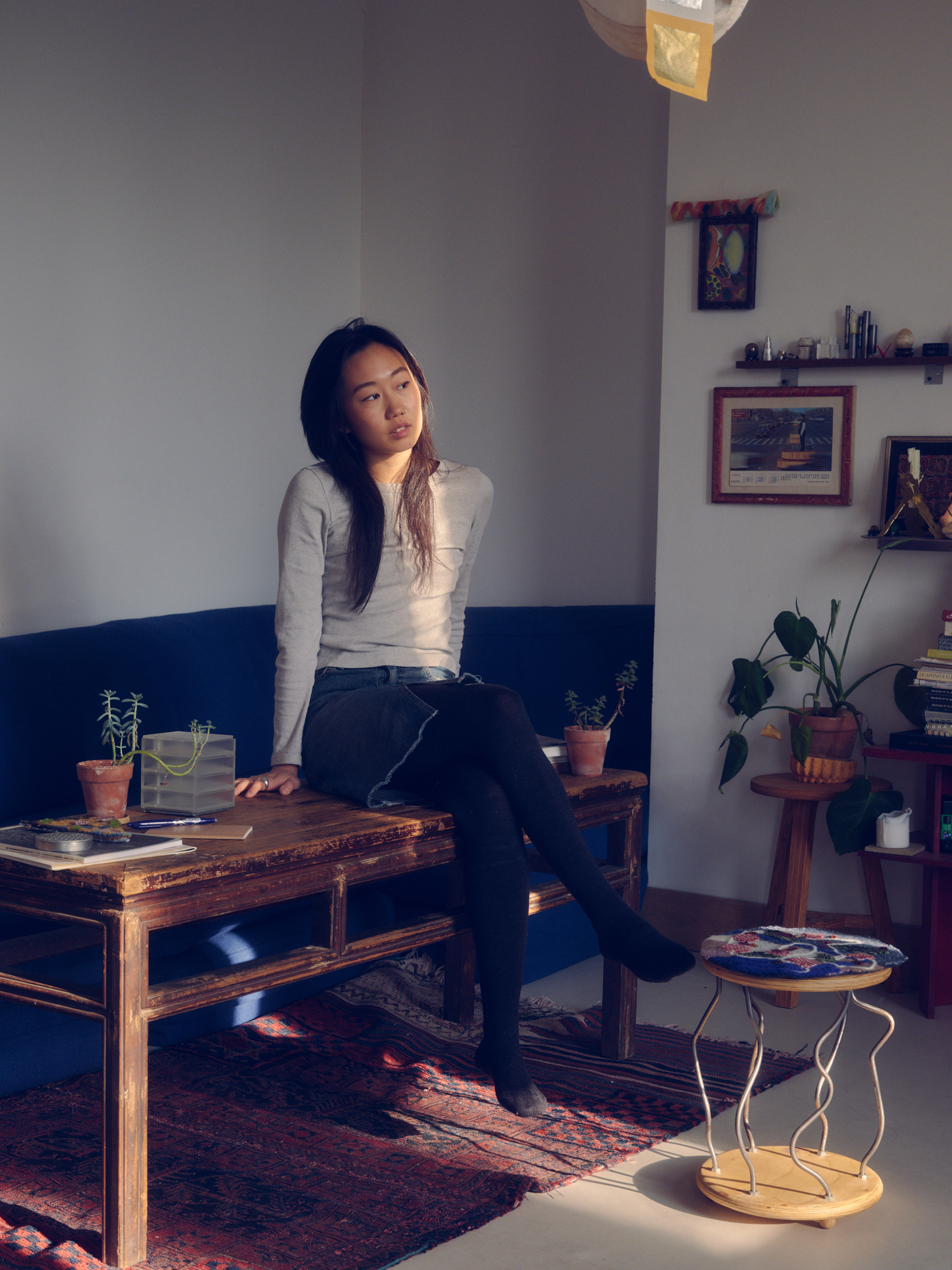
Yeah, we met at the RCA. She studied textiles and splits her time between London, Spain and Brussels, where she’s from.
She [Jane Wright] is also who I’ve been collaborating with recently to introduce textiles more directly into my work. For Alcova during Milan Design Week, we’re presenting a project together called On the Soft Edge. It brings together her textile works with my steel furniture, as well as a series of collaboration pieces that fully bring our materials and sensibilities together.
We’ve been thinking a lot about the tension between ornament and utility, softness and heaviness, and the way domestic objects carry these gendered histories and associations. It’s been exciting because it pushes my work somewhere less rigid. There’s something interesting about putting these monolithic metal forms into dialogue with lace and textile traditions.
What’s next for you?
Longer term, I want to do a show during London Design Festival based around paper lanterns. I’ve been developing these sewn washi-paper pieces where I stitch together large sheets of Japanese paper using a sewing machine.
The idea is to eventually do a live installation during LDF – just sewing continuously throughout the exhibition so the paper gradually fills the space.
Alongside that, I’m researching flowers. I want to choose somewhere between eight and 12 flowers, research their histories and migration routes, and then design a vase specifically for each one.
Flowers are fascinating because they’re not strictly useful. People have mostly cultivated and cared about them simply because they’re beautiful. Through flowers you can talk about colonialism, trade, material culture, selection and economics – there’s so much there. Tulips alone have this whole history tied to speculation and finance.
That’s probably the project I’m most excited about right now.
Suggested stories
An Artist’s Home in Hackney with Plenty of Creative Headroom
Going Out, Staying In With Dan Pope
Filippo Muzi Falconi’s World Is Filled With Wonder, Naturally
Making Work – and a Home – Out of Restrictions, Remains and Resourcefulness
A Designer Finding New Forms in Ancient Traditions
A Collector Who Sells – and Lives With – the Things She Loves
Functional Beauty: Jewellery Designer Helena Vieira’s Converted Warehouse Apartment
The State of Design? Designer David Searcy Has Thoughts
Jewellery Designer Jessi Burch’s Brooklyn Apartment is a Portal into her Mind
How “primitive craft” and “contemporary production” come together at Lewis Graham’s studio
An Apartment With No Sofa But 50 Lamps
A Happy Family Collaboration in De Beauvoir
How “The Muse of Spirited Resourcefulness” Guided The Making of Glass Artist Juli Bolaños-Durman’s Edinburgh Home
ON UGLINESS WITH DAVID MICHON, AUTHOR OF FOR SCALE
The Home That Thomas Wheller Is Making
Designer Jake Robertson’s Home is a “Living Library”
Jewellery Shaped by Architecture, History and the Human Hand

THE SCURA GUIDE TO GOSPEL OAK & AROUND
Scura Selects: November 2025
Luke Malaney’s Work is Always in Motion
Going Global: Reflections and Recommendations from Flawk’s Show at Collectible NYC
The Fluent Creativity of Liyang Zhang
SCURA Selects: What to see at Open House & LDF
FRIENDS OF SCURA: ALEXANDRA ARIAS
What is Flawk?
A Design Duo’s Reunion with a Family Farmhouse in Alsace
The best eats in London under £20
Introducing the Flawk Shop: a new home for a family of objects
An Architectural Adventure in Finland’s Far North
Freddy Tuppen’s Flat Keeps Getting Better
A Slower Guide to Istanbul
Inside A Copenhagen Apartment Shaped By Instinct, Collaboration and Kerbside Finds
A Guide to Copenhagen, Curated by a Design Duo We Love
Step Inside Tom Golland’s Colour Playground
Picasso Chairs and Playful Precision: Josh Page’s Creative World
Ajay Larr on the Architecture of Food and Why Meals Matter
A Slower Guide to London
The Scura Guide to eBay
The Homespun Beauty of Textile Designer Isabel Farchy’s Patchwork Panels
NYC Design Getaways
Our friends: PPP LAB on crafting for simplicity and usability
Hidden Feasts: Jiaonest
Scura’s Guide to Independent Stoke Newington
Welcome to Scura