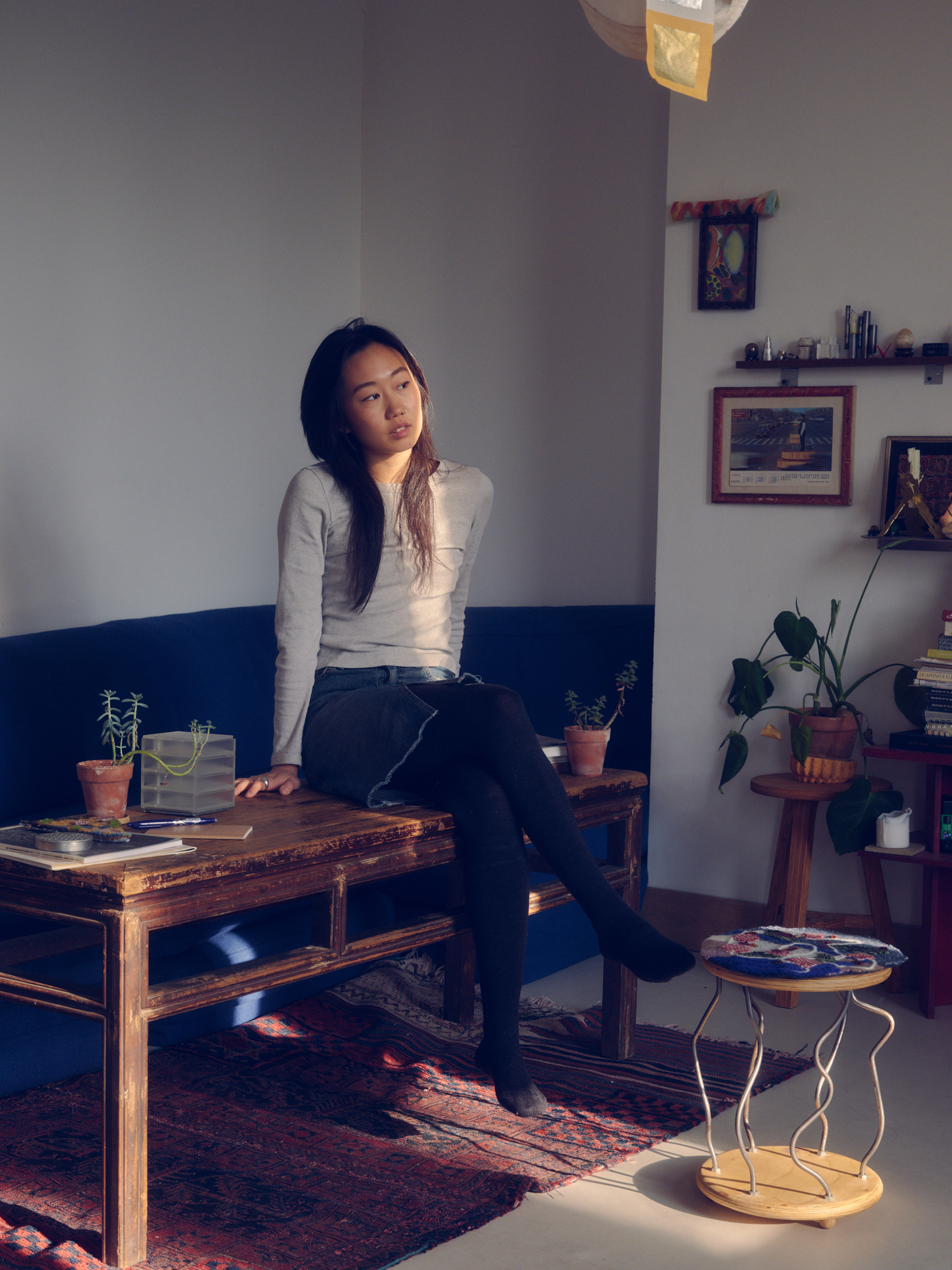
A Collector Who Sells – and Lives With – the Things She Loves
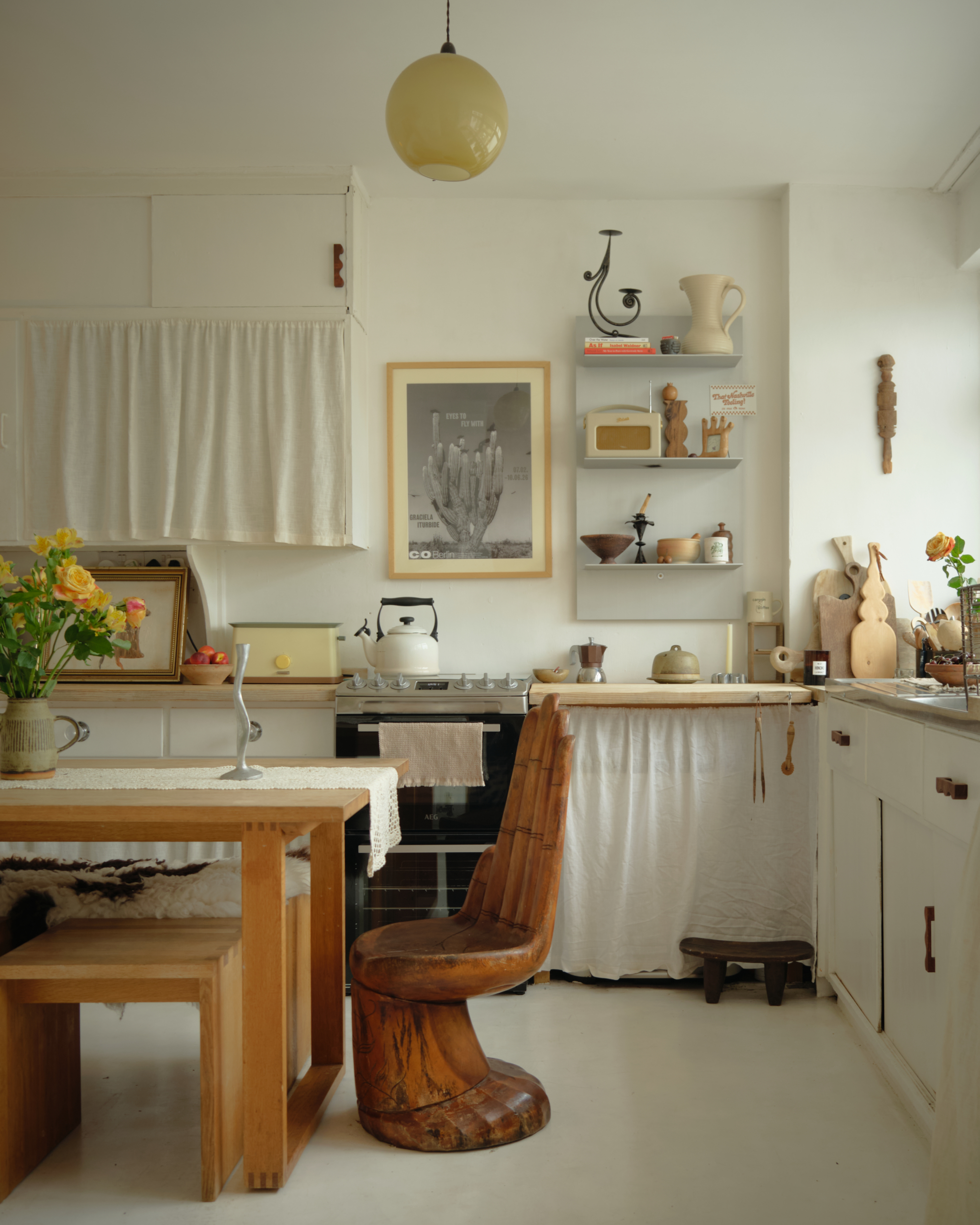
“Why have a normal chair when you can sit in a hand that was made in the 60s by a master craftsman?” That’s the question Megan Abbott puts to us as she shows us around the kitchen of her flat in Camberwell, pausing beside said chair, positioned at the end of a vintage Heal’s table gifted to her by the previous owners when they moved out. And, honestly, she has us there. Spend five minutes with Abbott, surrounded by a home full of objects that are, as she puts it, “a little bit silly”, and you’ll end up wondering why anyone wouldn’t want to sit in the upturned palm of an oversized wooden hand every day.
Abbott inherited her love of interiors from her mother, an avid collector with an insatiable appetite for colour, texture and beautiful things. “She’s like a dog that doesn’t know when to stop eating,” she laughs, before recognising the same magpie tendencies in herself. For Abbott, collecting is about creating a home that reflects her personality. “I think with interiors, some people would say it’s shallow, but I think it’s the complete opposite,” she explains. “It’s so personal. It’s an extension of your feelings, your family… It’s this interior world that you let people into. My mum always made me feel that way.”
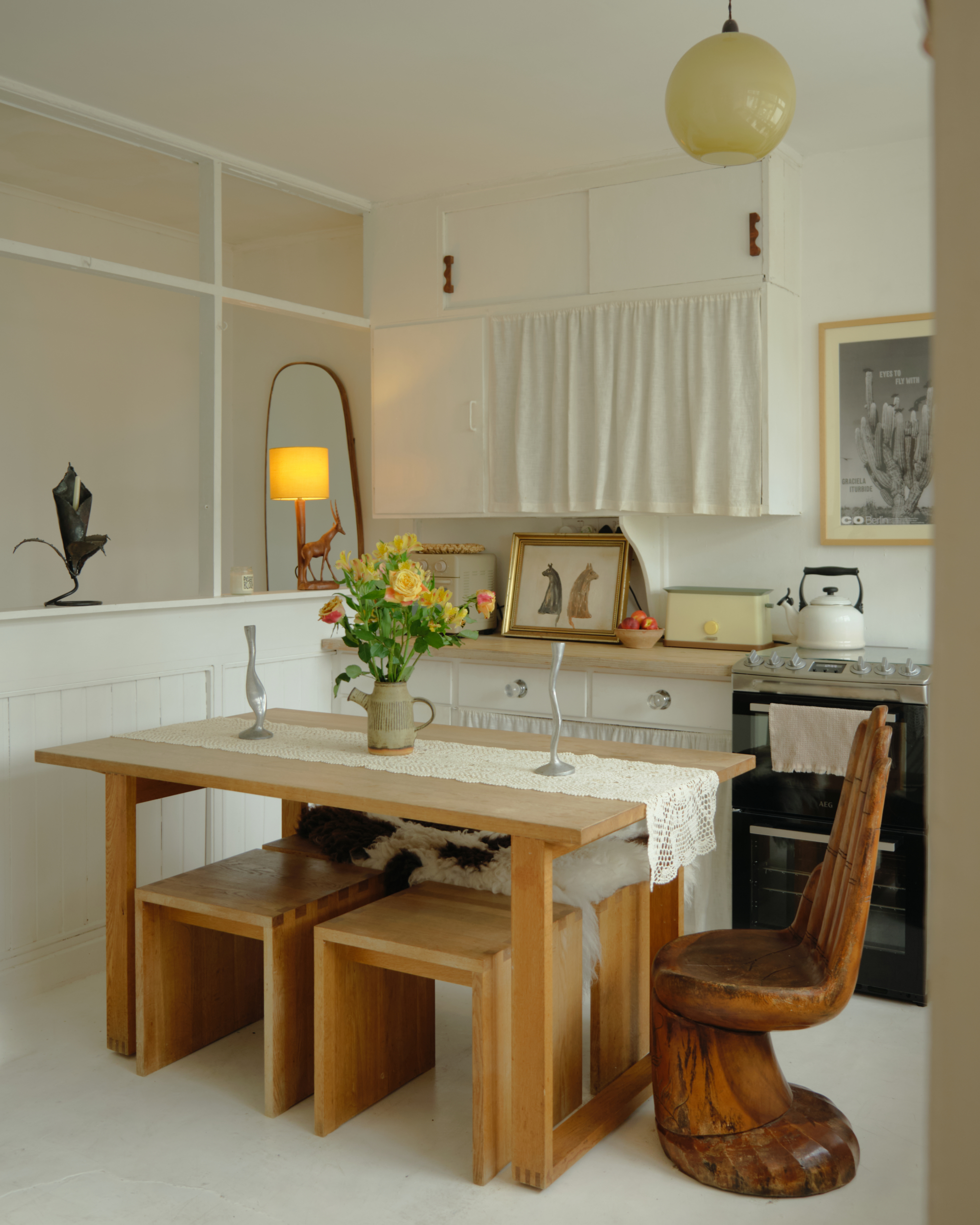
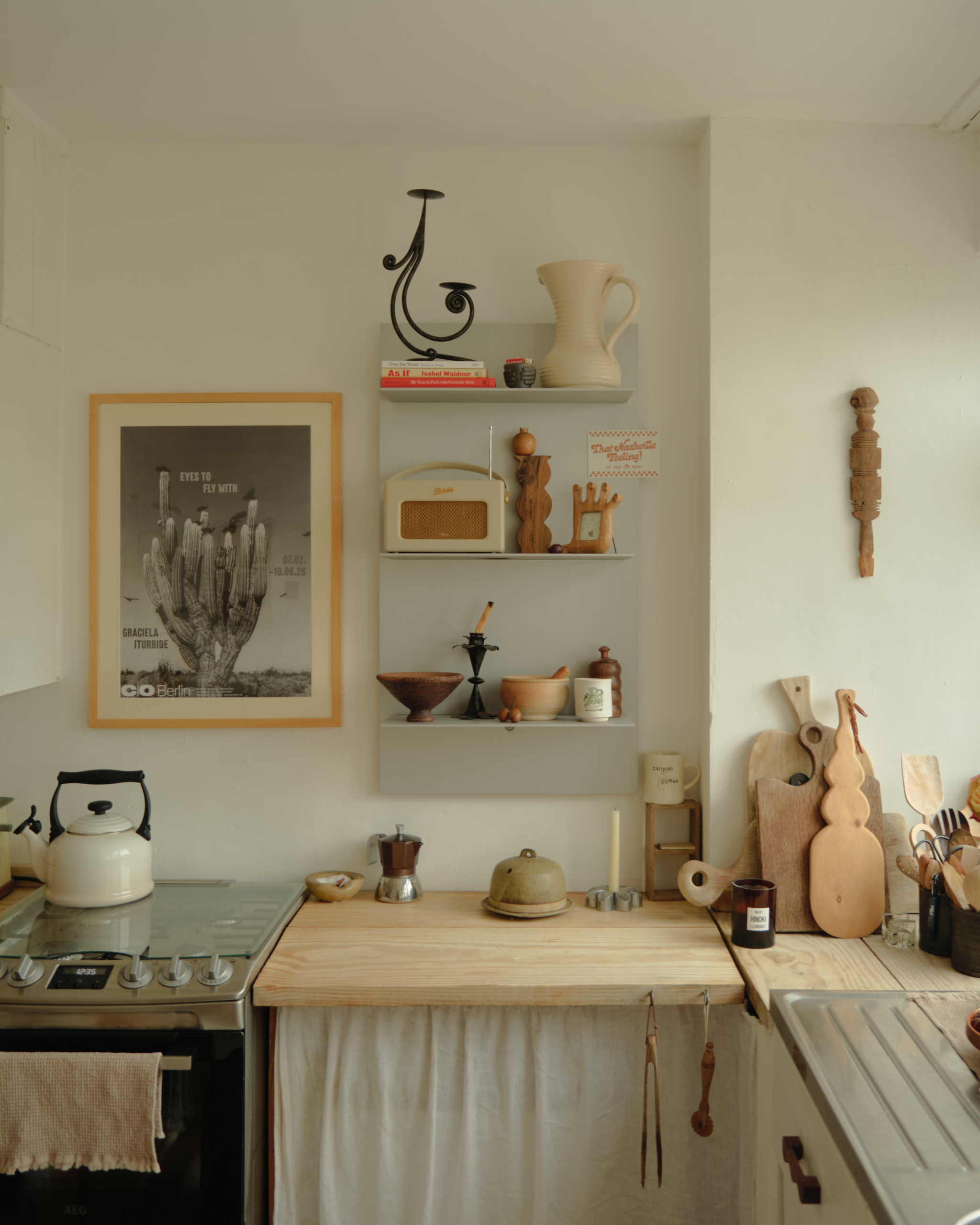
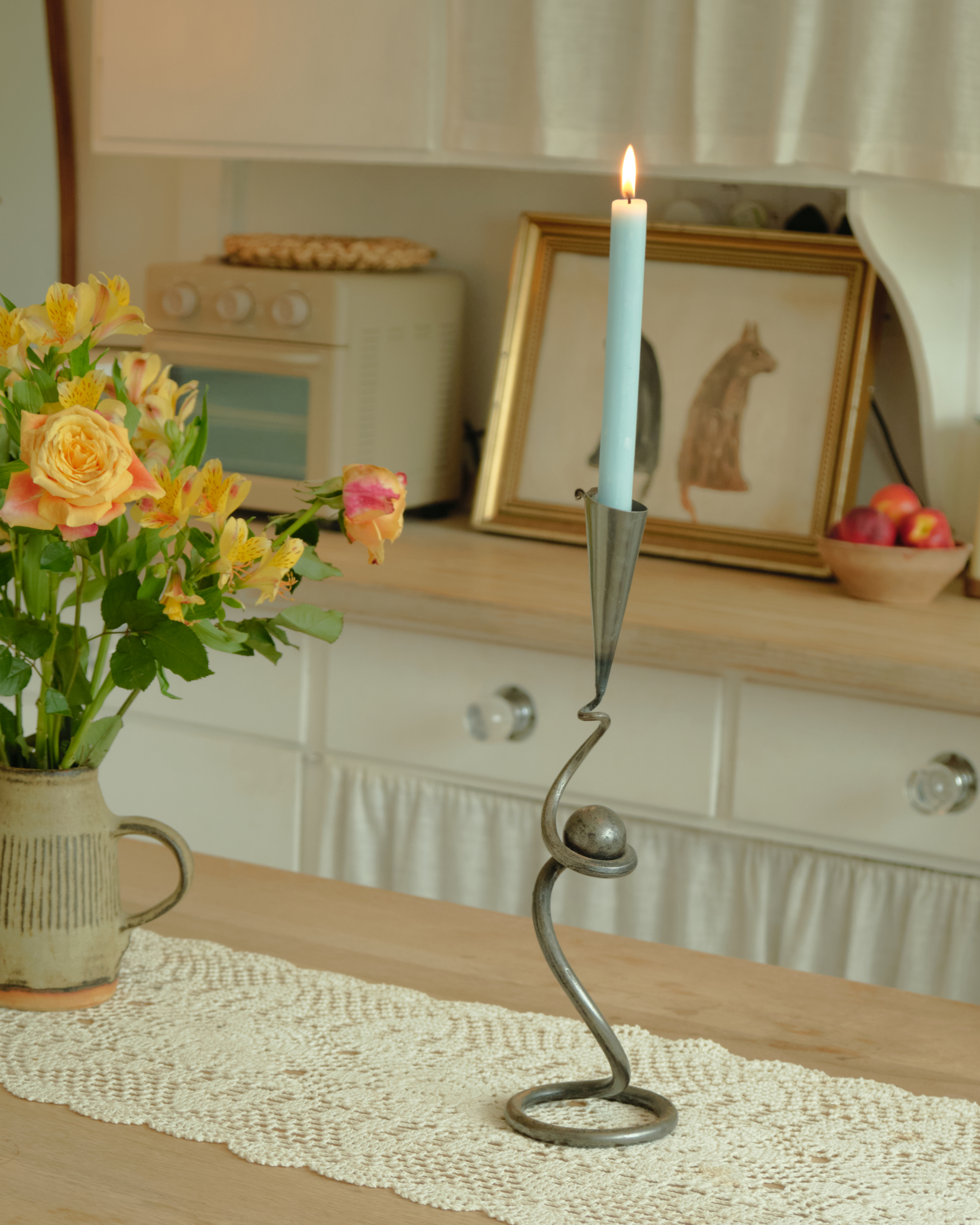
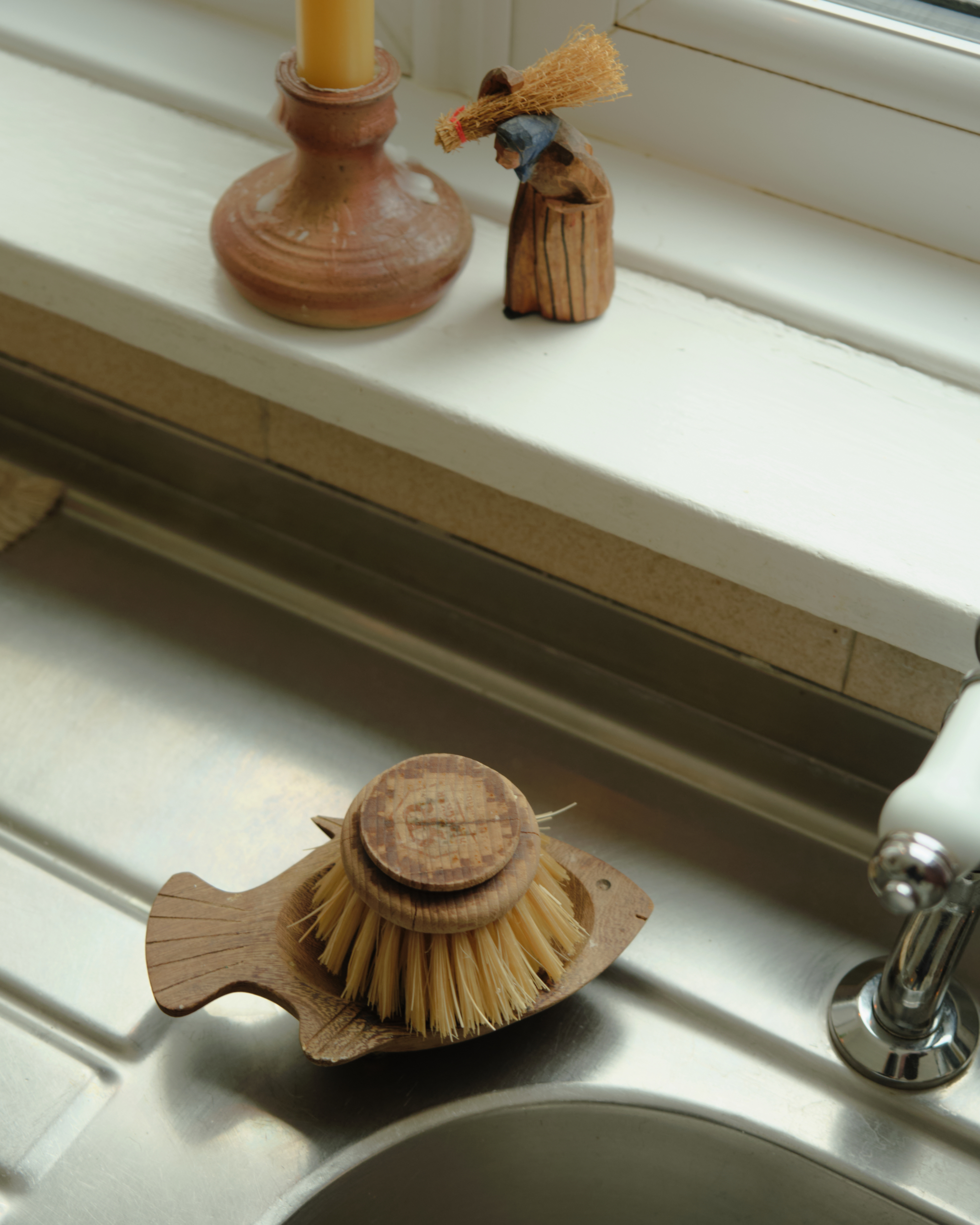
If her mother passed down a love of objects, Abbott has made it unmistakably her own. “I suppose my style is embodied in the hand chair,” she says. “It’s a little bit silly, a bit surreal, but it’s also incredibly well made. I love that it seems to belong to no particular place or time – it was made in the 60s, but it could be much older, and there’s something almost Mexican or Spanish about it.” Its beautifully darkened wood bears the marks of decades of use, only deepening its appeal for Abbott. “I’m really interested in this move towards people valuing older objects that have been loved, cared for and used,” she says. “I love pieces that make you look twice – objects that are playful but crafted with real seriousness.”
The same instinct is what drew her to the place she calls home: a single-level, two-bedroom flat in a modernist block full of quirks and contradictions. “It’s got most of the original features, which drives plumbers mad, and nothing really works well,” she laughs. “My girlfriend, [Polly], is a very functional person and this flat is the opposite of her personality.” Yet it is precisely those peculiarities that won Abbott over. To reach the front door, you climb three flights of stairs, despite there being no neighbours above or below, while the terrace feels remarkably secluded for such a dense part of London. “It feels like a private pod,” she says. And she loved how bright and airy the space is – so flooded with natural light, that she resisted her instinct to introduce colour throughout the flat. “It felt right to keep it painted white, exactly how I bought it,” she explains.
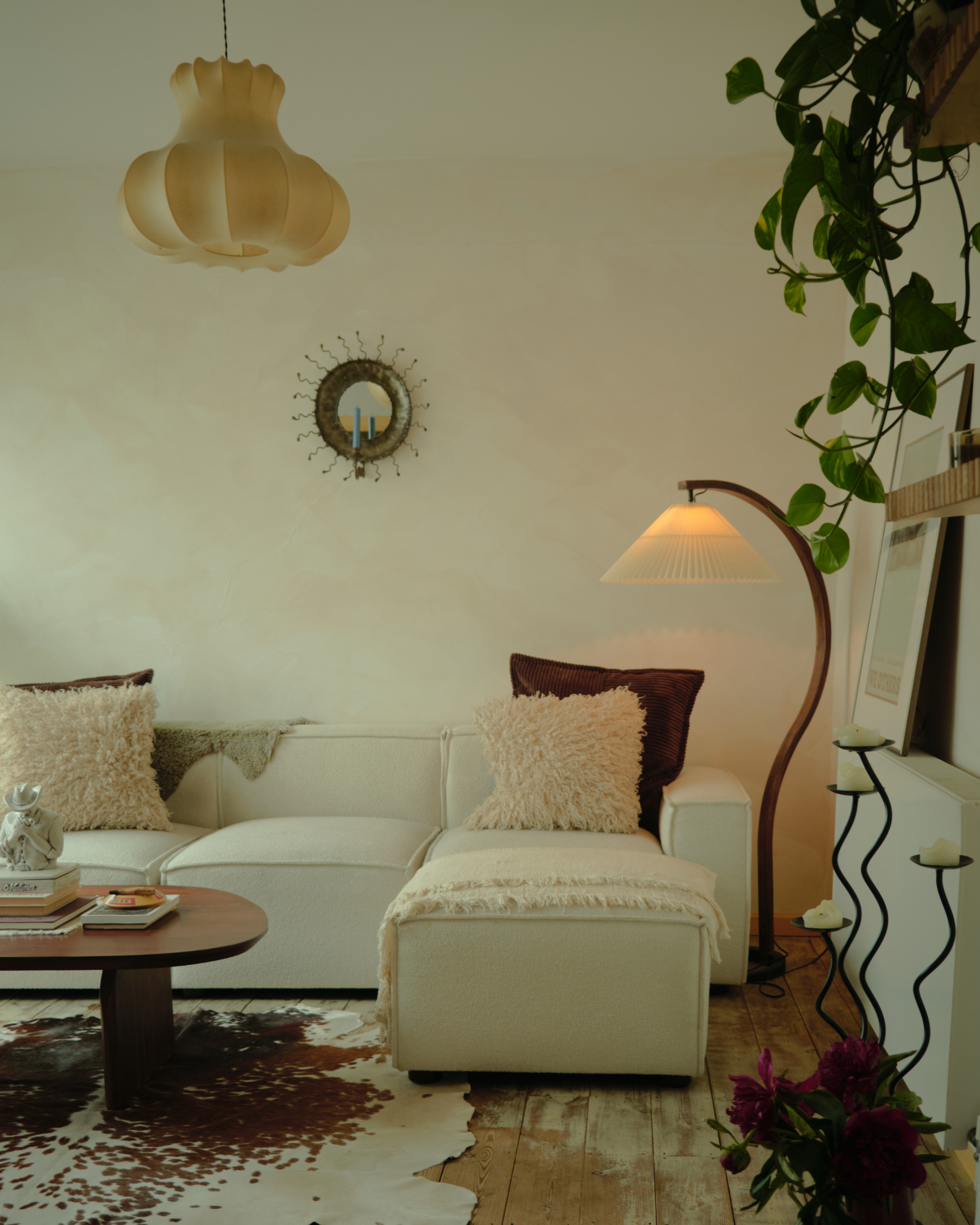
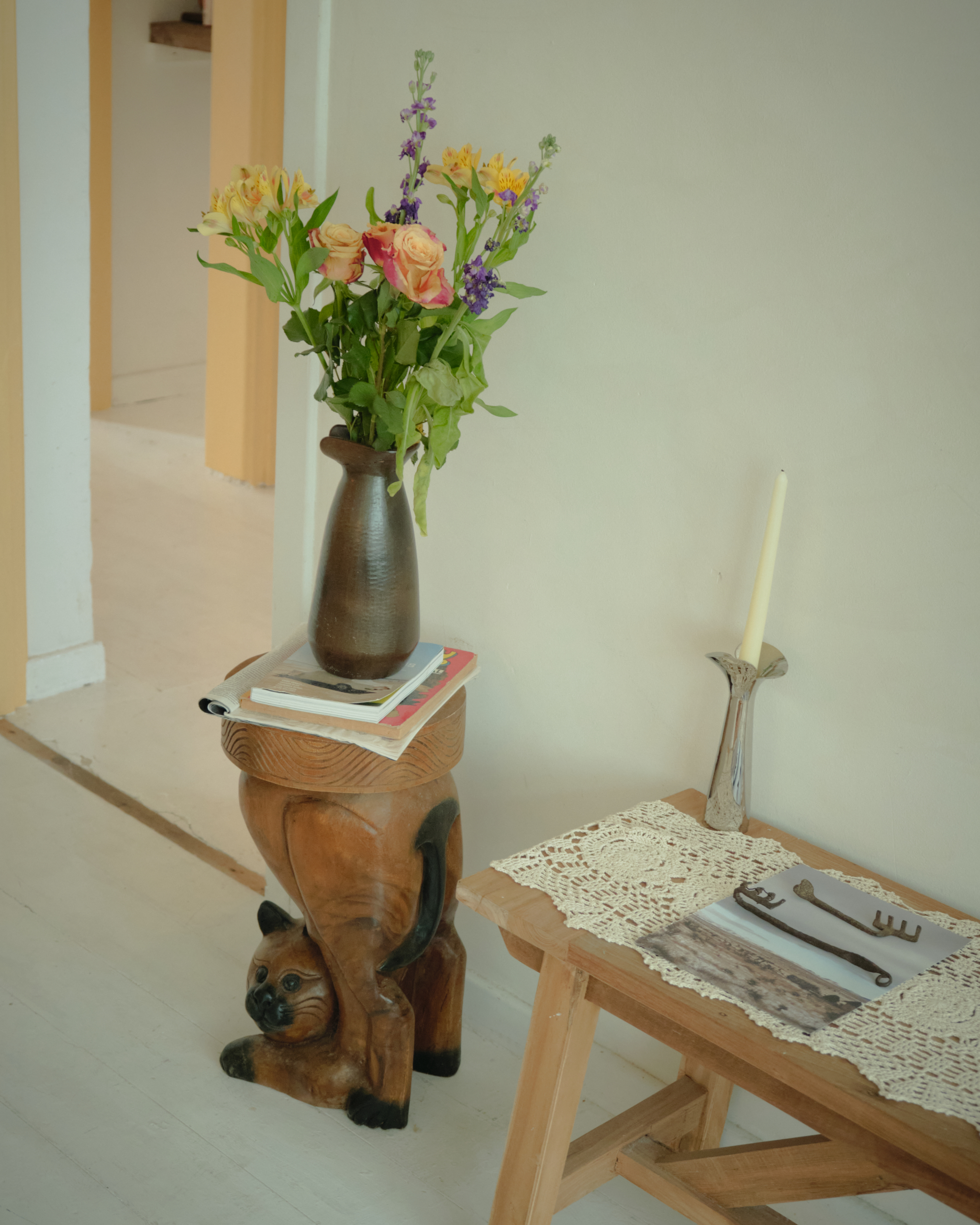
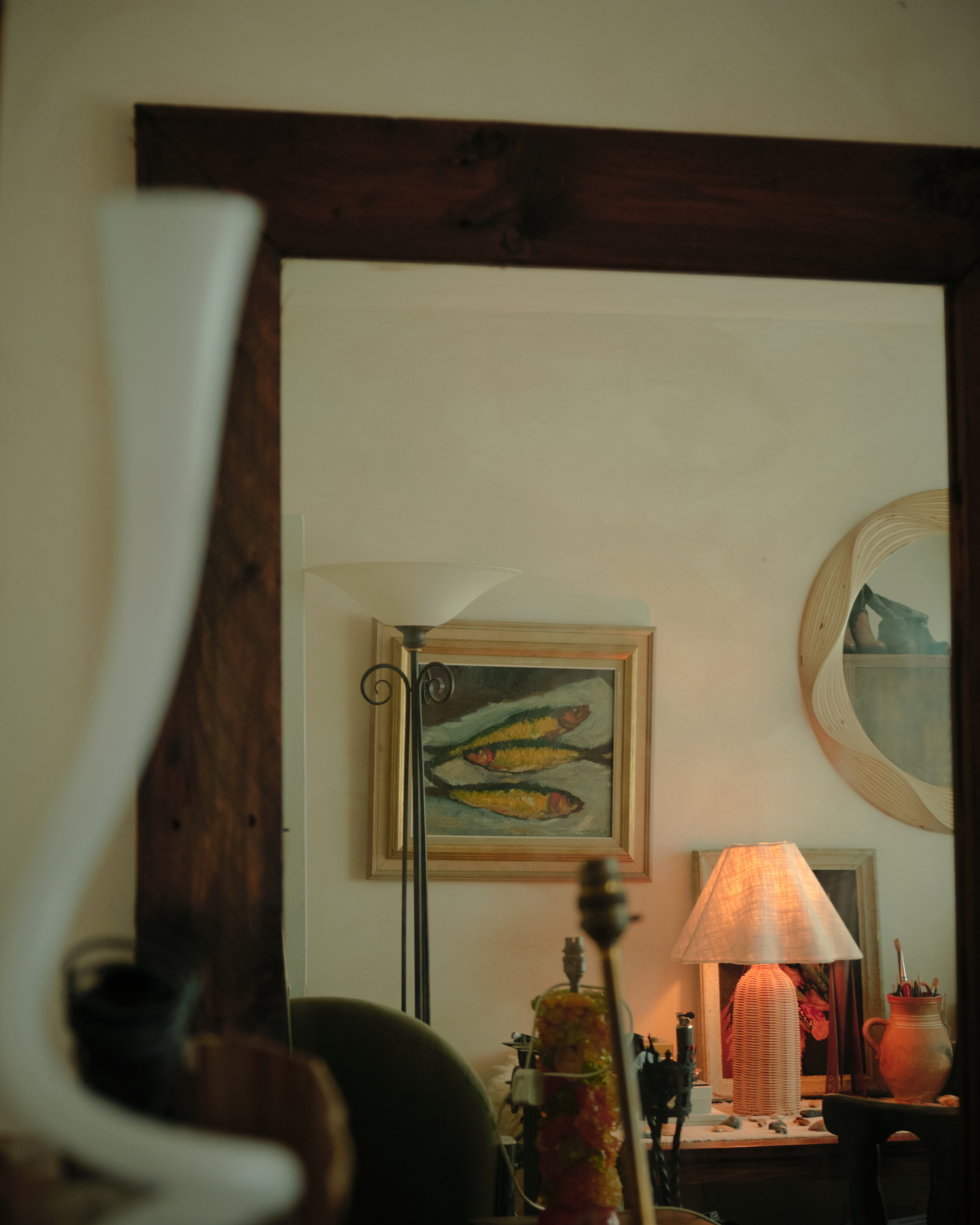
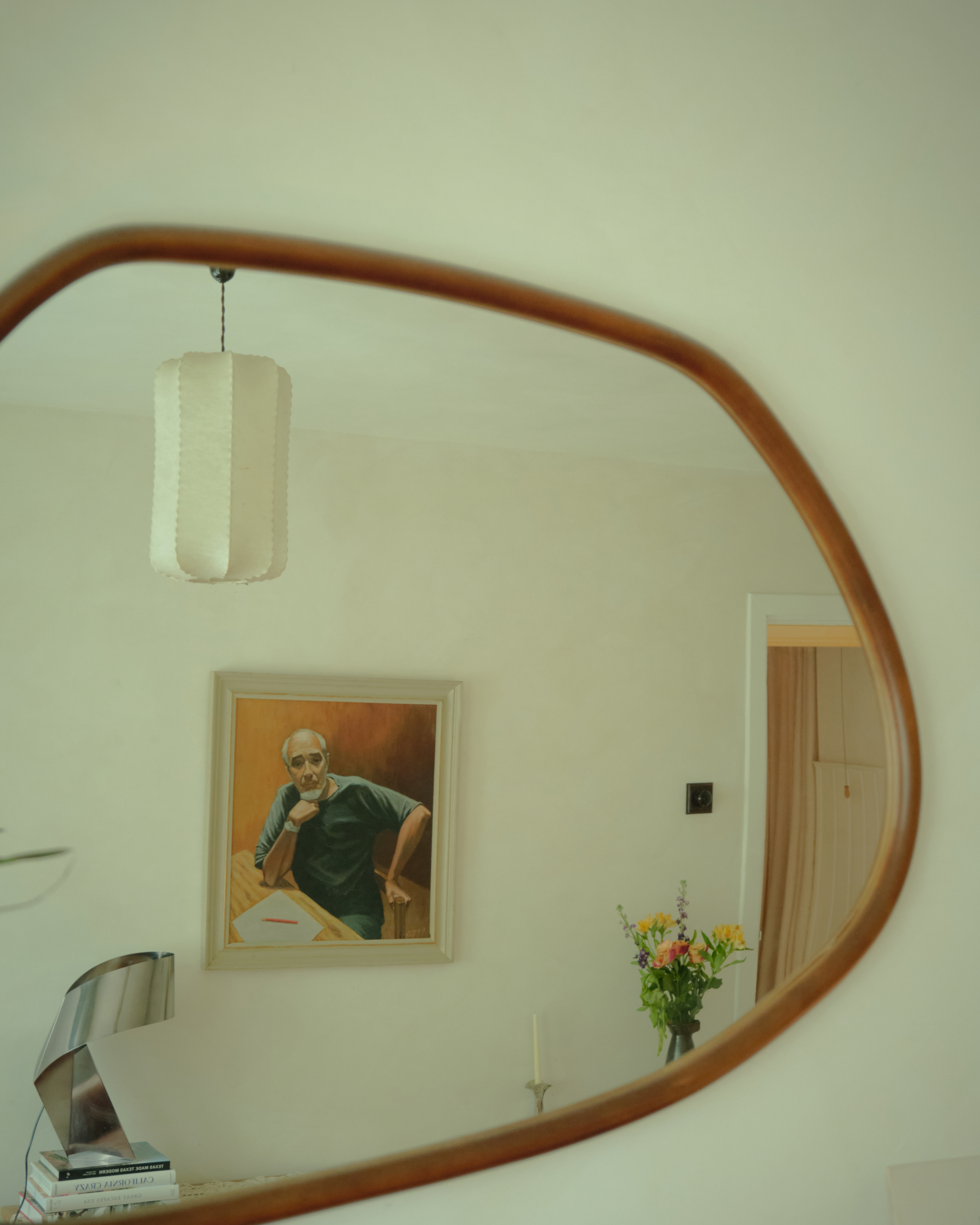
It’s with this blank canvas that Abbott got to work furnishing the space, spending two weeks “laser focused” on sourcing furniture from antique markets, and nearly breaking her back getting it all up the stairs. But if it was an effort to deck the place out, it’s also a process that got under her skin: last summer she launched Nica Hoop, a vintage furniture and object shop through which she sources and sells pieces with the same amount of character she likes to live with. “I’m a very impulsive person,” she says, “so when I thought about doing it on holiday last summer, I just thought, ‘fuck it, I’m just gonna set it up.’”
Looking back, though, she sees how she’s been slowly cultivating a taste throughout her life, starting with her mum’s influence but also through an art history degree, working as an editor for a travel magazine, writing about design and, more recently, working with an art start-up in New York. “I’ve always been interested in objects and design, so without realising it, I have been developing an eye my whole life. When I started sifting through markets and auctions, it came quite naturally to me,” she says.
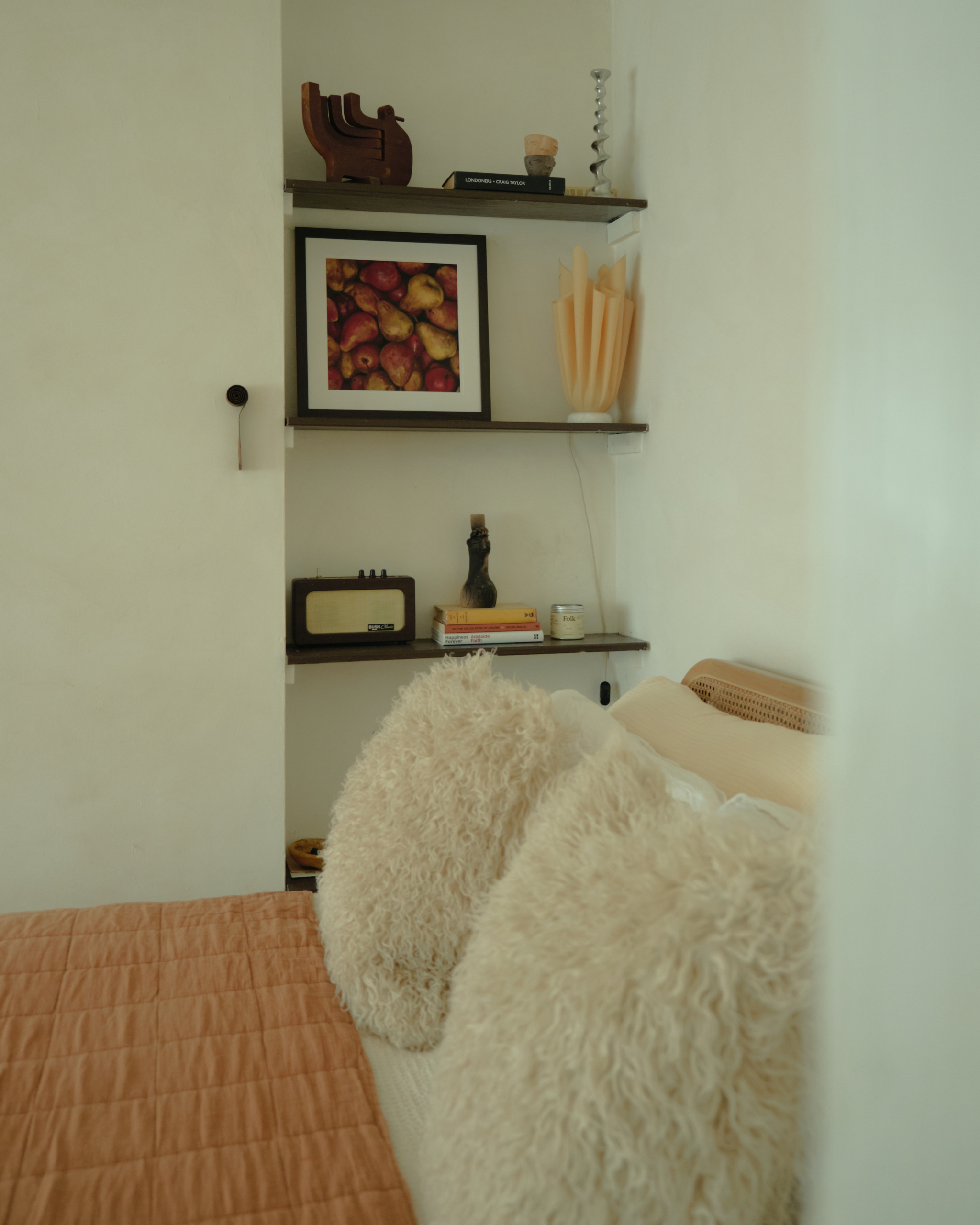
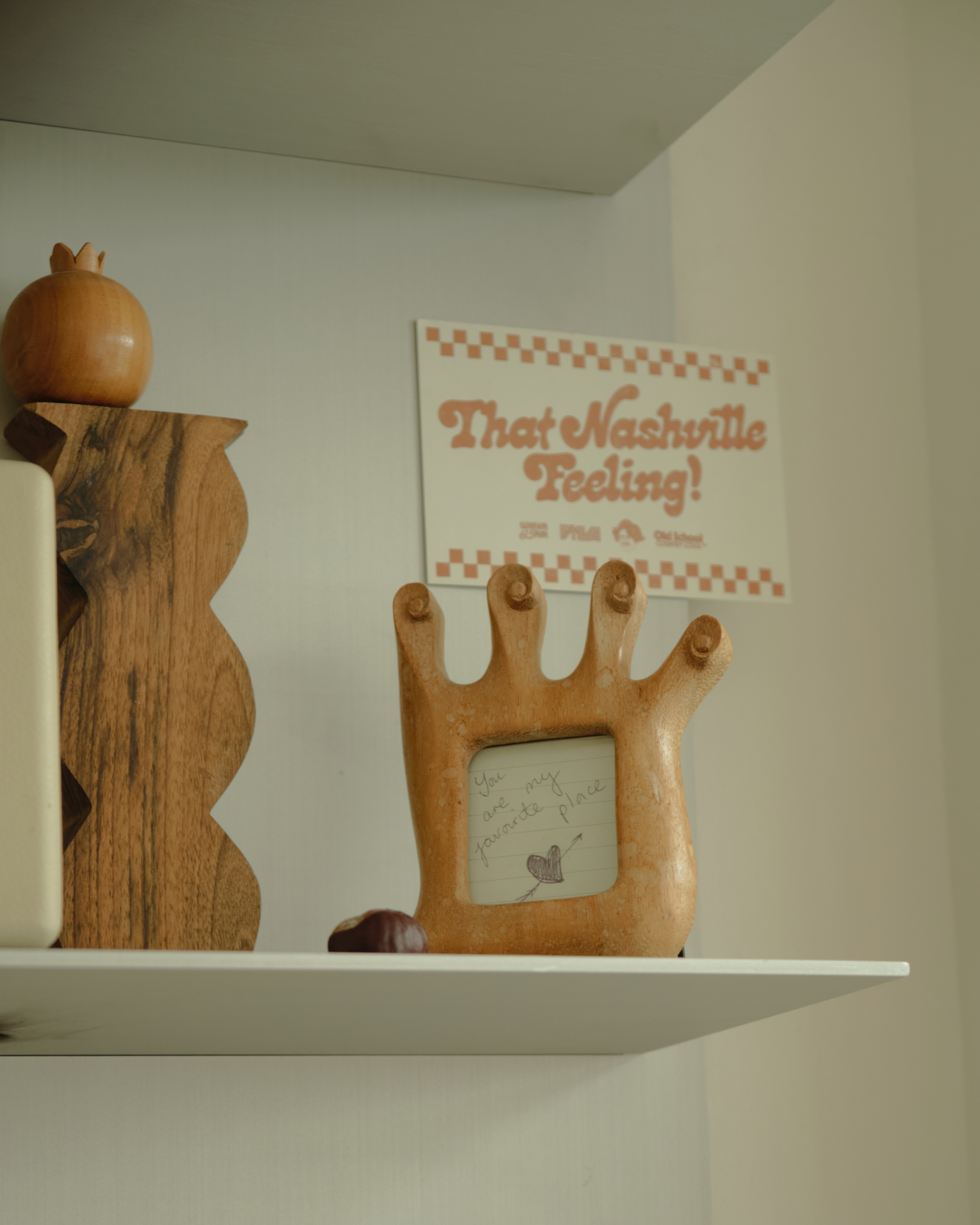
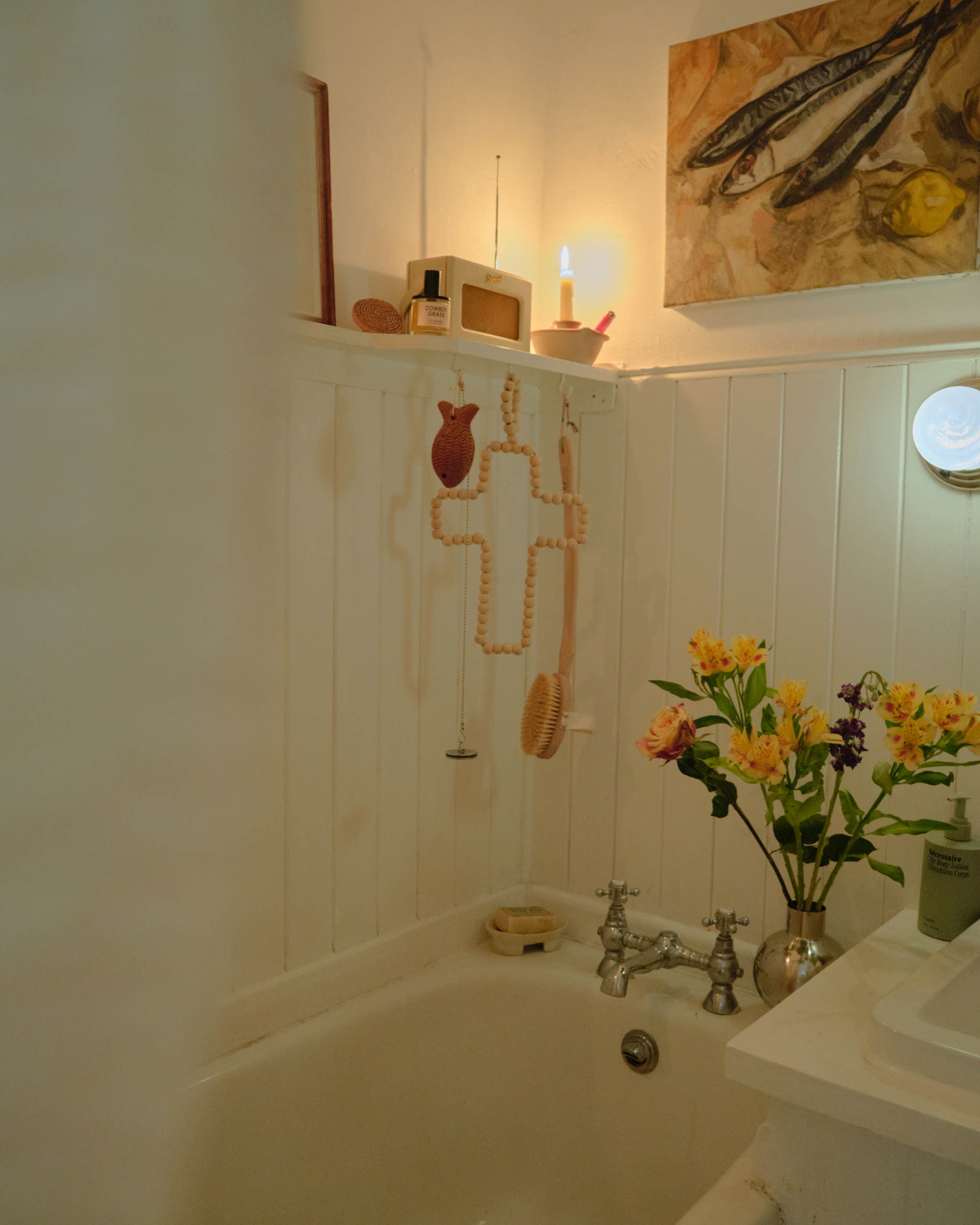
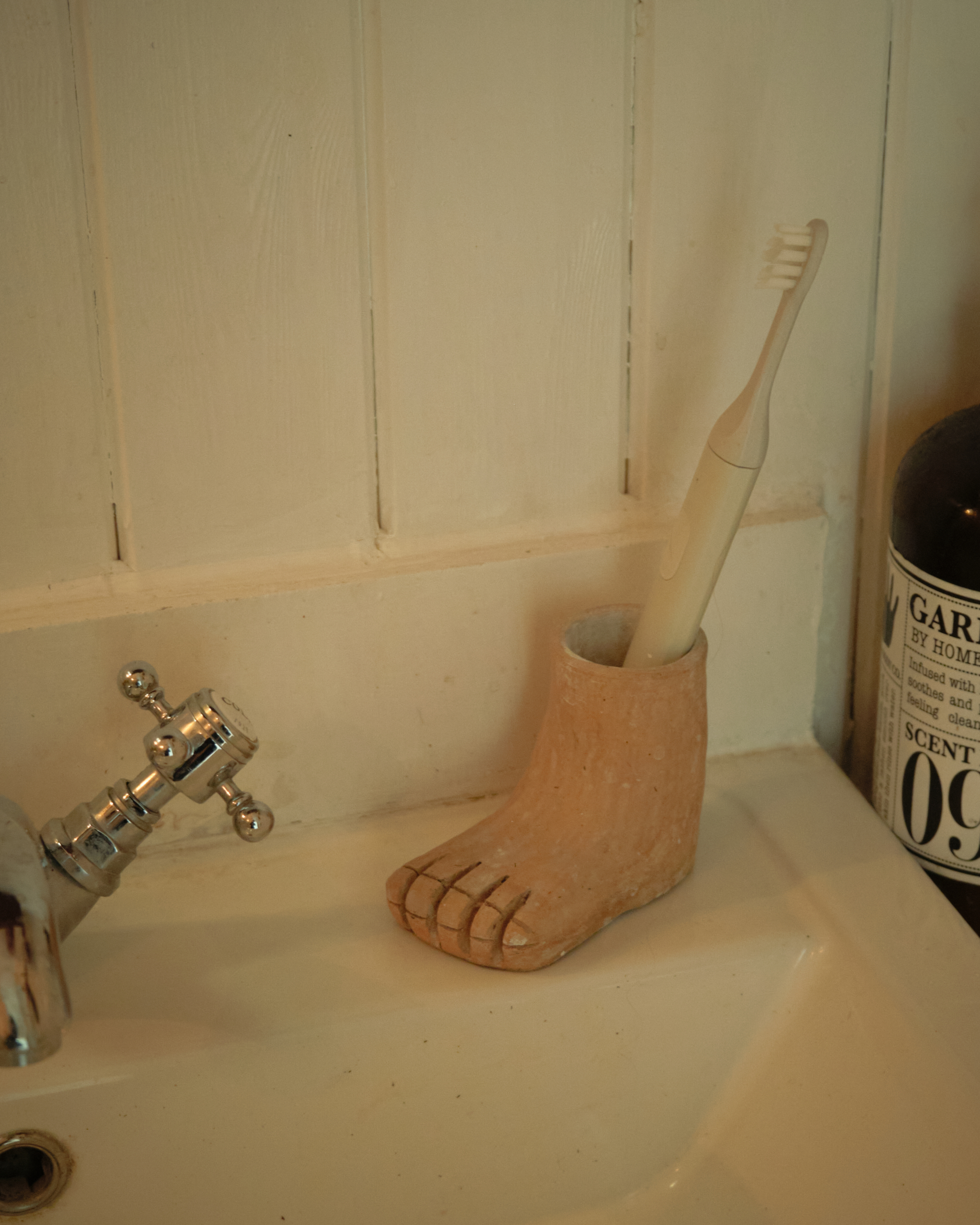
Now that it’s a job rather than a hobby, Abbott has been able to spend more time learning, reading books and researching pieces online, a process that has only sharpened her eye further. More often than not, though, she allows herself to be drawn by her instincts. “I’m always looking for imperfection: anything that shows it was made by a human. Not to sound totally absurd, but pieces with a real history just have a feeling about them,” she says.
Using her flat as both storage unit and photo studio against which she captures the pieces for her website and Instagram feed, means Abbott has had to set a rule that anything bought for Nica Hoop she has to be happy to keep, a mantra that is currently being tested with six large chairs occupying most of the spare bedroom – “they’re mad and covered in velvet. I’m too scared to try and sell them because I don’t think anyone is going to buy them,” she says, laughing.
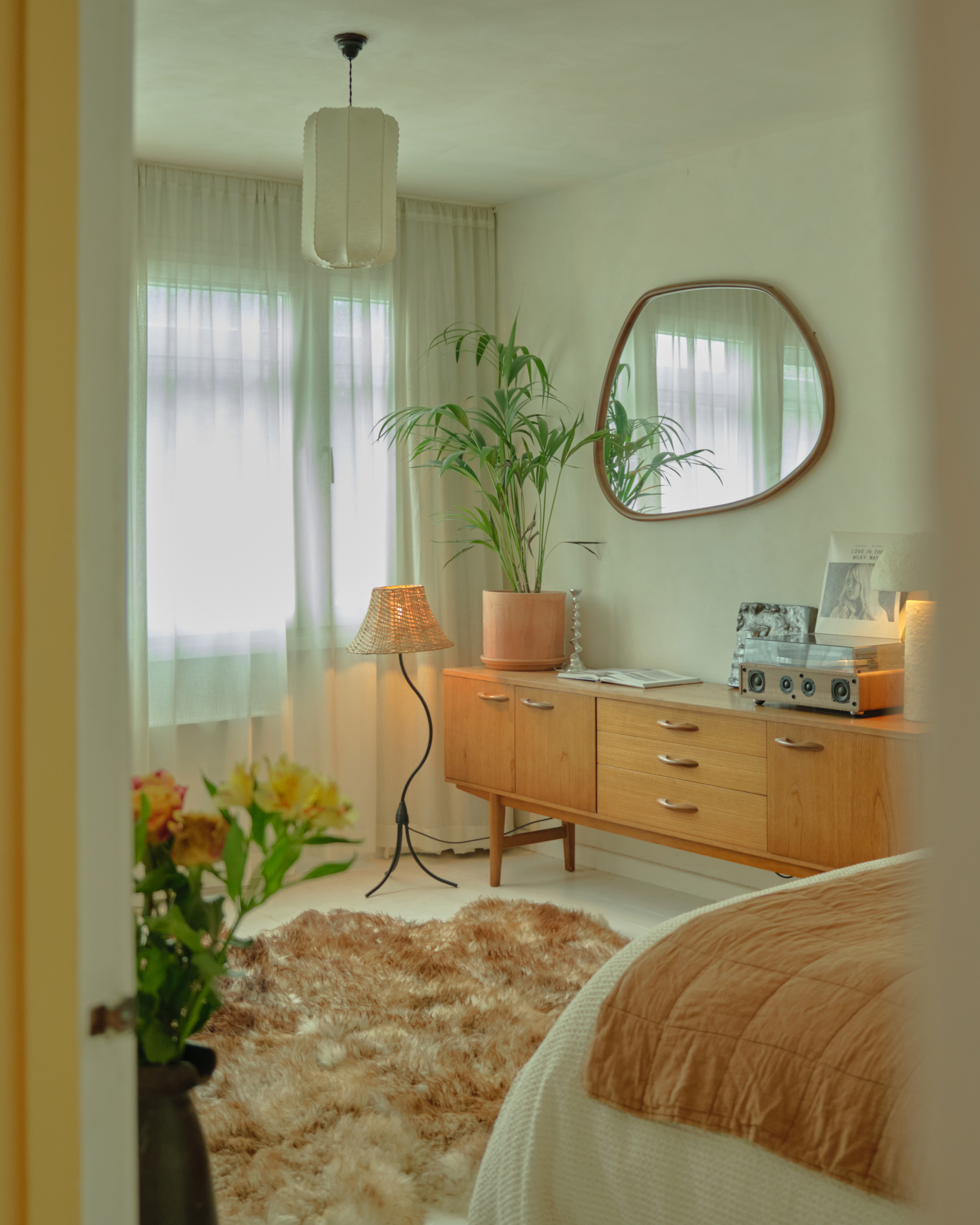
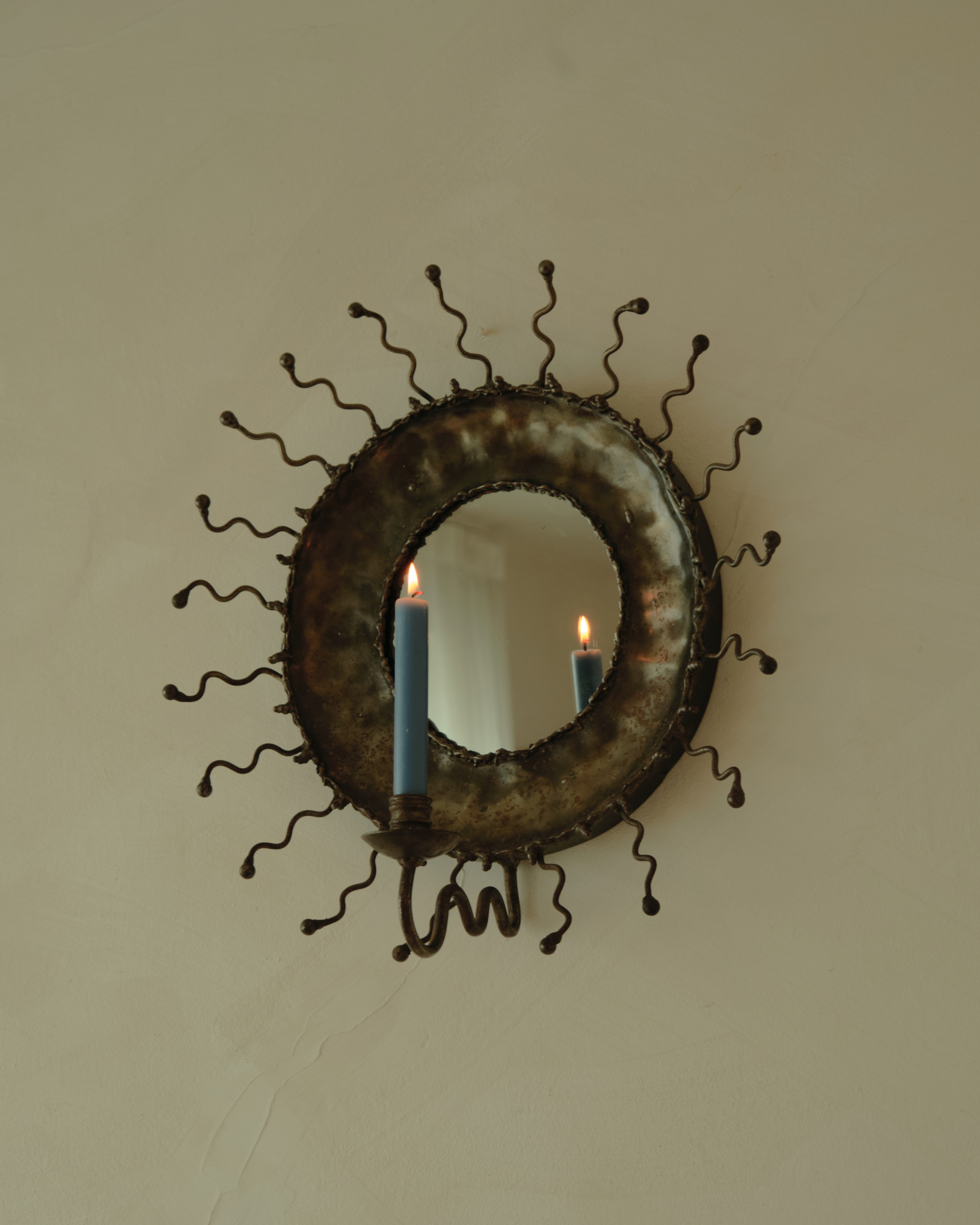
By next year, Abbott thinks she will need a studio space dedicated to Nica Hoop and its growing stock. It will free up space at home in time for Polly to move in, before the pair begin the search for somewhere bigger together. Abbott will be sad to leave this flat because she “loves it so much”, but admits she’s also looking forward to creating a home that belongs equally to someone else. That may require loosening her grip on some of the quirks she has become fiercely protective of, including a curtain that conceals the kitchen bin, which Polly insists must one day become a proper cupboard.
In the meantime, she’s learning that living with beautiful things also means letting them be lived with. “I can’t go on about loving marks on tables and signs of life, then be like, ‘Don’t touch that,’” she says, laughing. “You’ve got to practise what you preach.”
Suggested stories
An Artist’s Home in Hackney with Plenty of Creative Headroom
Going Out, Staying In With Dan Pope
Filippo Muzi Falconi’s World Is Filled With Wonder, Naturally
Making Work – and a Home – Out of Restrictions, Remains and Resourcefulness
A Designer Finding New Forms in Ancient Traditions
Functional Beauty: Jewellery Designer Helena Vieira’s Converted Warehouse Apartment
The State of Design? Designer David Searcy Has Thoughts
Inside Jesse Butterfield’s Studio

Jewellery Designer Jessi Burch’s Brooklyn Apartment is a Portal into her Mind
How “primitive craft” and “contemporary production” come together at Lewis Graham’s studio
An Apartment With No Sofa But 50 Lamps
A Happy Family Collaboration in De Beauvoir

How “The Muse of Spirited Resourcefulness” Guided The Making of Glass Artist Juli Bolaños-Durman’s Edinburgh Home
ON UGLINESS WITH DAVID MICHON, AUTHOR OF FOR SCALE
The Home That Thomas Wheller Is Making
Designer Jake Robertson’s Home is a “Living Library”
Jewellery Shaped by Architecture, History and the Human Hand

THE SCURA GUIDE TO GOSPEL OAK & AROUND
Scura Selects: November 2025
Luke Malaney’s Work is Always in Motion
Going Global: Reflections and Recommendations from Flawk’s Show at Collectible NYC
The Fluent Creativity of Liyang Zhang
SCURA Selects: What to see at Open House & LDF
FRIENDS OF SCURA: ALEXANDRA ARIAS
What is Flawk?
A Design Duo’s Reunion with a Family Farmhouse in Alsace

The best eats in London under £20
Introducing the Flawk Shop: a new home for a family of objects

An Architectural Adventure in Finland’s Far North
Freddy Tuppen’s Flat Keeps Getting Better

A Slower Guide to Istanbul

Inside A Copenhagen Apartment Shaped By Instinct, Collaboration and Kerbside Finds
A Guide to Copenhagen, Curated by a Design Duo We Love
Step Inside Tom Golland’s Colour Playground
Picasso Chairs and Playful Precision: Josh Page’s Creative World
Ajay Larr on the Architecture of Food and Why Meals Matter
A Slower Guide to London
The Scura Guide to eBay
The Homespun Beauty of Textile Designer Isabel Farchy’s Patchwork Panels
NYC Design Getaways
Our friends: PPP LAB on crafting for simplicity and usability
Hidden Feasts: Jiaonest
Scura’s Guide to Independent Stoke Newington
Welcome to Scura