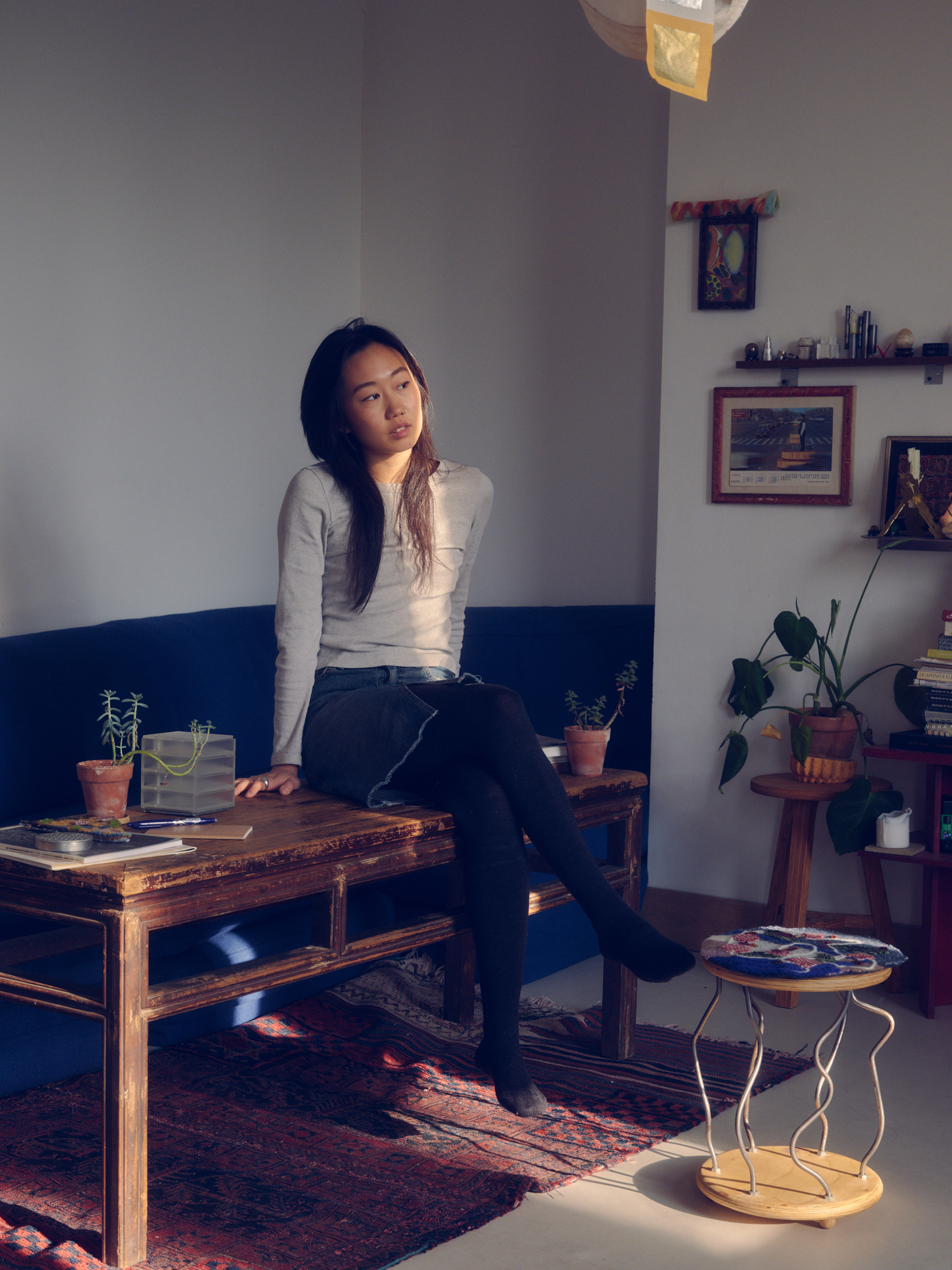
Functional Beauty: Jewellery Designer Helena Vieira’s Converted Warehouse Apartment
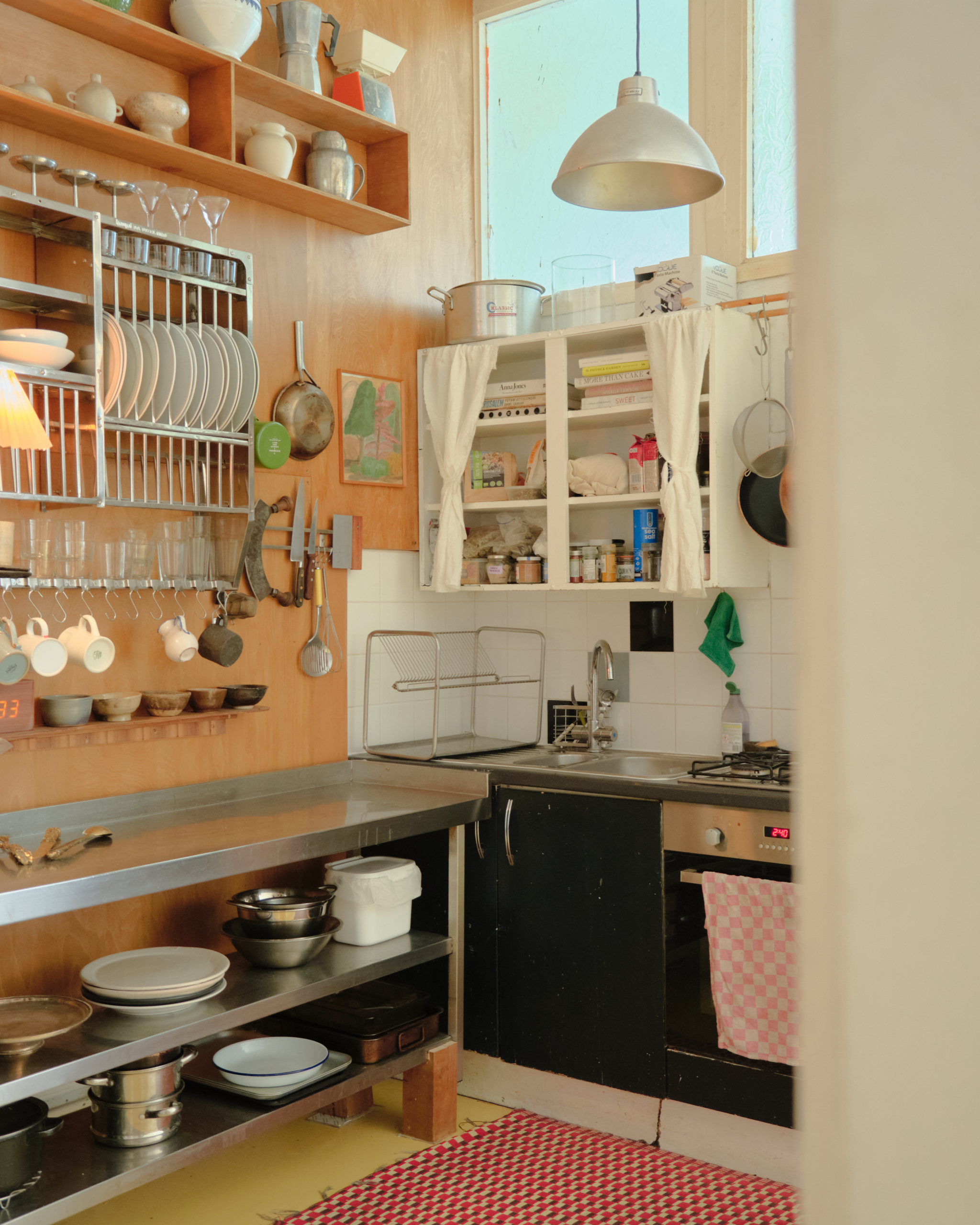
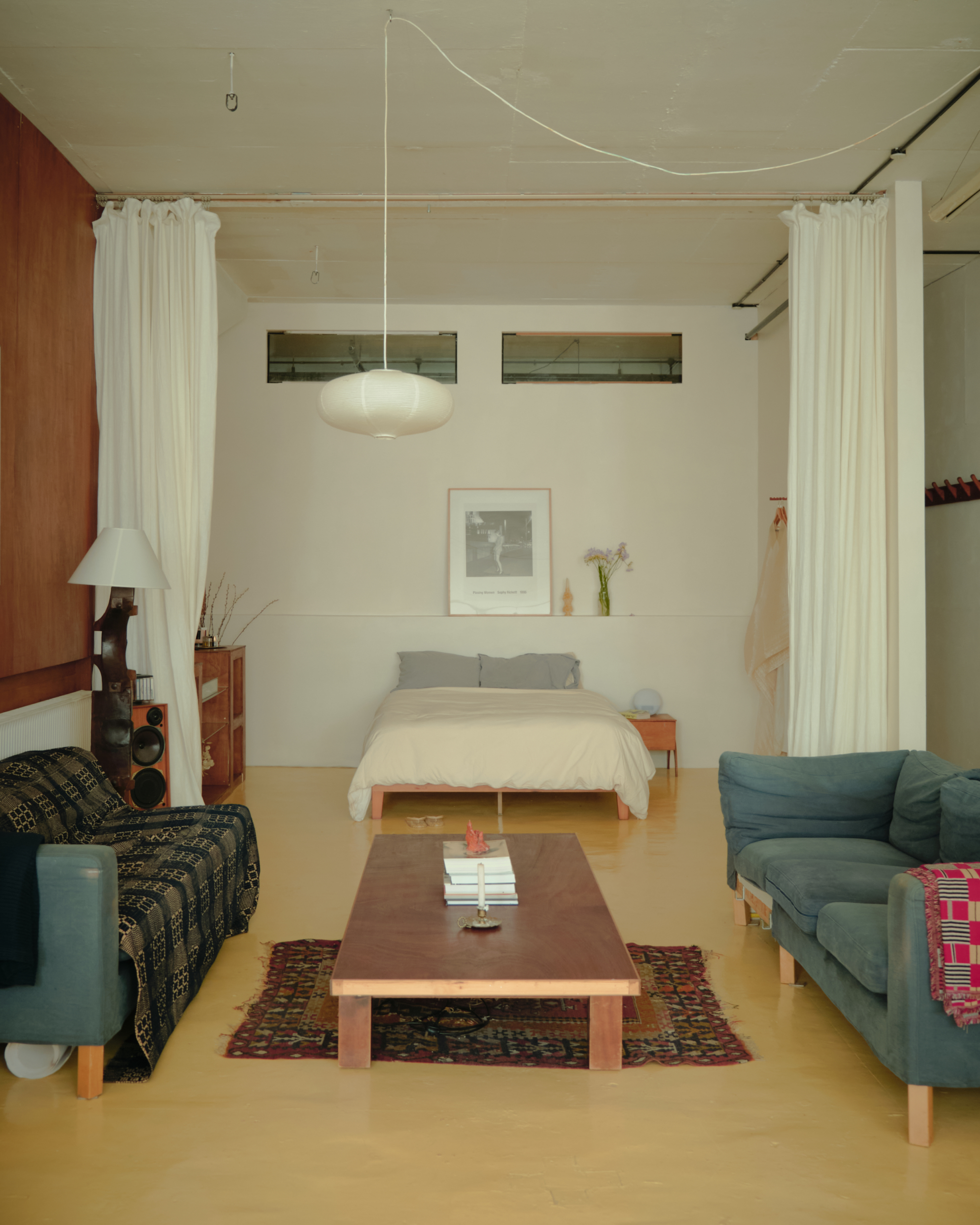
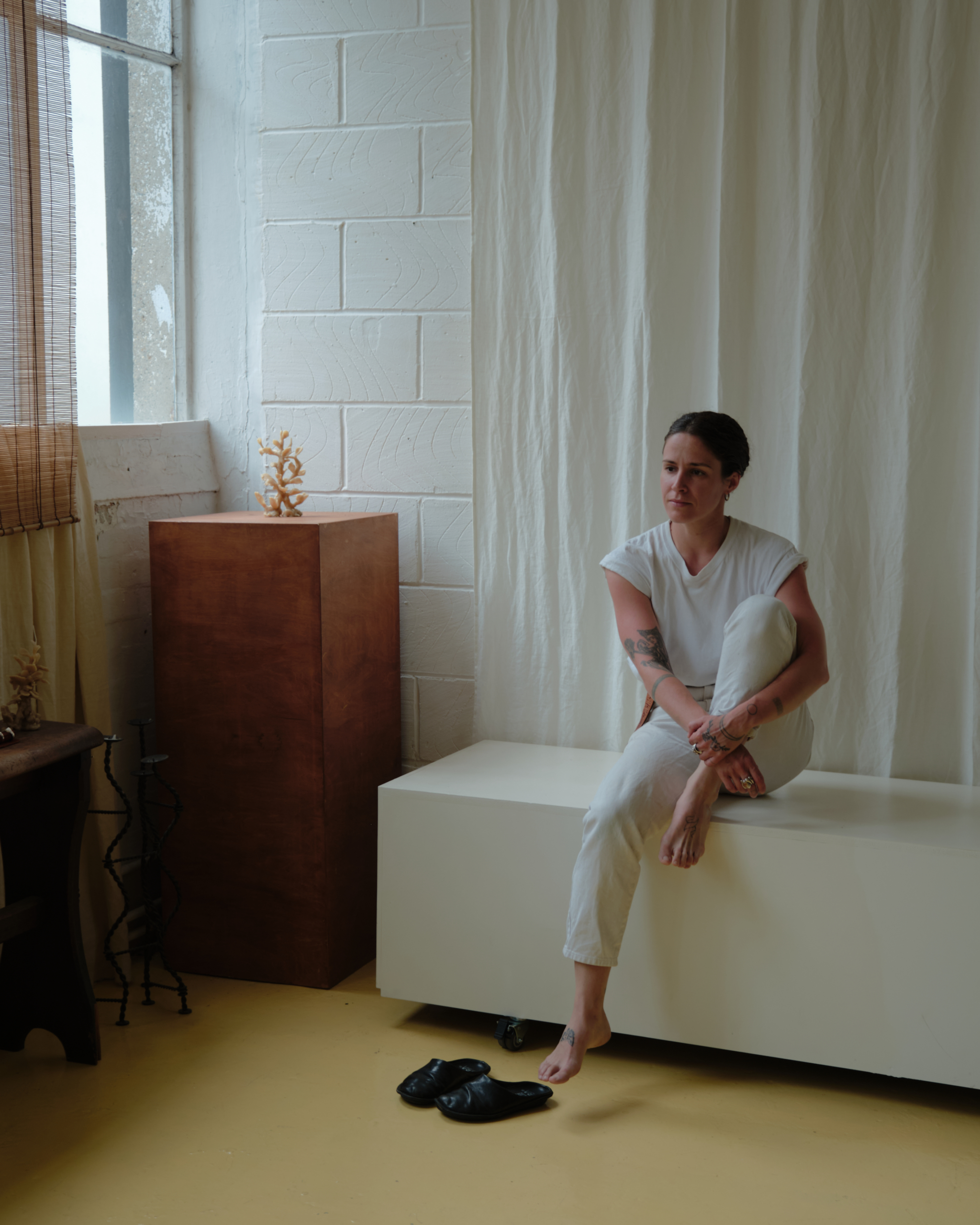
“I’m the sort of person who really needs to be in a beautiful space,” says jewellery designer Helena Vieira as she shows us around the expansive live-work unit she rents in a converted warehouse in Hackney Wick. As she talks us through life in the apartment, it quickly becomes clear that Vieira means this on both a personal and practical level: it is her home, but also the studio and showroom for her jewellery brand, Mutter, as well as a setting for shoots, workshops and collaborations with other artists. It’s a hardworking space, and the attention and creativity Vieira has applied to making it a beautiful, uplifting place to be is part of that; “I spend a lot of time here so it’s very important to me. I function better that way,” she says.
Born and raised in Portugal, Vieira moved to London 15 years ago. She had studied product design at university in Lisbon, on a course that allowed her to experiment with sculpture, engraving, lino printing and photography — the latter being what first brought her to London. But after an internship, she began to question that path. “I wasn’t enjoying what I was doing, so I was like, okay, what do I want to do instead?” she recalls. What followed was a series of short courses, including, most formatively, a sword-making one. “I realised from that I wanted to work with metal, but I couldn’t afford a forge. That’s what led me to lost wax jewellery making,” she says.
Looking back, Vieira realises her journey to jewellery-making has a longer origin story. She recalls growing up around her grandmother’s jewellery collection, which was a “mishmash” of religious items and tribal pieces she collected while living in Mozambique – all of which still influences her process to this day. “She had a big dresser with jewellery and as a child I was like a kid in a candy store. Those experiences had a big impact,” she recalls. Her mother also loved necklaces and would get Vieira’s dad to build her stands to hang her necklaces on. “We’re very given to jewellery,” she says about her family.
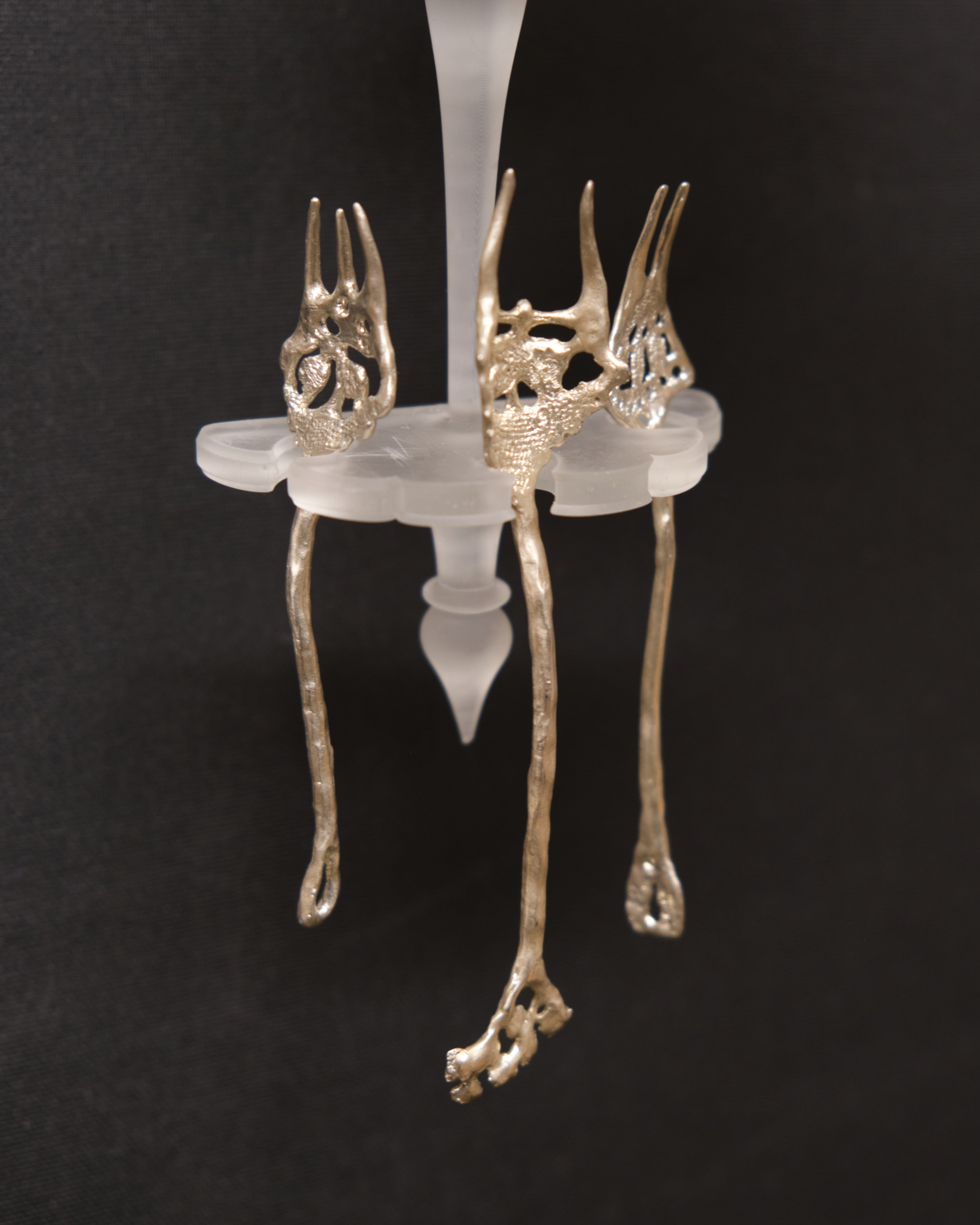
Vieira inherited both a love of jewellery and her dad’s handiness when it comes to making things, a combination that has been put to use through her brand, Mutter (meaning ‘mother’ in German). The metal pieces begin as wax carvings, which Vieira shapes by hand into various forms, often inspired by nature – see the ‘Sticks and Stones Chain’ or the ‘Etruscan Shell earrings’ – and varying in intricacy, from the highly detailed ‘Magic Brew Earrings’ to the more chunky ‘Lava Stone Ring’, a piece that exemplifies the “molten look” that many of her designs share.
Until fairly recently, Vieira had been pretty much solely focused on the small, intricate scale of jewellery, working on new designs to add to the Mutter range. Two things have changed that, however. Firstly, Vieira has taken a step back from both sharing and browsing on Instagram, and the pause in Mutter content has meant most of her jewellery work is now taken up by commissions from long-standing clients, rather than from new customers. The second shift has come about because, since two former flatmates have moved out of the apartment, she has the whole floor plan to herself – prompting her to think about, and play with, scale in a completely new way.
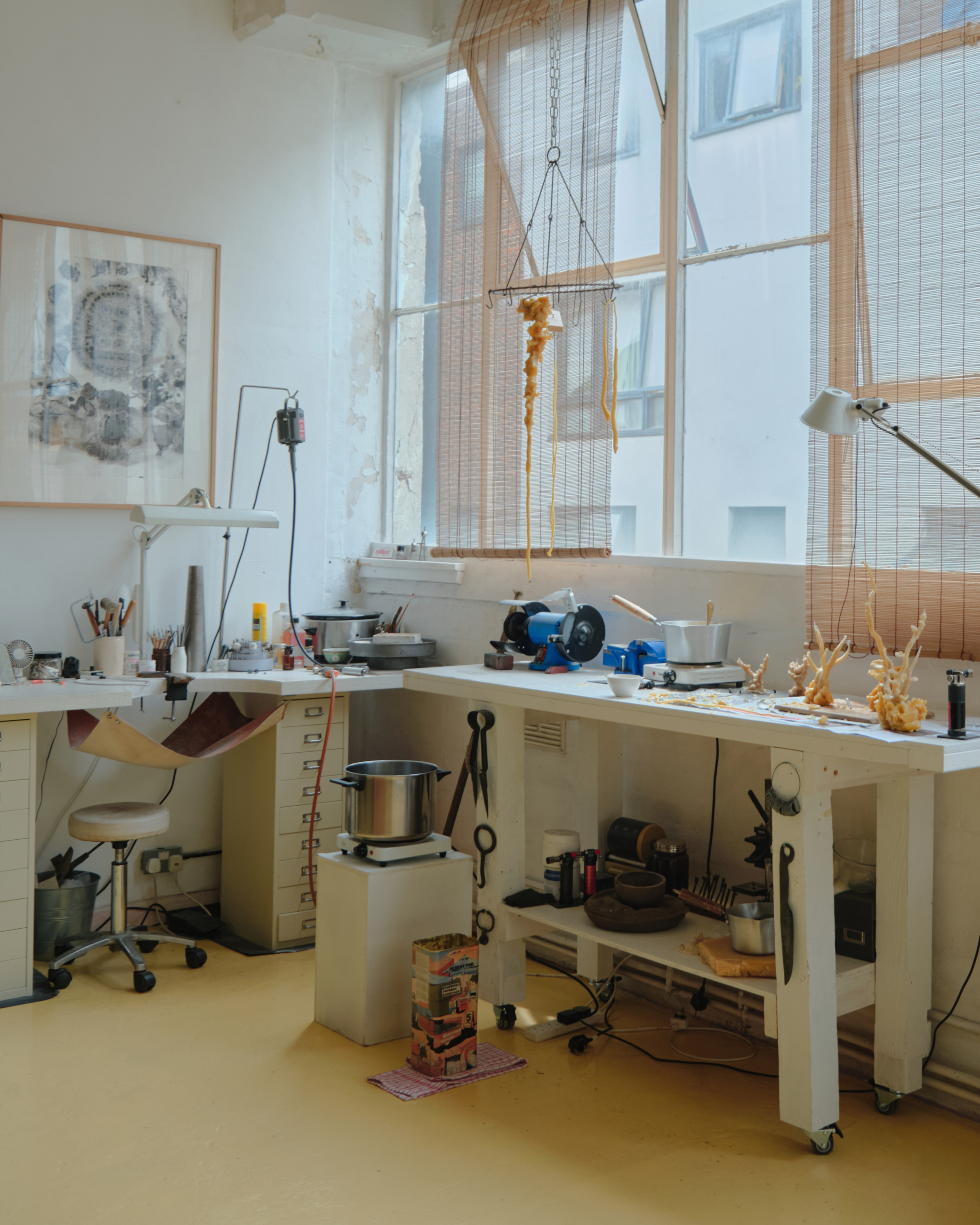
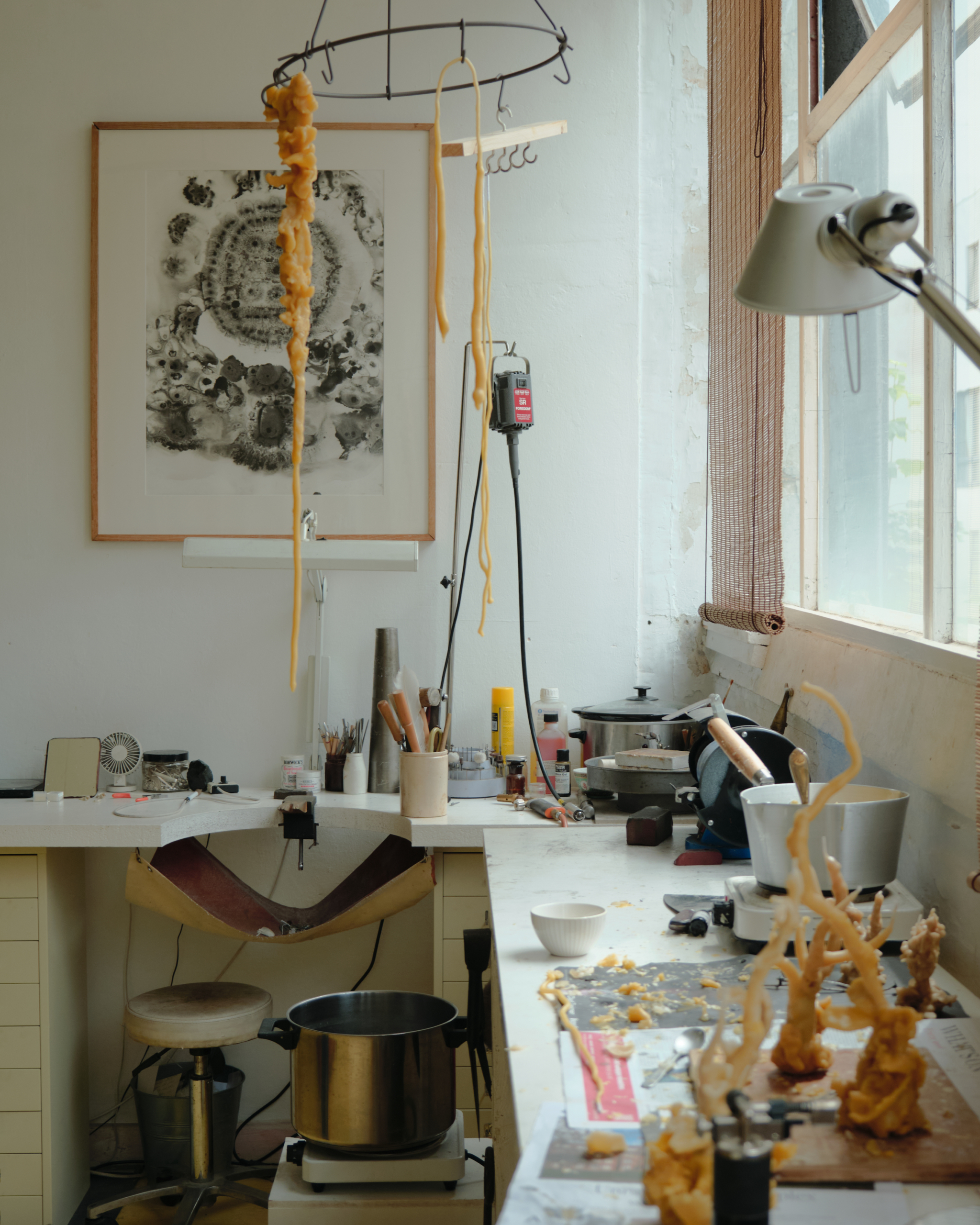
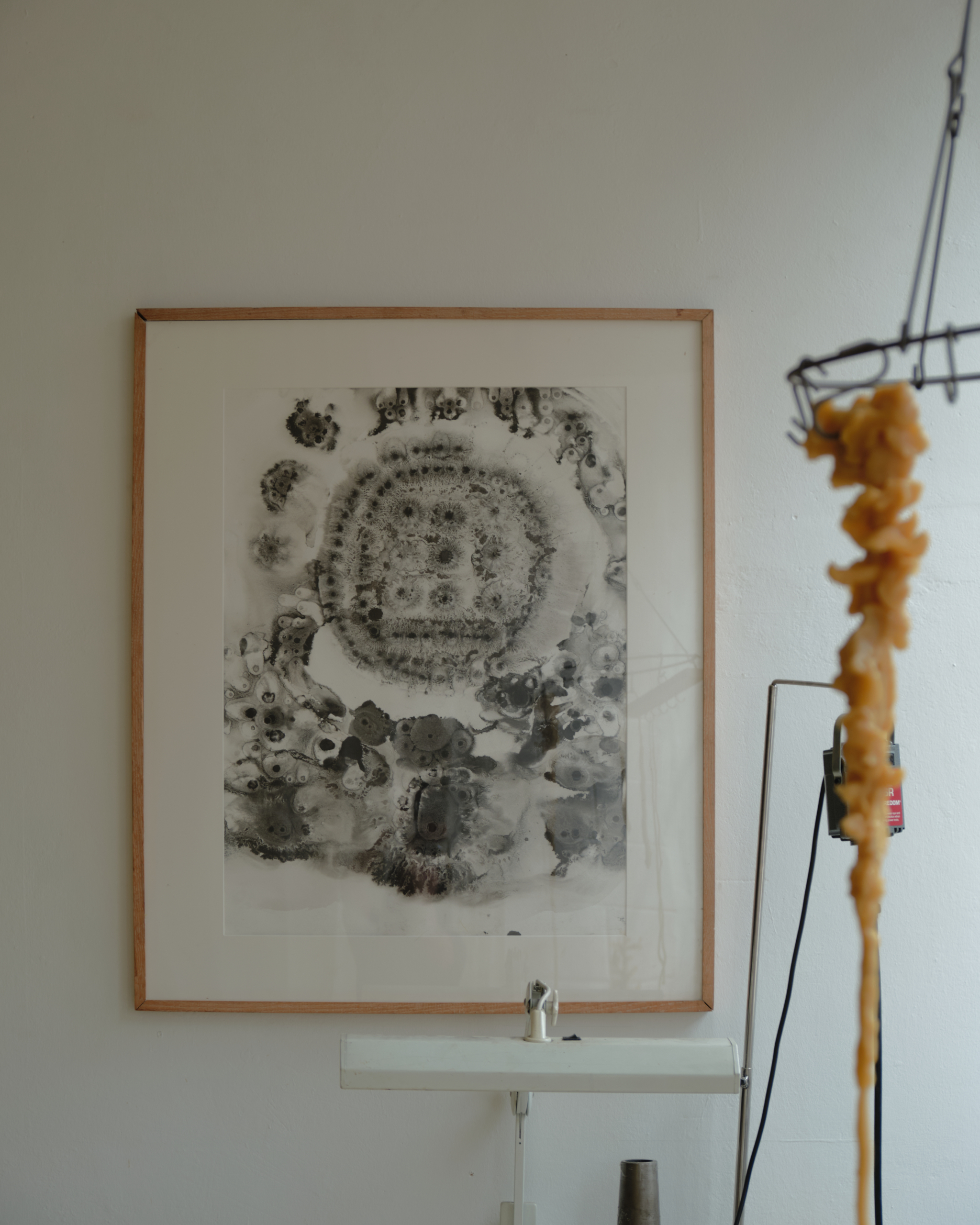
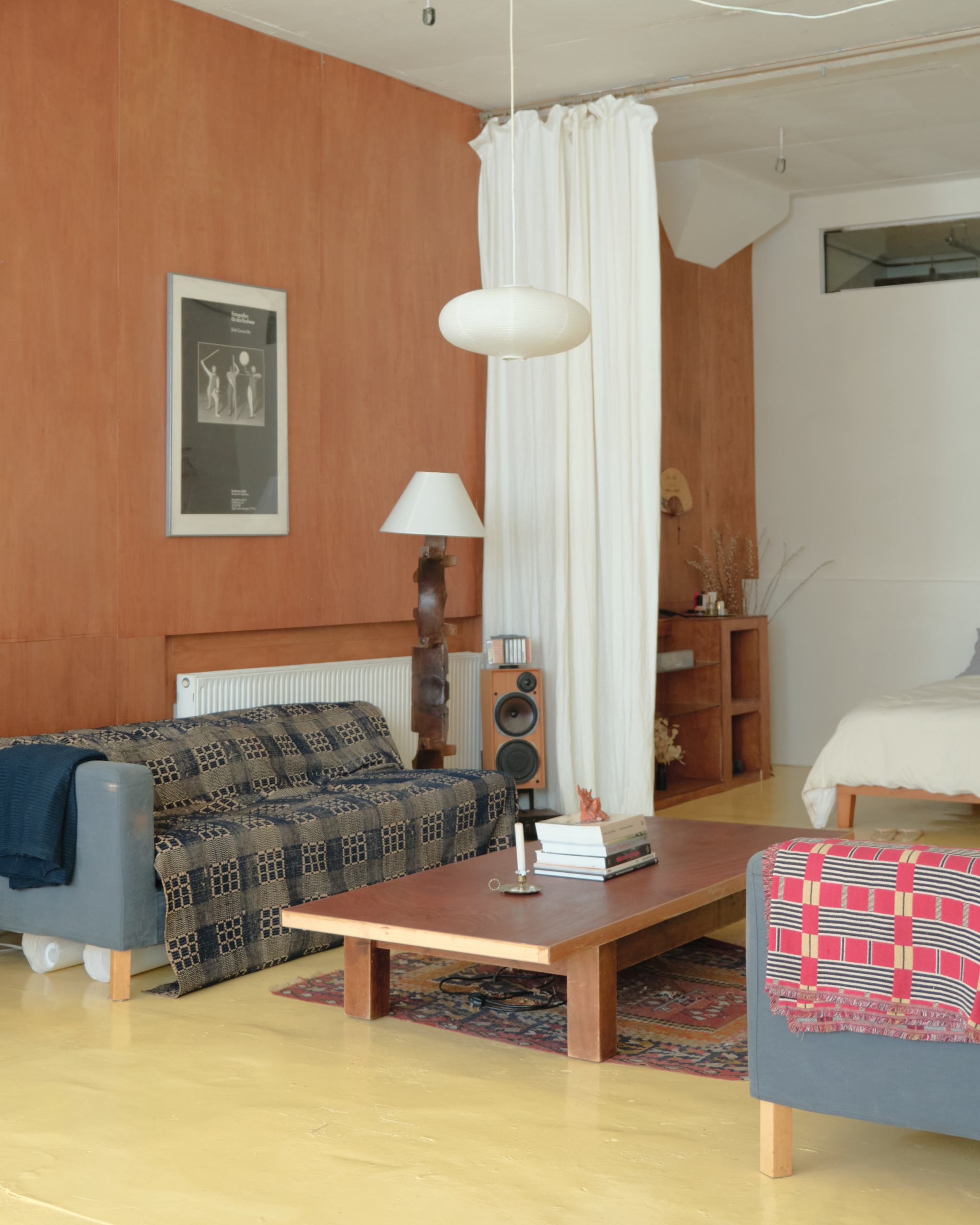
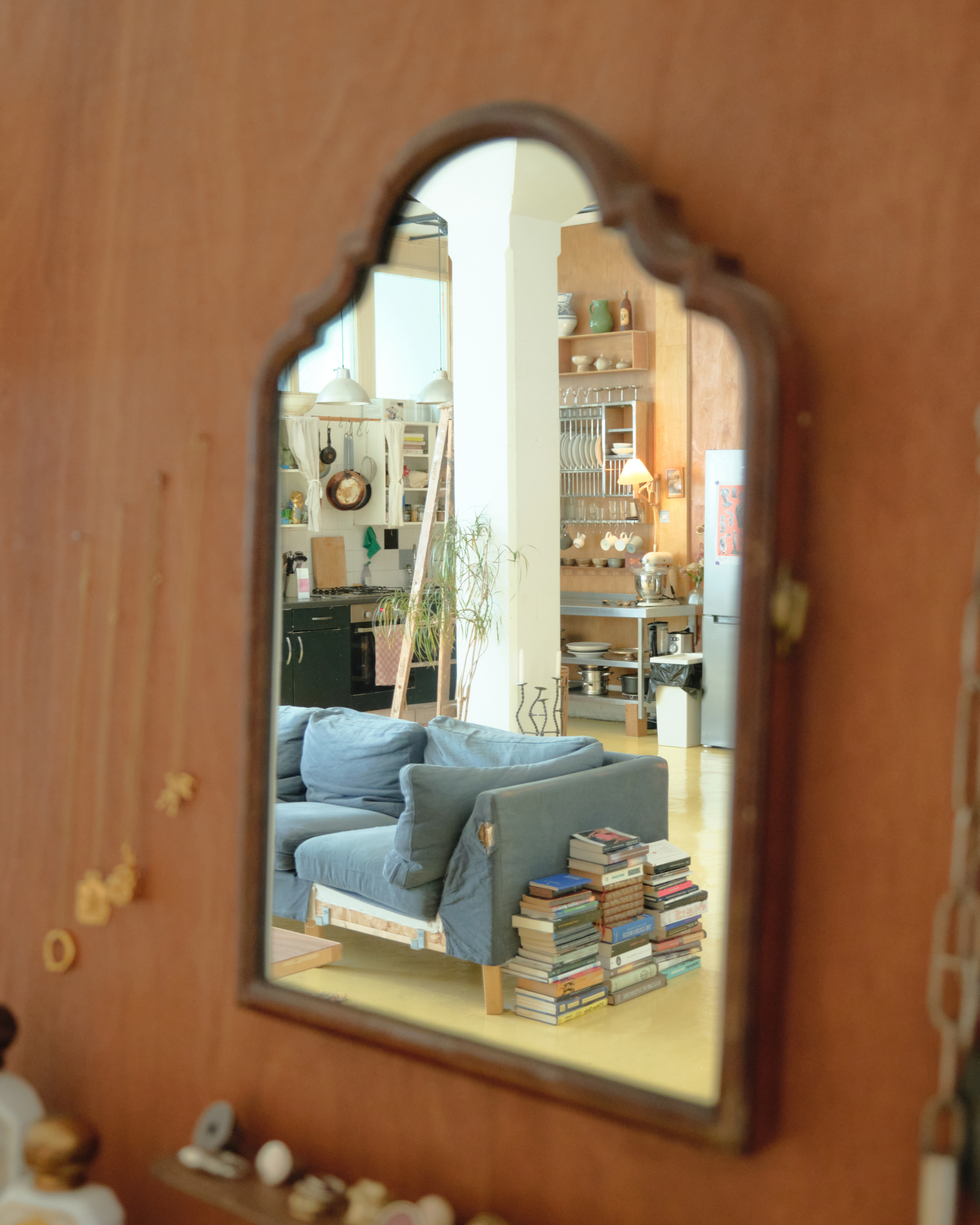
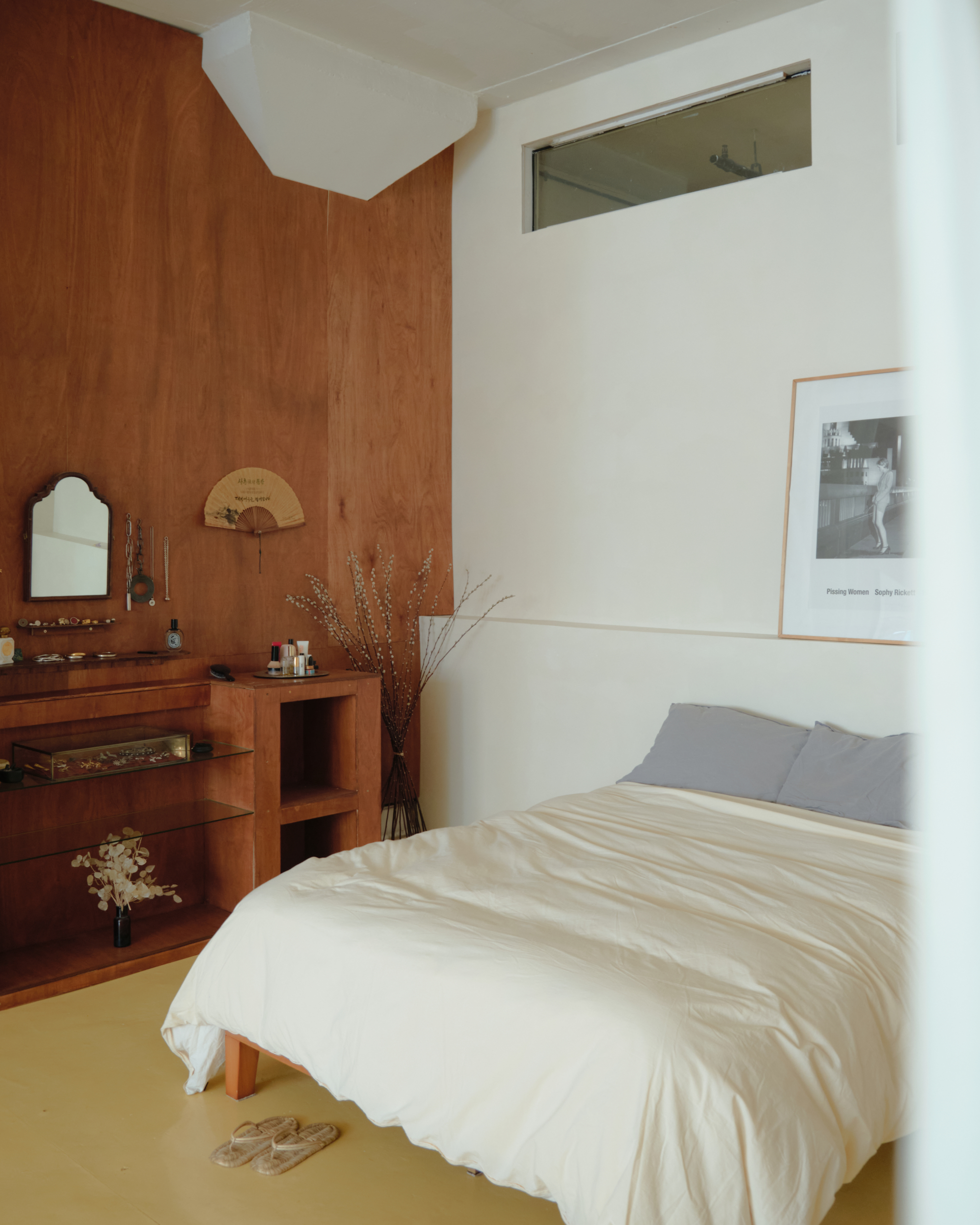
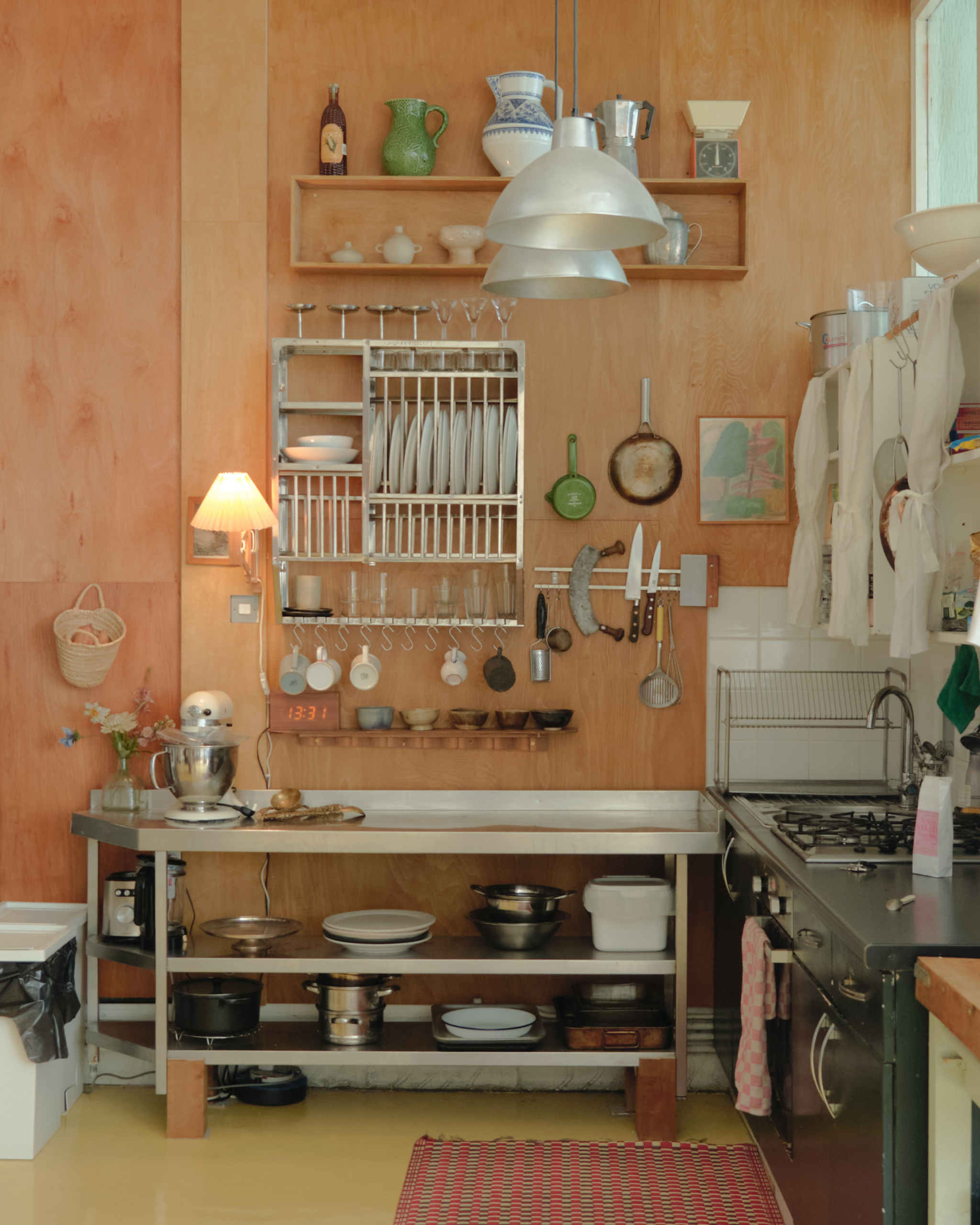
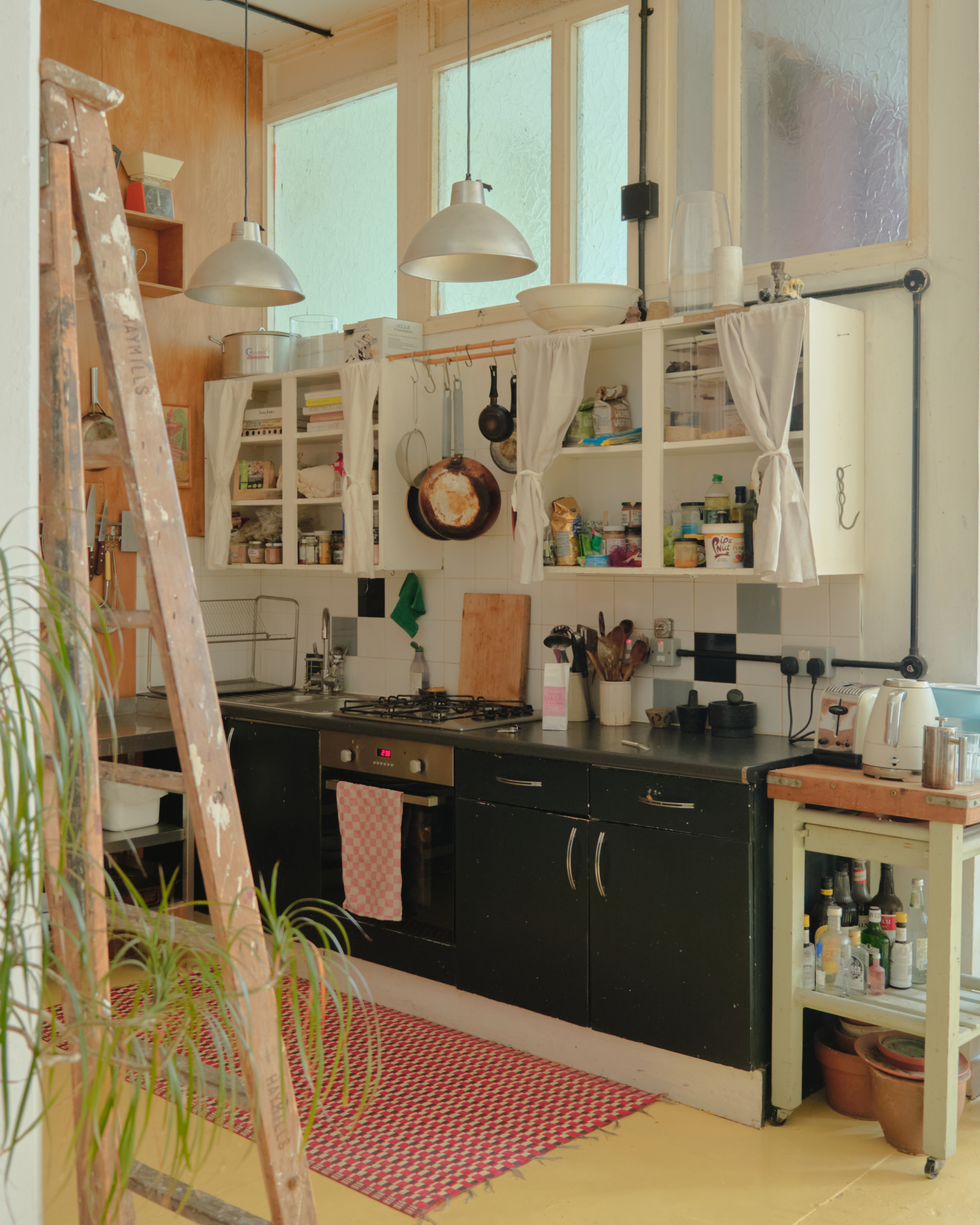
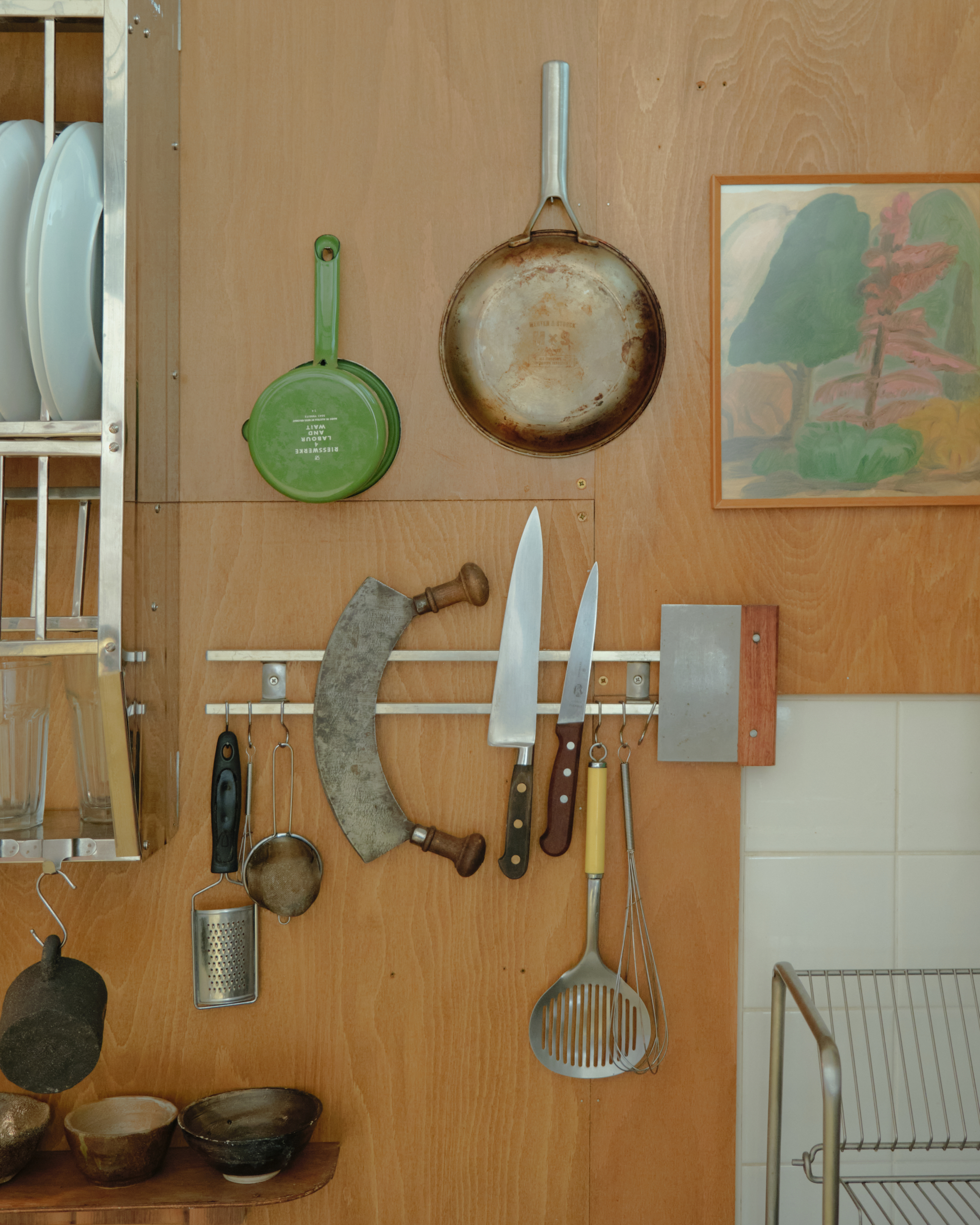
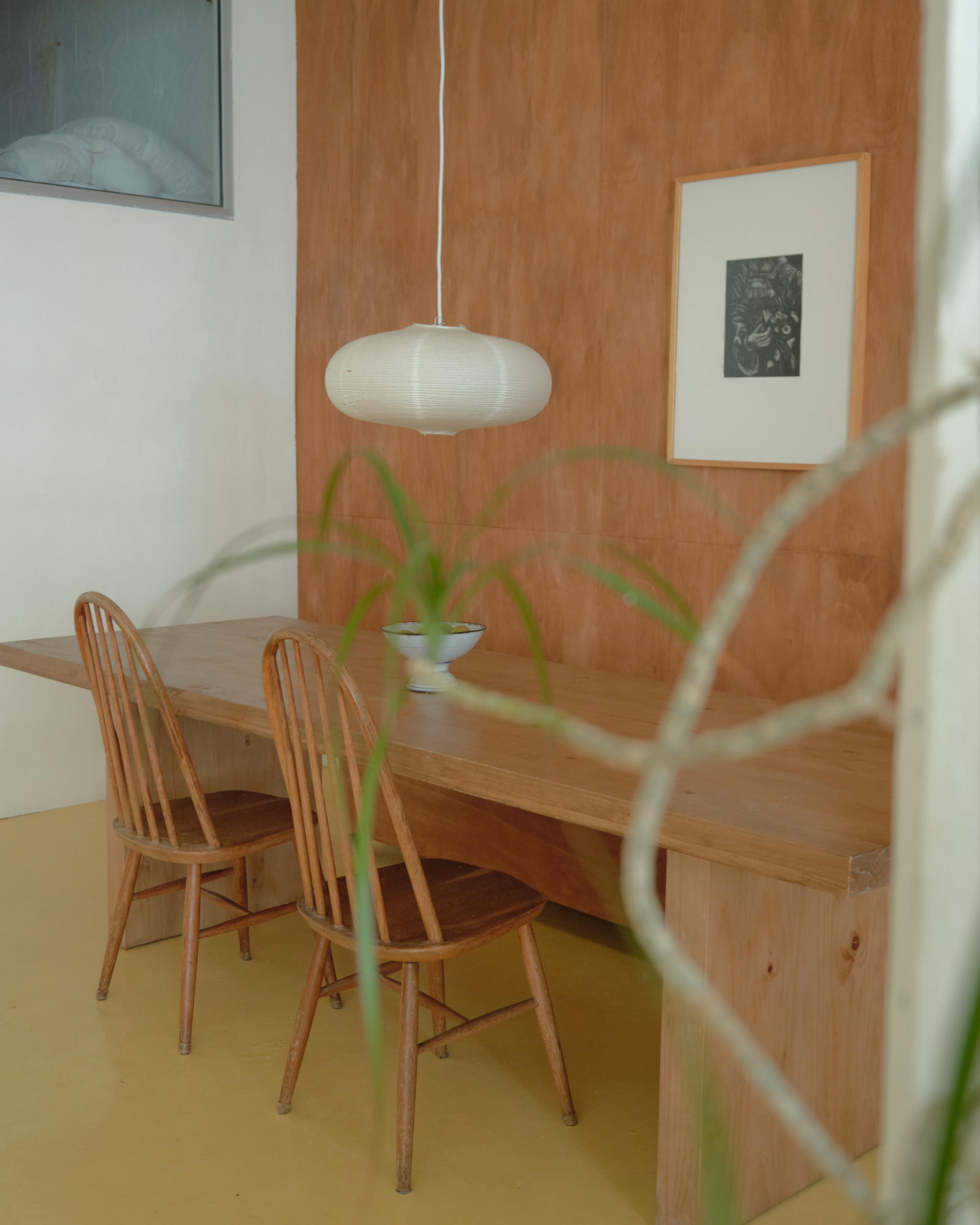

She started by opening up the space, removing walls that previously enclosed two bedrooms. The new arrangement revealed layers of painted floors that had built up over the years, which she painted over in a shade of yellow to unify the space. It now holds a dining area, the kitchen, her studio, display cases of her work (which function as a showroom), a living area and, behind a curtain that can close it off, her bedroom, all in an open, free-flowing layout.
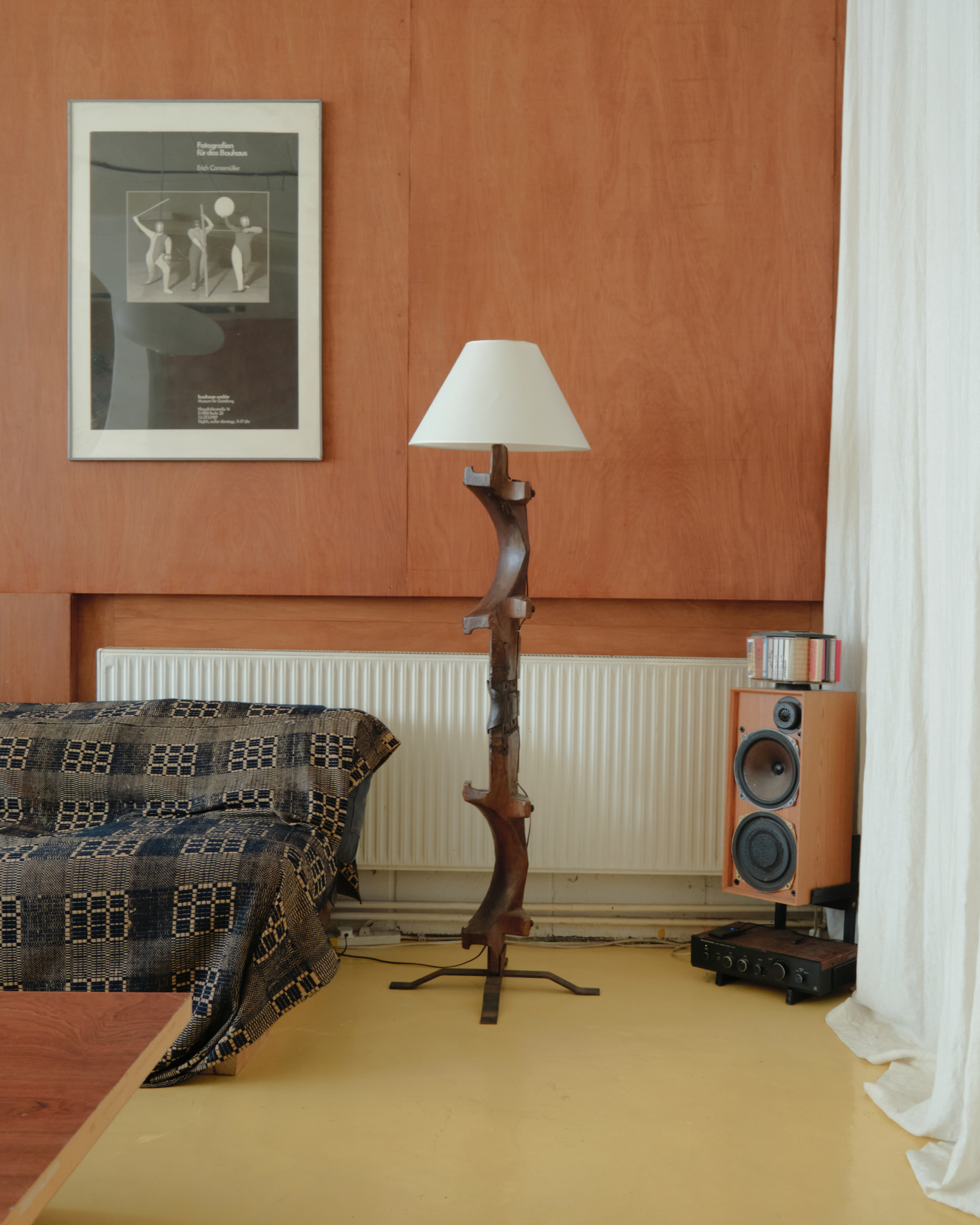
It’s a vast area, and early on Vieira realised “that I had to think big,” she says. To fill it, she has made furniture herself, often making use of what other tenants, many of them fellow artists and makers, left around the building. “The hallway used to be so good,” she says. “Now it’s not so great, but back in the day… oh, so many things!”, she says. Things found out there, such as a church pew that now has a life as a display bench, have been complemented by a coffee table, which she fashioned together from a door and some wooden blocks she found on the street. They’re pieces with presence and, together with a hefty new dining table, two large sofas and various display podiums, help give the various spaces distinct uses. It’s only when her friend asked to store a black leather sofa at the apartment that she realised how right she’d got it: the new addition, in comparison to everything, looked puny,” she says, laughing.
Having the extra space has opened up other creative possibilities, too. “I want the space to be a creative hub, to inspire people, to focus on creativity,” Vieira says. Last year she collaborated with a watercolourist on a painting session, and another workshop invited people to make sculptures inspired by poems using materials collected on mudlarking tips. “I’d like to organise a few more this year,” she says.
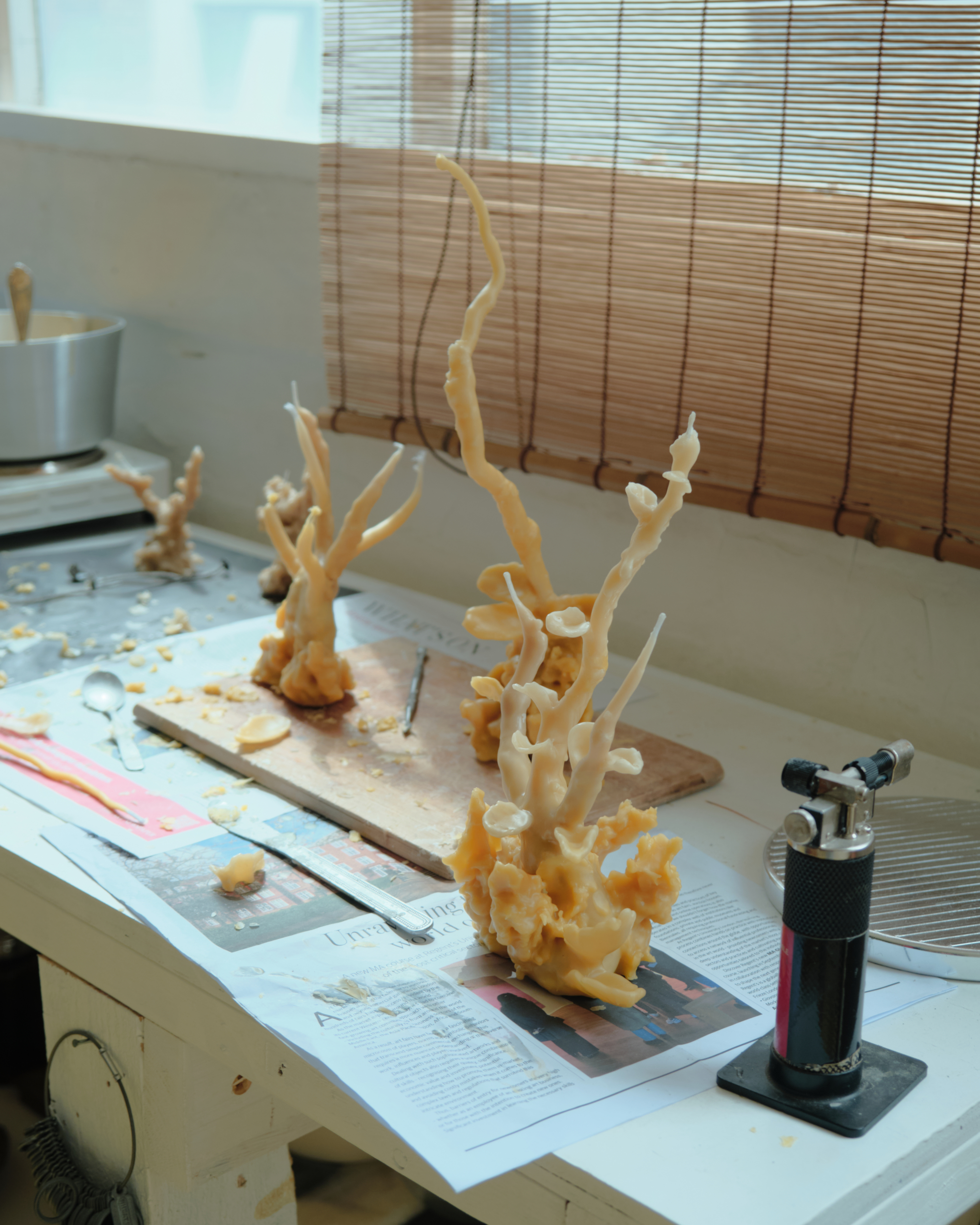
But perhaps the biggest shift has been how the change of scale has expanded her practice. “I was invited to collaborate with a photographer for a project in Lisbon and I am branching out into huge wax sculptures. The sculpture I’m working on is going to be from floor to ceiling, so at the moment I’m just trying to develop a language of wax that I can kind of incorporate in the show,” she says. “Jewellery is very constrictive,” she adds. “You have to think about weight and how it sits in the body. So, I just want to go back to wax and see what it can do.”
And what it can do, it turns out, is quite a lot. “I’ve been browsing a lot of vintage places recently for this place. I love design, especially vintage and brutalist things. I get really inspired by it, and I saw these paper lamps the other day that had wax on their shades and I’m like, oh, you can do so much with it!” With ideas for a series of lamps already whirring away, the pieces would be a direct response to the newly gained physical space and the creative freedom it has brought. “I realised when I was looking for pieces it’s hard to find what fits in the space here. So to be able to make things myself means they can work better. And it’s me, it’s my world, I get to create it.”
Suggested stories
An Artist’s Home in Hackney with Plenty of Creative Headroom
Going Out, Staying In With Dan Pope
Filippo Muzi Falconi’s World Is Filled With Wonder, Naturally
Making Work – and a Home – Out of Restrictions, Remains and Resourcefulness
A Designer Finding New Forms in Ancient Traditions
A Collector Who Sells – and Lives With – the Things She Loves
The State of Design? Designer David Searcy Has Thoughts
Inside Jesse Butterfield’s Studio
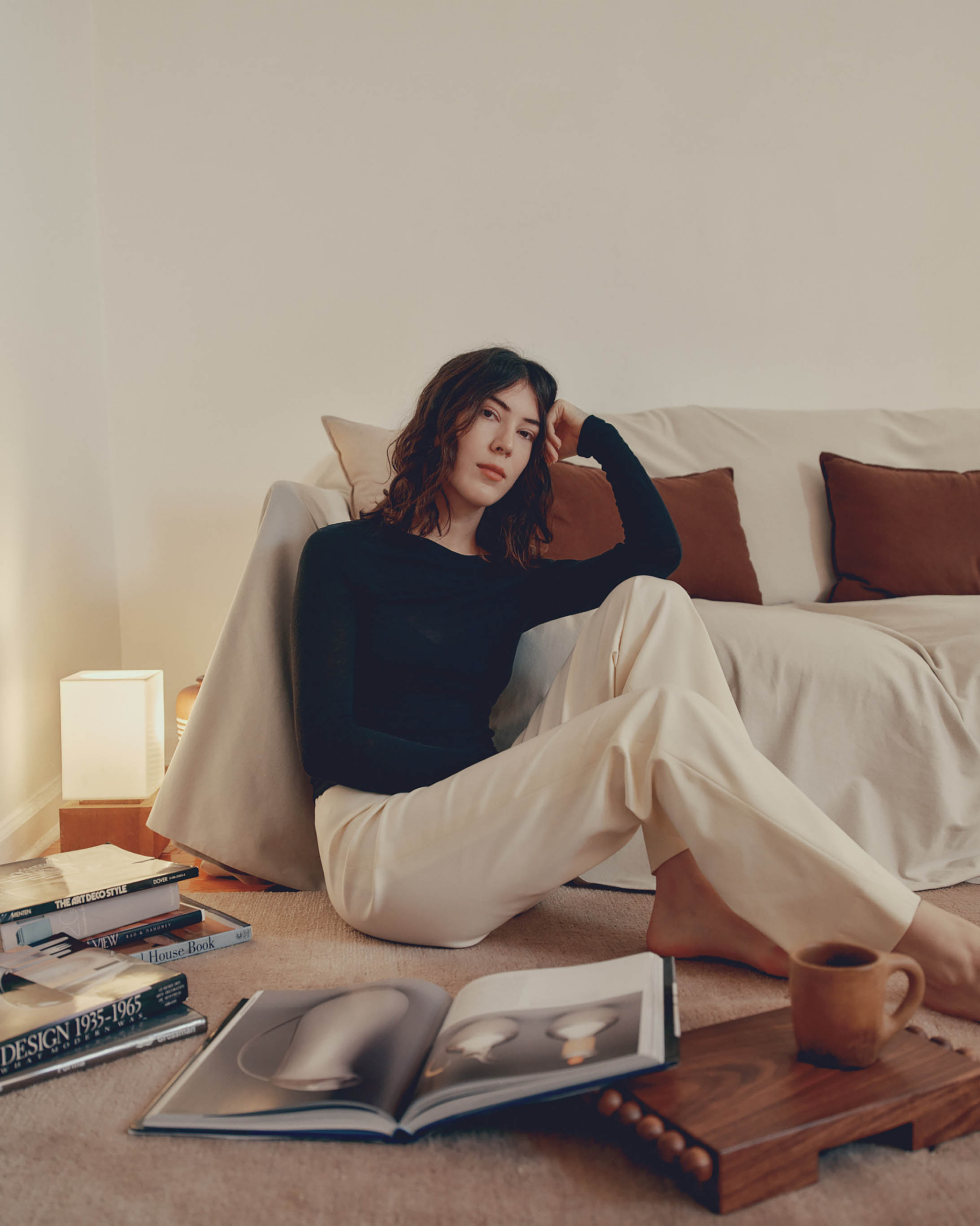
Jewellery Designer Jessi Burch’s Brooklyn Apartment is a Portal into her Mind
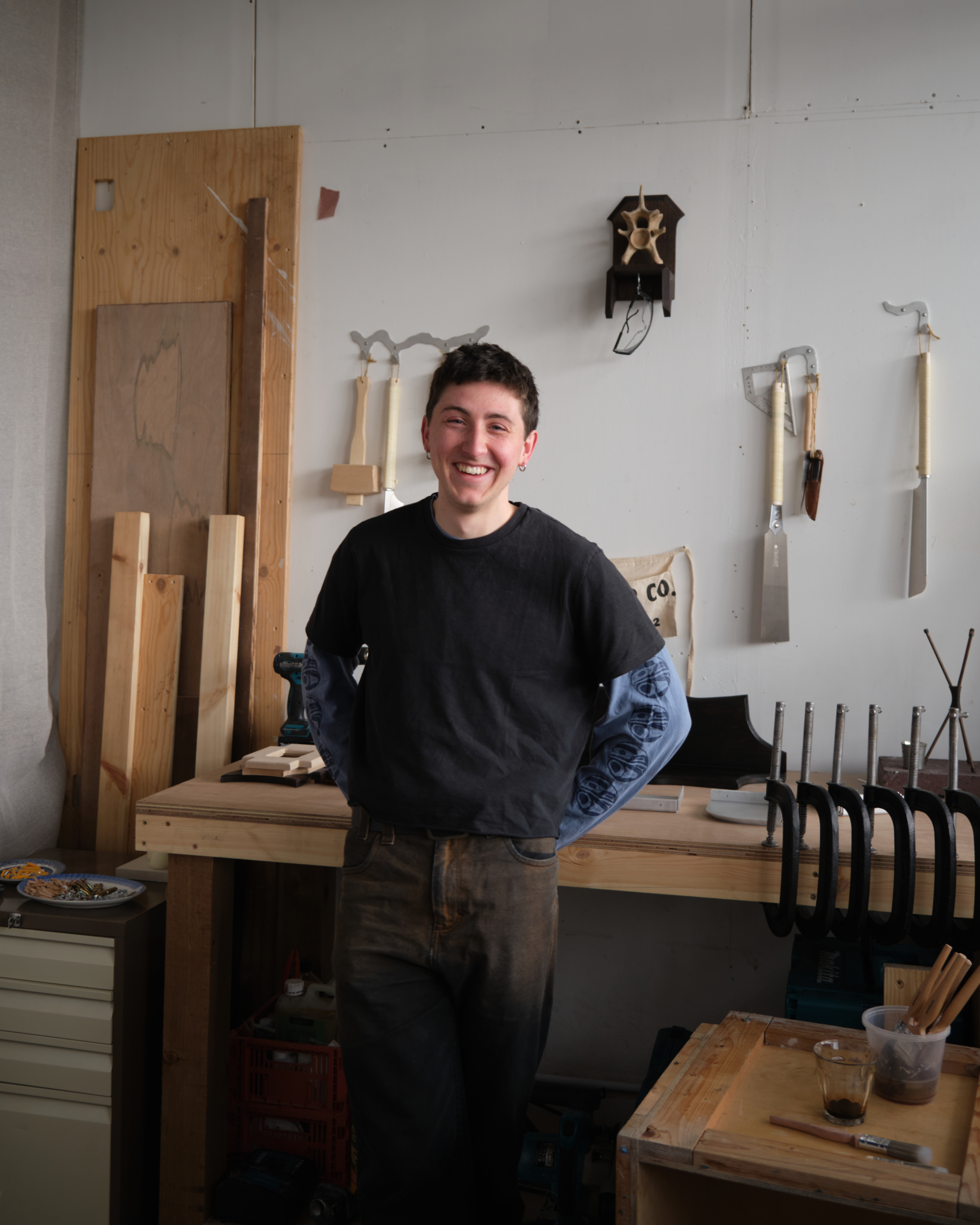
How “primitive craft” and “contemporary production” come together at Lewis Graham’s studio
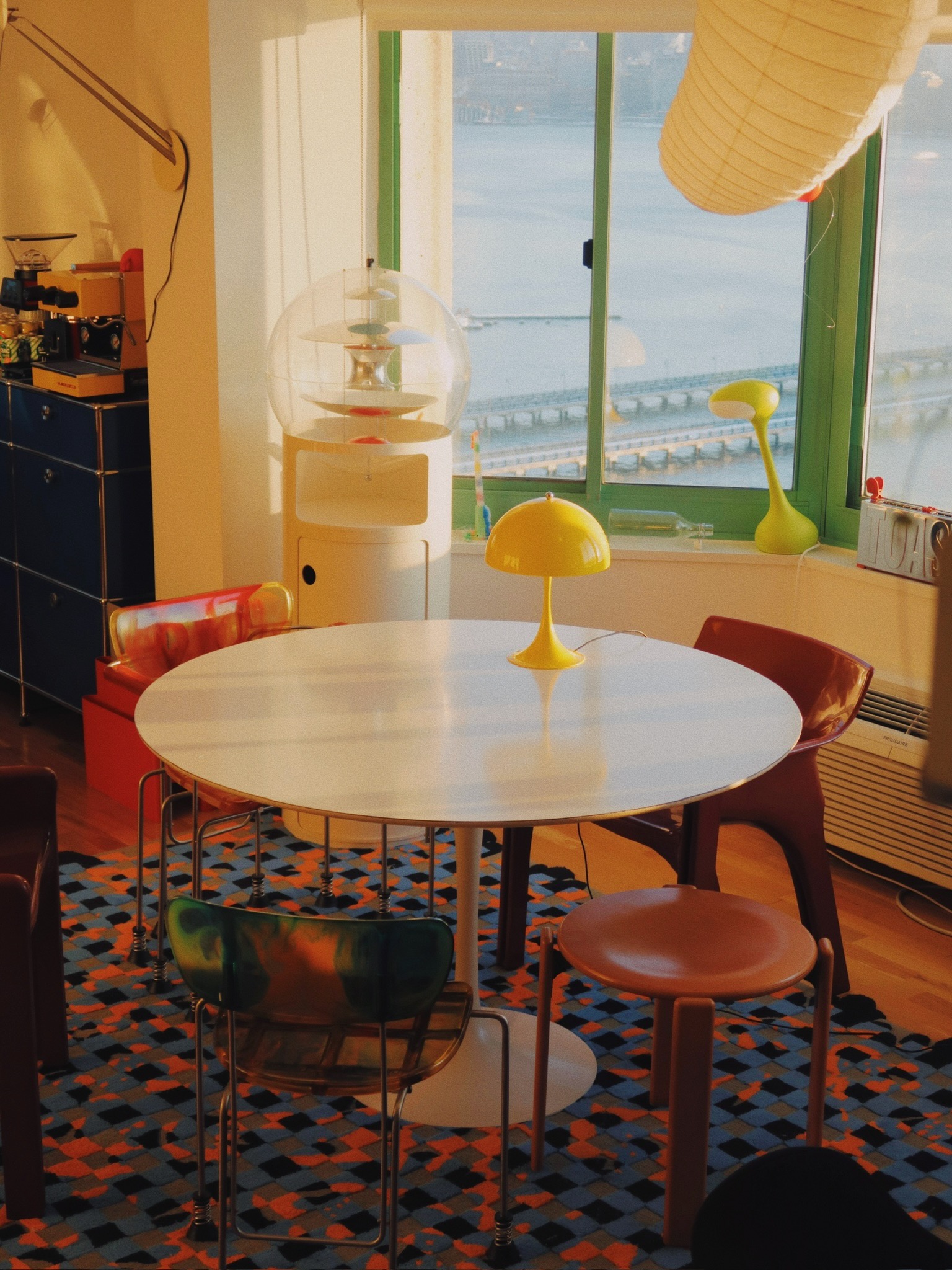
An Apartment With No Sofa But 50 Lamps
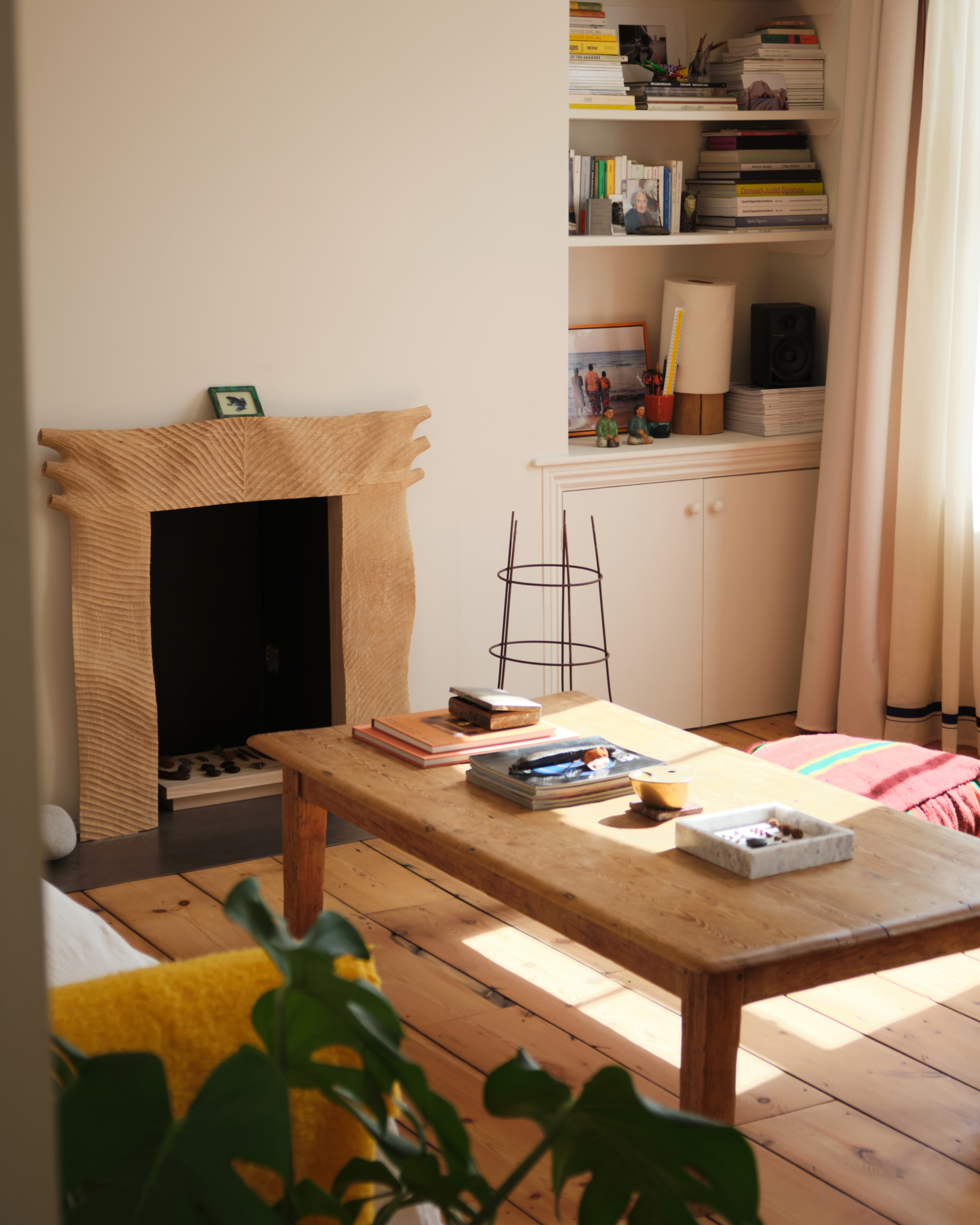
A Happy Family Collaboration in De Beauvoir
How “The Muse of Spirited Resourcefulness” Guided The Making of Glass Artist Juli Bolaños-Durman’s Edinburgh Home
ON UGLINESS WITH DAVID MICHON, AUTHOR OF FOR SCALE
The Home That Thomas Wheller Is Making
Designer Jake Robertson’s Home is a “Living Library”
Jewellery Shaped by Architecture, History and the Human Hand

THE SCURA GUIDE TO GOSPEL OAK & AROUND
Scura Selects: November 2025
Luke Malaney’s Work is Always in Motion
Going Global: Reflections and Recommendations from Flawk’s Show at Collectible NYC
The Fluent Creativity of Liyang Zhang
SCURA Selects: What to see at Open House & LDF
FRIENDS OF SCURA: ALEXANDRA ARIAS
What is Flawk?
A Design Duo’s Reunion with a Family Farmhouse in Alsace
The best eats in London under £20
Introducing the Flawk Shop: a new home for a family of objects
An Architectural Adventure in Finland’s Far North
Freddy Tuppen’s Flat Keeps Getting Better
A Slower Guide to Istanbul
Inside A Copenhagen Apartment Shaped By Instinct, Collaboration and Kerbside Finds
A Guide to Copenhagen, Curated by a Design Duo We Love
Step Inside Tom Golland’s Colour Playground
Picasso Chairs and Playful Precision: Josh Page’s Creative World
Ajay Larr on the Architecture of Food and Why Meals Matter
A Slower Guide to London
The Scura Guide to eBay
The Homespun Beauty of Textile Designer Isabel Farchy’s Patchwork Panels
NYC Design Getaways
Our friends: PPP LAB on crafting for simplicity and usability
Hidden Feasts: Jiaonest
Scura’s Guide to Independent Stoke Newington
Welcome to Scura