Making Work – and a Home – Out of Restrictions, Remains and Resourcefulness
Animal bones, hedgehog spikes, broken porcelain and polypropylene twine: not the first things you’d think to make furniture or home objects with. Yet for designer Katy Brett, these are exactly the materials that, through time-old making techniques and a lot of imagination, she fashions into beautiful, often delicate pieces imbued with ideas about death, decay, home and belonging.
Katy grew up in Sussex and studied graphic communication at CSM in London. When her family moved from Sussex when she was 17, Katy’s sense of home became less anchored to a single place. Her mother was Scottish, so “Scotland feels like it has that homeness to me,” Katy says, “even though I never lived there”. Sussex is where she grew up, but she rarely visits the county any more because her dad and brother are in London, which, despite her ties to, “doesn’t really feel like home”. So where does? “It’s really complicated. I think that’s a lot about what my work is about,” Katy says, and her recent project “Teasels” certainly points to that. A series of small domestic tools, fashioned from deer bone and other foraged materials collected in Scotland, pose a question Katy has often asked herself: how do you fashion a sense of familiar domesticity from what you have in front of you?
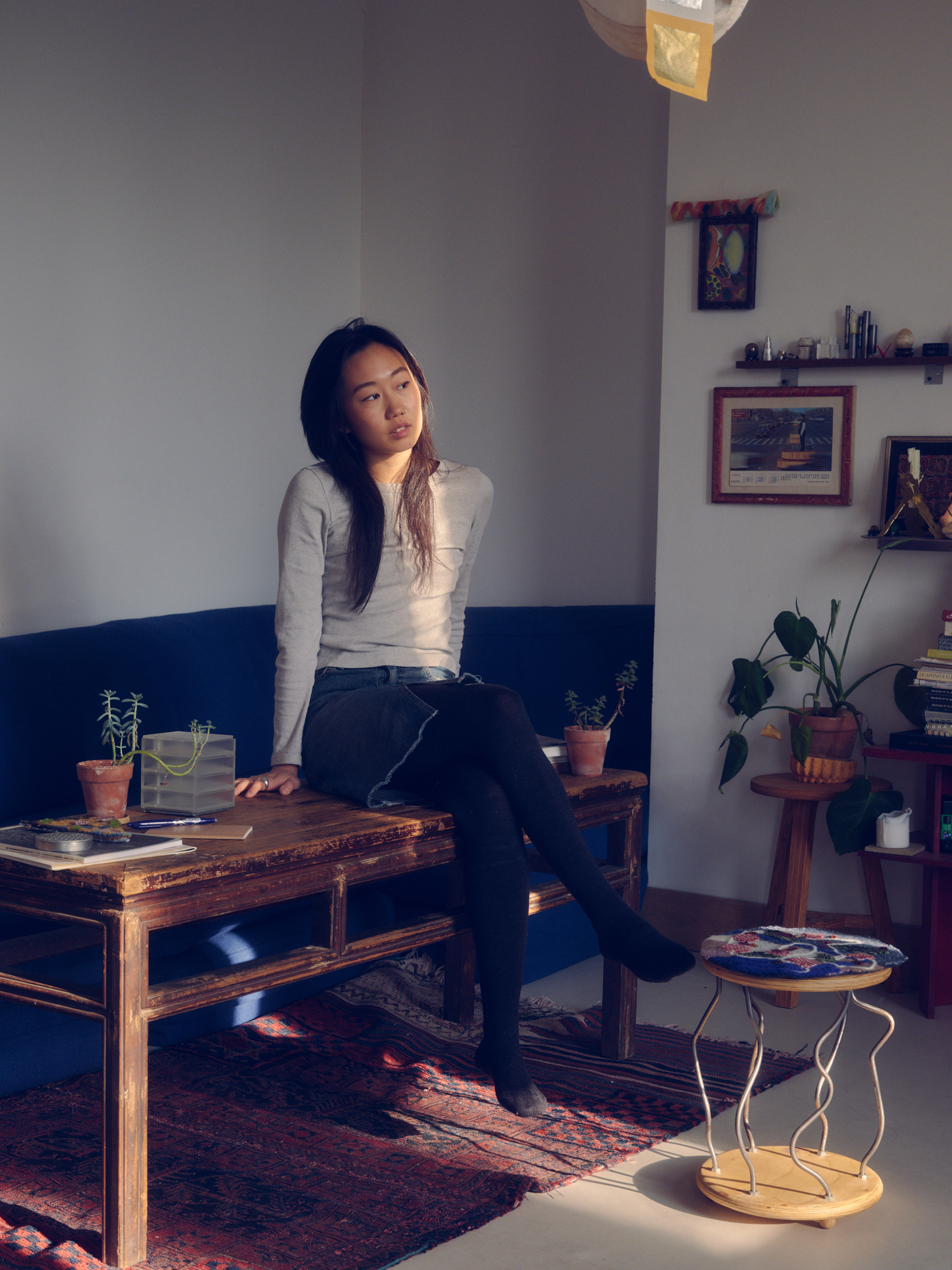
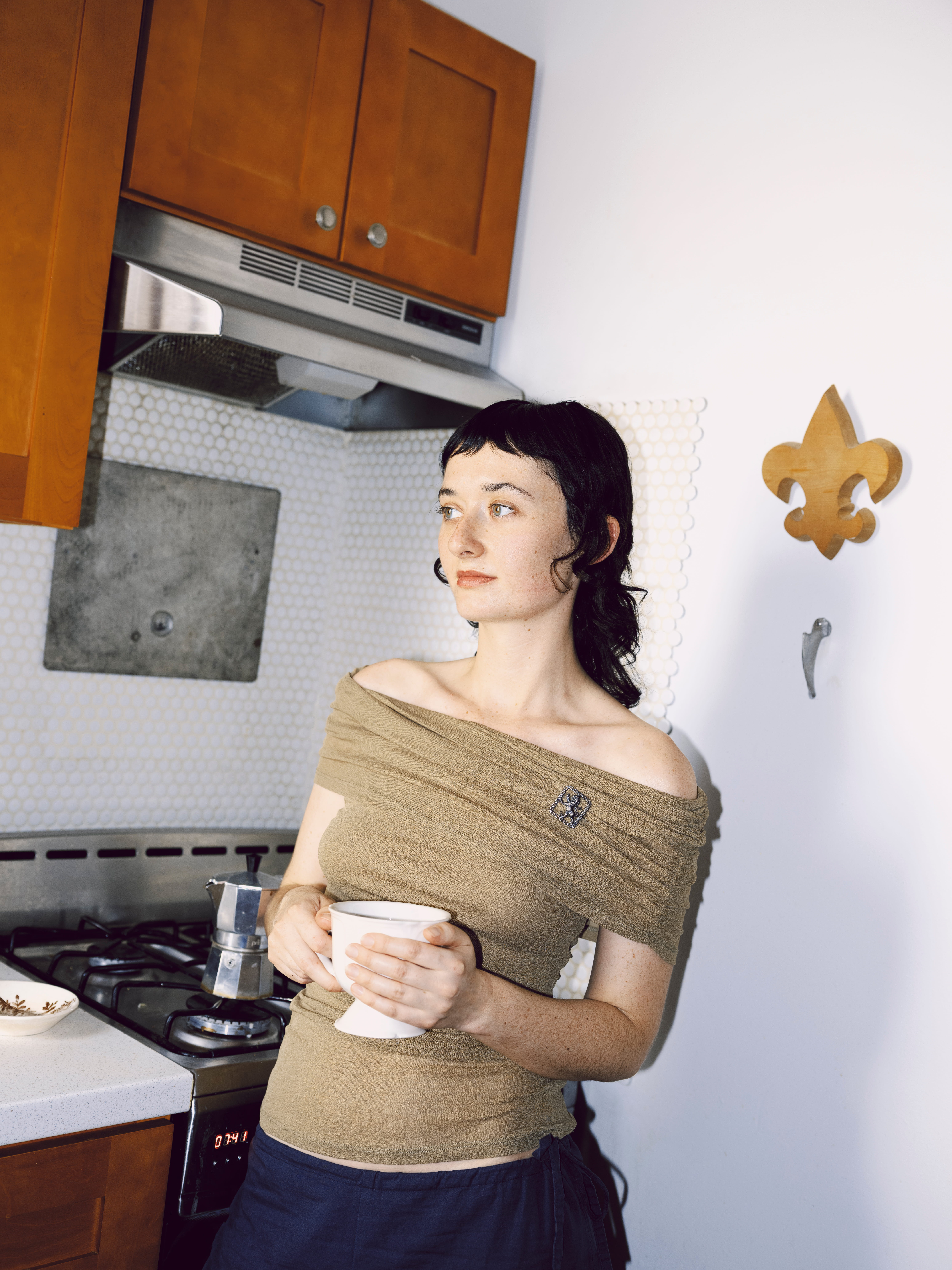
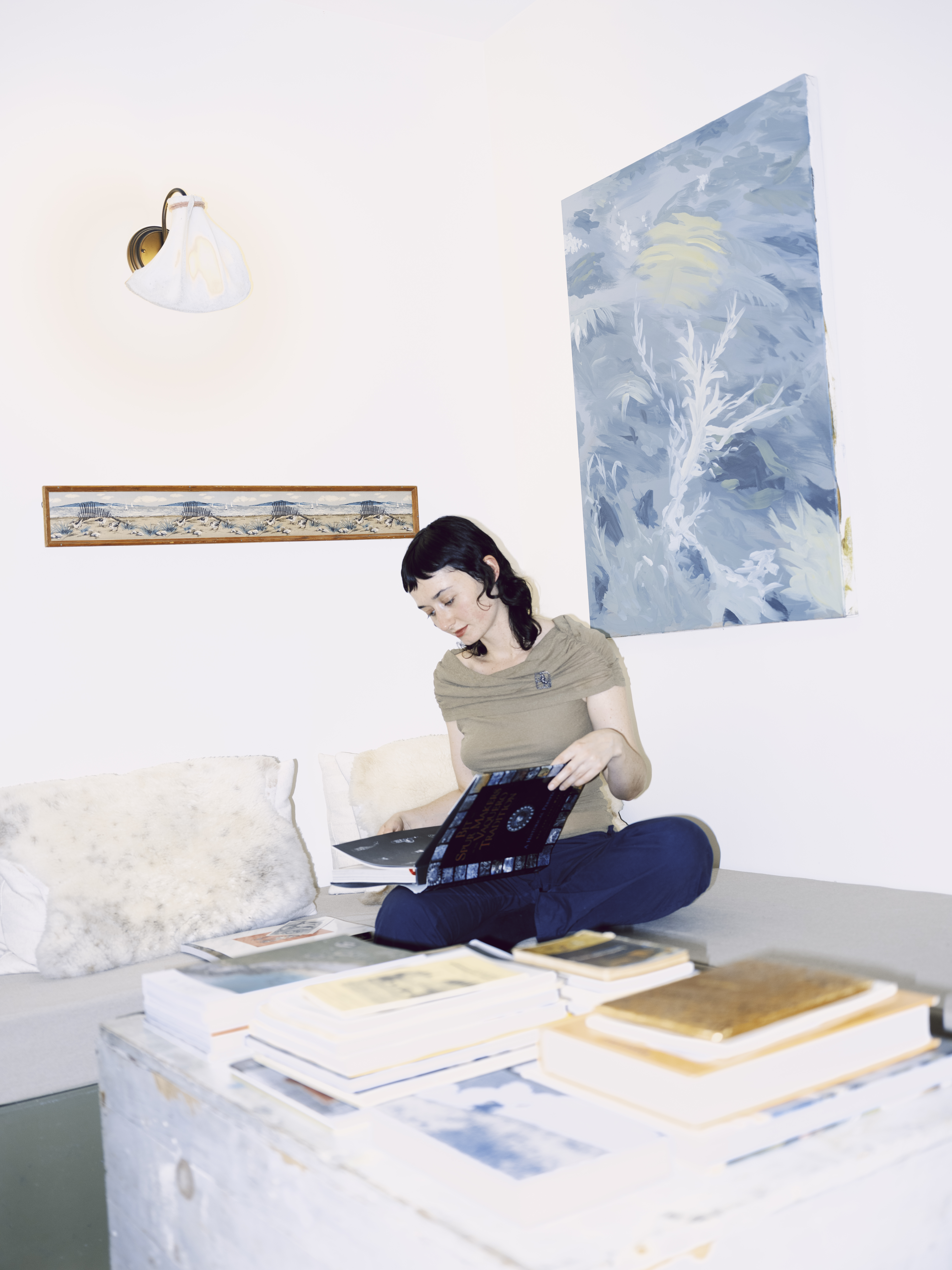
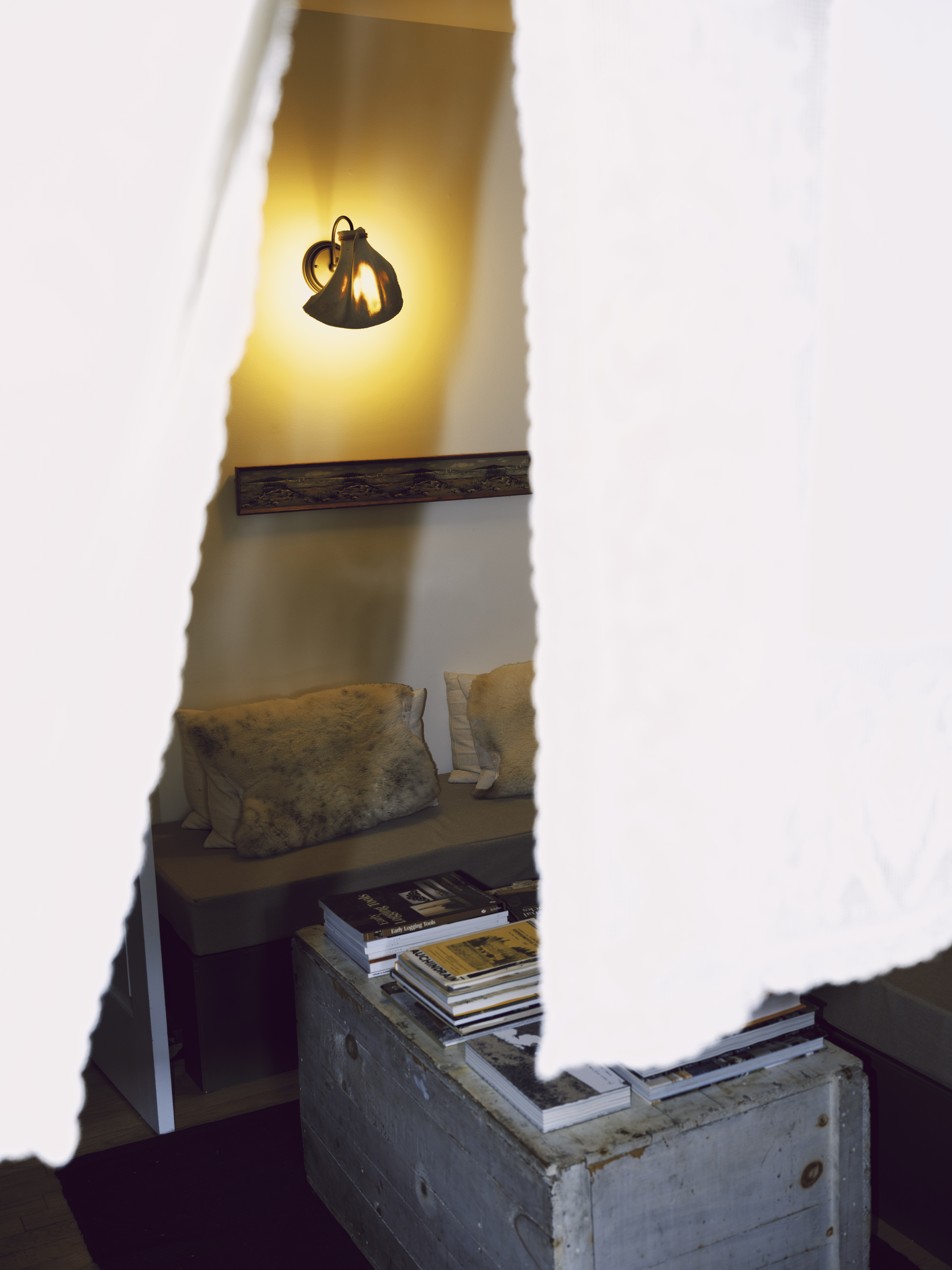
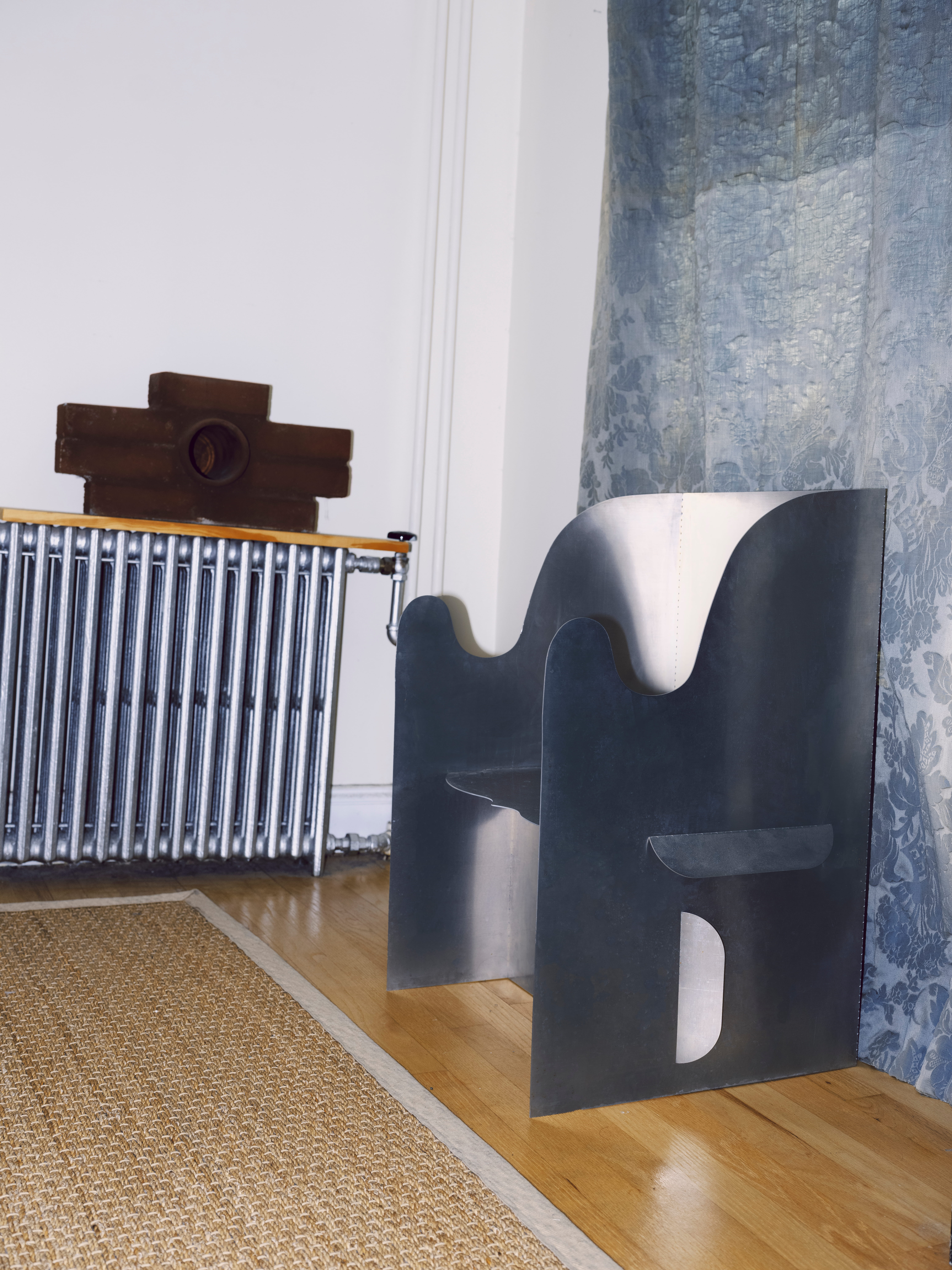
In the most straightforward of ways, home for Katy is now New York, where she first came to work as a gallery assistant in 2019, before later completing a master’s in interior design at Parsons. For the last three years she has lived by herself in an apartment in Greenpoint, Brooklyn – the longest she has spent in one place in her adult life. As with her approach to making work, Katy has enjoyed leaving her own mark on the apartment within the constraints of what was already there: faux-marble tiles and walls painted in colours she wouldn’t have picked, but also generous natural light and a floor plan that functions well. “I didn’t want to fight what was here. A lot of my work is about restriction and what’s already there or available, and I really wanted to do the same with the apartment.”
Hey Katy! To begin, could you tell us about your early life and education?
I grew up in Sussex, by the coast, with two artist parents who were both painters. Our house was filled with stuff. My mum was Scottish, so we would spend summers and Christmases with my grandparents in Scotland.
I studied graphic communication at Central Saint Martins. I sometimes wonder whether I should have studied sculpture or furniture design, but what I loved about that course was that the aim was simply to communicate; the outcome could take any form. I ended up making furniture.
How did you end up in New York?
I graduated in 2019 and came to New York on holiday because I had never been to America. I’d just started showing work with Max Radford, and everything was very new to me. There were all these downtown galleries showing furniture, and I remember walking into one and thinking, “I’d love to work here. I could learn so much.” I met someone who was looking for an assistant and it all happened from there. I managed to get a trainee visa and moved over just before Covid.
I had about six months at the gallery before the pandemic, but it threw me into the New York design scene. It was an amazing introduction. Then Covid forced me to turn inwards again – I ran away to Scotland because everything felt so chaotic and scary, and started thinking about what I wanted to do next. I knew I wanted to keep making work, so I returned to New York to do a master’s in interior design at Parsons.
You’ve said that your relationship with the idea of home is complicated. Why is that?
When my family moved away from Sussex, my sense of home shifted and became less fixed to one place. Even when I was studying in London, I think I was trying to figure out a sense of belonging. I have always really cared about space and materials, so from quite a young age I had to learn how to arrive somewhere new and make it work for me. The residencies I’ve done recently have made me think about that idea of a temporary home, too. I’ve learnt how to be somewhere new and make it my own.
My dad and brother live in London, and some of my best friends are there, so my people are there. There are lots of things I miss about it, even the Tube, but London has never quite felt like home. Scotland has that “homeness” to me because it was my mother’s home, even though I never actually lived there. It’s really complicated, but I think that’s what a lot of my work is about.
How does that search for home manifest itself in your work?
I think all my work is trying to find home in the everyday, or a sense of belonging and shelter in materials we wouldn’t normally notice. It’s a play on locality and local materials. I don’t think it was initially intentional, but every piece I’ve made has been about experimenting with something I found nearby. There’s a sense of place in the finished object.
I feel very passionately that we should make more things from local materials. It makes me sad that we surround ourselves with objects made somewhere else, using materials that have no relationship to where we are. I’m not claiming to know how to solve that enormous problem, but I can explore it in my own small way.
What first brought you to your apartment in Greenpoint?
It’s the first place I’ve lived alone. I found it on Craigslist and it was rent-controlled, two blocks from where I was already living. I’ve always lived in Greenpoint since moving here, so I feel very connected to the area. It’s historically a Polish neighbourhood and, although it has changed enormously, there are still film studios, fabrication workshops and remnants of its industrial life.
The apartment is what they call a railroad or shotgun apartment: it runs along one corridor and you can see almost all the way through. It had great natural light and was an incredible deal, so I thought, “I’m never going to find anything better than this.” Everything is slightly wonky, but I love that about it.
I was starting completely from scratch because my previous apartment had been furnished. That was scary but exciting. I’ve been here for three years now, which is the longest I’ve had a space of my own in a very long time.
How did you approach making it feel like home?
I didn’t want to fight what was here. A lot of my work is about restriction and what is already available, and I wanted to approach the apartment in the same way.
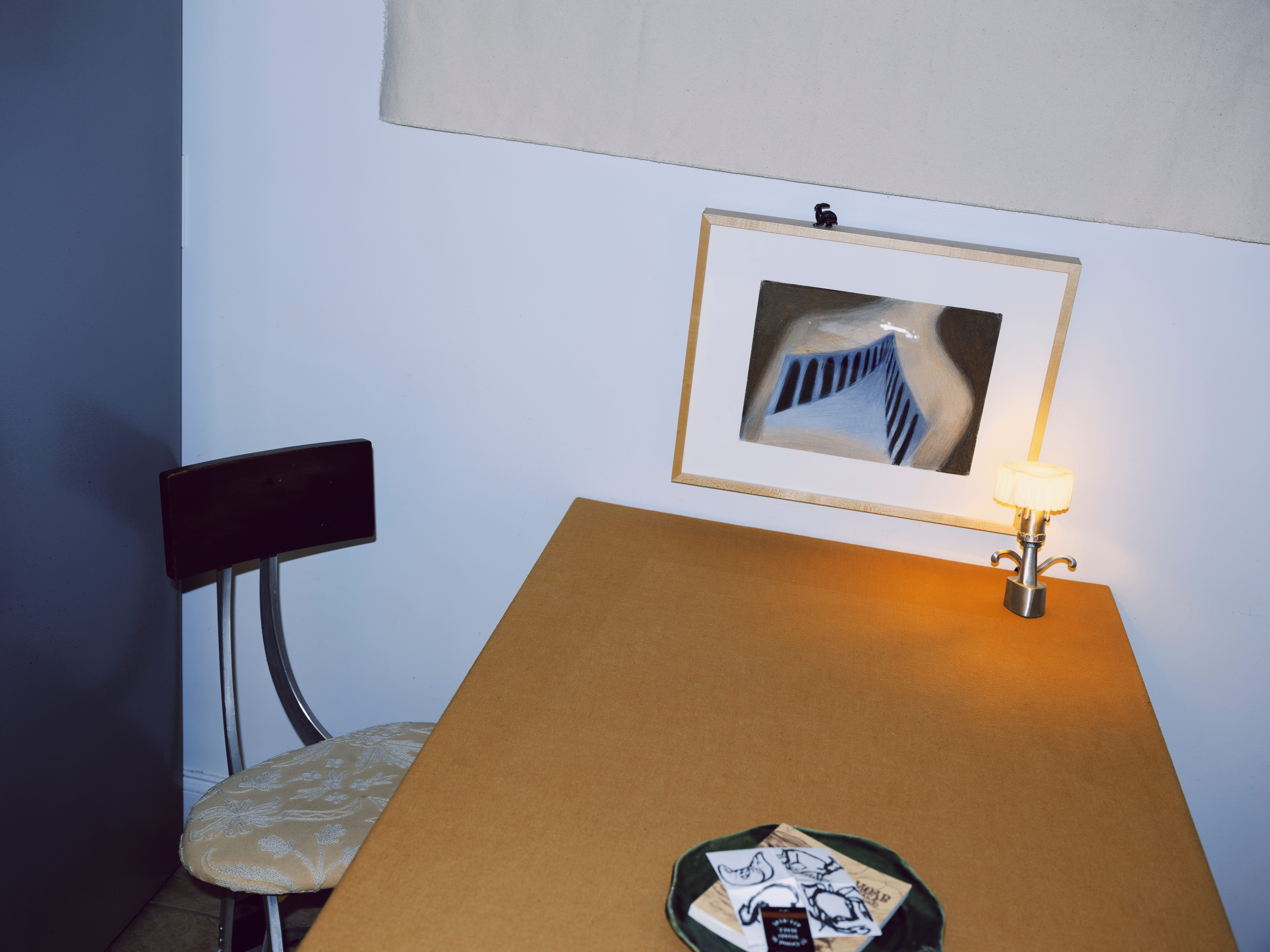
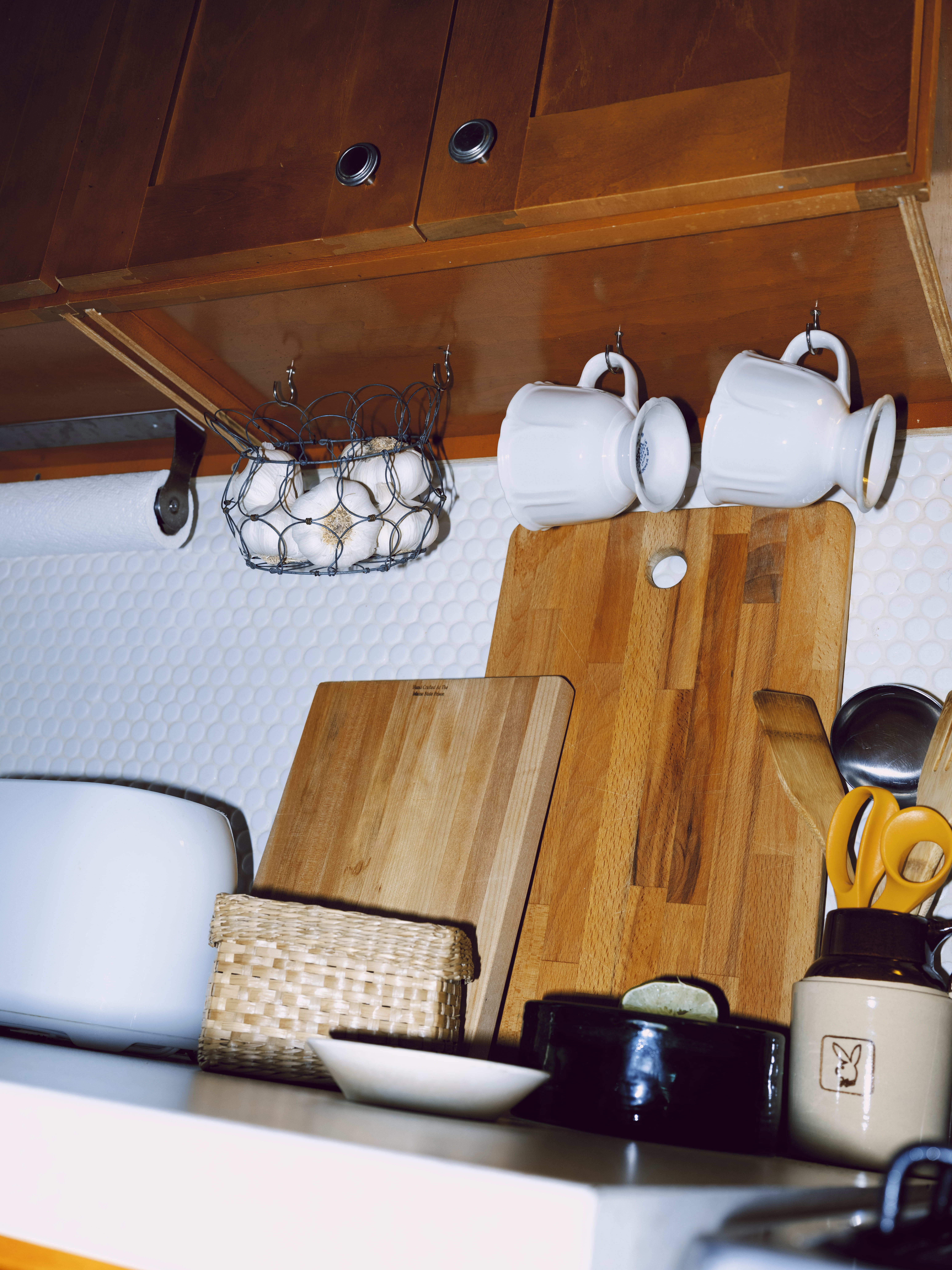
There are funny pinky-orange faux-marble tiles in the kitchen, so I worked with pinks and oranges rather than trying to disguise them. Even the communal hallway informed the apartment: it has terracotta tiles, pine green and duck-egg blue walls, and those colours somehow became the palette inside. I really like having a restriction to play with.
I have a slightly overbearing landlady, who is an older Polish woman and comes into the apartment quite often. I love her, but I’ve been respectful about not making permanent changes. Beyond furnishing it, I haven’t really altered anything. It has taken three years for everything to find its place, and it’s still not entirely there.
Do you think of yourself as more of a forager than a collector?
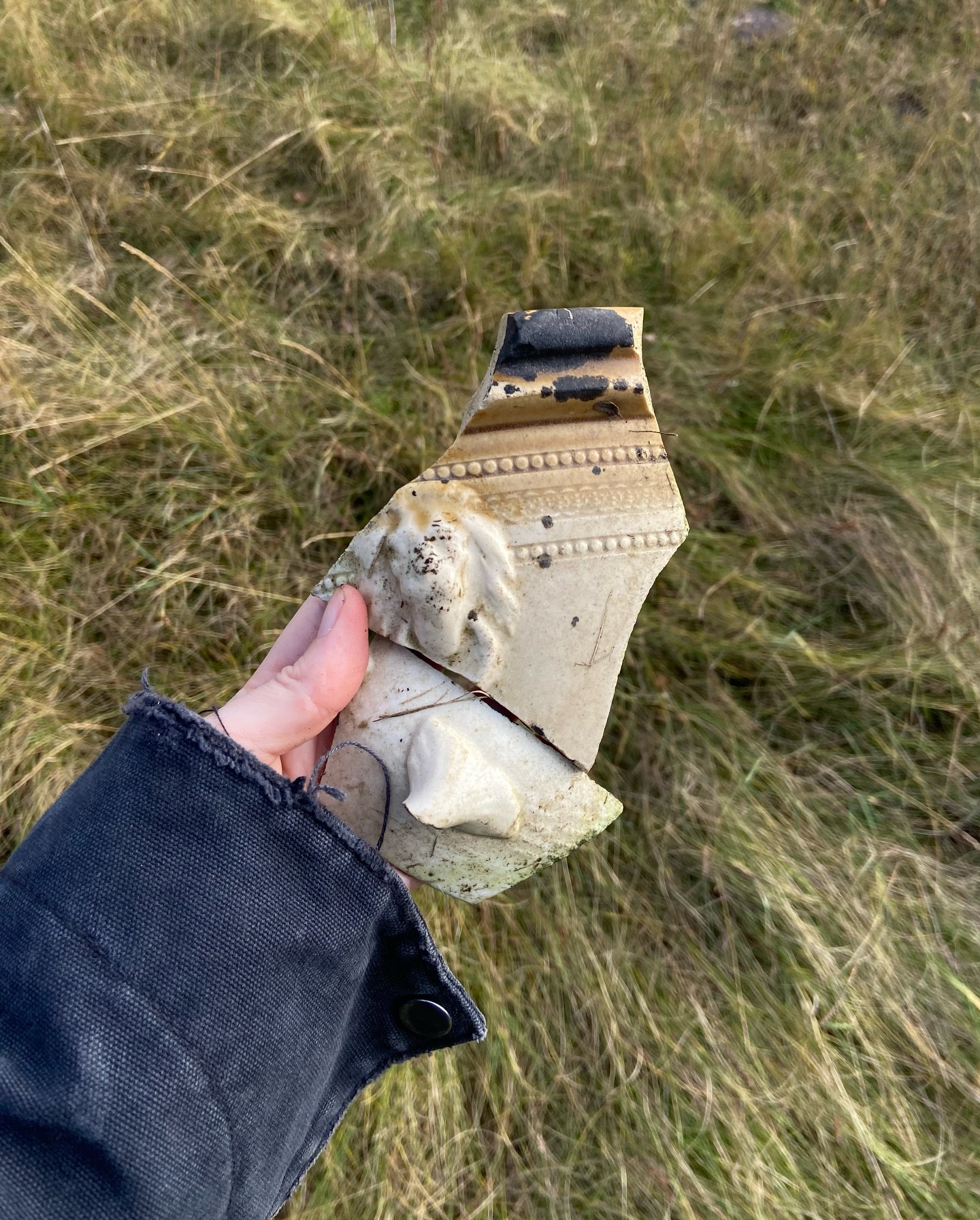
Definitely. Almost everything I have in the apartment has been found by “stooping”, as they call it here. Through my interior design work, I’ve become more familiar with the world of antiques and collectable design, and I really enjoy looking at those things, but it isn’t what I do in my spare time.
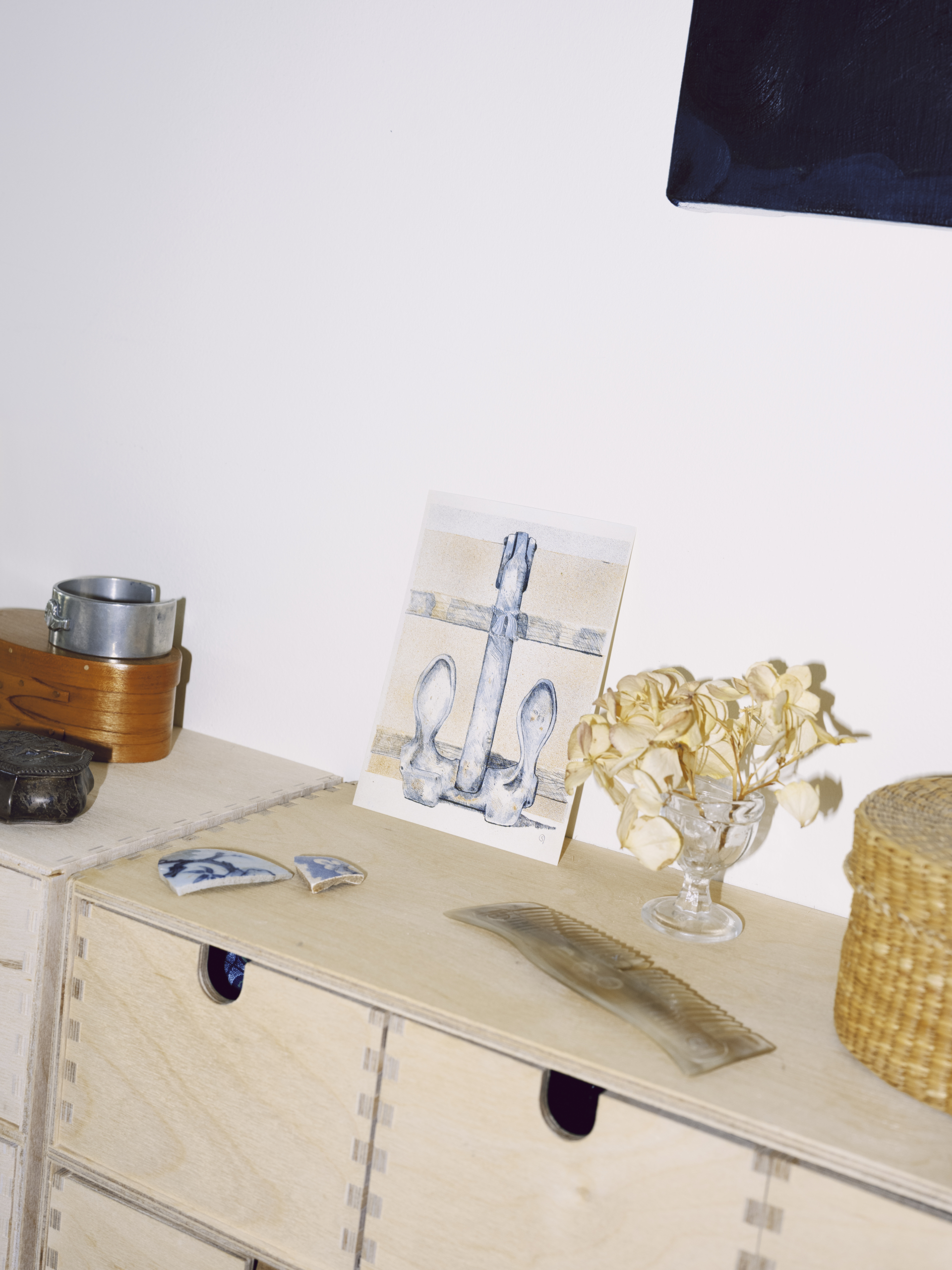
There’s such an idyllic idea of foraging that is mostly about mushrooms or beautiful things found in nature. I like the challenge of asking what else is available, and especially in the city. In London, for example, I can find chicken bones outside a chicken shop and they have the potential to be turned into a beautiful cast tile. I found this strange concrete fossil on the street here – New York’s pavements are filled with gems.
The restriction is important: I can’t just order a material online. I need to know where it came from and why it was there.
Has New York itself made its way into your work?
There is a lot of concrete in New York that has been made to look like stone. My local laundrette has a fake brownstone façade with a lion’s face that is slowly decaying. I made a 3D scan of it because I wanted to reproduce it, then discovered that you used to be able to order moulds from the Sears catalogue, pour concrete into them and “make your own rock at home”.
That encapsulates what I find both inspiring and frightening about New York and America more broadly. There’s this feeling that you can make anything happen, but also a history of industry and globalisation that can be quite scary. I’ve been working more with moulds recently because I’m interested in what happens when you reproduce something in another material.
New York is mad. There’s no set path because everyone is doing something different, and that makes it feel limitless; it energises you. I’m very interested in the parts of America beyond New York, too, and the city has been a stepping stone into those places.
You recently completed residencies in Scotland and Oregon. What did you make in each place?
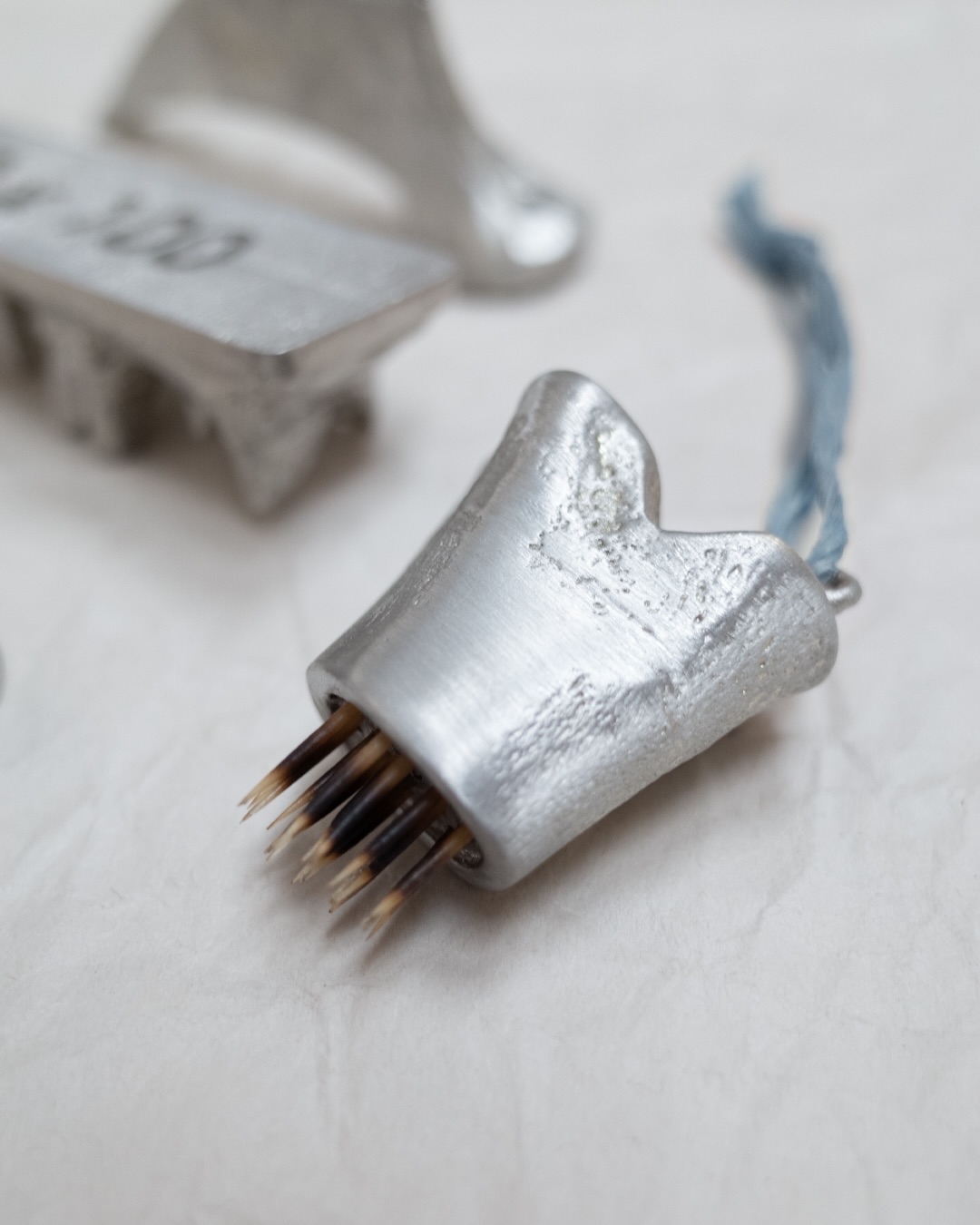
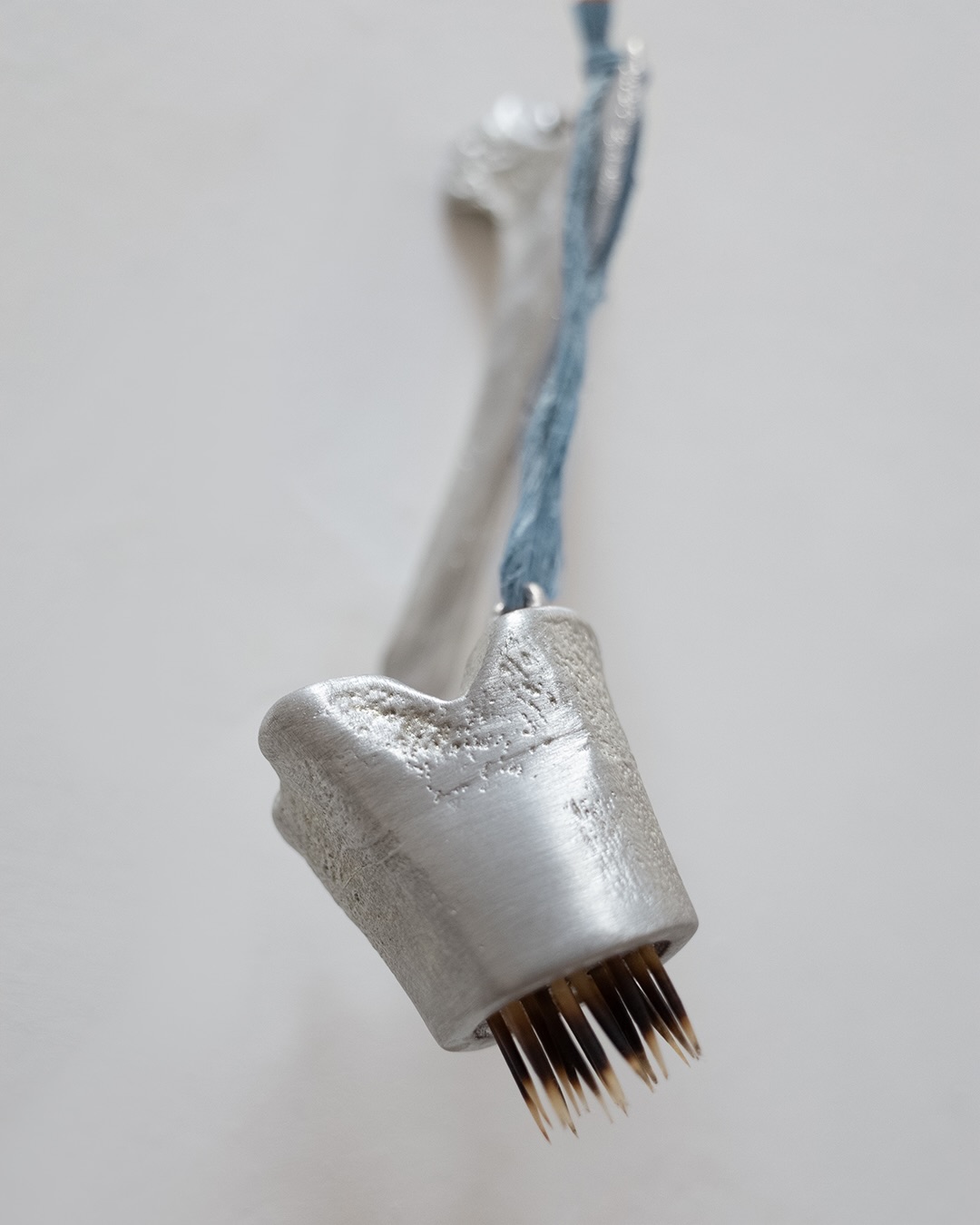
The first was in the Scottish Borders, where I had an old squash court as a studio. I’d never had so much space before, so I was able to make more installation-based work. I became interested in teasels after discovering that the verb “to tease” comes from using teasels or thistles to tease wool.
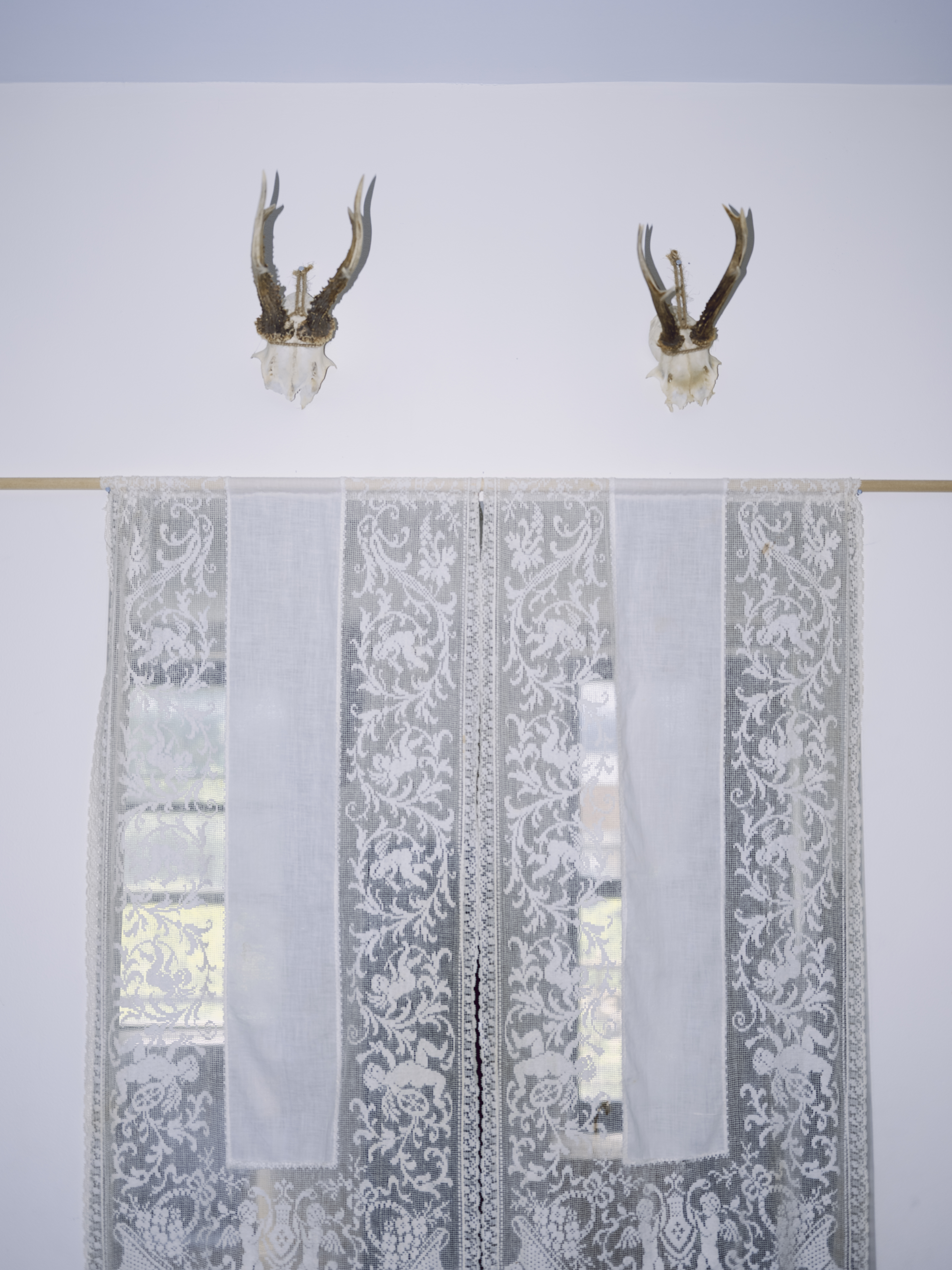
It was a heavily farmed landscape, so there was polypropylene baler twine everywhere. I wove it around deer bone and used pheasant bones found around the estate to make small domestic tools and hooks. I was interested in creating something functional from these tiny scraps.
The second residency was in Oregon, which was my first experience of the West Coast. The pace was completely different. I arrived thinking, “Why is nobody being productive?” After a week, I realised how nice it was to slow down.
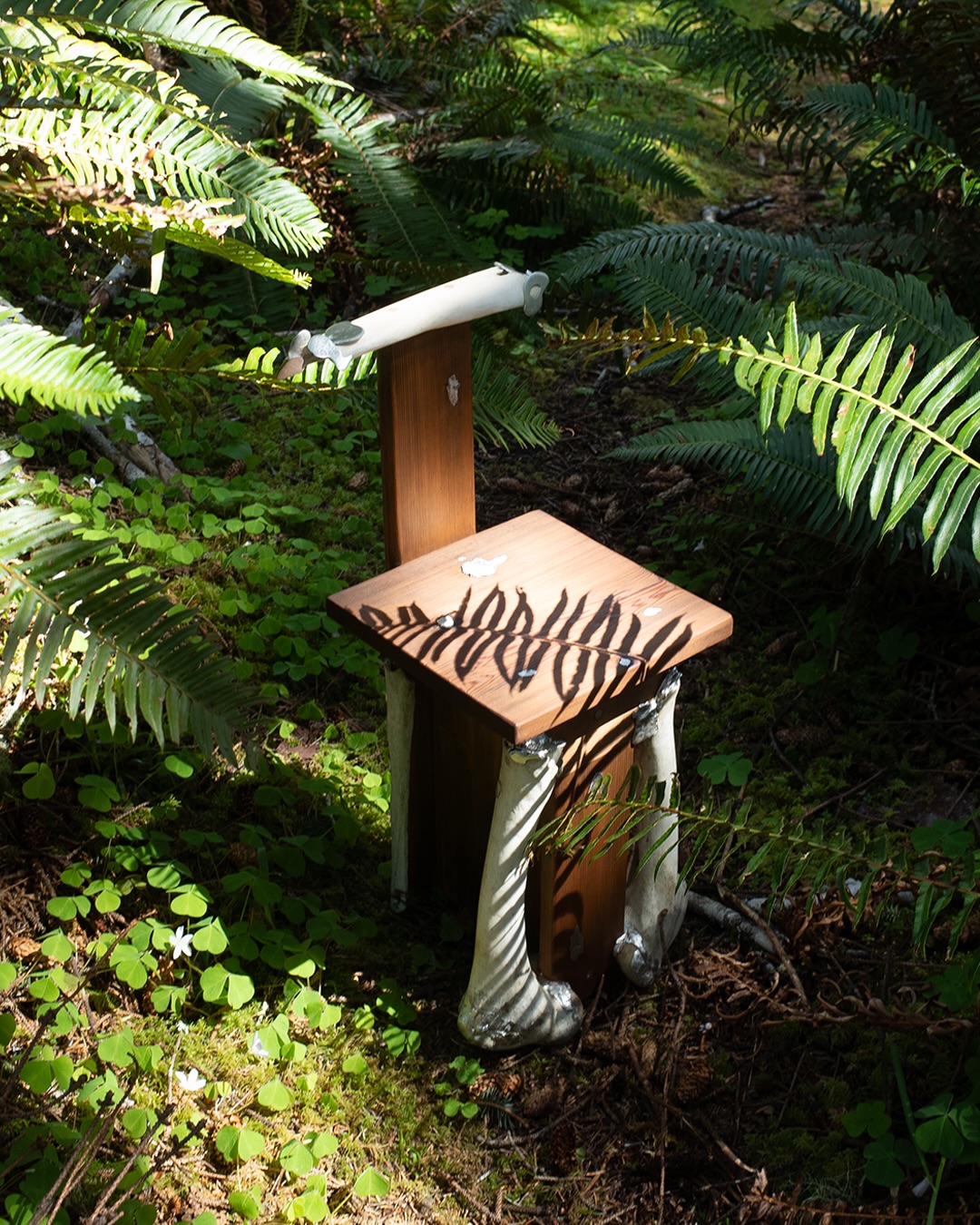
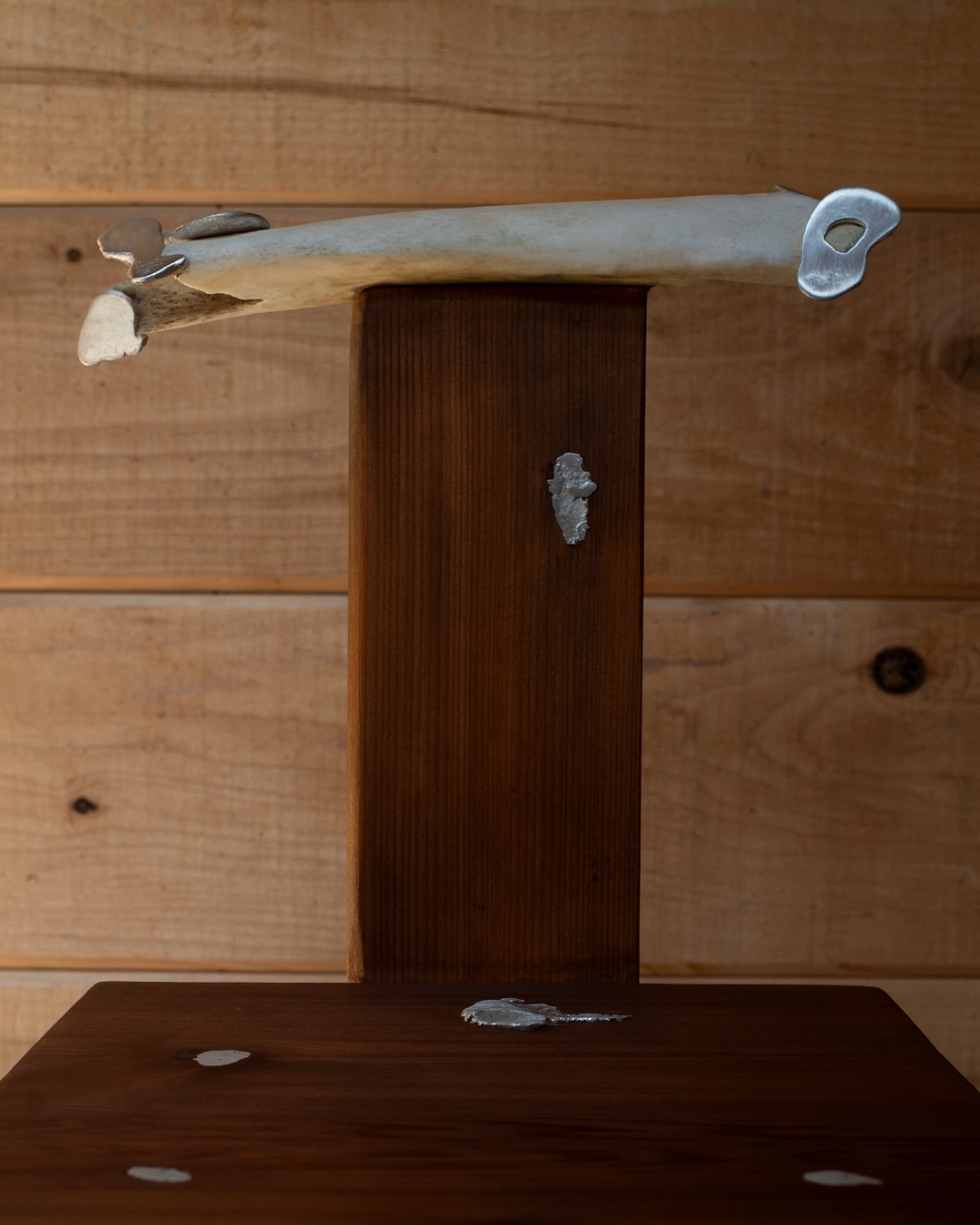
There were elk and cougars, and enormous bones. I remember seeing one and thinking, “I have to make a chair. I can’t not make a chair.” The resulting piece is made from cedar and elk bone, and explores their relationship to Oregon’s logging industry. Wood is the fabric of everything there. The industry has shaped the entire state, but as logging has declined, its machinery has been left to rust and decay while elk roam through recovering forests. The chair came out of all those relationships between the material, the animals, the industry and the landscape.
Death, waste and decay appear repeatedly in your work. Are those conscious preoccupations?
There is a lot of death in my work, although I don’t always think about it consciously. I’m probably more interested in decay: in things that are overlooked and what happens when you give them time, care and attention.
Polished bone is incredibly beautiful. It can look almost like ivory, and yet we eat so much meat and discard all these bones. Until everybody becomes vegetarian, why wouldn’t we look at what can be done with that material? I’m not pretending that making one object tackles the scale of the problem, but it can offer a small example or ask, “What if?”
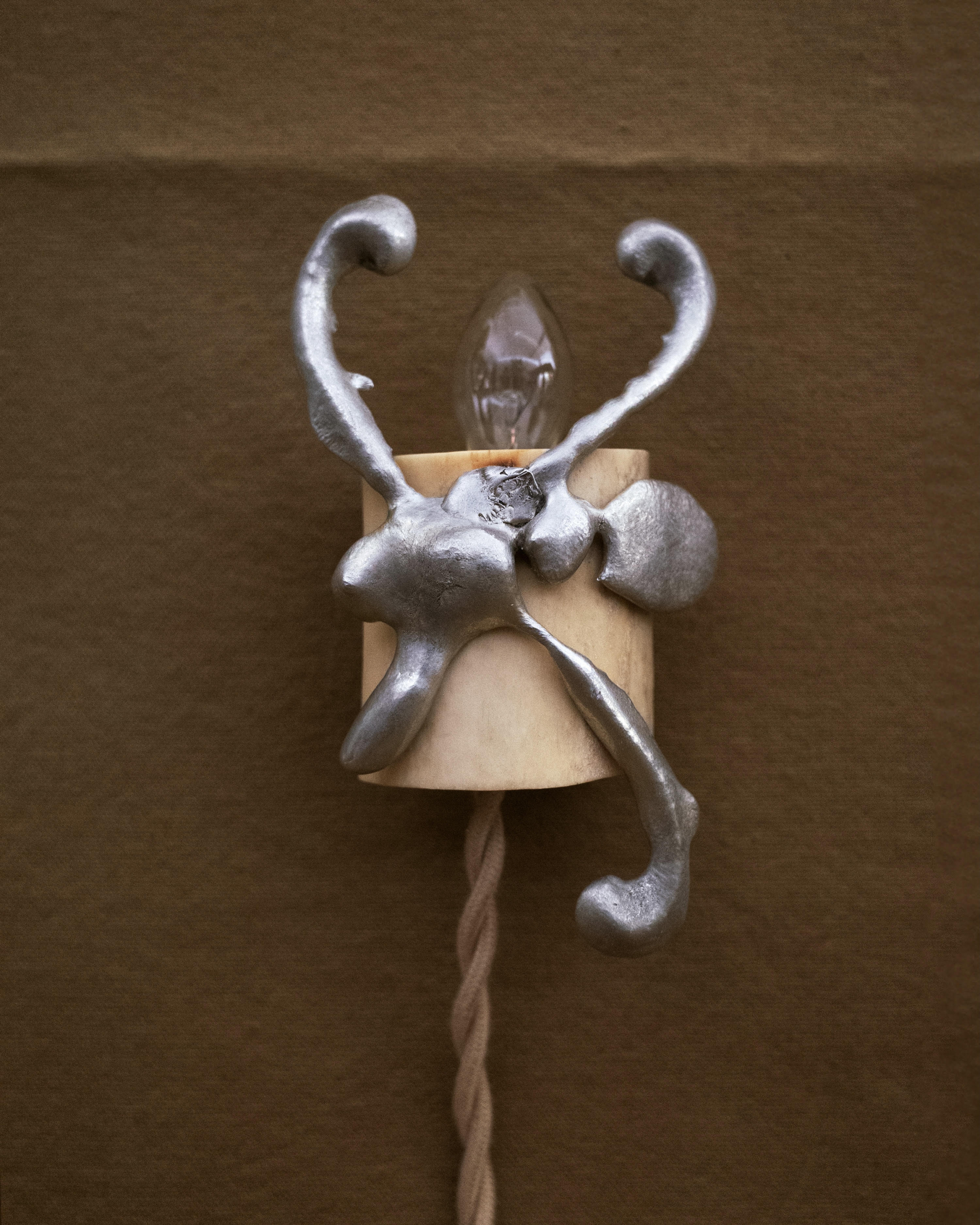
I also love combining something raw with something clinical or industrial. My favourite pairing might be metal with chicken bone or driftwood. I don’t want too much of one thing; I need both.
Does that explain why the apartment feels so ordered despite being filled with found things?
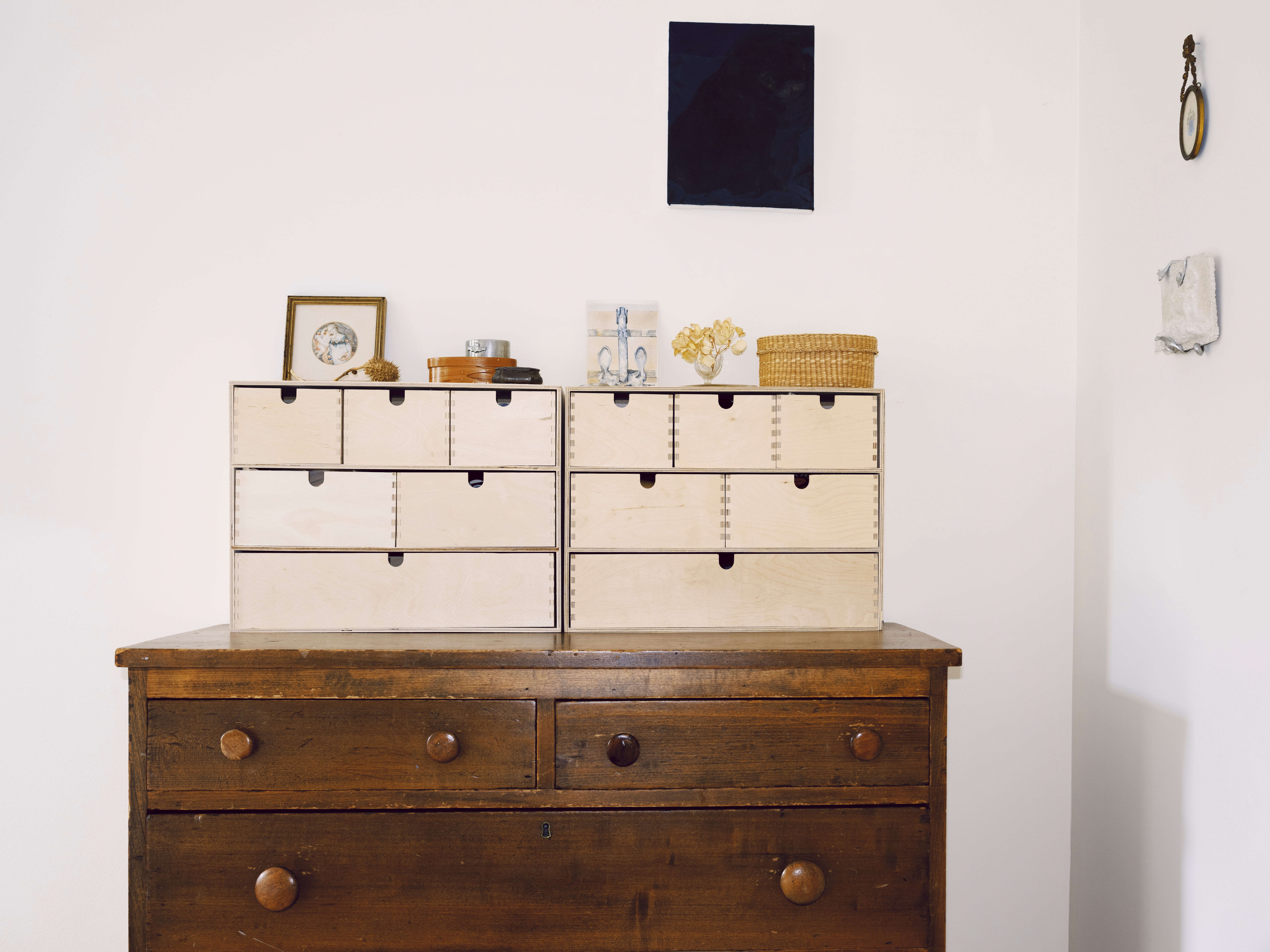
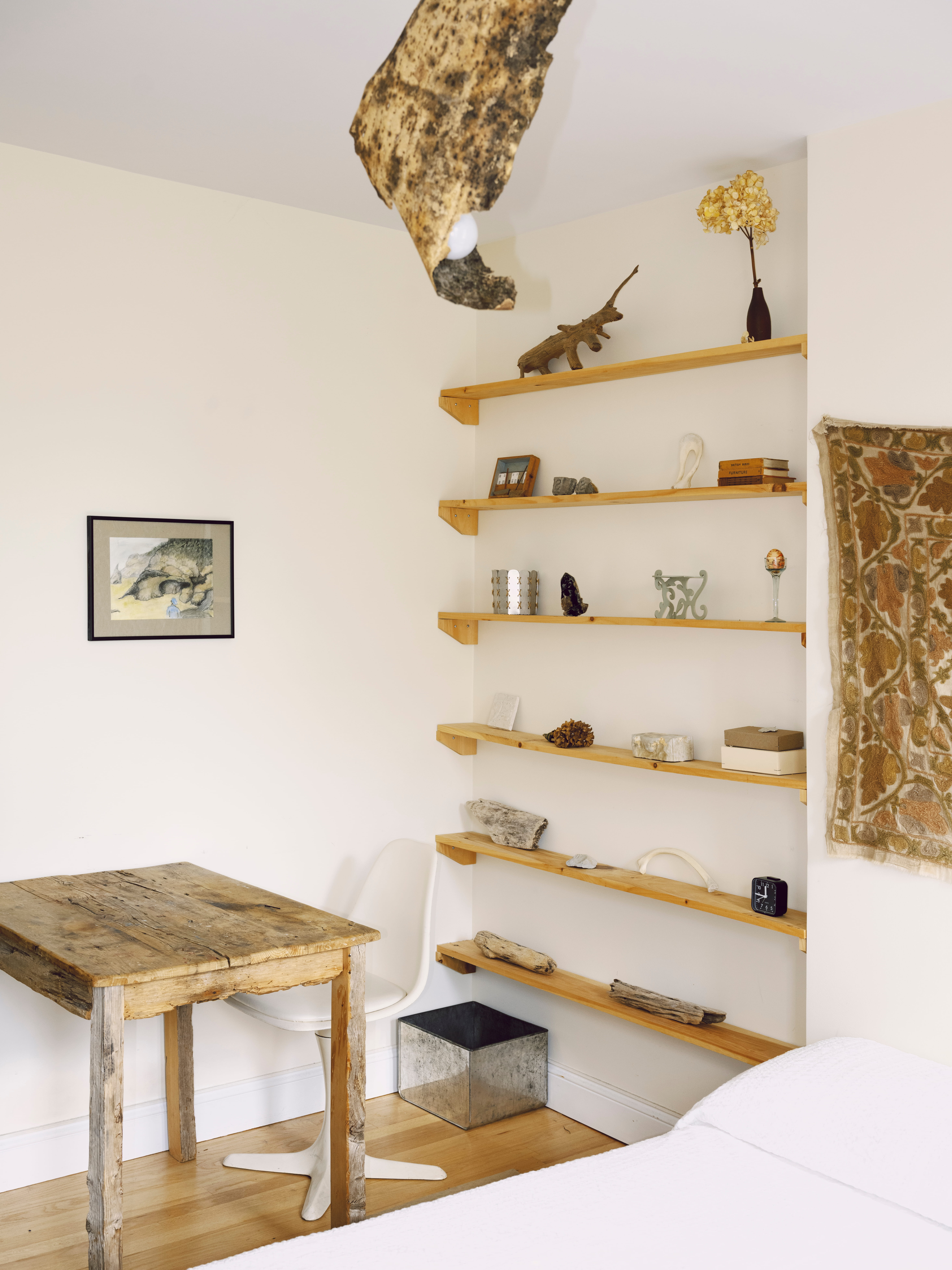
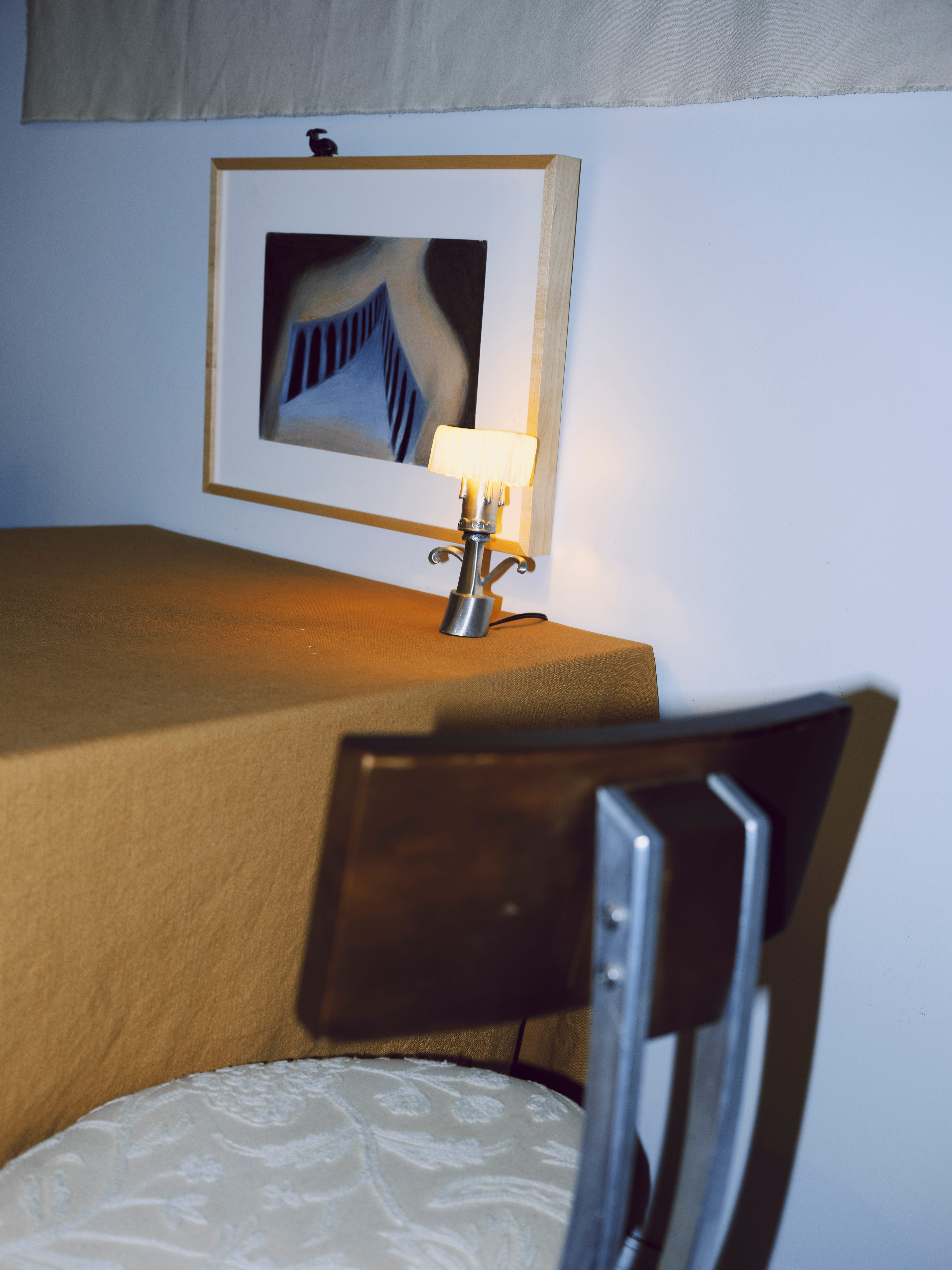
I think so. Because I grew up in a house filled with stuff, I now like everything to have its place. The objects and materials are rough around the edges, so I arrange them in an almost clinical way, without wanting that to sound creepy. In my bedroom, for example, the light has a piece of bark wrapped around its wire, set against sheet metal. There’s a balance between the rawness of the object and the order around it.
I don’t think of myself as a minimalist, but perhaps I am. I like being surrounded by things, as long as each one feels intentional.
What does your life at home look like?
I’m a huge morning person. The light in the apartment is beautiful early in the day, so I get up to enjoy it and then walk around Greenpoint. I’m very close to the water and sometimes it even smells like the ocean.
I love having friends over and watching television. If I’m ready to be stimulated, I’ll watch Twin Peaks — I’m on my second or third time through it. If I’ve had a long day, it will be Farmer Wants a Wife. It offers this bizarre little window into rural America. I’m trying to get into Love Island, too. Sometimes that kind of television is good for the soul, even if it probably shouldn’t be.
Being at home in New York feels like a treat. There’s a pressure to be out doing something, so you have to carve that time out intentionally. Staying in can feel almost naughty.
What comes next?
I’ve made so much work over the past six months that I’m taking a breather — a kind of factory reset. Bone will continue to be a focus, but I’m thinking carefully about what the next version of my practice looks like.
I really like the residency framework because my work is so place-specific, and it gives me a defined period to respond to somewhere fully. So I’d like to do some more of them.
I’m also in the process of launching SHIEL here in New York, which will be a studio making bespoke pewter hardware using forms specific to client and site. It feels like a natural next step for my practice.
Suggested stories
Going Out, Staying In With Dan Pope
Filippo Muzi Falconi’s World Is Filled With Wonder, Naturally
A Designer Finding New Forms in Ancient Traditions
A Collector Who Sells – and Lives With – the Things She Loves
Functional Beauty: Jewellery Designer Helena Vieira’s Converted Warehouse Apartment
The State of Design? Designer David Searcy Has Thoughts
Inside Jesse Butterfield’s Studio
Jewellery Designer Jessi Burch’s Brooklyn Apartment is a Portal into her Mind
How “primitive craft” and “contemporary production” come together at Lewis Graham’s studio
An Apartment With No Sofa But 50 Lamps
A Happy Family Collaboration in De Beauvoir
How “The Muse of Spirited Resourcefulness” Guided The Making of Glass Artist Juli Bolaños-Durman’s Edinburgh Home
ON UGLINESS WITH DAVID MICHON, AUTHOR OF FOR SCALE
The Home That Thomas Wheller Is Making
Designer Jake Robertson’s Home is a “Living Library”
Jewellery Shaped by Architecture, History and the Human Hand

THE SCURA GUIDE TO GOSPEL OAK & AROUND
Scura Selects: November 2025
Luke Malaney’s Work is Always in Motion
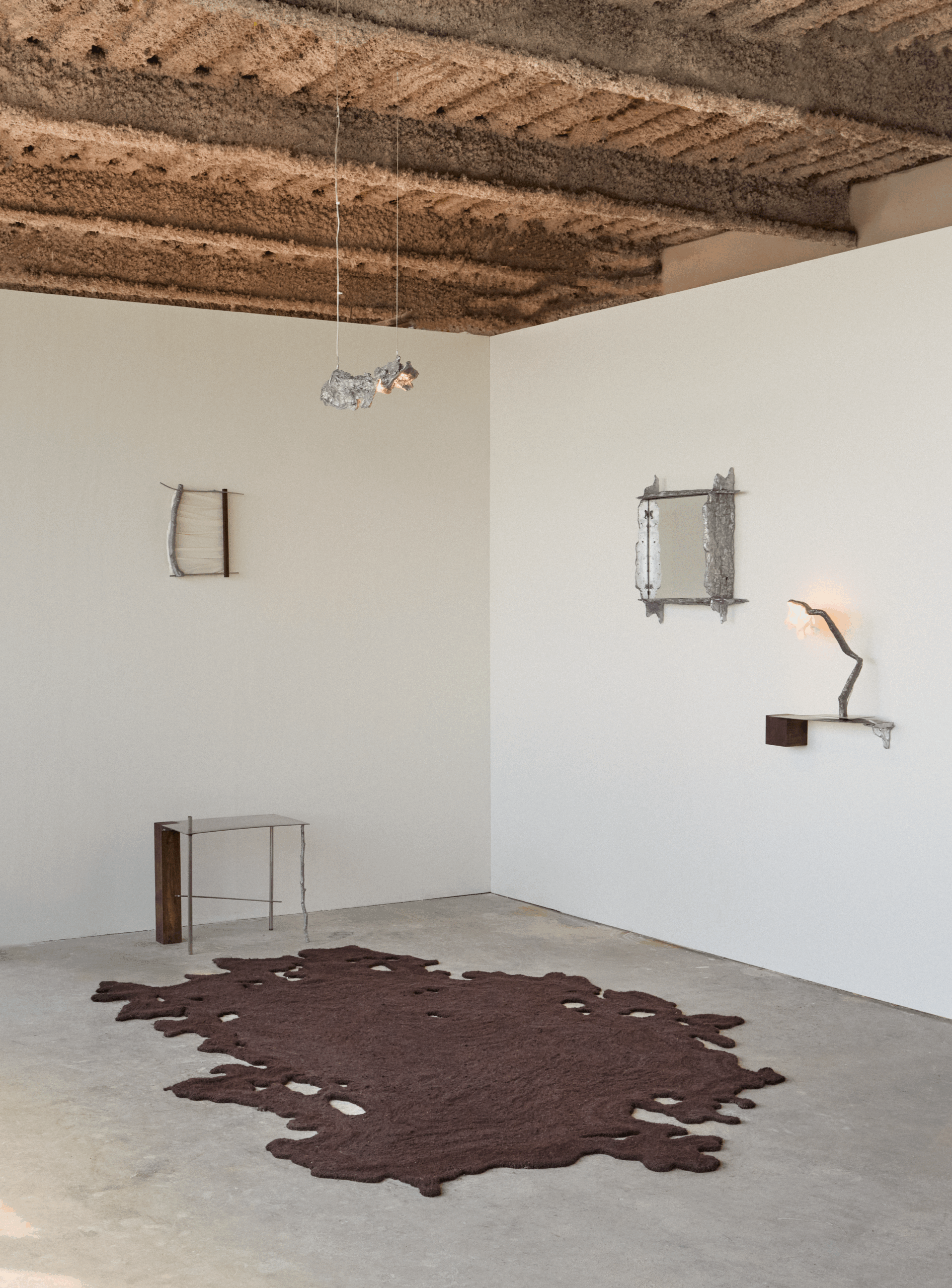
Going Global: Reflections and Recommendations from Flawk’s Show at Collectible NYC
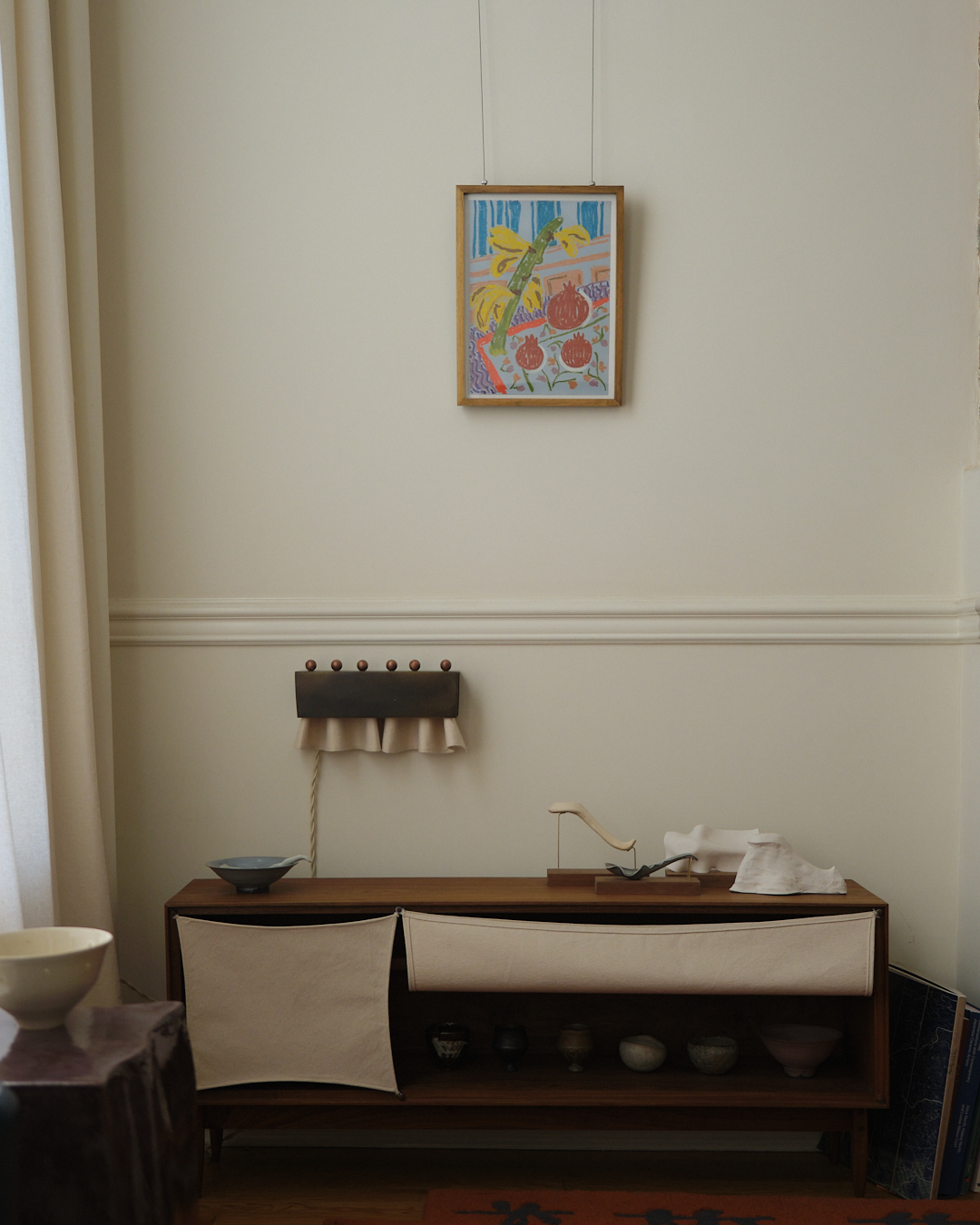
The Fluent Creativity of Liyang Zhang
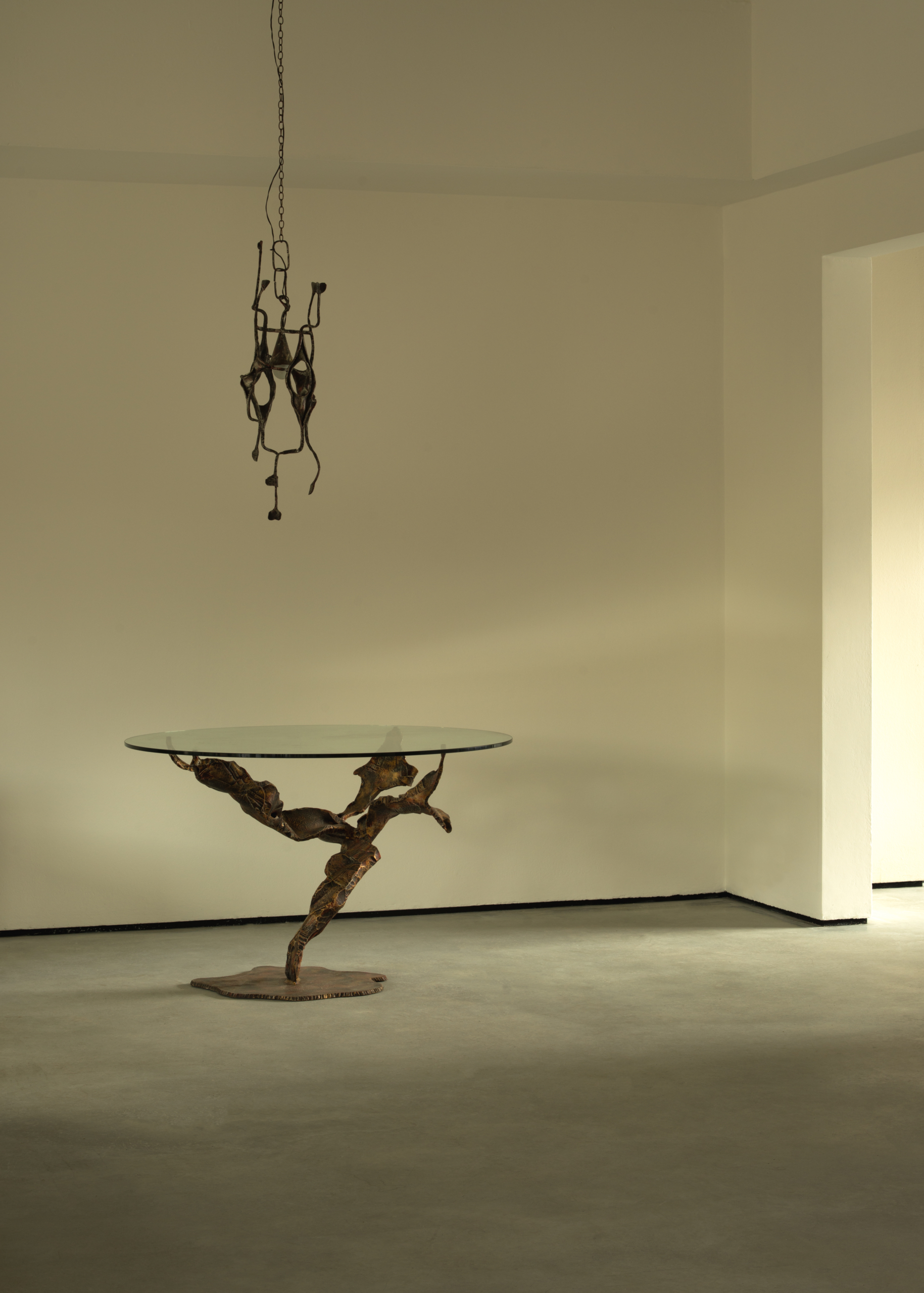
SCURA Selects: What to see at Open House & LDF
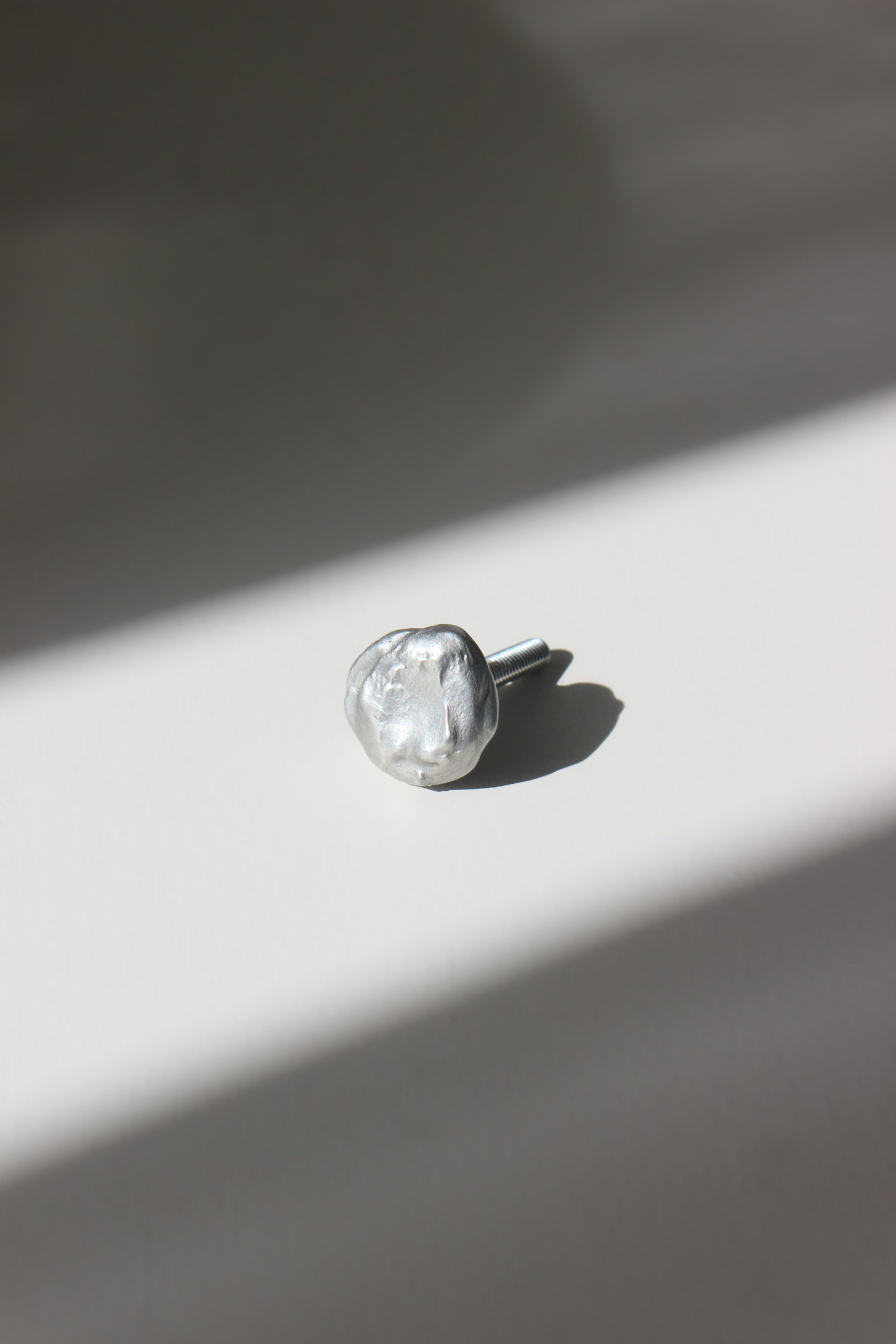
FRIENDS OF SCURA: ALEXANDRA ARIAS
What is Flawk?
A Design Duo’s Reunion with a Family Farmhouse in Alsace
The best eats in London under £20
Introducing the Flawk Shop: a new home for a family of objects
An Architectural Adventure in Finland’s Far North
Freddy Tuppen’s Flat Keeps Getting Better
A Slower Guide to Istanbul
Inside A Copenhagen Apartment Shaped By Instinct, Collaboration and Kerbside Finds
A Guide to Copenhagen, Curated by a Design Duo We Love
Step Inside Tom Golland’s Colour Playground
Picasso Chairs and Playful Precision: Josh Page’s Creative World
Ajay Larr on the Architecture of Food and Why Meals Matter
A Slower Guide to London
The Scura Guide to eBay
The Homespun Beauty of Textile Designer Isabel Farchy’s Patchwork Panels
NYC Design Getaways
Our friends: PPP LAB on crafting for simplicity and usability
Hidden Feasts: Jiaonest
Scura’s Guide to Independent Stoke Newington
Welcome to Scura