Filippo Muzi Falconi’s World Is Filled With Wonder, Naturally
When we visited artist Filippo Muzi Falconi at home in Canonbury, north London, back in April, we were in the middle of preparing for Alcova Milan and looking for a fabricator near the city to help make pieces for our presentation. As it happened, we were talking to the right man. Born in London to Italian parents, Filippo lived in Milan until four years ago and regularly returns to his father’s farm in Liguria, where he experiments with foraged natural materials and co-runs Apua, a residency programme that brings artists together for collaborative making projects. “I might know someone who can help,” he said.
But Filippo’s ties to Italy run much deeper than being able to recommend a good craftsperson there. As a boy, he spent his summers at his father’s farm, making bows and arrows and becoming enchanted by the plants, animals and landscape around him. Ever since, he has been on a path back – both physically and metaphorically – to feeling at once part of and inspired by the natural world. “I want the freedom that came with making things instinctively from found natural materials,” he says.
Today, inspired as much by these childhood memories, as well as other parts of his Italian identity – from the Catholic influence of his mother and an interest in Roman and Etruscan material culture – Filippo is making sculpture and furniture that, as he puts it, “aspires to re-enchant our understanding of the natural world, blending contemporary biology, material exploration and archaic artefacts and narratives. At the heart of [my] practice is the idea of reintroducing a spiritual dimension to our life, one that is not centred on humans but sees us as part of a larger ecosystem.”
You spent much of your childhood at your father’s farm in Liguria. Is that where your interest in nature and making began?
I think so. My brother and I would spend our summers there, building bows and arrows, collecting bugs and generally exploring. It felt very liberating. Back in London, I watched lots of David Attenborough documentaries and became interested in animals and biology. As I grew older, that developed into reading about botany, evolution and different ways of understanding the natural world.
In a way, my practice is about trying to return to who I was as a child. Life adds all these layers of expectation, and you gradually have to peel them away again. When I was six, I already knew what interested me; I just didn’t question whether it was childish or useful. I liked prehistoric objects, animals and making things, and I still do.
Your work seeks to “re-enchant” our understanding of the natural world. What does that mean to you?
We like the reassurance of believing that everything has been explored and understood, but that isn’t true. We’re constantly discovering new things about the complexity of ecosystems and realising how limited our knowledge is.
Historically, we have placed humans at the centre of the world. Nature was first seen as a gift created for us, then, following industrialisation, as a resource to manufacture and transform. I would like to contribute to a different view: one that acknowledges mystery and encourages reverence for what we don’t understand. We are part of something much larger, but we are not at its centre.
How does spirituality enter into that?
My mother’s side of the family is quite Catholic. My mum still hides little images of the Virgin Mary in my clothes and suitcases without telling me. I never completely connected with Catholicism, but its presence stayed with me.
I became interested in animistic beliefs because they provided a meeting point between that religious influence and my interest in nature. There is something spiritual in accepting that the world exceeds our understanding. I’m also drawn to sacred objects, shrines, and folktales, not necessarily as expressions of a particular religion, but as ways of giving form to mystery.
You began by making functional objects. What led you towards sculpture?
As a teenager, I made lamps and tables because I enjoyed working with my hands. Later, I spent several summers as a workshop assistant at Domaine de Boisbuchet, the design and architecture centre in France. Being surrounded by designers and makers showed me that something I had treated as an individual pursuit could become a practice.
The turning point came when I met Yoshin Ogata, a Japanese sculptor living near Carrara. I showed him my furniture and drawings, and he asked whether I had ever made anything that wasn’t functional. I hadn’t. Removing that constraint was liberating: suddenly I could bring together making with my interests in biology, evolution and spirituality.
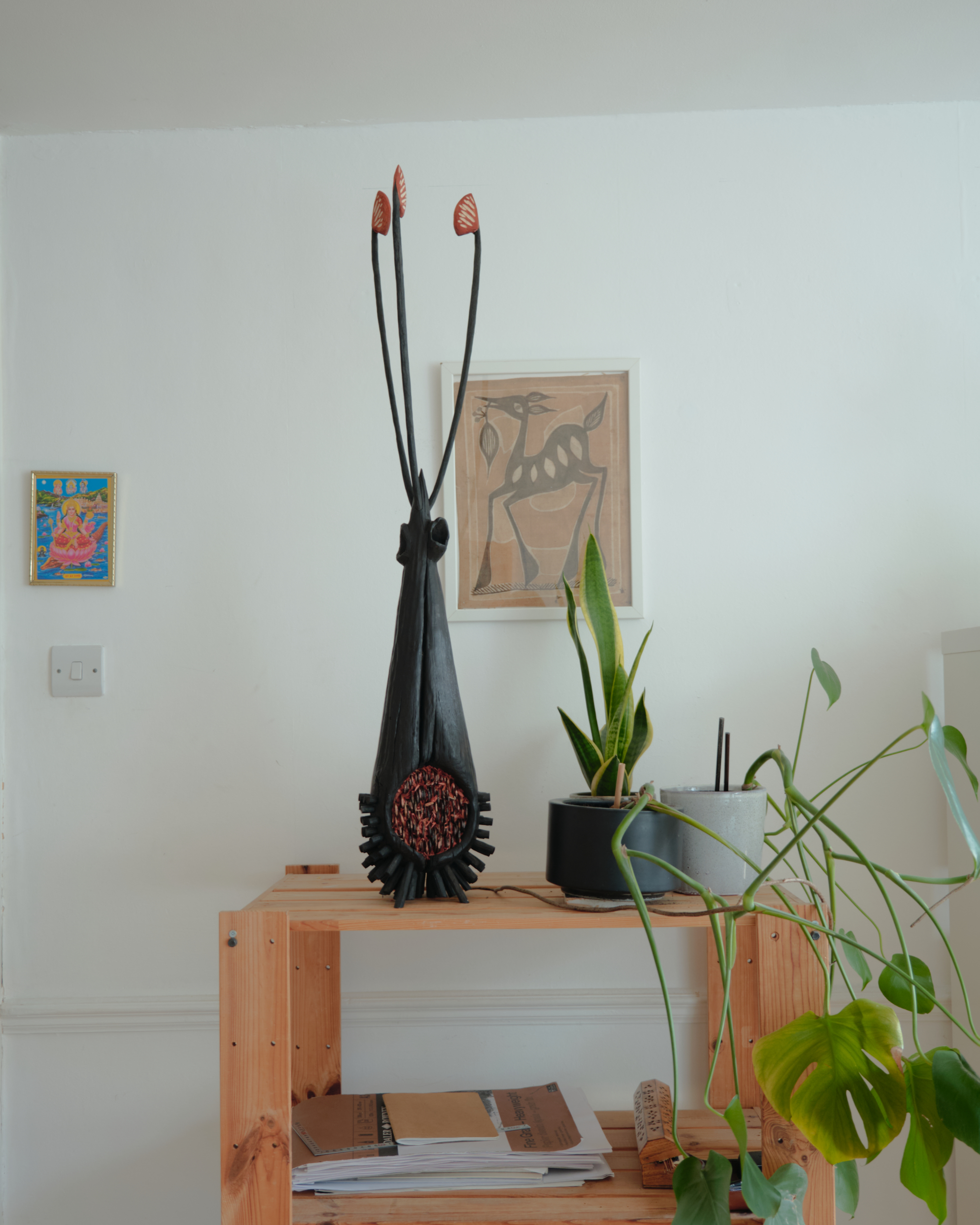
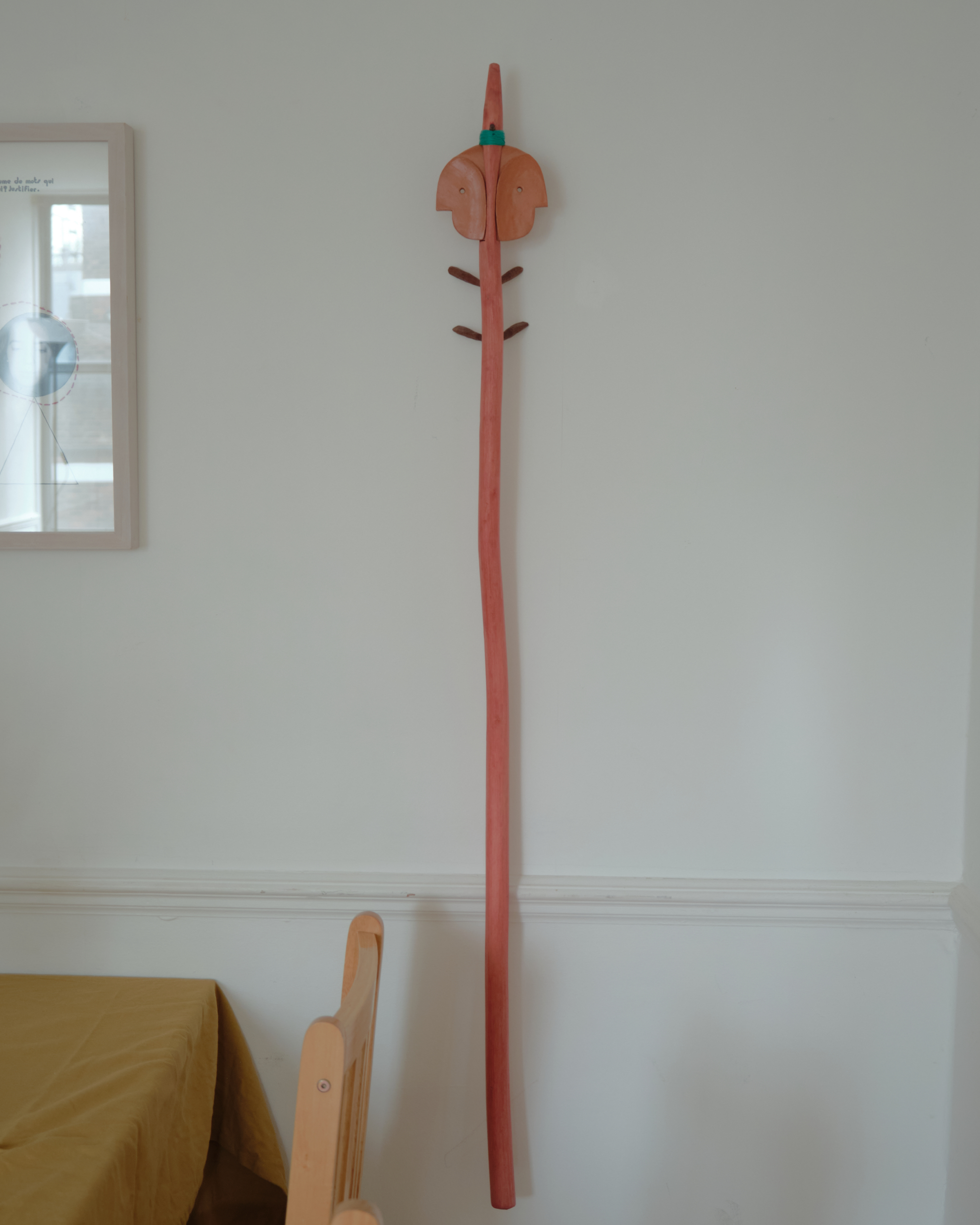
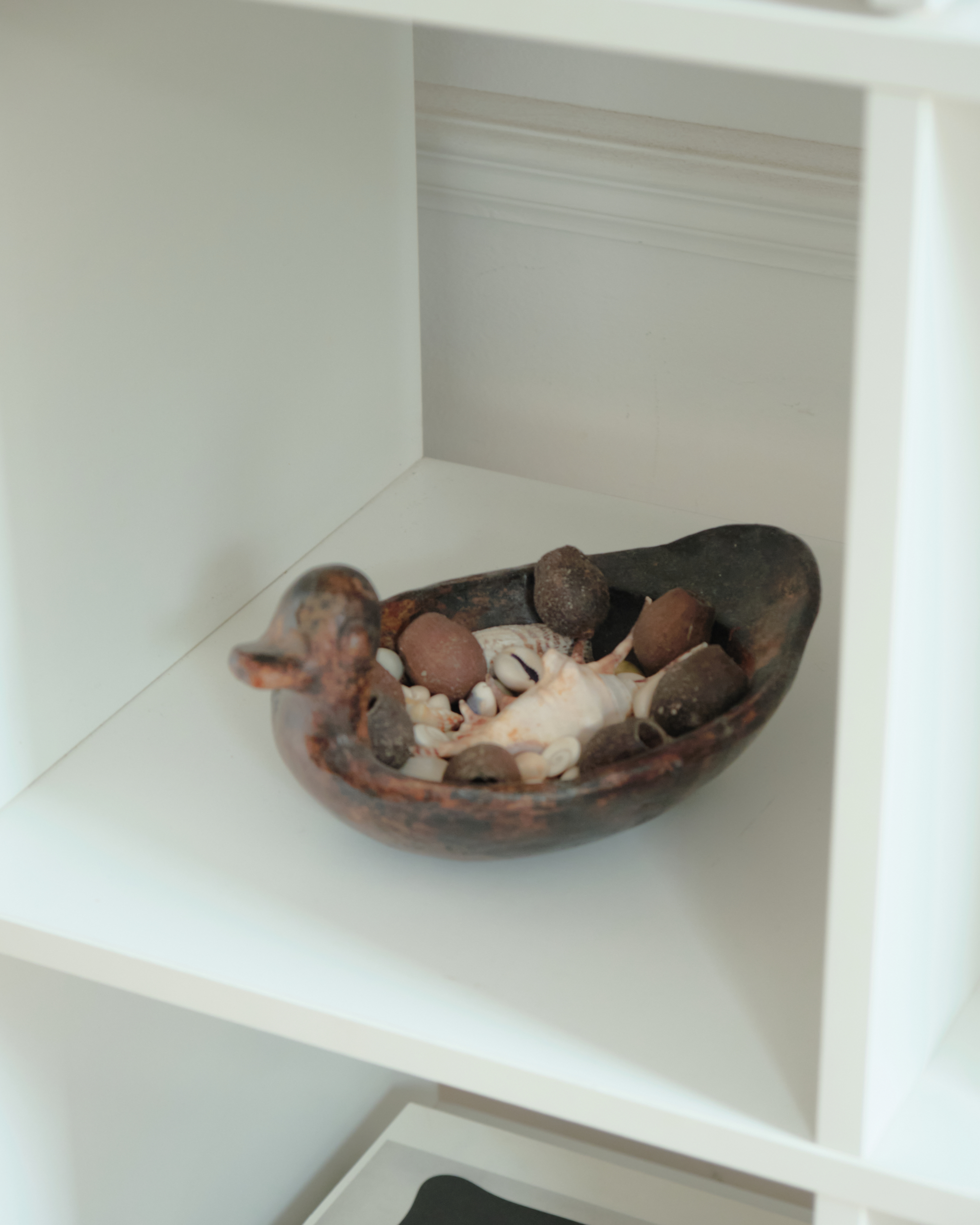
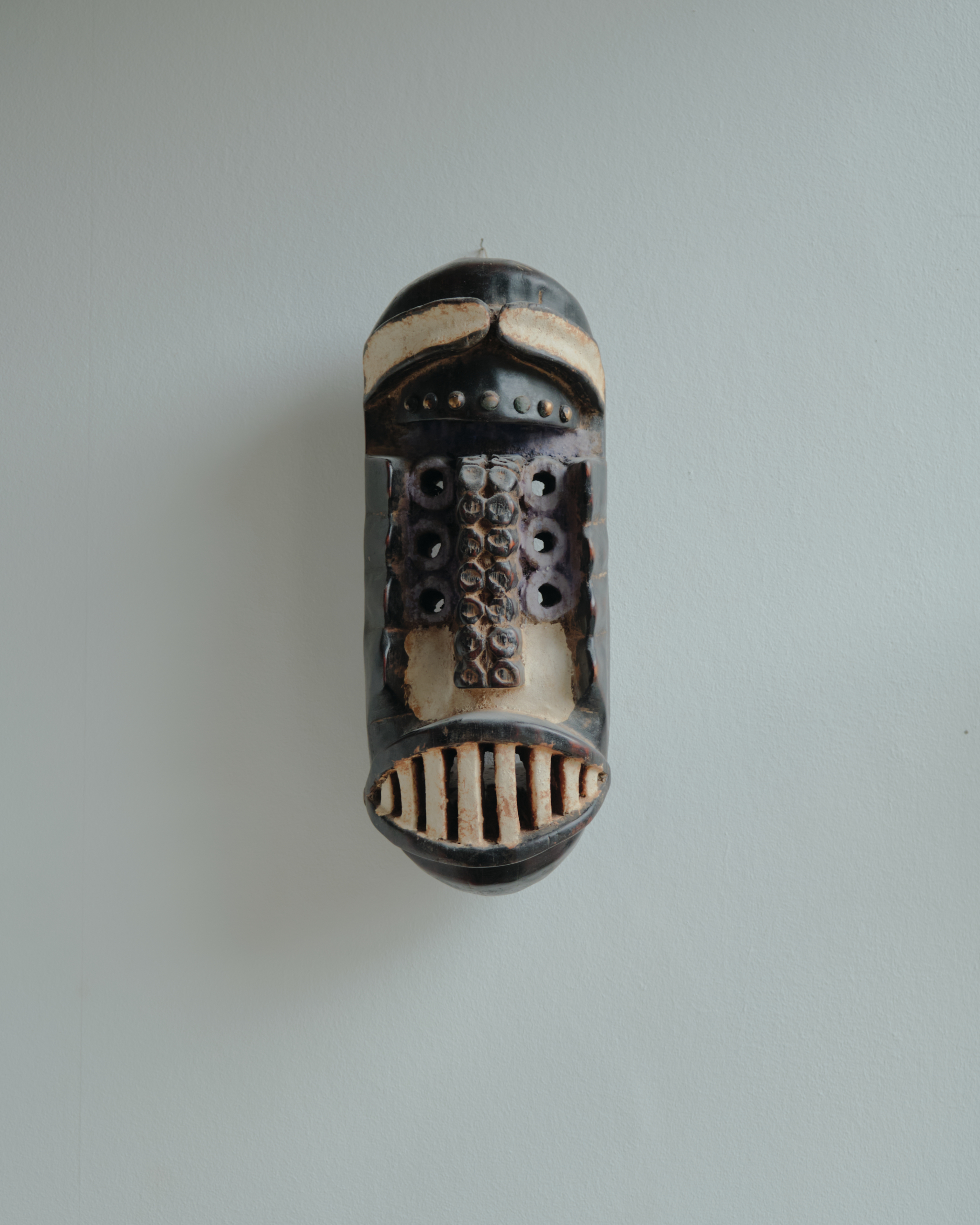
Your materials are often gathered directly from the landscape. Why is foraging important?
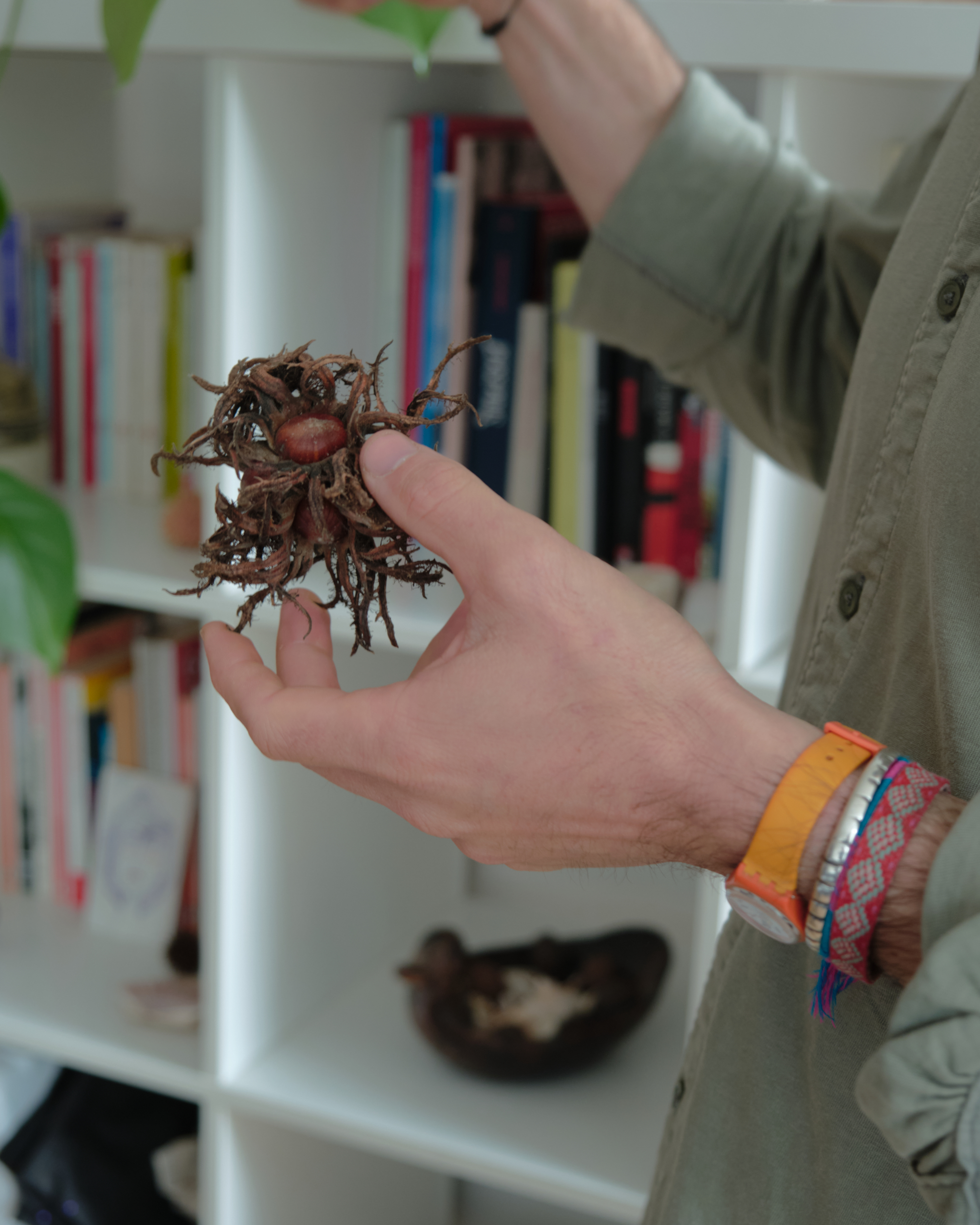
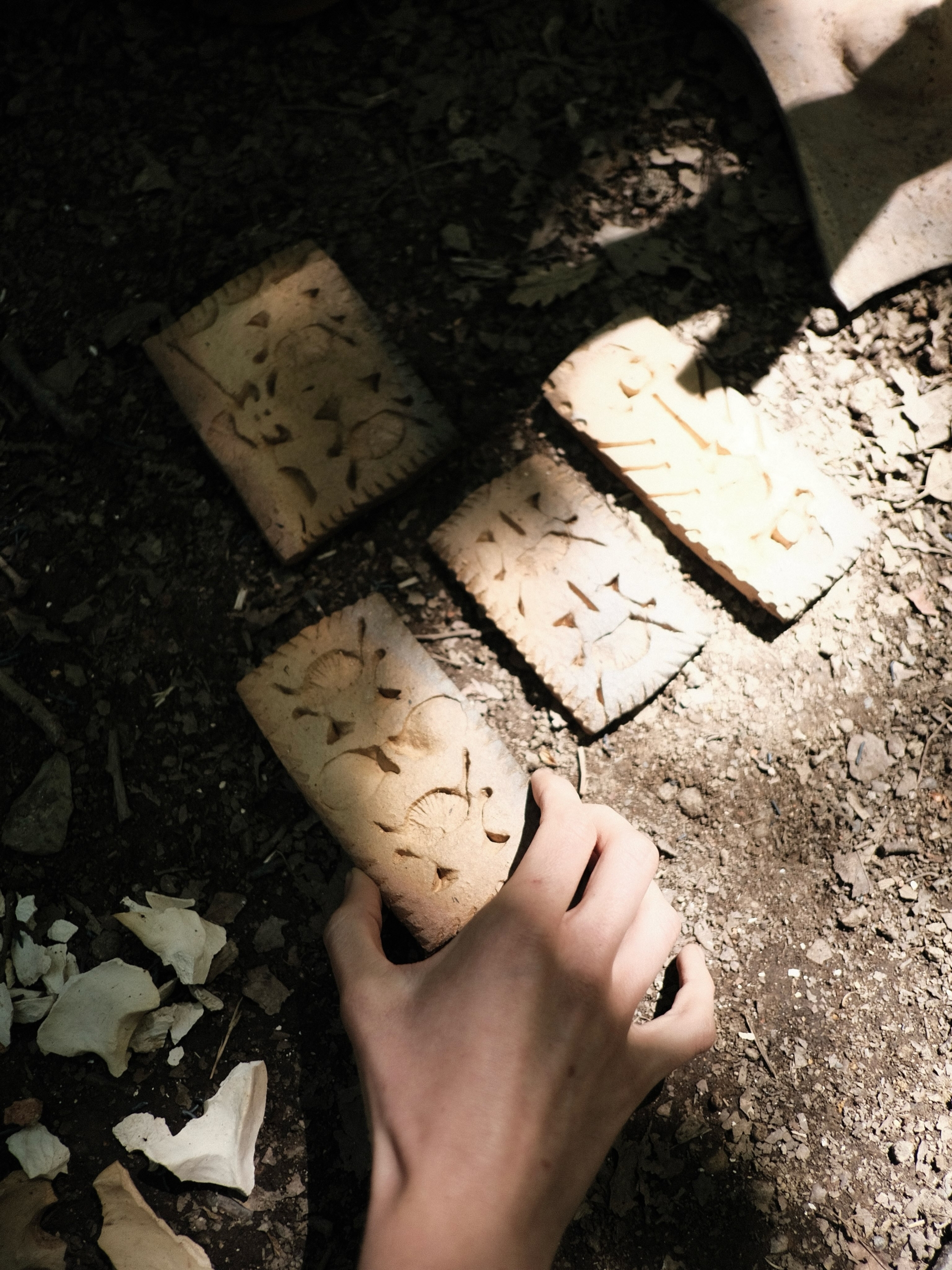
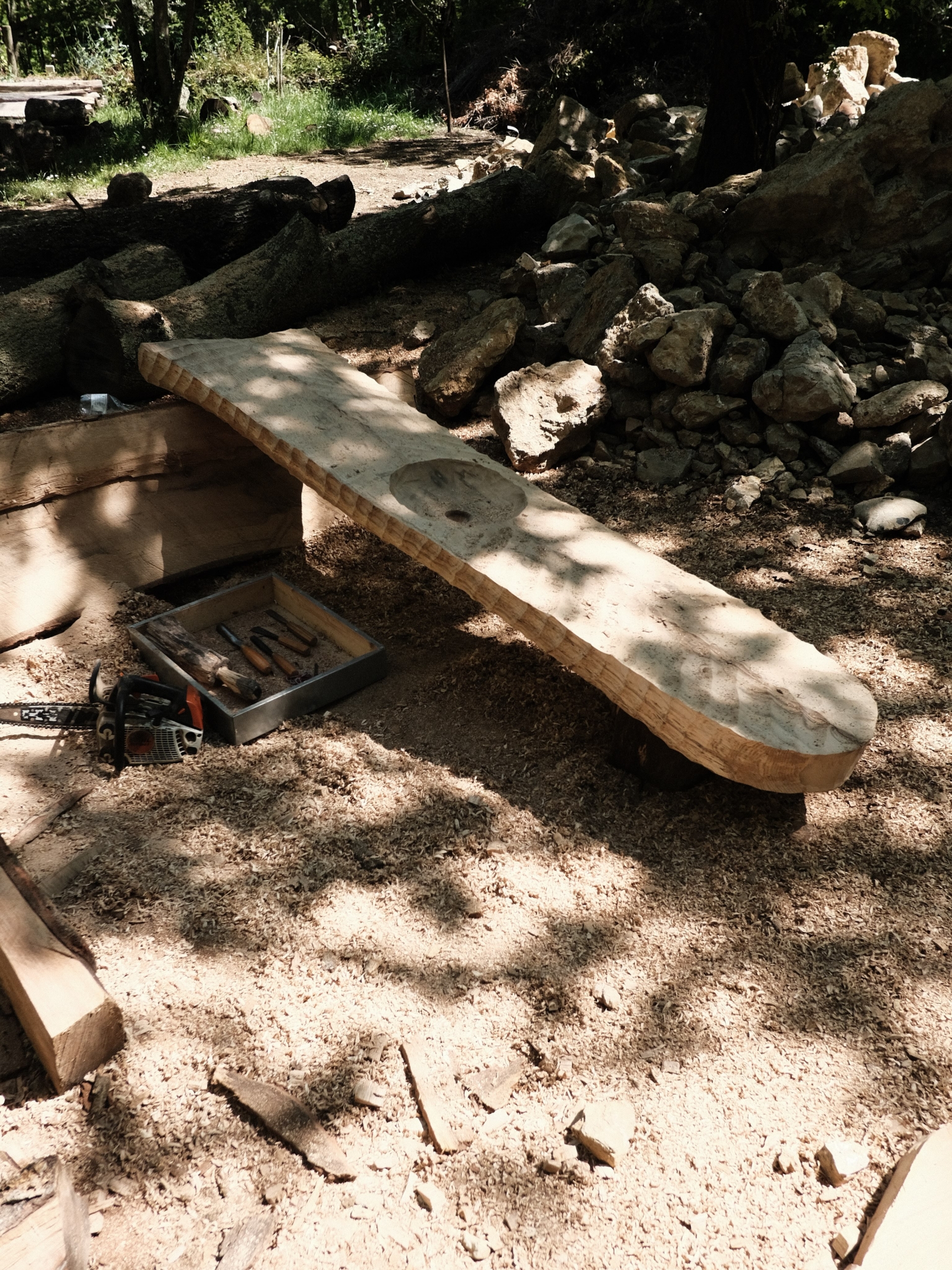
Making gives me an excuse to go out into the world: to find materials, work outside and become more attentive to a place. I might begin with a fallen log, wild clay, natural pigment, a shell, a seed or even a shark egg case. Sometimes I keep an object for years before understanding what it might become.
The material and the idea need to be coherent. If the work is about our relationship with nature, it makes sense to begin with materials I have encountered myself. You have to respond to what is already there rather than imposing a completely predetermined form upon it.
Several works resemble shrines or archaic artefacts. What draws you to those forms?
I’m interested in the way earlier cultures used objects to connect human life with wider natural cycles. Ancient fertility figures, for instance, weren’t only about human reproduction; they could also celebrate spring, seeds and the fertility of the land.
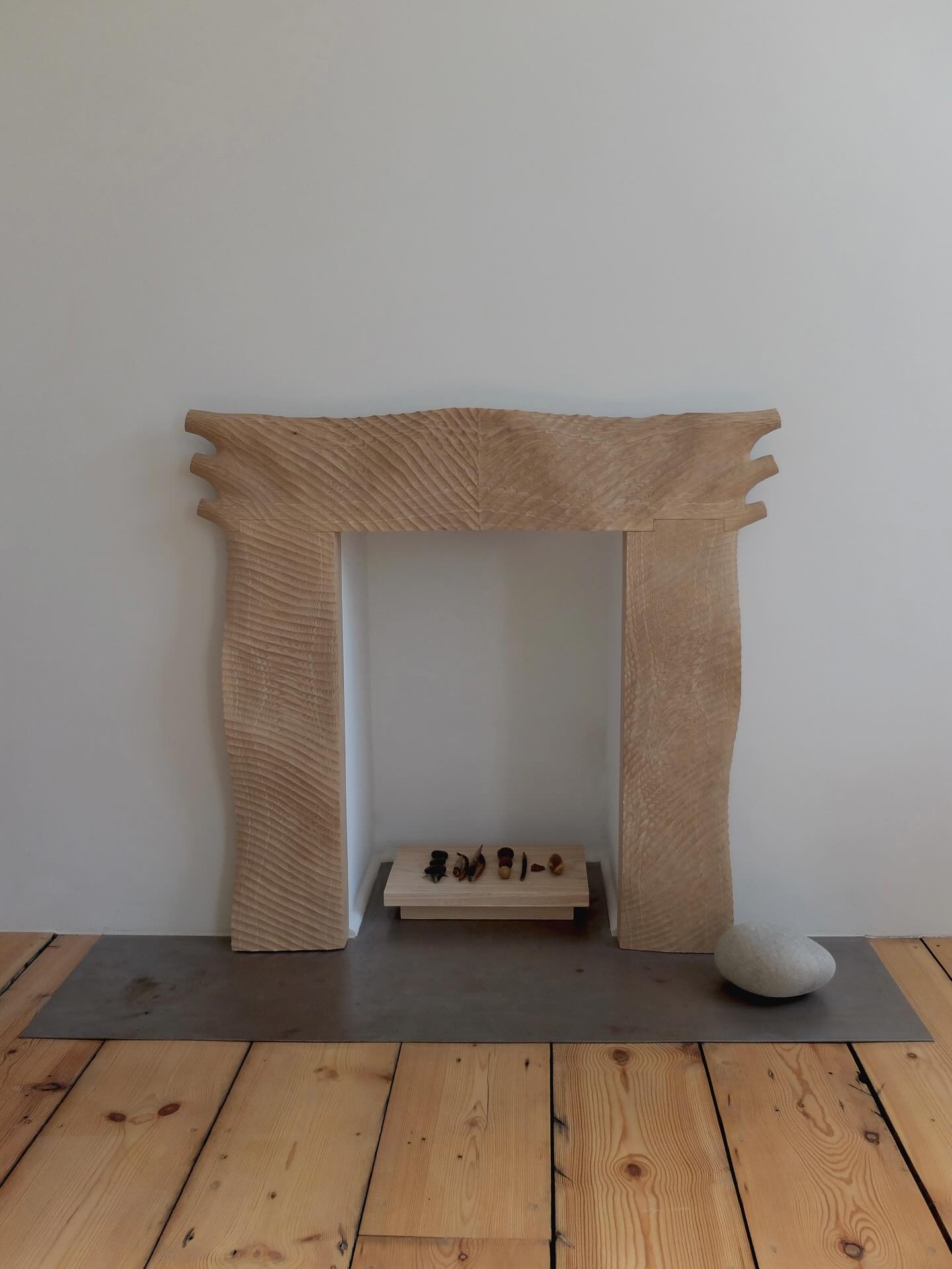
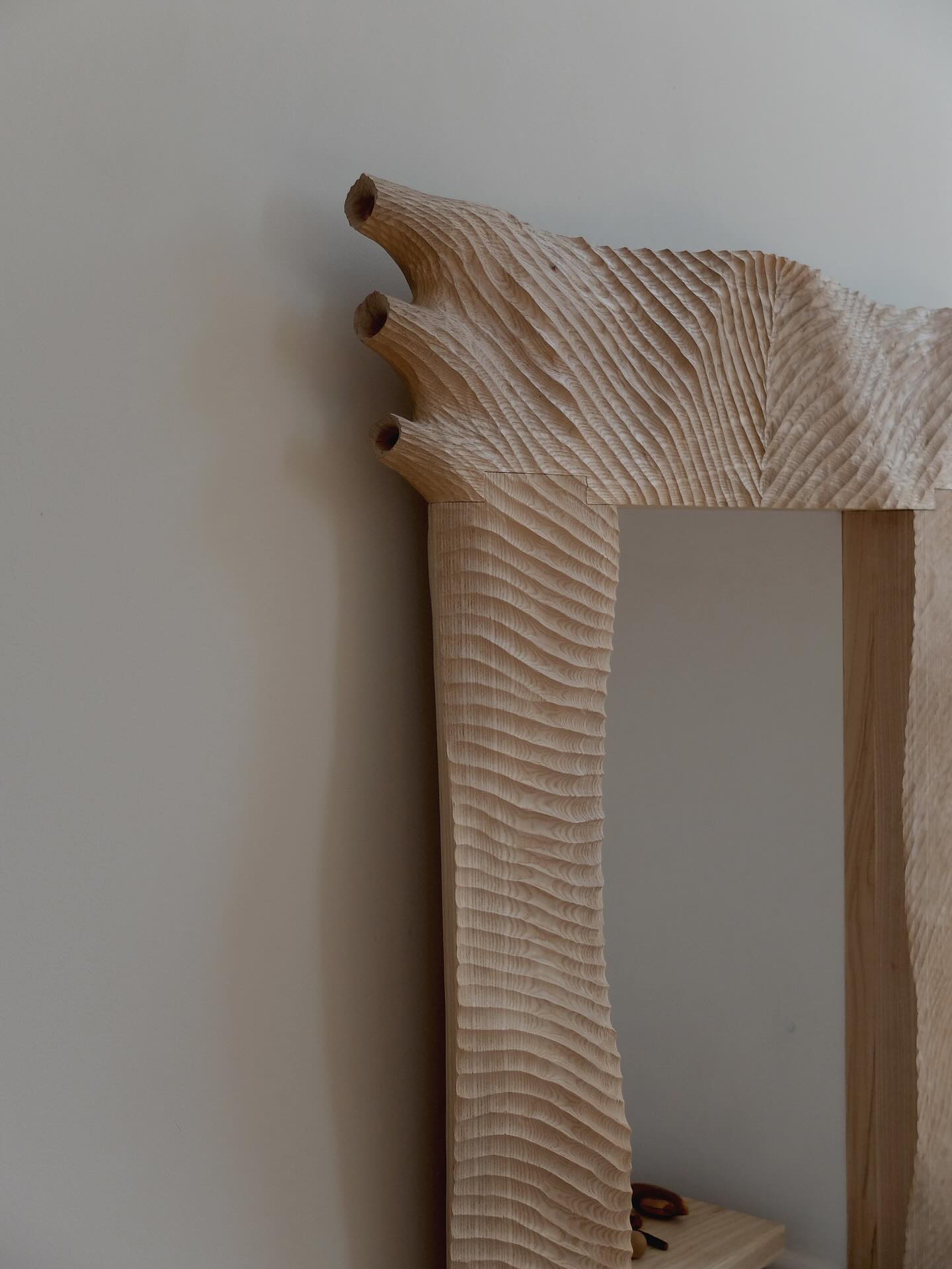
Portal of Seedlings transforms a fireplace no longer used for its original purpose into a shrine for strange-looking seeds collected by my sister-in-law, Margherita Zompa. It reimagines the anthropocentric nativity scene as a celebration of life in many forms. (It will be exhibited at Unlocked Shoreditch from 15–17 September as part of the Wood Awards presentation at Material Matters during London Design Festival.)
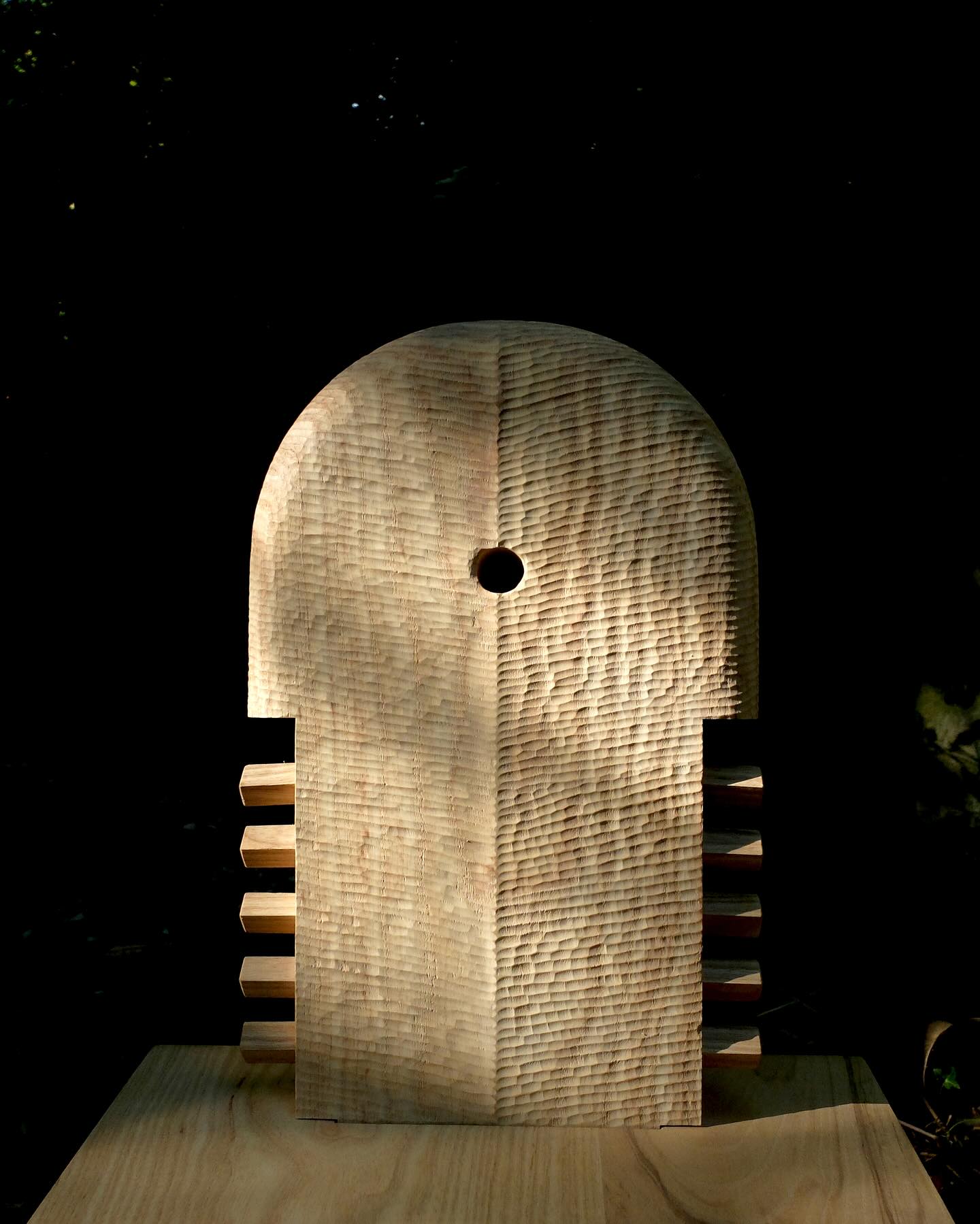
Other sculptures borrow from altars, masks and votive objects without belonging to a specific religion. In one recent sculpture, I created a small, womb-like interior, with details that only become visible when you move closer.
How do these ideas move between sculpture and furniture?
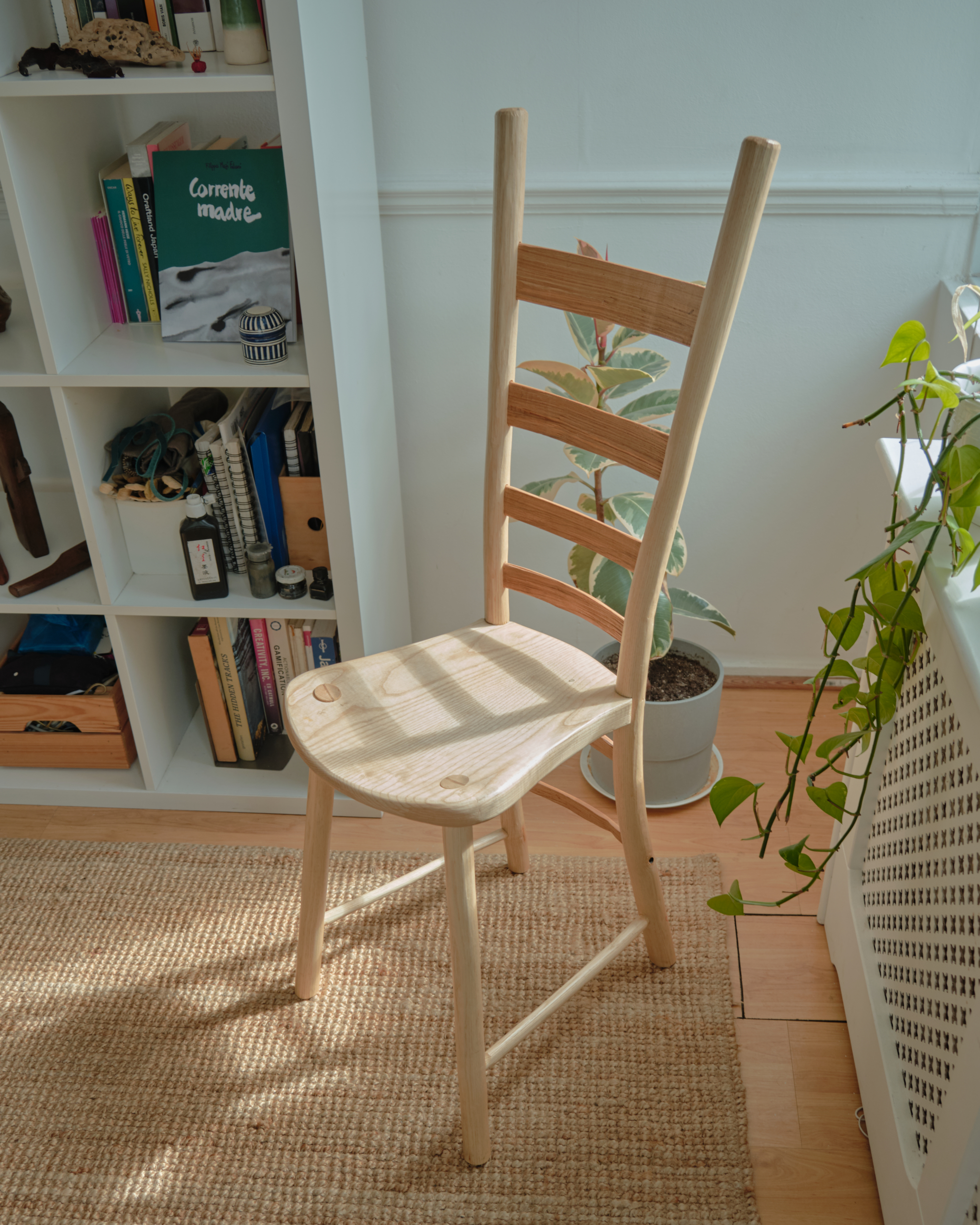
Craft is the common denominator. Sometimes I discover a texture or carving technique through sculpture and later translate it into furniture. The Ammonite Table, for example, has hand-carved ash legs and rails that evoke the ripples of a fossil and the traces of time held in sedimentary rock.
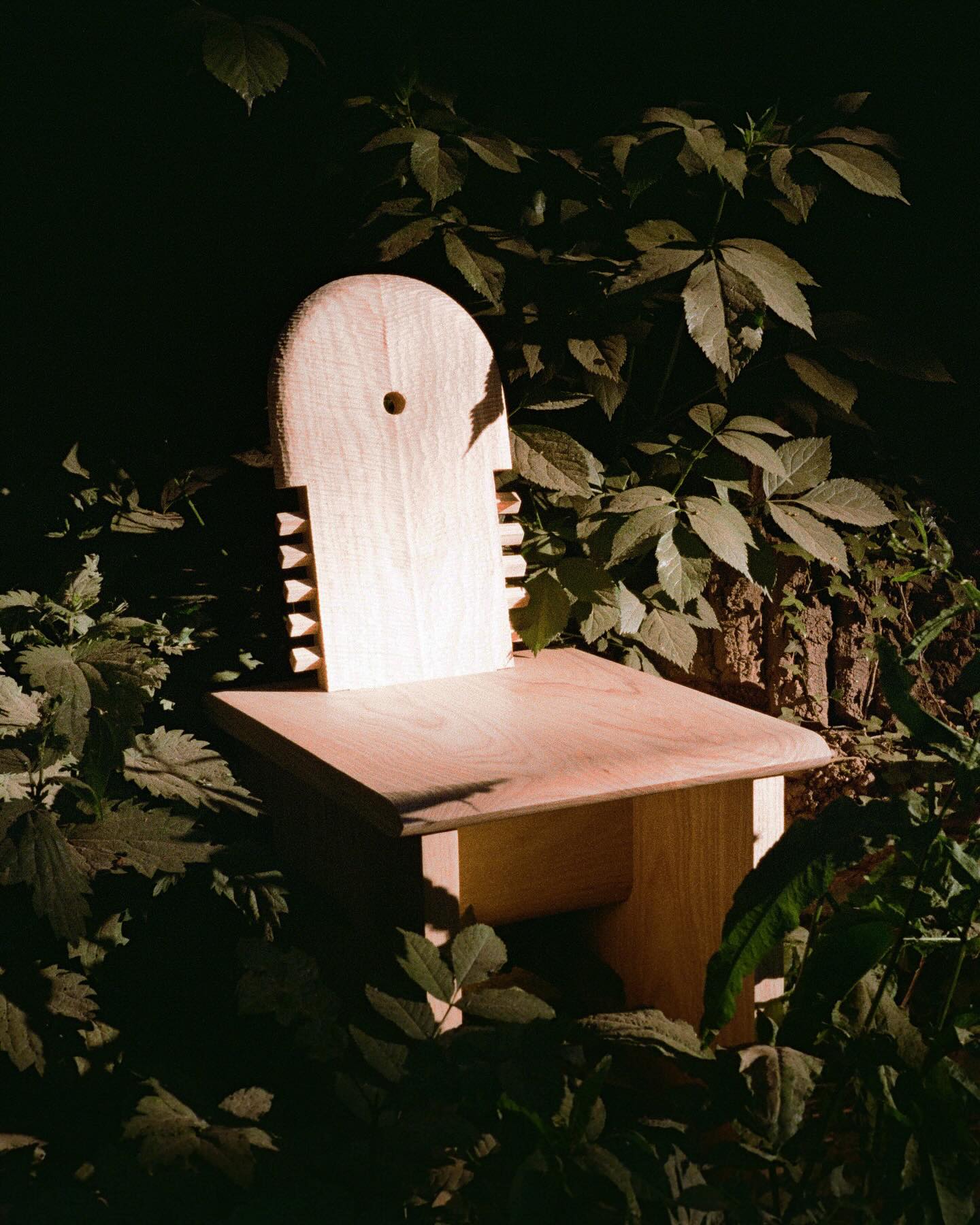
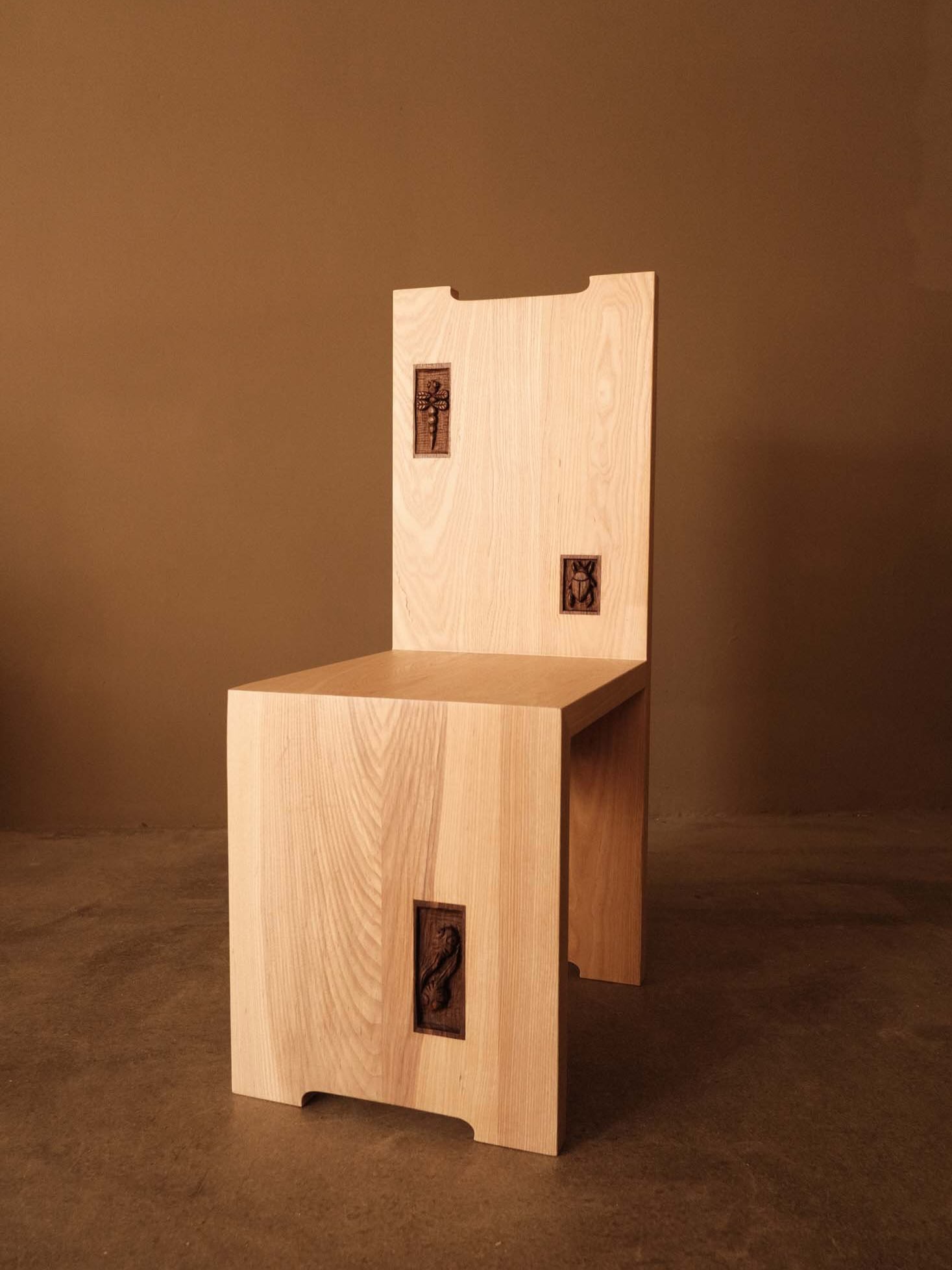
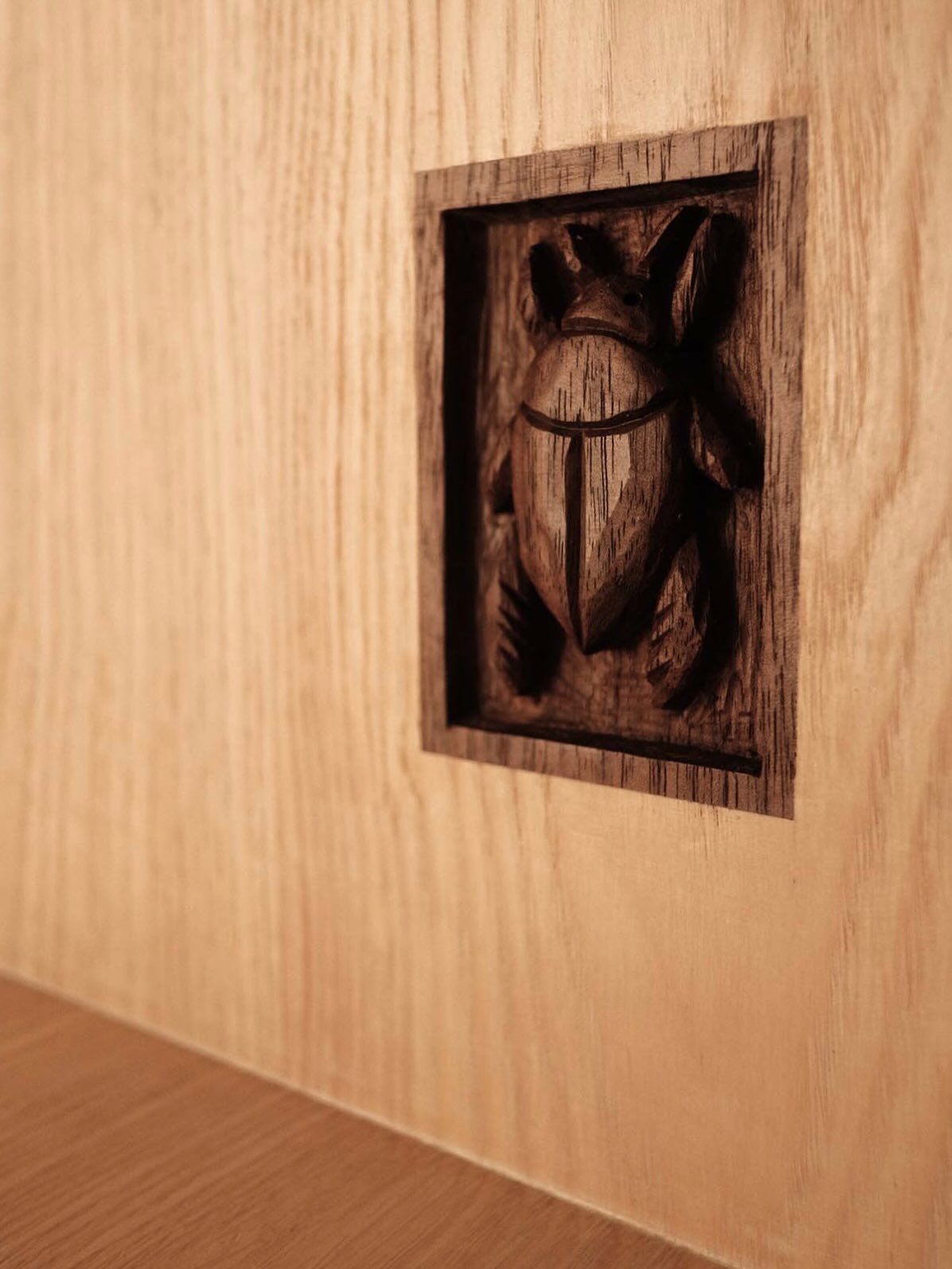
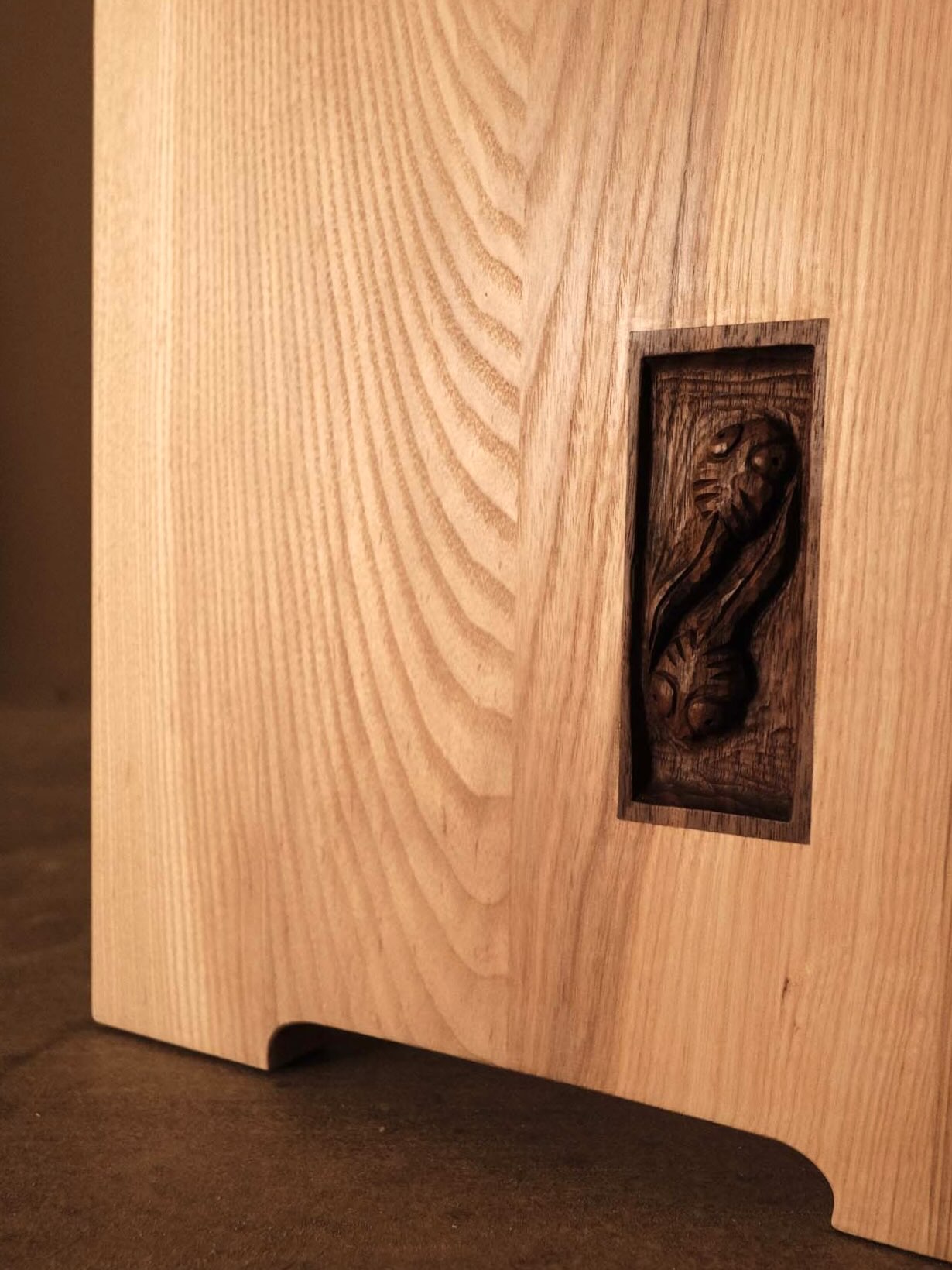
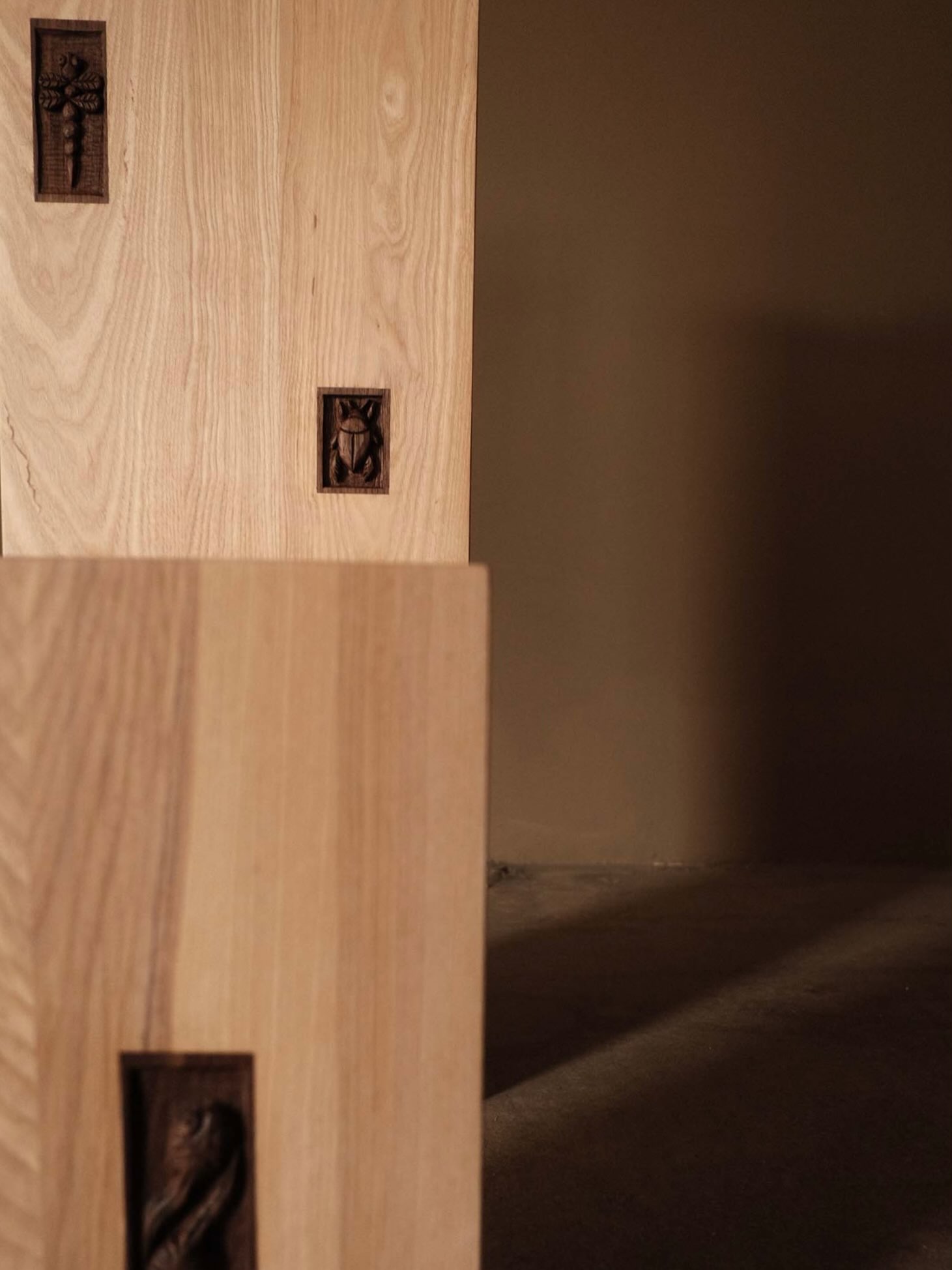
Chair of Transitions considers how chairs can establish social position or authority. Its form is inspired by Janus, the Roman god of transitions, so sitting in it becomes a way of momentarily embodying that figure. A Seat in the Marshes works similarly: its walnut inlays depict dragonflies, water beetles and tadpoles, bringing an ecosystem and a sense of narrative into an everyday object.
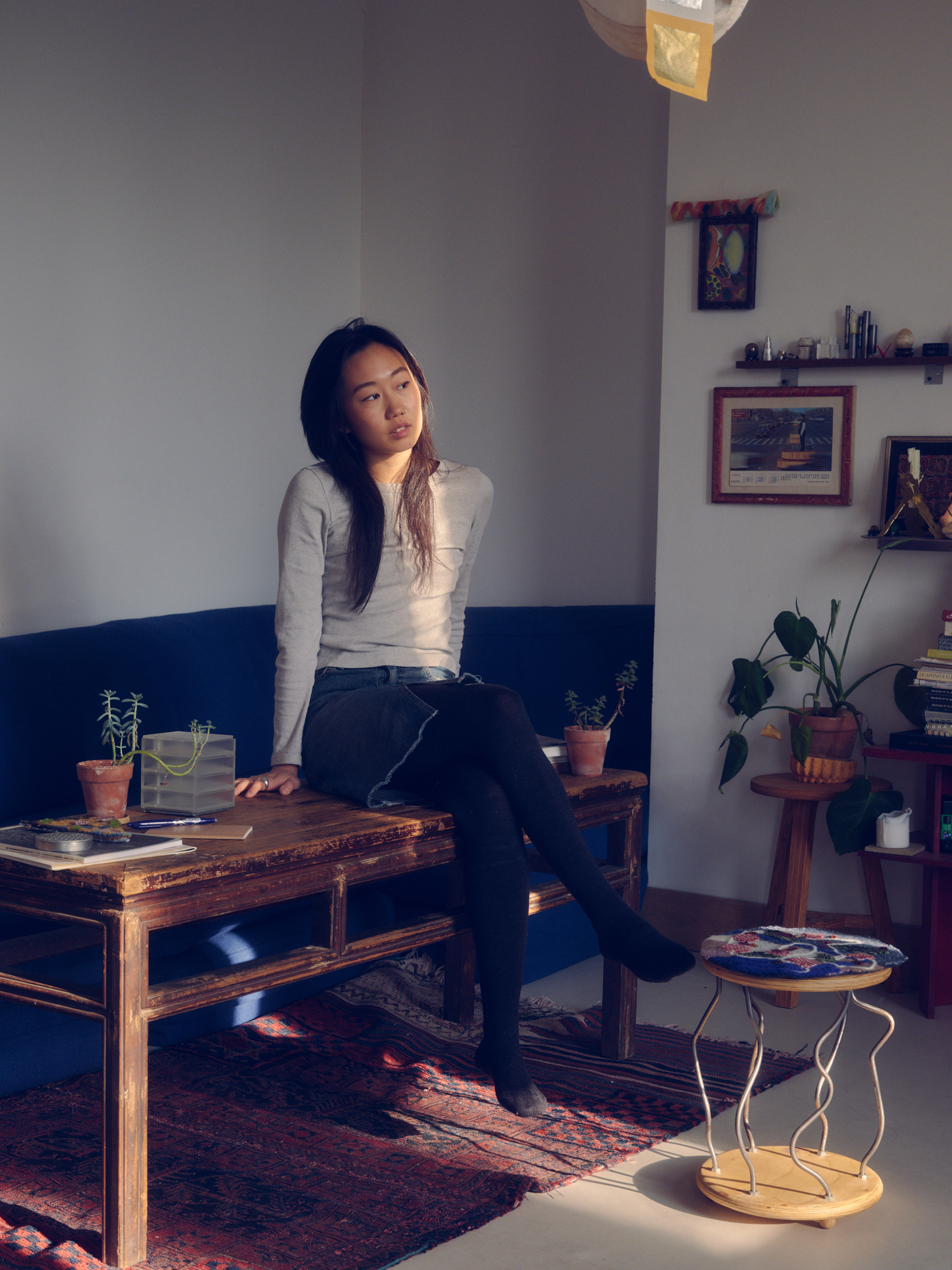
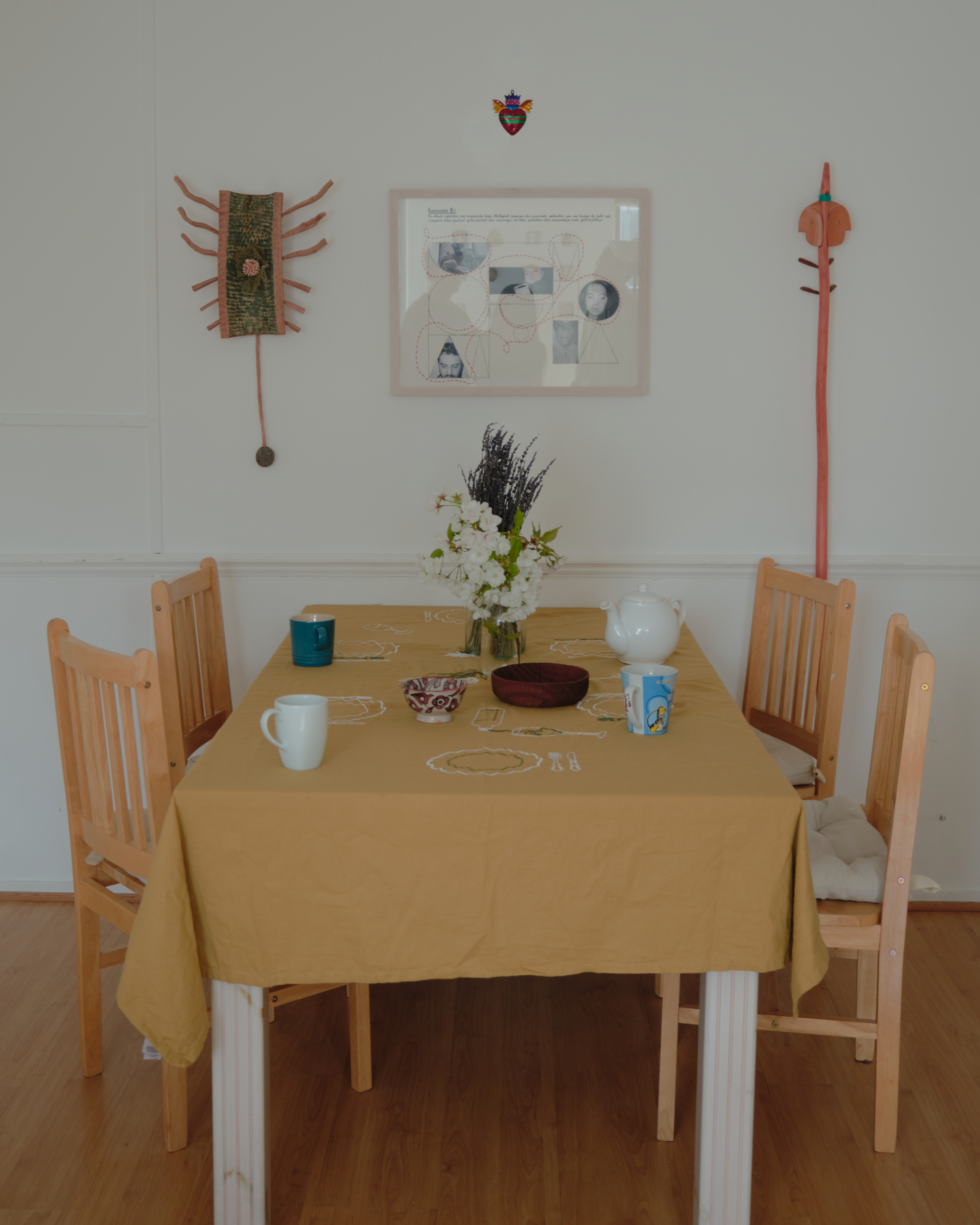
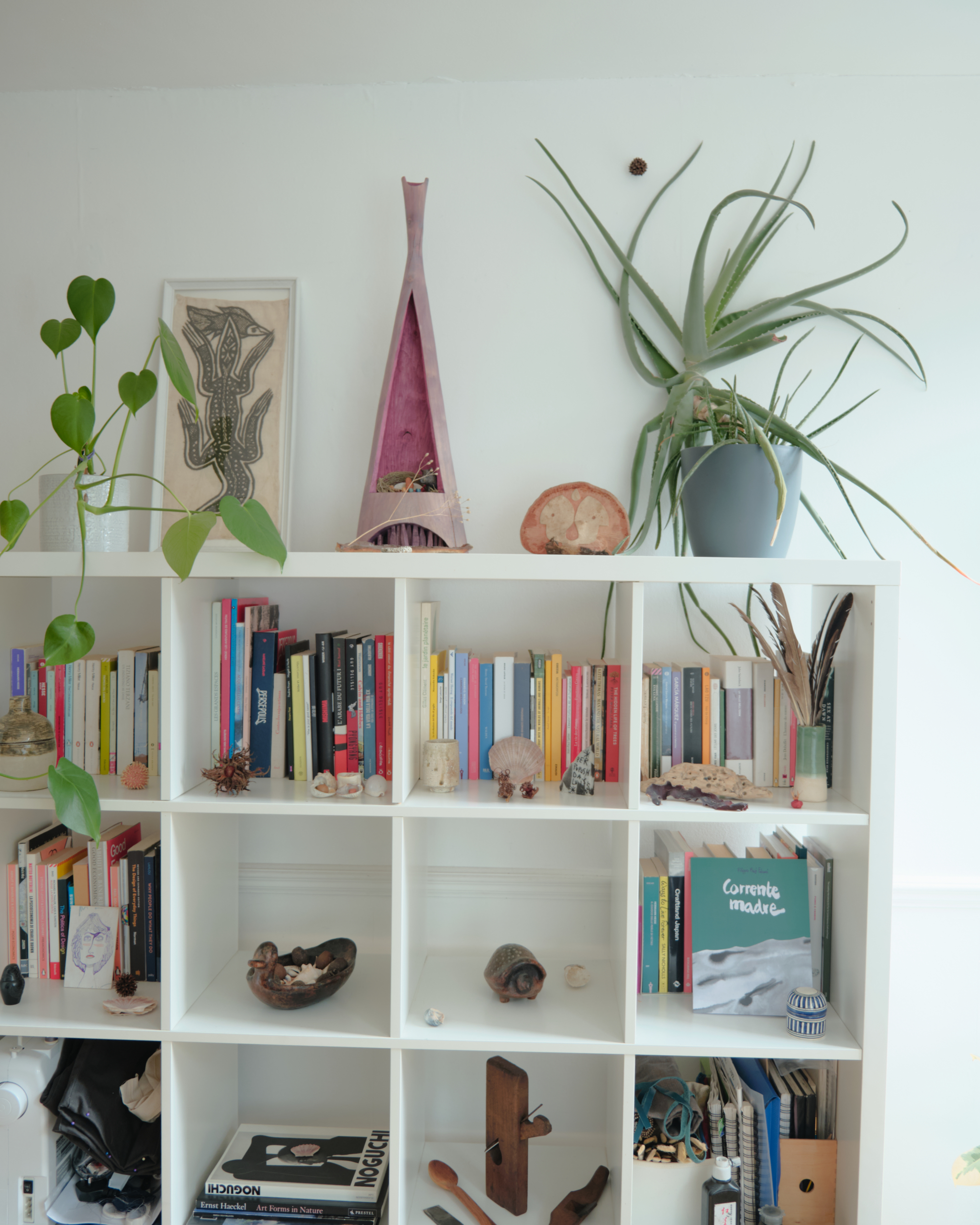
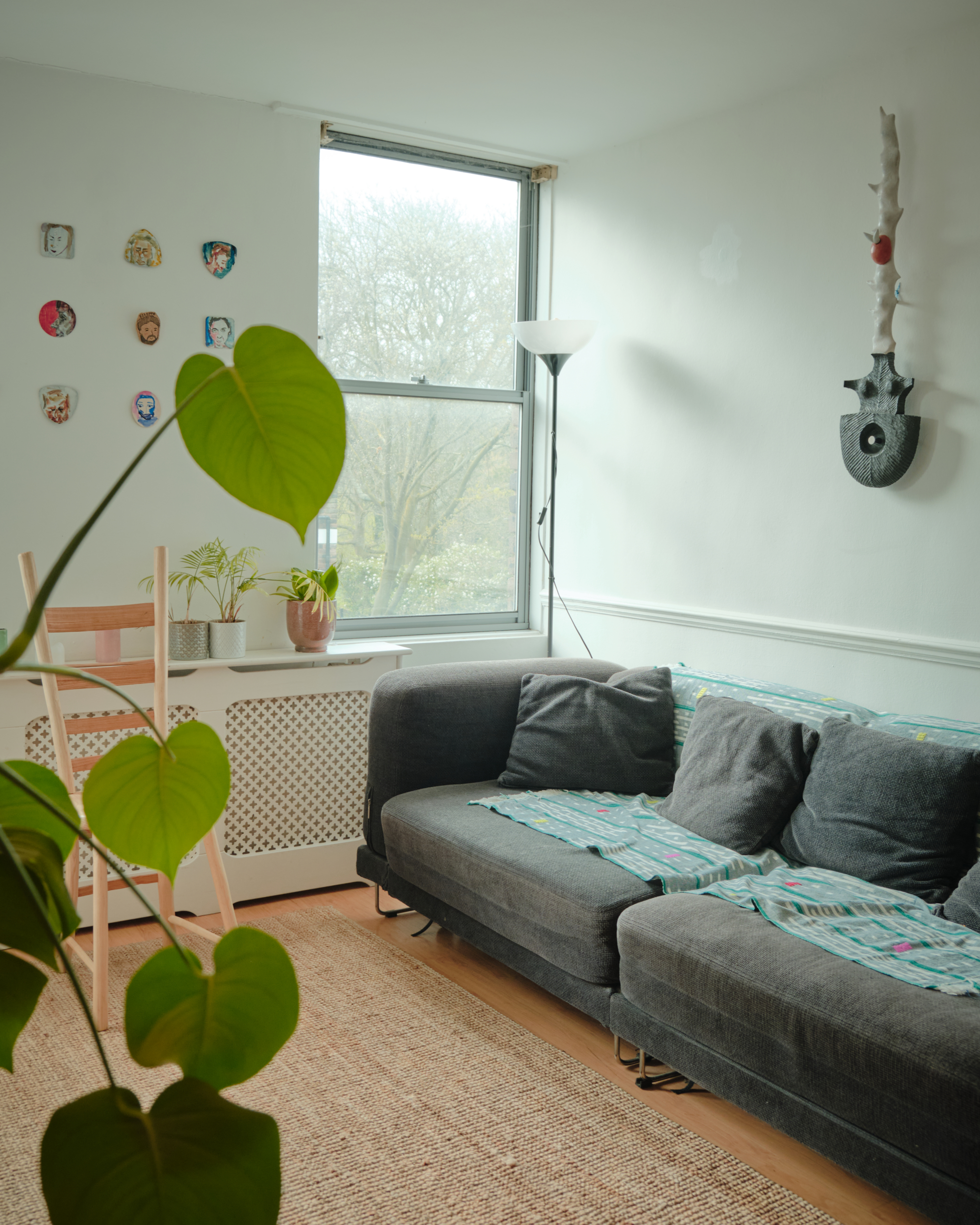
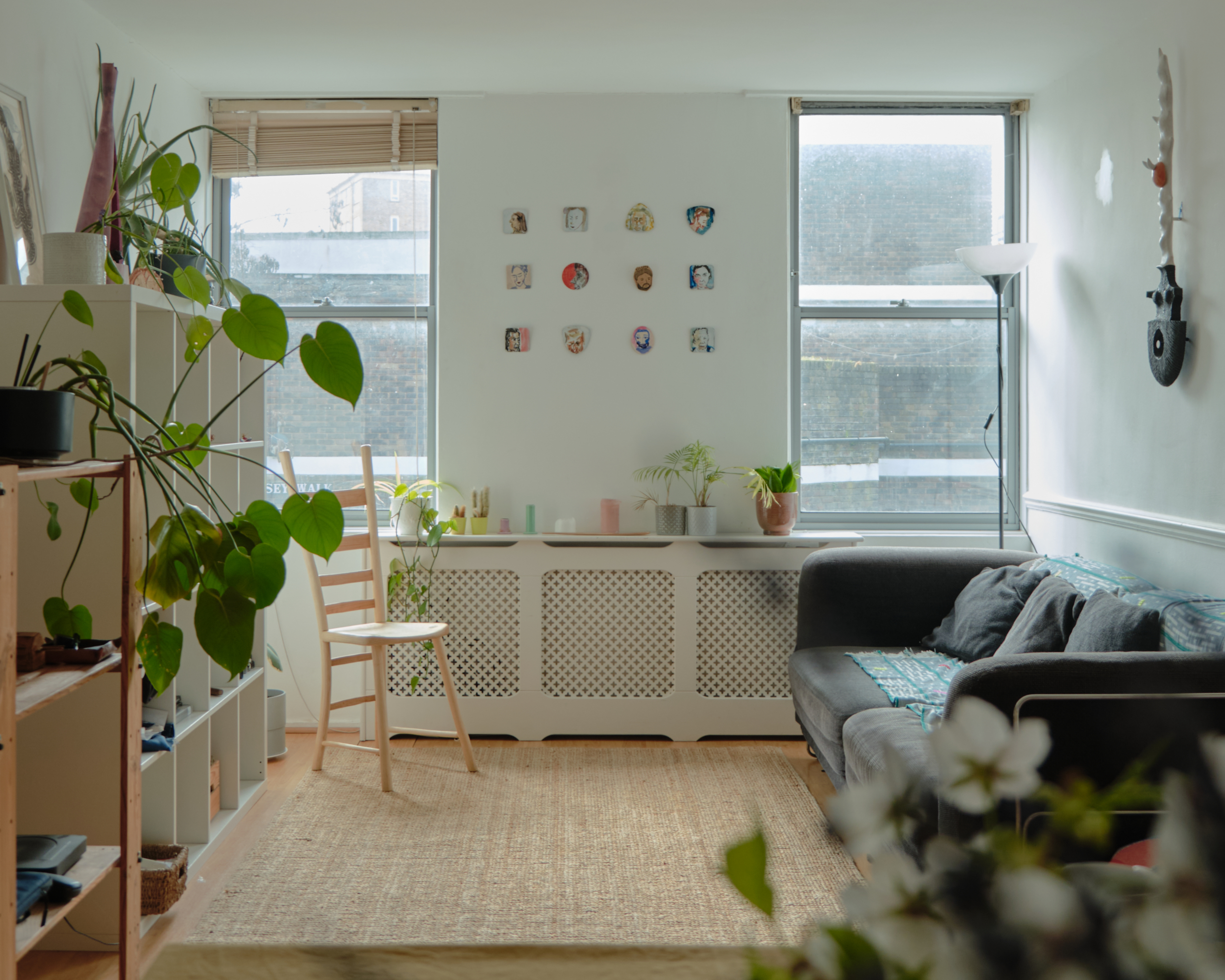
Your home seems to operate partly as an archive of your practice. Can you tell us about some of the things you have gathered here?
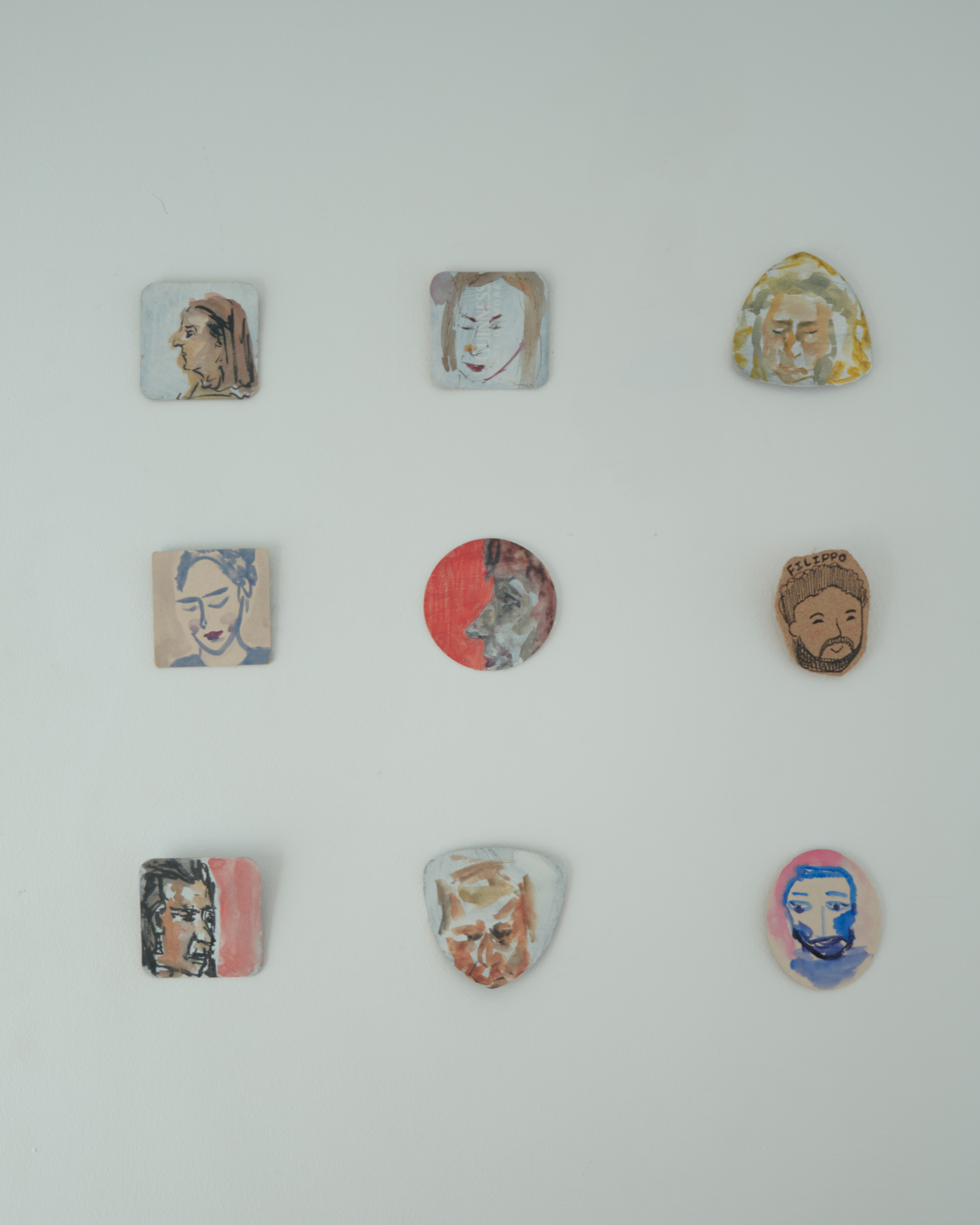
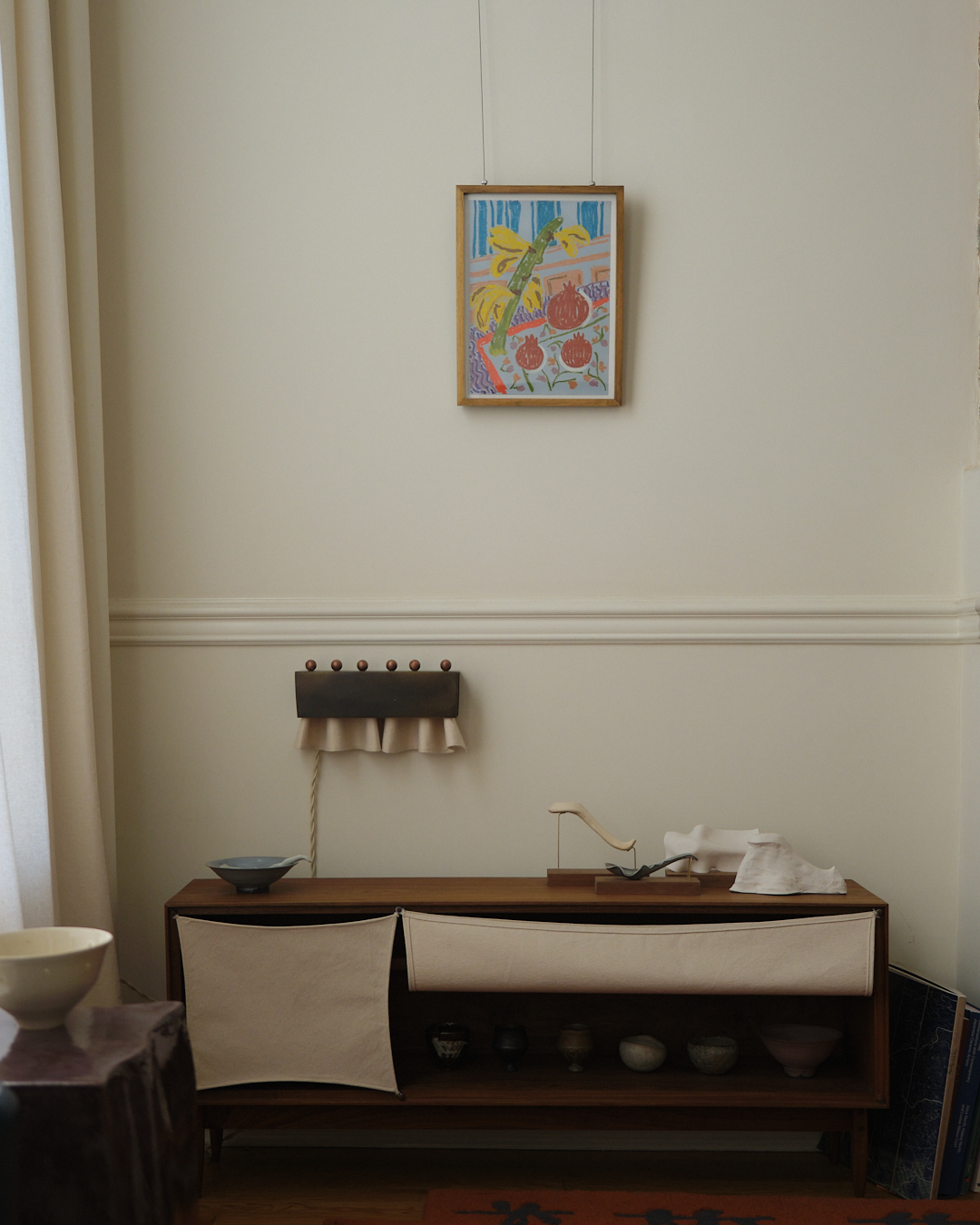
There are works from different periods. Some of the drawings are from around 10 years ago, when I was living in Milan and working with the painter Claudio Jaccarino. We would go into streets and bars and paint people, or work with found things such as newspapers and receipts. It was a very participatory way of making and, for me, almost like keeping a visual diary.
There are also early sculptures, including an altar-like piece made from a sycamore log I found and small objects that were given to me or gathered over time. Looking at everything together, I can see a gradual shift: the drawings were more concerned with people and my internal world, whereas the sculptures increasingly look outwards, towards nature, material and ritual.
You now divide your practice between London and Italy. What does each place allow you to do?
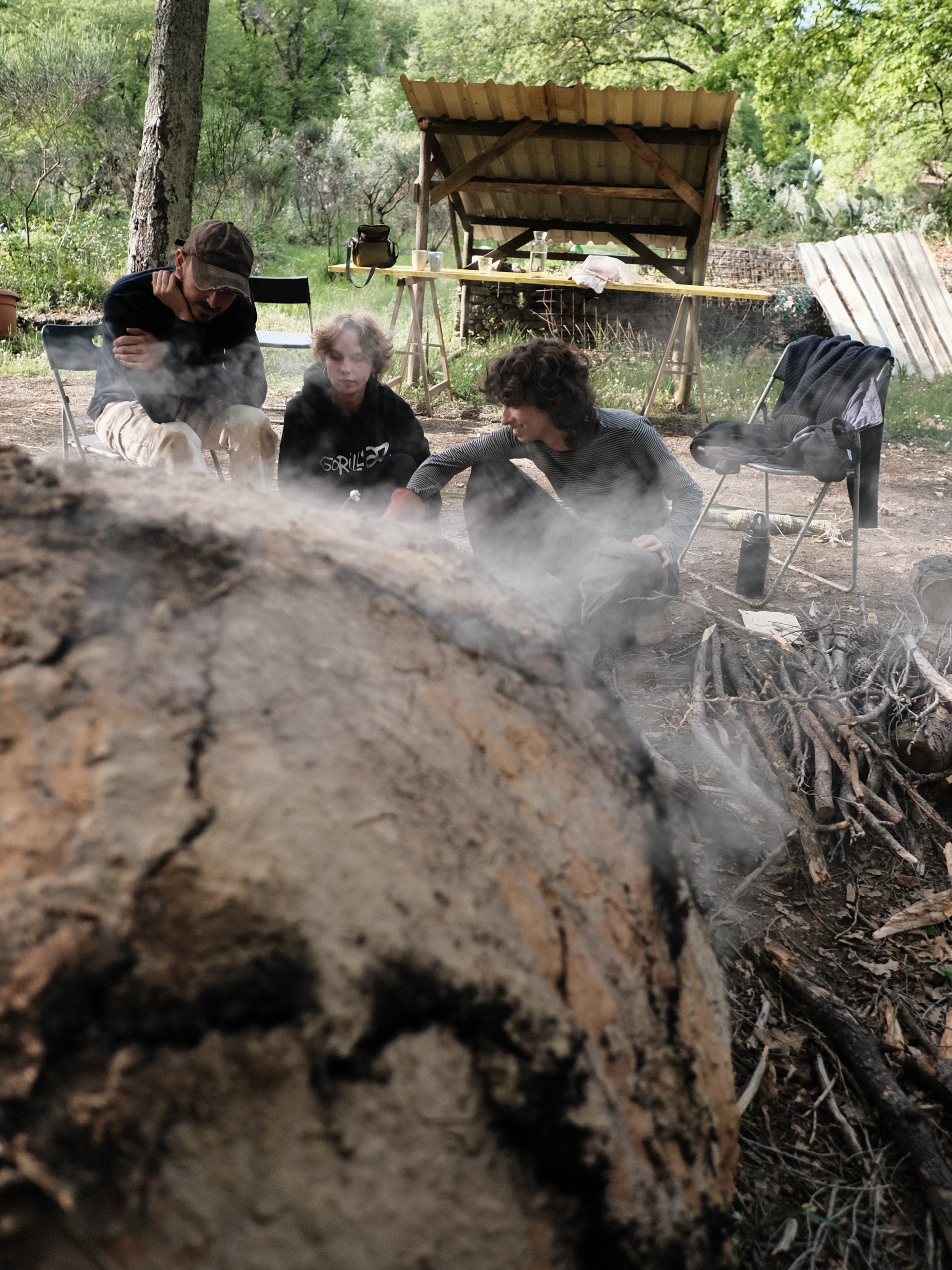
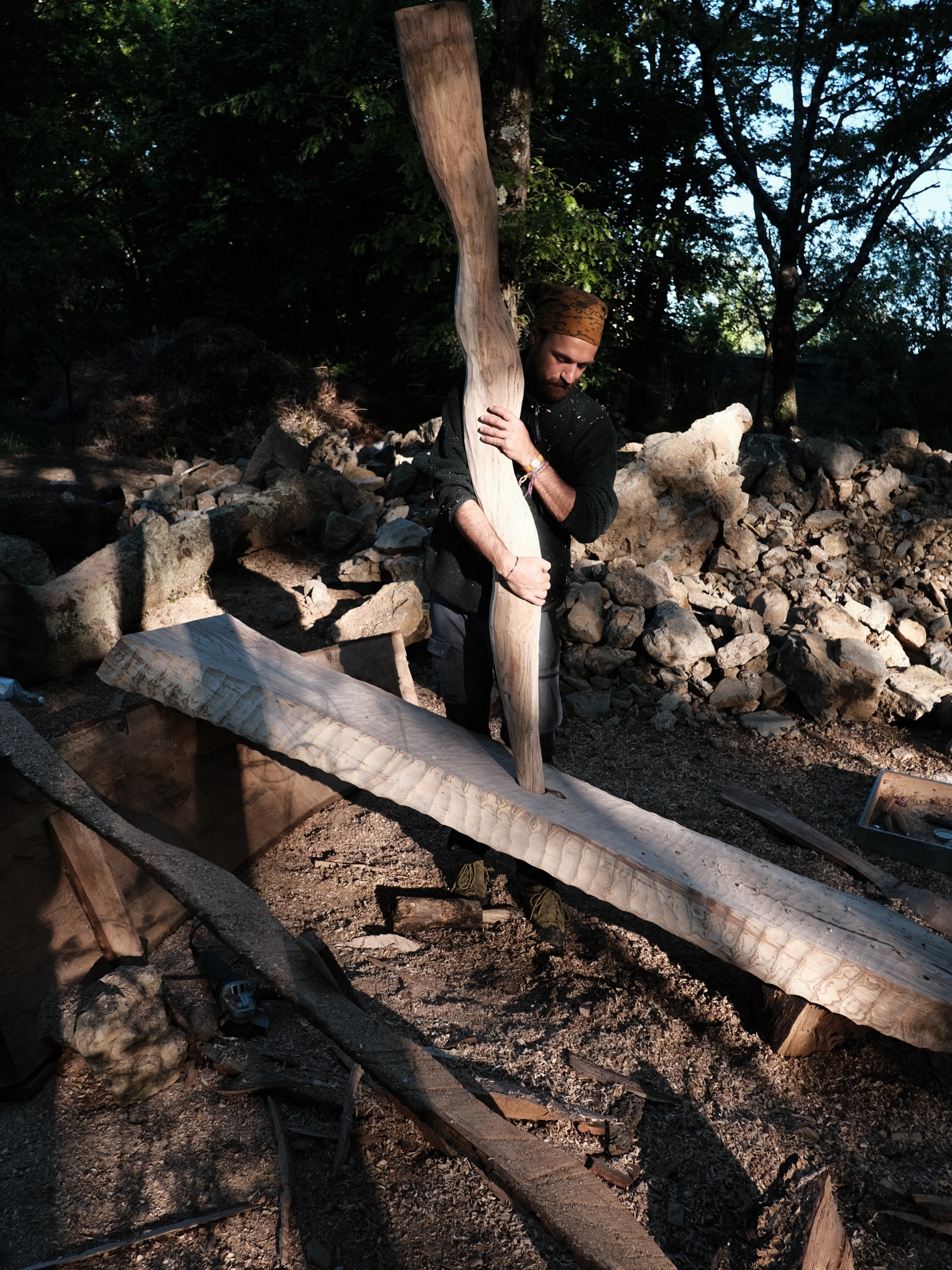
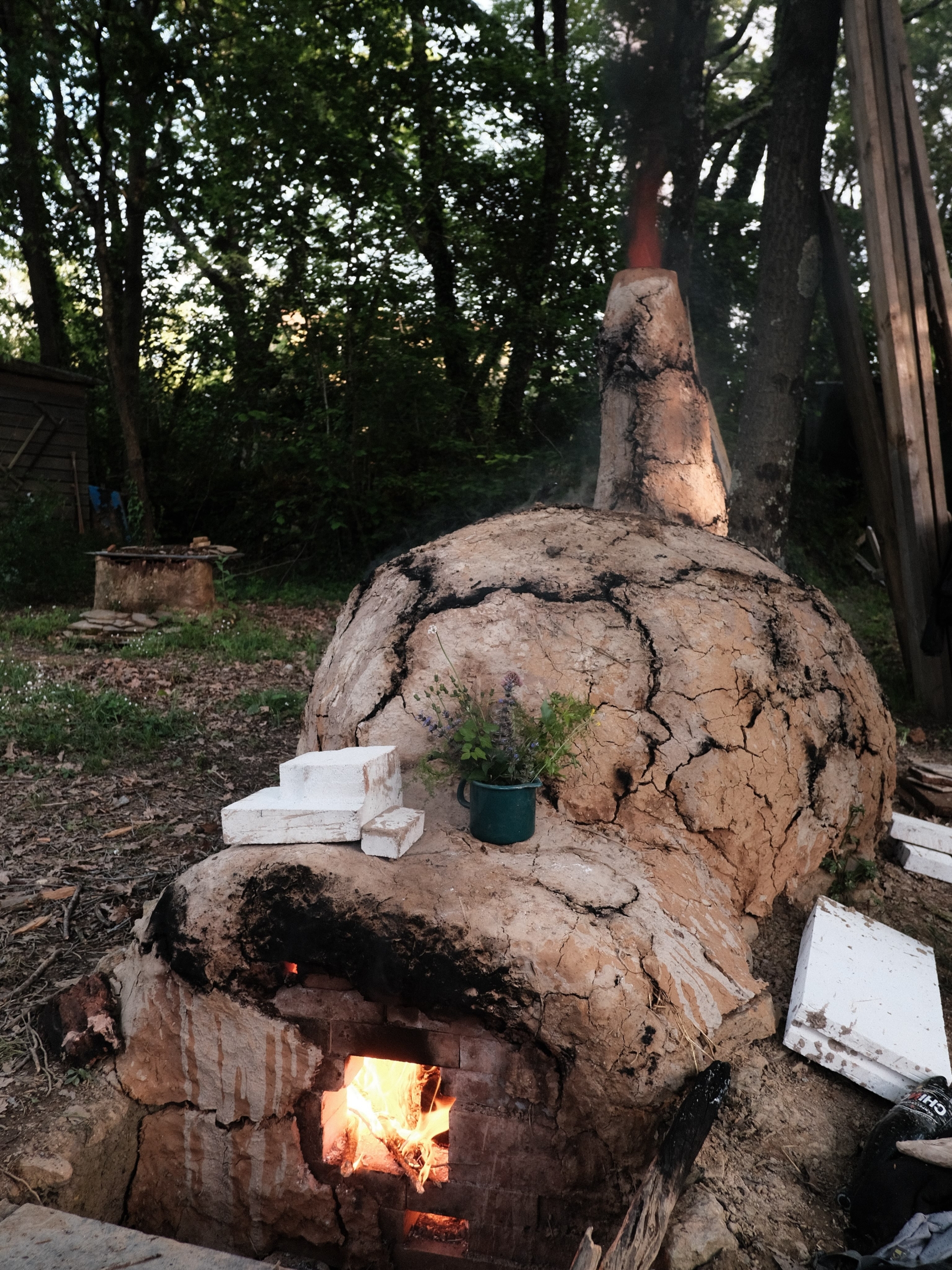
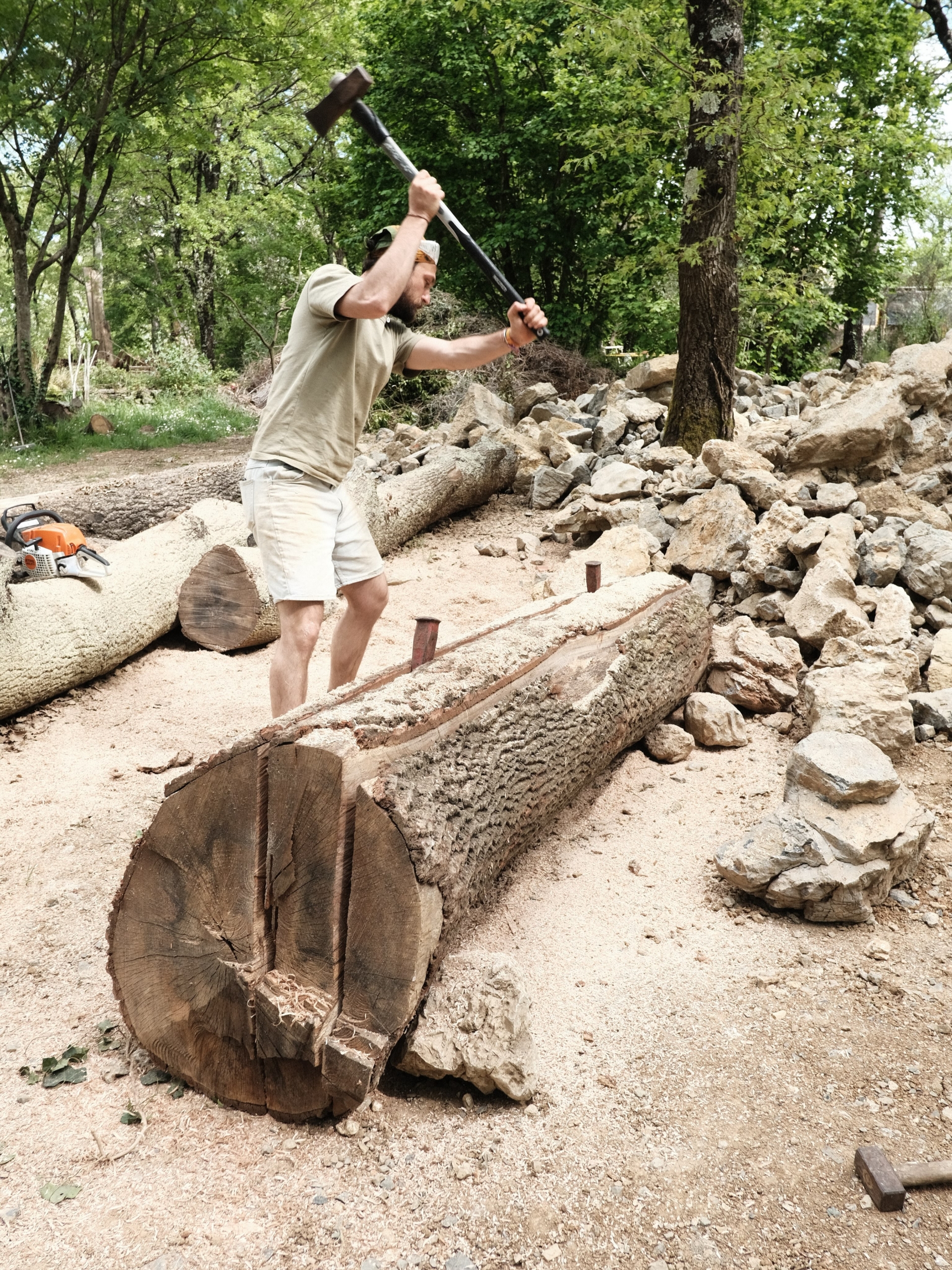
Italy is where I can work more roughly and experimentally. I can take a log, forage clay or use the wood-fired kiln I built at the farm. London offers greater precision and access to workshops, so it lends itself more naturally to furniture and collectable design. One is wild and instinctive; the other is ordered and controlled. My work needs both.
Is that desire for experimentation also behind Apua, the residency you run at the farm?
Yes. I wanted to recreate something of the collective energy I experienced at Boisbuchet. Apua brings a small group of artists together for two weeks to explore the area, gather materials and make work collaboratively.
Each edition responds to something specific in the landscape. The first looked at ancient dry-stone structures that may once have been tombs or shelters. The second focused on the area’s geology: we explored caves with a geologist, collected clay and created work that drew attention to this particular environment.
For me, a sculpture almost dies once it is finished. What matters most is the exploration: the relationship you form with a material, a landscape or another person through the process of making. Apua creates more space for that moment, allowing the curiosity and freedom I experienced here as a child to become something shared.
Suggested stories
An Artist’s Home in Hackney with Plenty of Creative Headroom
Going Out, Staying In With Dan Pope
Making Work – and a Home – Out of Restrictions, Remains and Resourcefulness
A Designer Finding New Forms in Ancient Traditions
A Collector Who Sells – and Lives With – the Things She Loves
Functional Beauty: Jewellery Designer Helena Vieira’s Converted Warehouse Apartment
The State of Design? Designer David Searcy Has Thoughts
Inside Jesse Butterfield’s Studio
Jewellery Designer Jessi Burch’s Brooklyn Apartment is a Portal into her Mind
How “primitive craft” and “contemporary production” come together at Lewis Graham’s studio
An Apartment With No Sofa But 50 Lamps
A Happy Family Collaboration in De Beauvoir
How “The Muse of Spirited Resourcefulness” Guided The Making of Glass Artist Juli Bolaños-Durman’s Edinburgh Home
ON UGLINESS WITH DAVID MICHON, AUTHOR OF FOR SCALE
The Home That Thomas Wheller Is Making
Designer Jake Robertson’s Home is a “Living Library”
Jewellery Shaped by Architecture, History and the Human Hand

THE SCURA GUIDE TO GOSPEL OAK & AROUND
Scura Selects: November 2025
Luke Malaney’s Work is Always in Motion
Going Global: Reflections and Recommendations from Flawk’s Show at Collectible NYC
The Fluent Creativity of Liyang Zhang
SCURA Selects: What to see at Open House & LDF
FRIENDS OF SCURA: ALEXANDRA ARIAS
What is Flawk?
A Design Duo’s Reunion with a Family Farmhouse in Alsace
The best eats in London under £20
Introducing the Flawk Shop: a new home for a family of objects
An Architectural Adventure in Finland’s Far North
Freddy Tuppen’s Flat Keeps Getting Better
A Slower Guide to Istanbul
Inside A Copenhagen Apartment Shaped By Instinct, Collaboration and Kerbside Finds
A Guide to Copenhagen, Curated by a Design Duo We Love
Step Inside Tom Golland’s Colour Playground
Picasso Chairs and Playful Precision: Josh Page’s Creative World
Ajay Larr on the Architecture of Food and Why Meals Matter
A Slower Guide to London
The Scura Guide to eBay
The Homespun Beauty of Textile Designer Isabel Farchy’s Patchwork Panels
NYC Design Getaways
Our friends: PPP LAB on crafting for simplicity and usability
Hidden Feasts: Jiaonest
Scura’s Guide to Independent Stoke Newington
Welcome to Scura