An Artist’s Home in Hackney with Plenty of Creative Headroom
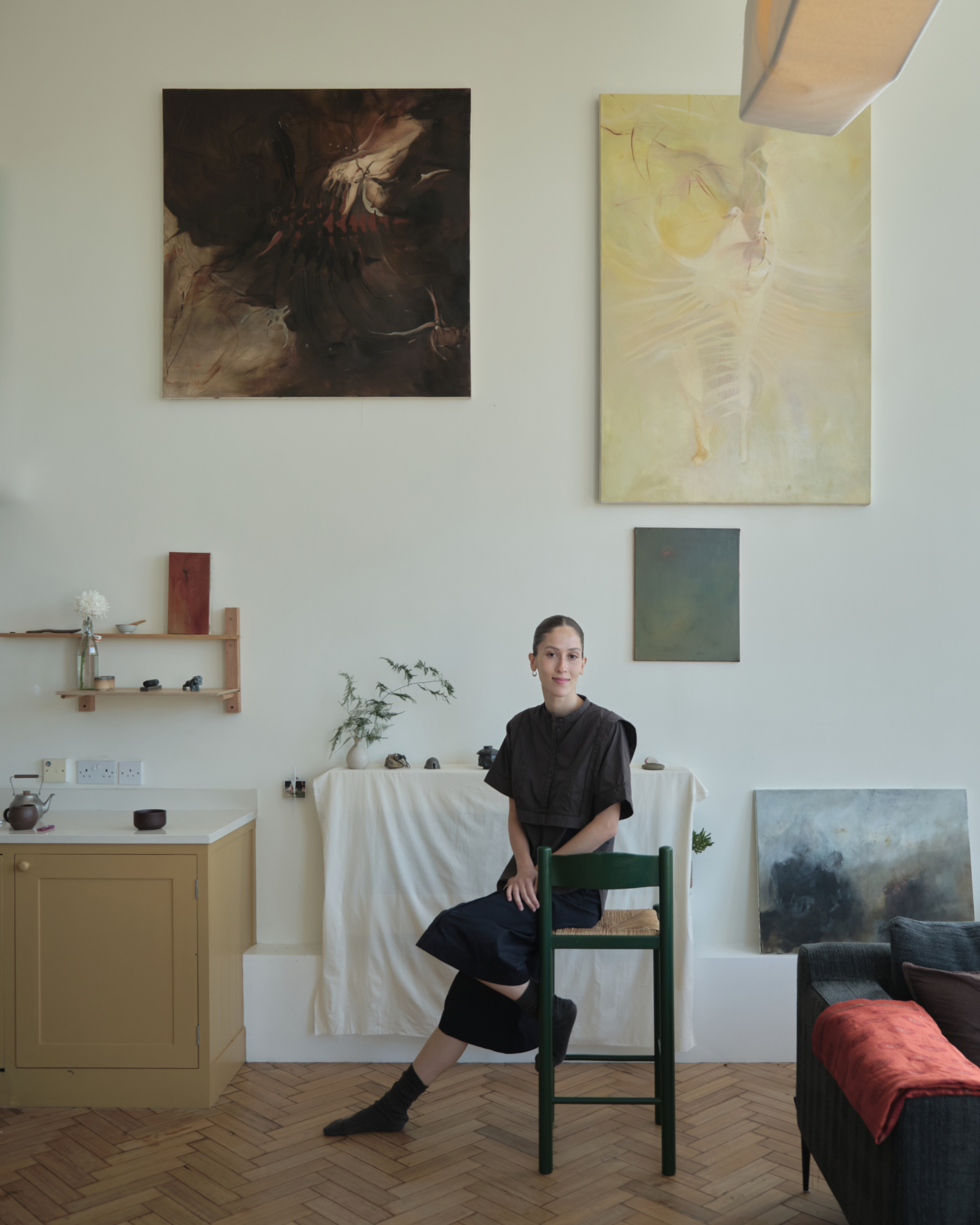
You might not go looking for design inspiration at a multi-use sports complex, but that is where Selin Nisa Açıkel first remembers thinking about architecture and its relationship to the body. She trained as a rhythmic gymnast from the age of nine, later joining the National Team of Turkey and travelled frequently for championships – spending, she estimates, “about half my waking life in sports complexes”. Large and impersonal, and often lit in ways that made performing difficult, the buildings left her wondering why they were so badly designed. “It was frustrating, but they are also spaces that taught me how to be imaginative with furniture. No one makes specialised equipment for gymnastic training, so you have to get playful and think about all the possibilities a chair has to offer,” she says.
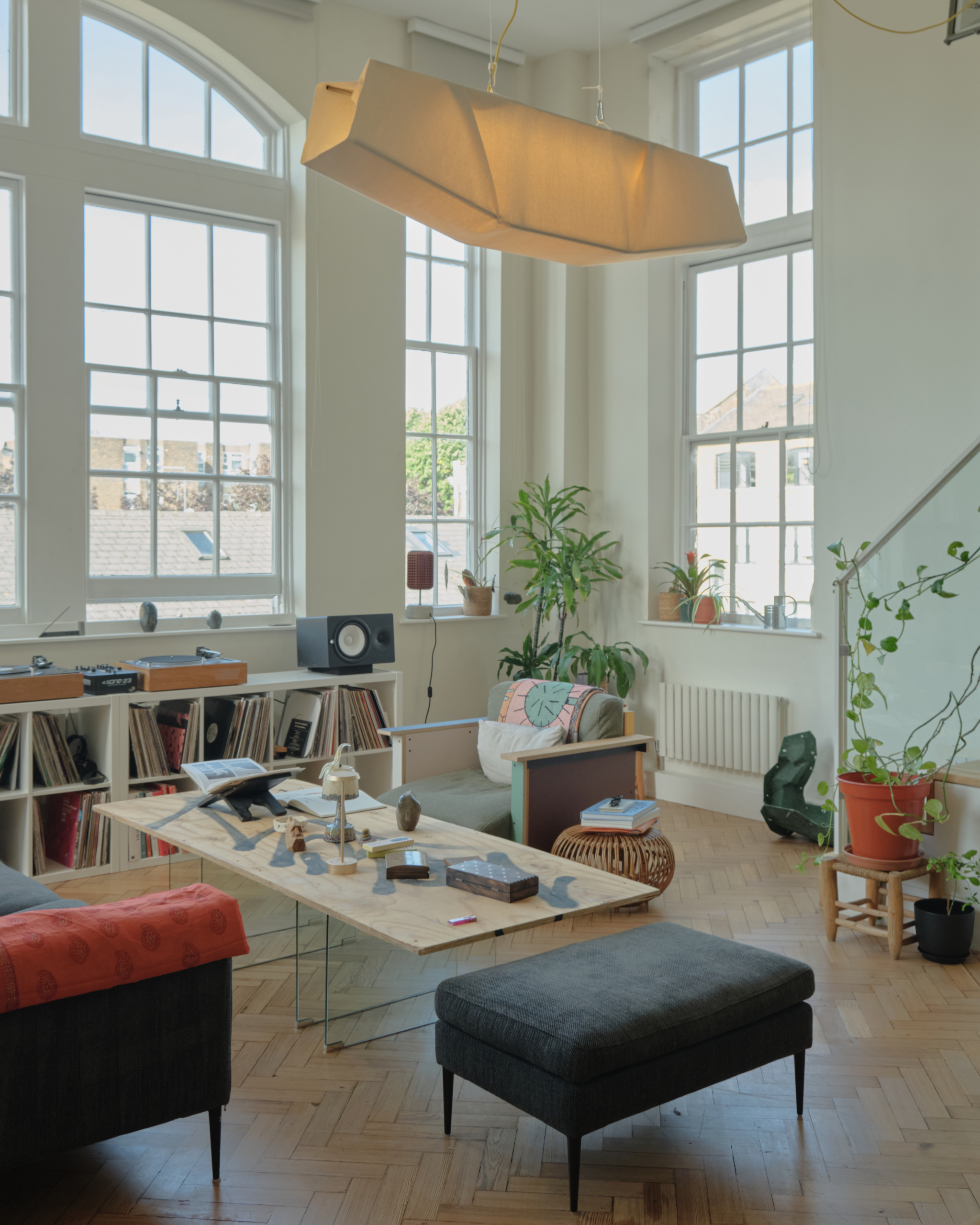
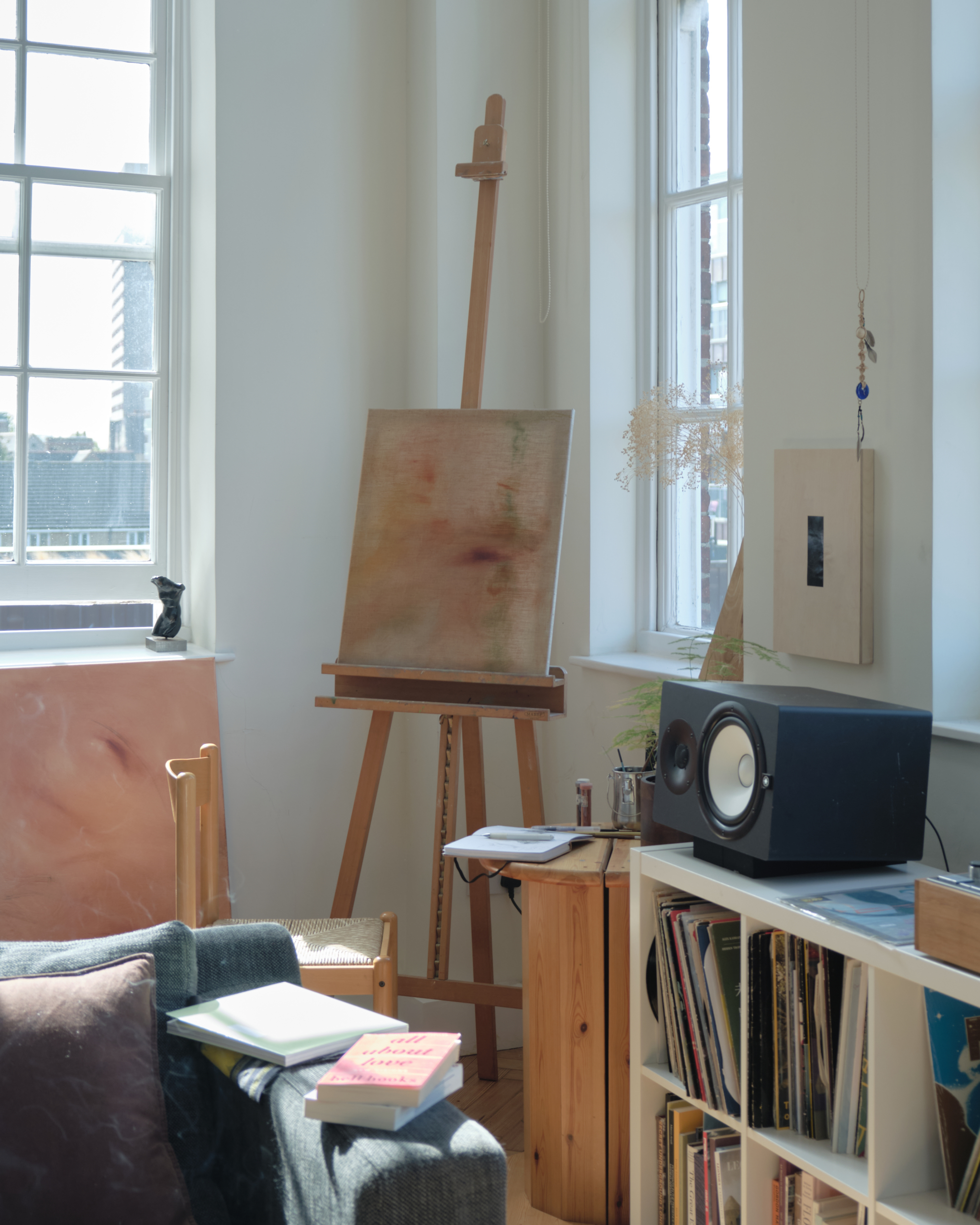
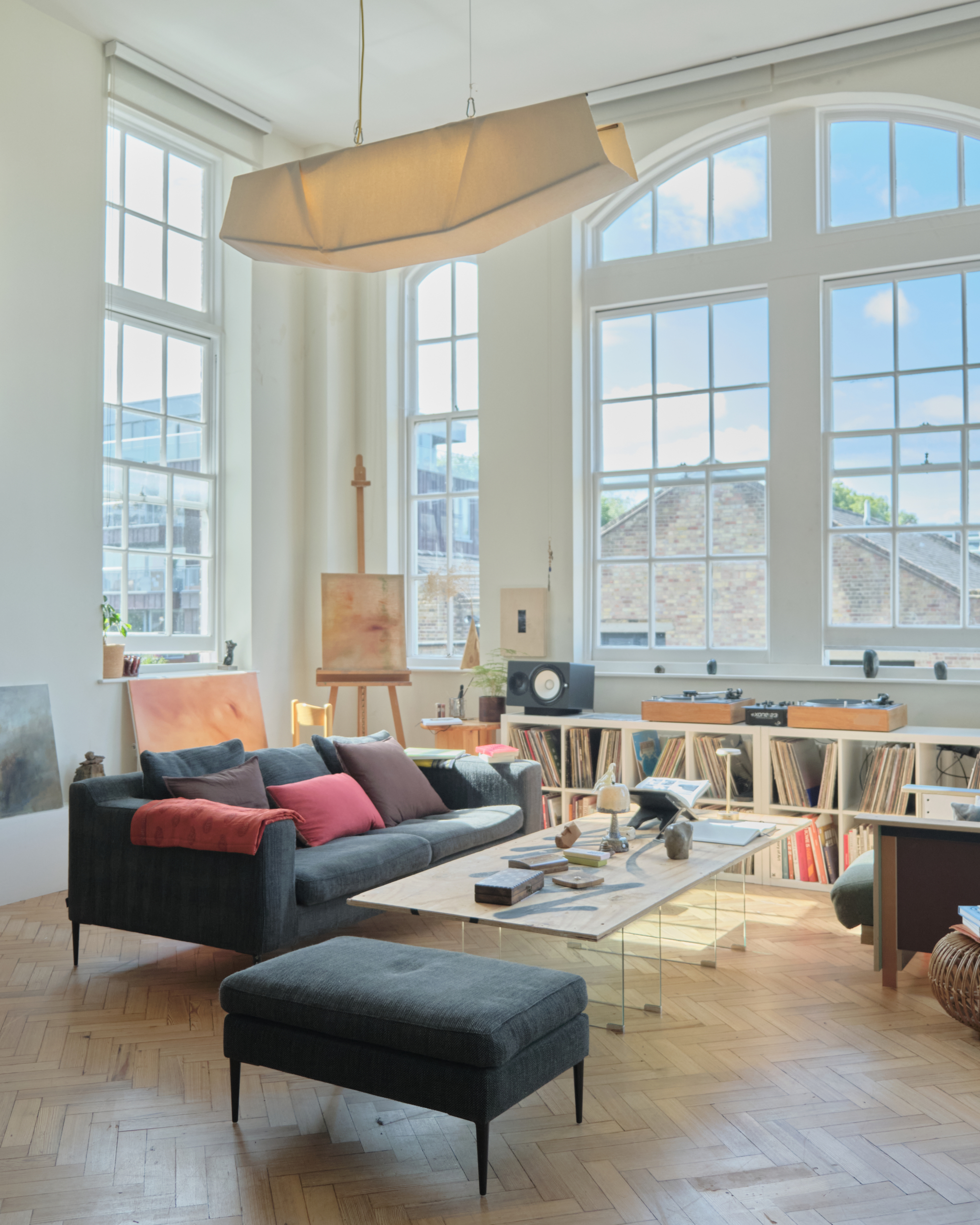
Since then, wearing several hats as an artist, designer and architect, Selin has had plenty of opportunities to think about how spaces, furniture and the things we make affect human experience. Today, though, those ideas find their fullest expression in the former school in Hackney that she shares with friends. At its heart is a generous, double-height living room: an open volume with room for paintings, making, gatherings and the furniture shifts that come with them. “This home is the ultimate playground,” she says, sitting on the kitchen worktop, her legs dangling in front of the cupboards.
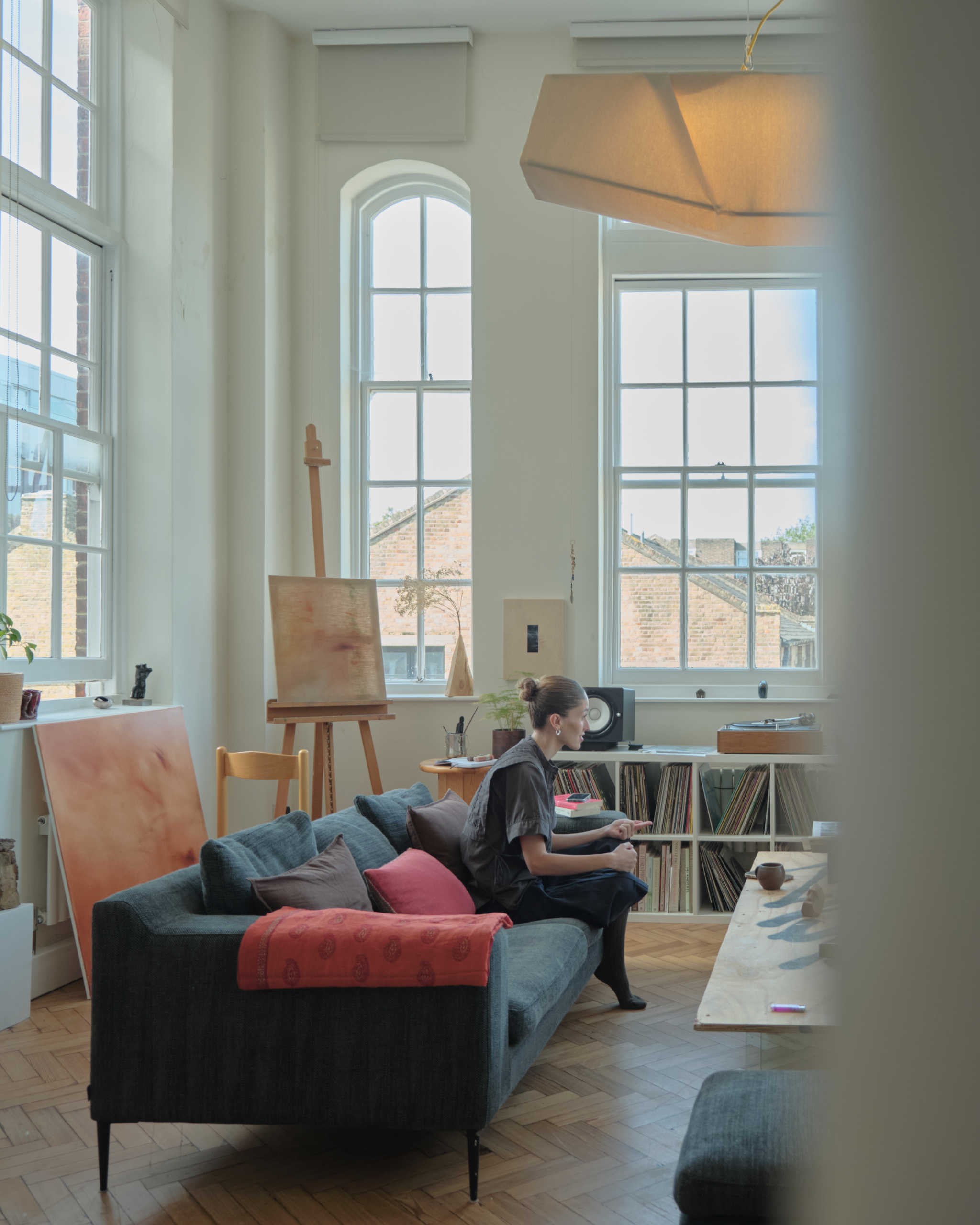
Growing up in Istanbul, Selin first came to London at 18 to interview for a place at the Architectural Association. Leaving competitive sport can be difficult, but she describes her own departure as “an easy breakup”. She had always made space for drawing and painting, as well as her studies; the excitement of studying architecture in a new city helped, too. “It was the first time I made proper friends. I loved the freedom London brought – hanging out, raving, getting into techno and dancing, which allowed me to use my body in an entirely free and unregulated way,” she says. “I had energy and feelings and I just danced.”
The looseness of the AA’s syllabus gave her further freedom to reconsider the body, which, she says, “is commodified at a very young age in competitive sports”. She made plaster models of spinal vertebrae and explored bodily movement and restraint through performance and video art, while experimenting with materials in unexpected ways. “The thing I feel luckiest about having studied at the AA is that I never felt uncomfortable doing many different things at the same time. Everyone was doing that – we were all just… experimenting,” she says.
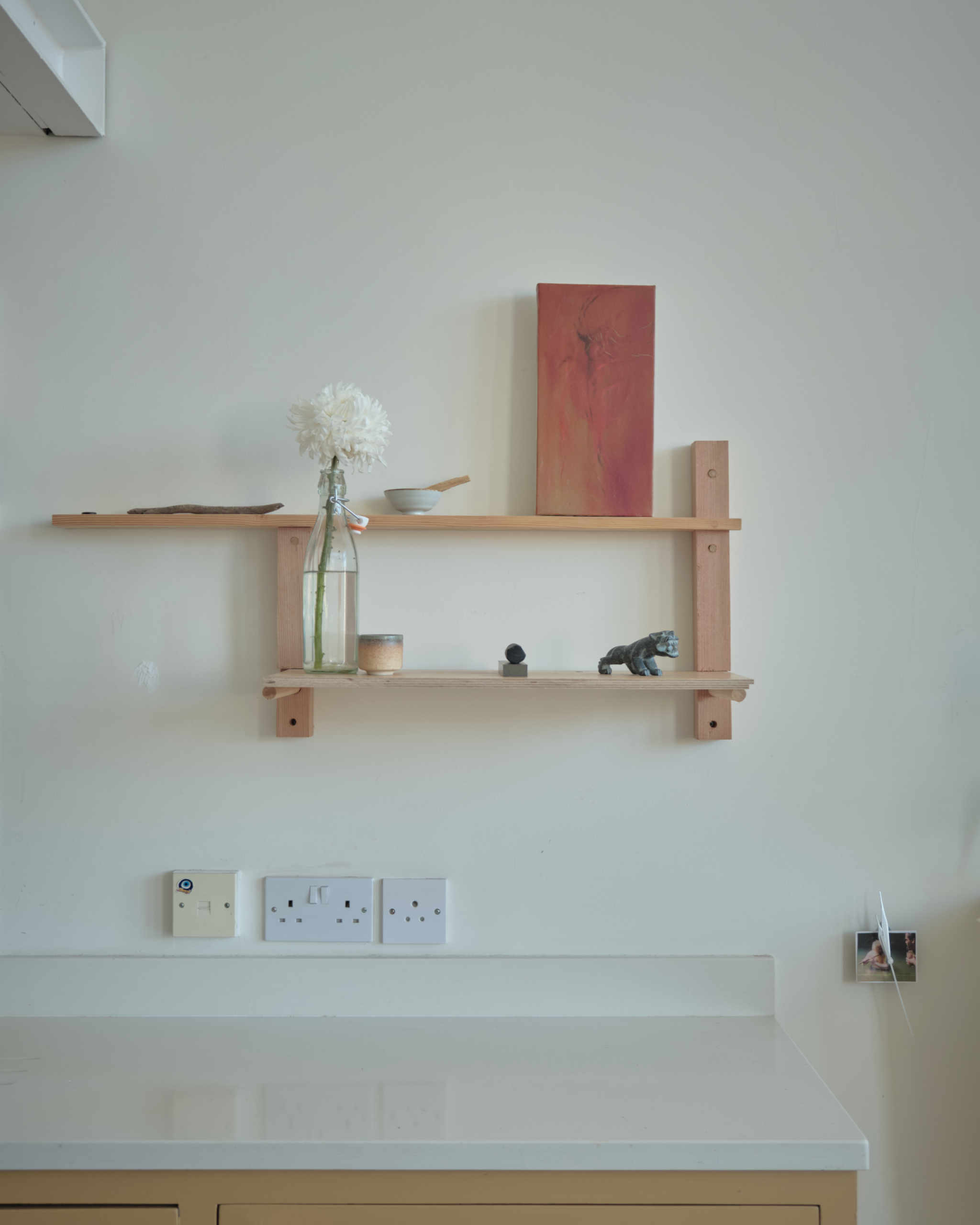
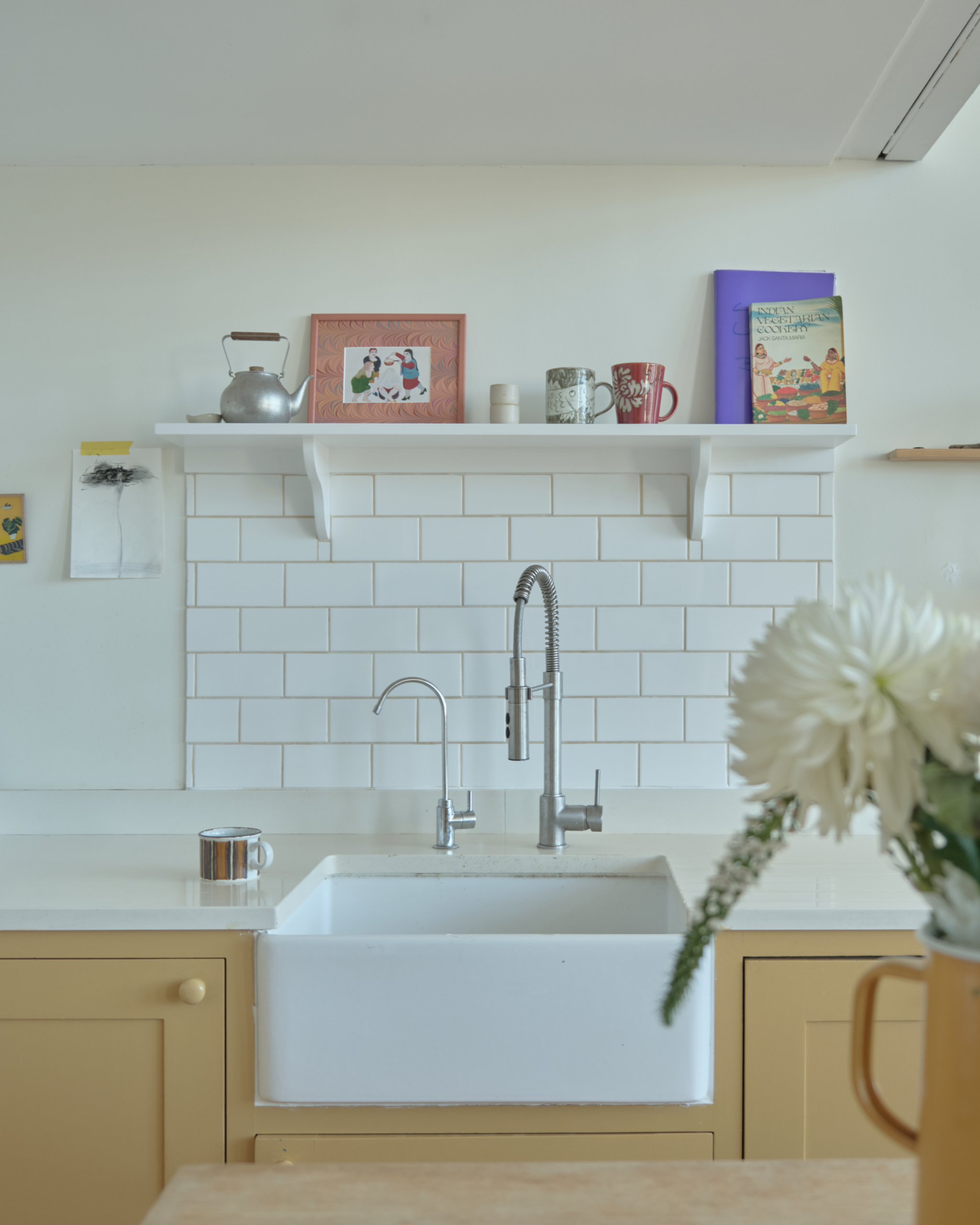
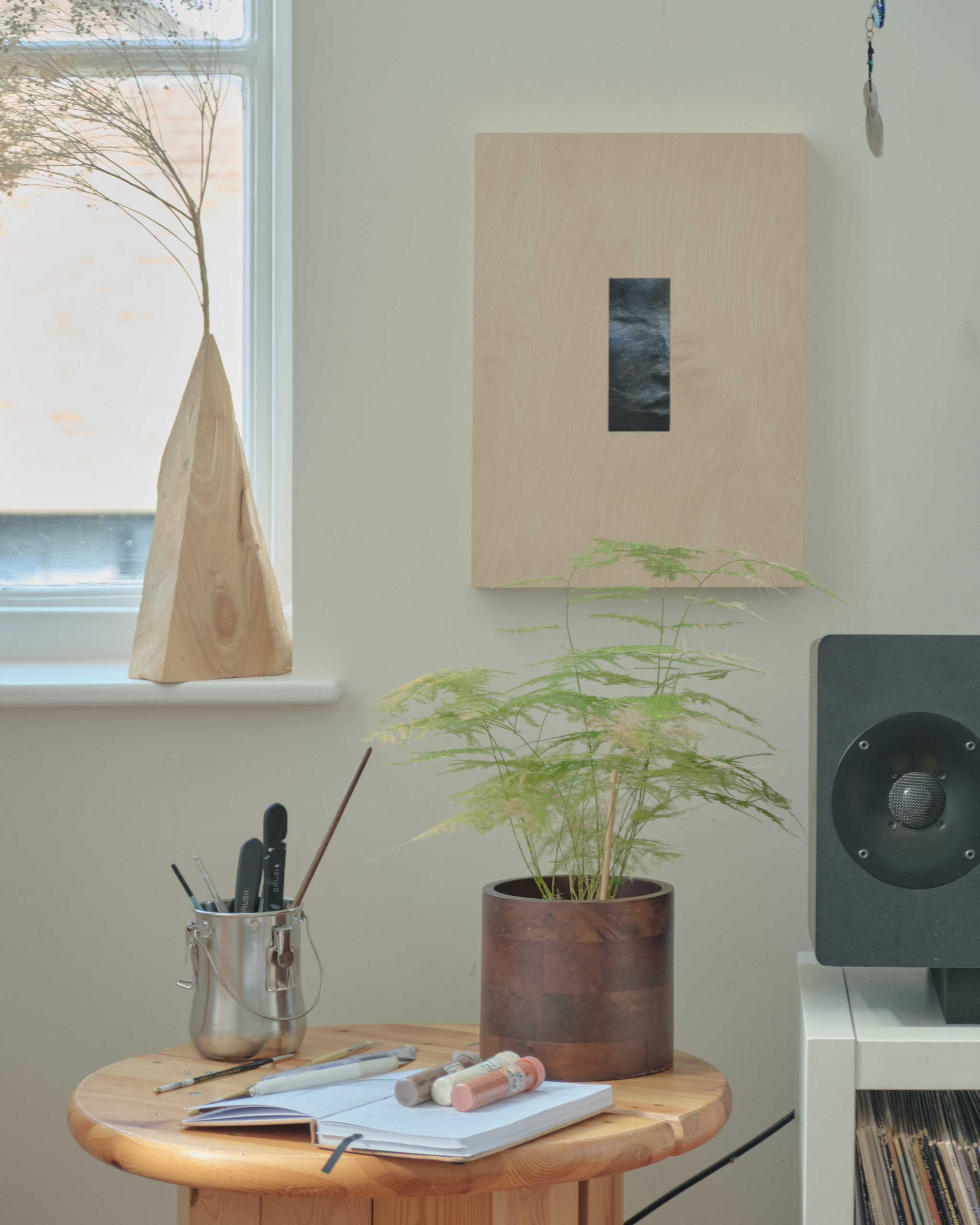
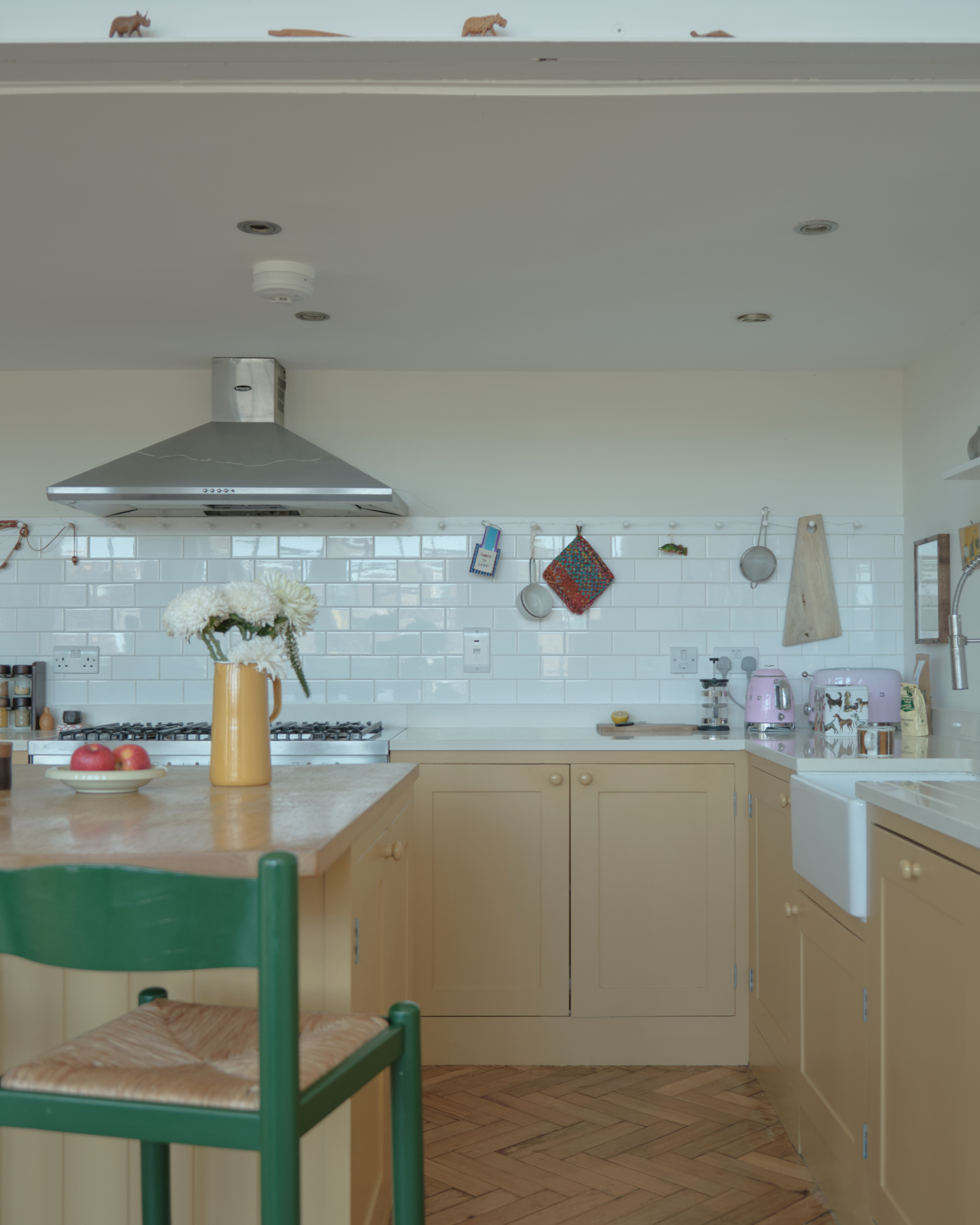
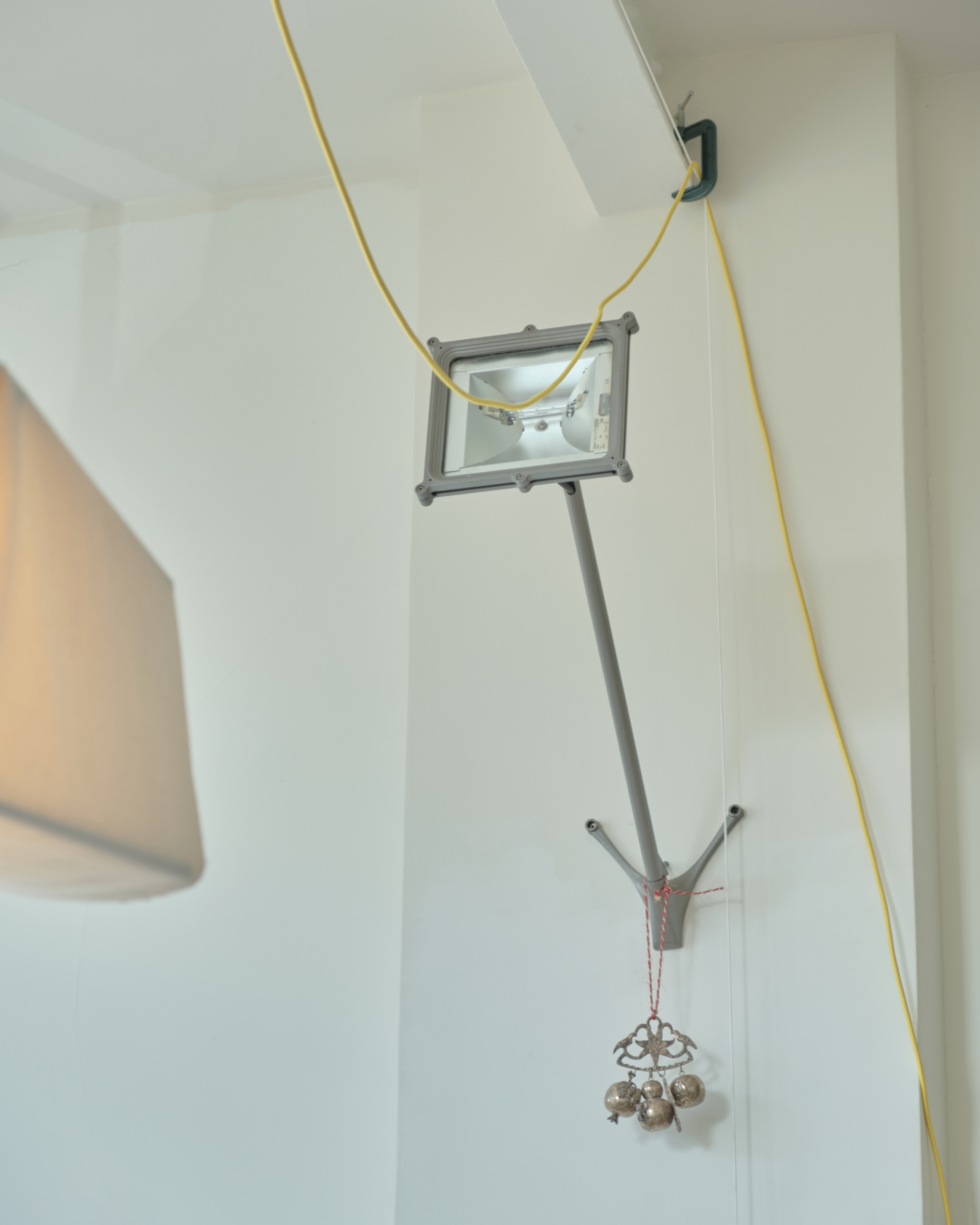
Today, a lack of fear when it comes to trying new things is a hallmark of how Selin works – and lives. In the flat’s large, double-height living space, evidence of her unprecious, unconfined approach is everywhere: from a shelf she recently made for the kitchen to her paintings, hung gallery-style, and a large, metal-framed pendant lamp suspended from a height-adjustable pulley system. “Soon, I want to lower it and have a painting workshop where people come and paint onto the canvas using domestic pigments like coffee and turmeric,” she says, lowering the lamp. In one corner is a sewing machine, a birthday gift from her partner, Arran Gregory, that she hopes will become “something that develops alongside my different channels”.
With so many creative outlets, many of them pursued here, it’s a surprise to find the space looking so calm and orderly. Selin assures me it’s usually much messier and more chaotic. “Selina, my best friend and housemate, sometimes comes home to a place that’s turned upside down and says, ‘Oh, cool, what are you doing?’ It would be totally understandable if she wasn’t like that. To have her support is priceless,” Selin says. In any given week, she might move her painting studio from her bedroom to the mezzanine above the living area, set the table up in one of four different configurations or push it aside altogether, as she did for a party the previous week. “I am still discovering who I am, what my values are, what creative outlets I might be interested in, so having a house that you can play around with and shift things around and create different modes of living really helps with that,” she says, before offering us tea.
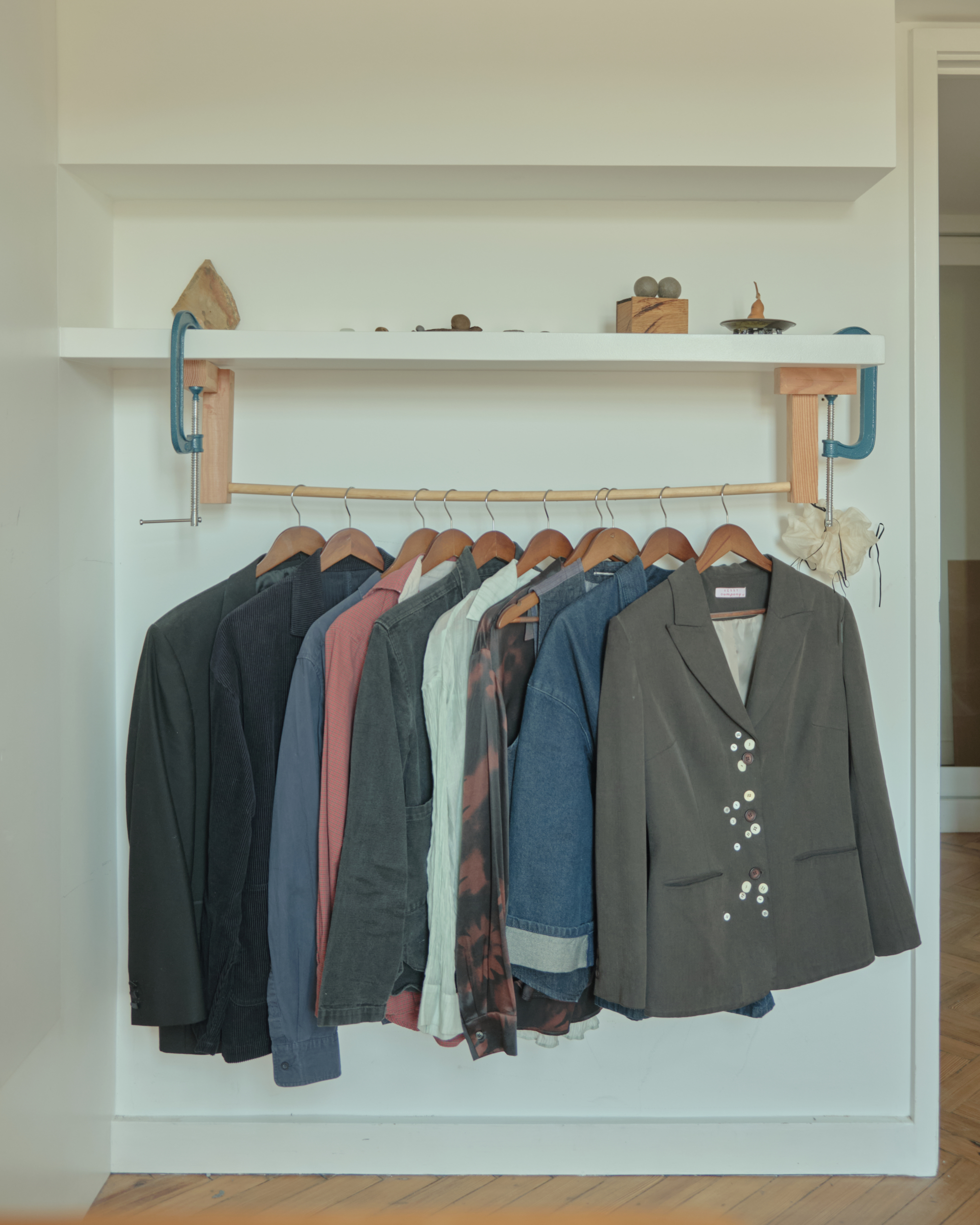
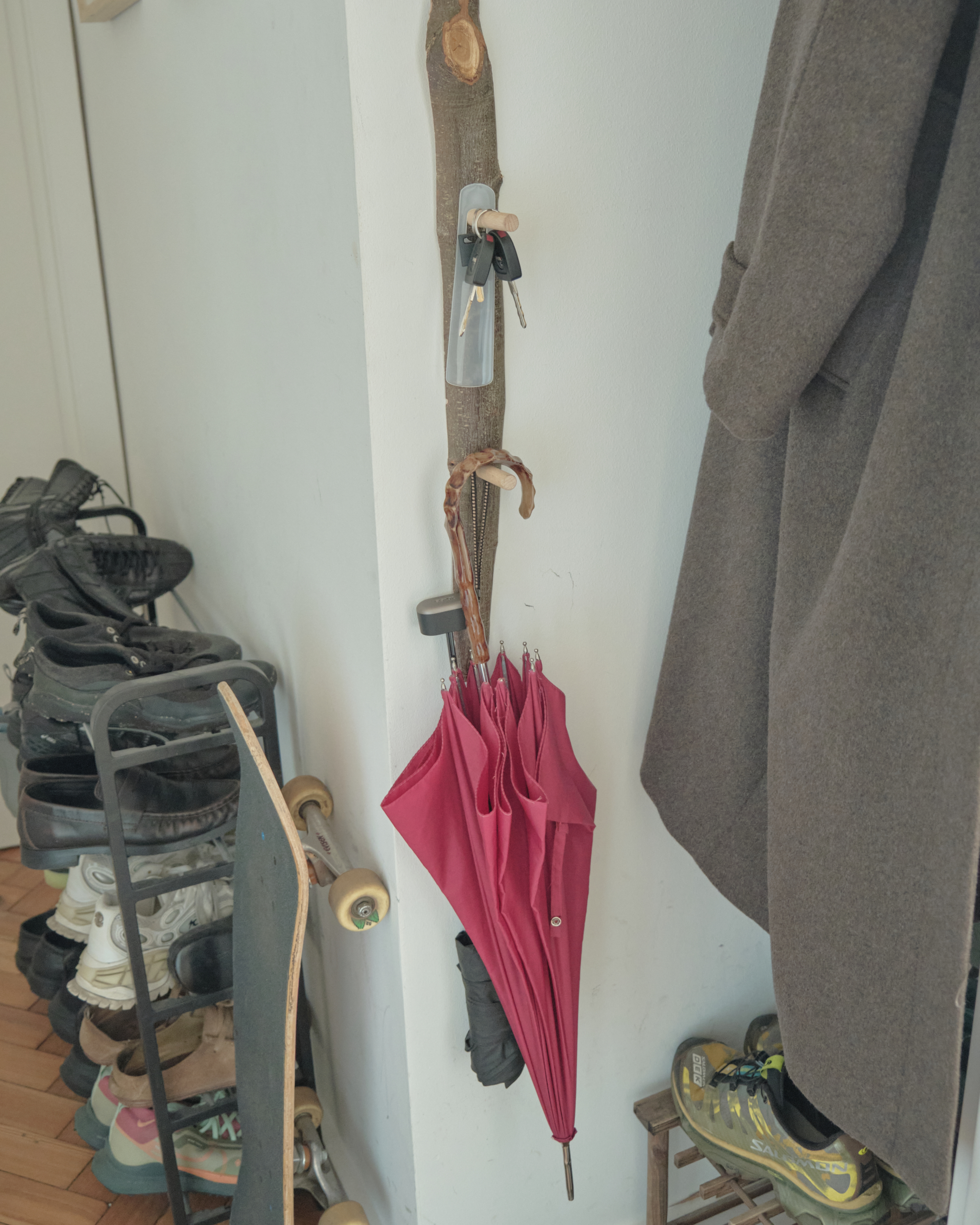
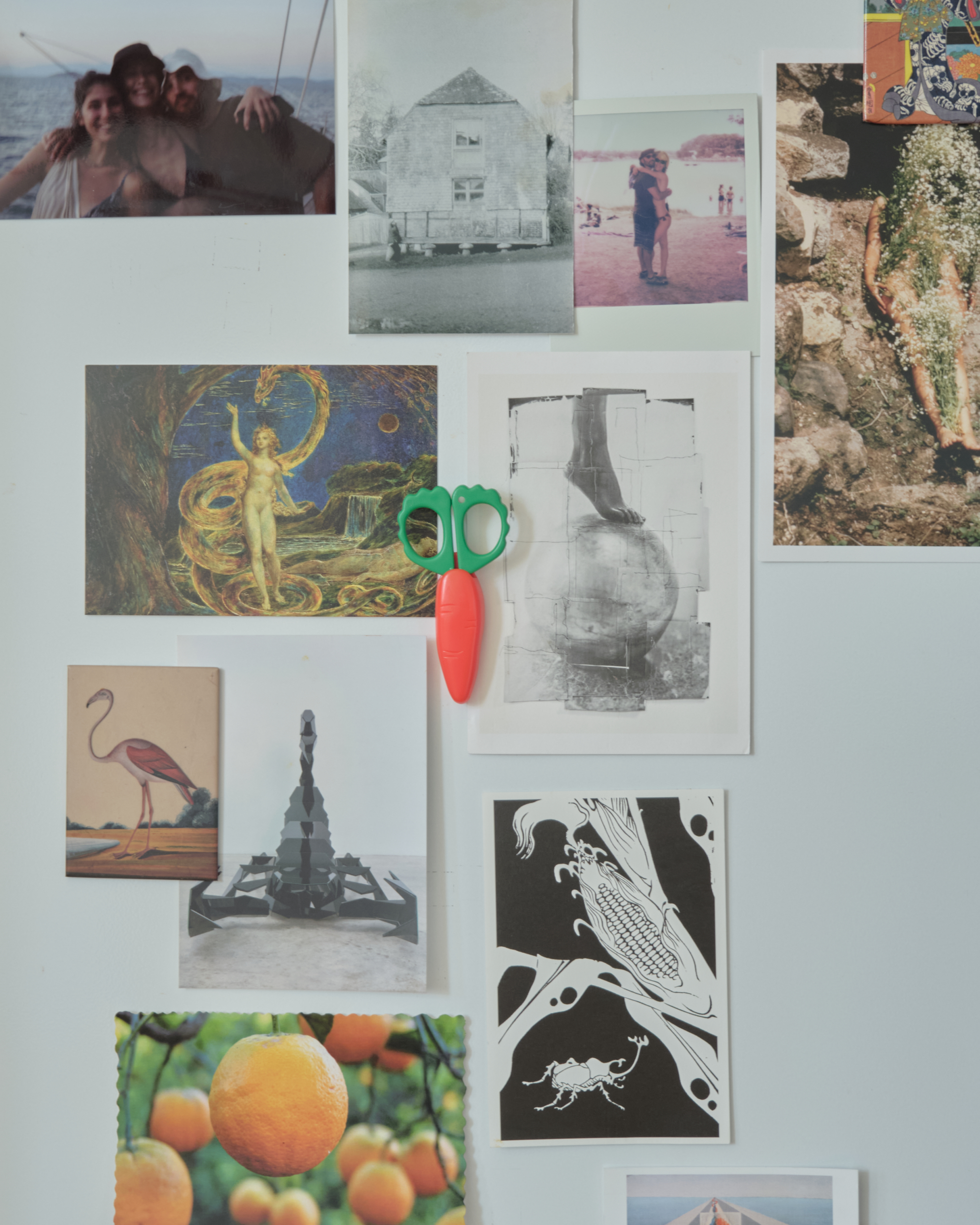
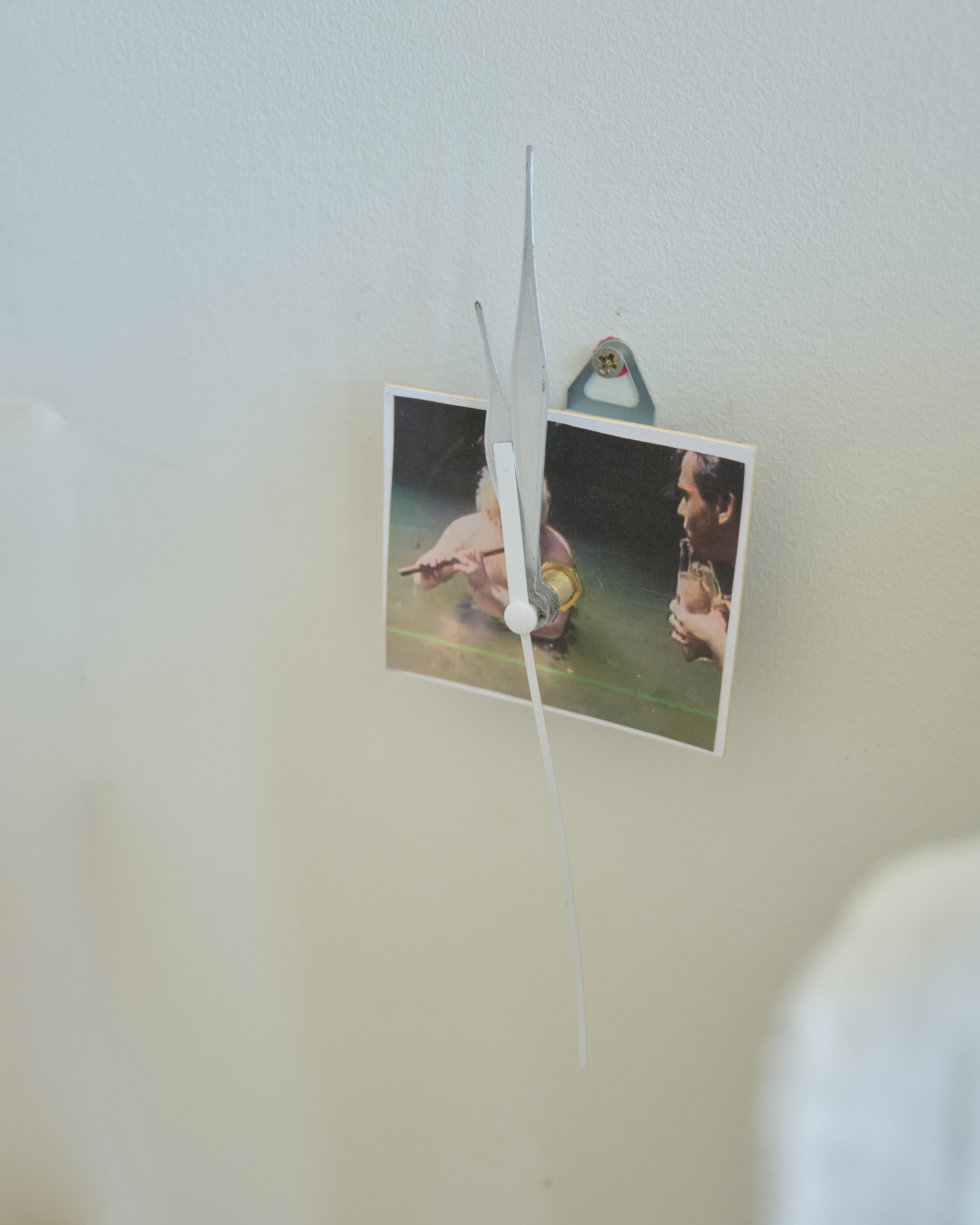
Living here has also prompted Selin to make more domestic pieces than she thinks she would have otherwise. The latest is Mayfly, a room divider she made with Arran and unveiled during this year’s London Design Festival. “You can have a lot of fun with a room divider and express a lot of different beliefs in the way you approach an object,” she says. “Our thinking was that we don’t need any more solid division walls in a domestic sense. What you probably need is a mutual understanding with the people you share a space with: that you’re in your own zone.” Rather than closing off a room, Mayfly offers a permeable boundary – a kind of “do not disturb” that lets someone claim a little space while remaining part of the shared home. For Selin, it becomes “a marker of a shared understanding of each other’s space”.
Mayfly also reflects the interest in reuse that runs through Selin’s personal work and her job at Yes Make, a design-and-build practice that engages local communities in creating public spaces. Selin and Arran set out to make the divider without using extractive resources; its materials are reclaimed or locally harvested, including the cotton canvas, which a friend sourced from Phyllida Barlow’s studio after her passing. At Yes Make, Selin has been involved in projects such as Tipping Point East, a circular construction hub founded by Yes Make, Material Cultures, and RESOLVE Collective.
Before her master’s degree, Selin spent a year at a large architectural practice, working on international projects. She is glad to have had the experience: “It showed me everything I needed to see at that stage.” Seeing the scale and resources involved in delivering those megaprojects, she could appreciate the innovation and design involved. “The planet is not in a place where she can appreciate it,” she recalls thinking. At Yes Make, “the planet is our first client”, followed by the local communities the practice actively involves in the making process. “Design should be about what you have available and what people need. Your role is just to facilitate. At Yes Make, there is a complete dissolution of the designer, which I love,” she says.
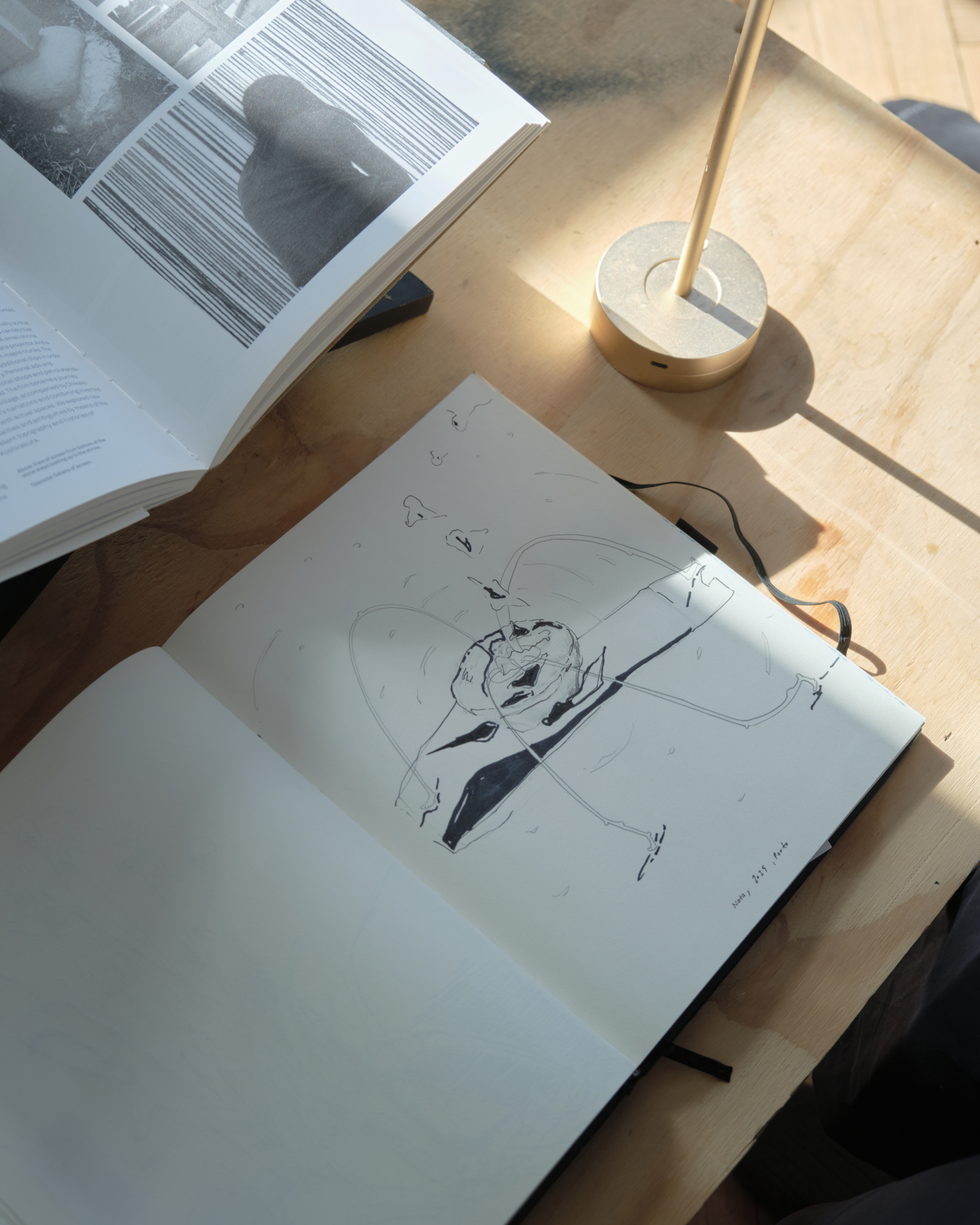
Alongside her personal and architectural work, painting is a more solitary and sacred practice for Selin. “It’s a bit more personal, a bit more solitary for me. It’s where I explore my relationship to nature and memories,” she says, looking up at the finished pieces on the wall. A painting might take three days or six months to reach a point where she is happy with it. The process is instinctive and deeply personal, she says, which is why she prefers to paint alone.
“Painting is exhausting, like sports. You have to learn to navigate that, to not be shaken by it and know that failure is part of the process,” she says. Interestingly, Selin credits her endurance and ability to push through, all while juggling her other projects, to her training as a gymnast. “In that way,” she continues, “I am grateful for my experience in competitive sports as a child, because it gave me the skills and discipline to be an artist. To put yourself out there, to not be too precious, requires so much vulnerability, so much reliance, which is something you learn when you mess up something you’ve practised 5,000 times in competition.”
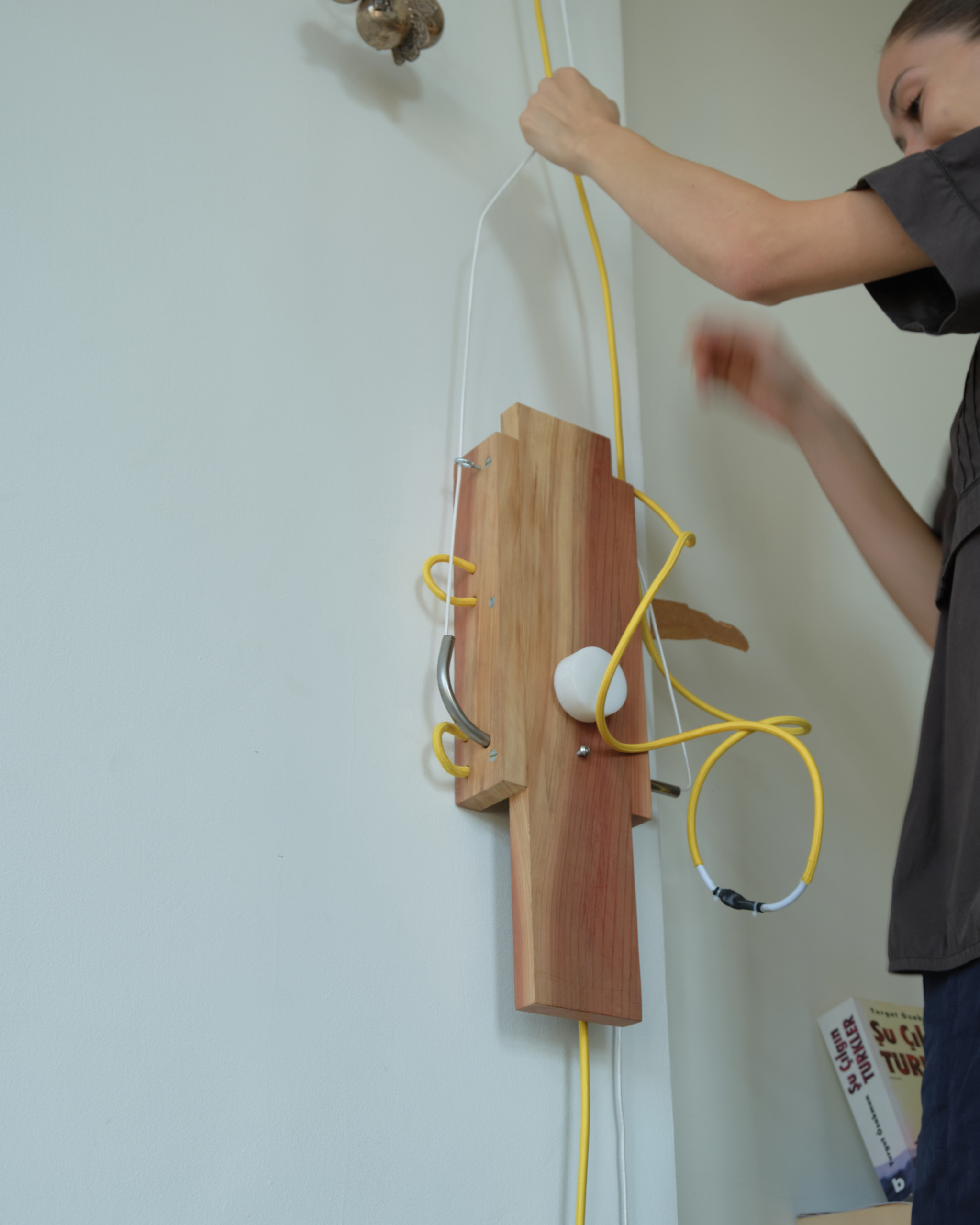
At the same time, Selin can see how sport and creativity require opposite mindsets: the former demands perfection and constant exertion, while the latter asks her to slow down. “To create, you really need to be able to calm down. To be curious, to allow yourself to be bored and embrace the slowness. With competitive sports, it’s basically the opposite. You just go, go, go.” Perhaps this is why this home, and the space it creates for her to create, matters so much. But maybe not. “Feeling at home for me is a skill, rather than a place. I spent so much time out of my childhood home as a kid, sleeping in uncomfortable beds while competing in different countries, that home wasn’t about people or objects, but my state of mind,” she explains.
One day, Selin hopes to build a house of her own – “an archive of my life” – but she is in no rush. “I’m a long way away from that. I’m okay with this house constantly changing. I love waking up to a free, blank wall and starting the day with that clear space. But I can find the equivalent of that ritual if I’m spending a month somewhere else. It’s more about understanding that it’s a skill that you can nurture to feel at home.”
Suggested stories
Going Out, Staying In With Dan Pope
Filippo Muzi Falconi’s World Is Filled With Wonder, Naturally
Making Work – and a Home – Out of Restrictions, Remains and Resourcefulness
A Designer Finding New Forms in Ancient Traditions
A Collector Who Sells – and Lives With – the Things She Loves
Functional Beauty: Jewellery Designer Helena Vieira’s Converted Warehouse Apartment
The State of Design? Designer David Searcy Has Thoughts
Inside Jesse Butterfield’s Studio
Jewellery Designer Jessi Burch’s Brooklyn Apartment is a Portal into her Mind
How “primitive craft” and “contemporary production” come together at Lewis Graham’s studio
An Apartment With No Sofa But 50 Lamps
A Happy Family Collaboration in De Beauvoir
How “The Muse of Spirited Resourcefulness” Guided The Making of Glass Artist Juli Bolaños-Durman’s Edinburgh Home
ON UGLINESS WITH DAVID MICHON, AUTHOR OF FOR SCALE
The Home That Thomas Wheller Is Making
Designer Jake Robertson’s Home is a “Living Library”
Jewellery Shaped by Architecture, History and the Human Hand

THE SCURA GUIDE TO GOSPEL OAK & AROUND
Scura Selects: November 2025
Luke Malaney’s Work is Always in Motion
Going Global: Reflections and Recommendations from Flawk’s Show at Collectible NYC
The Fluent Creativity of Liyang Zhang
SCURA Selects: What to see at Open House & LDF
FRIENDS OF SCURA: ALEXANDRA ARIAS
What is Flawk?
A Design Duo’s Reunion with a Family Farmhouse in Alsace

The best eats in London under £20
Introducing the Flawk Shop: a new home for a family of objects
An Architectural Adventure in Finland’s Far North
Freddy Tuppen’s Flat Keeps Getting Better

A Slower Guide to Istanbul

Inside A Copenhagen Apartment Shaped By Instinct, Collaboration and Kerbside Finds
A Guide to Copenhagen, Curated by a Design Duo We Love
Step Inside Tom Golland’s Colour Playground
Picasso Chairs and Playful Precision: Josh Page’s Creative World

Ajay Larr on the Architecture of Food and Why Meals Matter
A Slower Guide to London
The Scura Guide to eBay
The Homespun Beauty of Textile Designer Isabel Farchy’s Patchwork Panels
NYC Design Getaways
Our friends: PPP LAB on crafting for simplicity and usability
Hidden Feasts: Jiaonest
Scura’s Guide to Independent Stoke Newington
Welcome to Scura