Fiona Mackay’s Brooklyn Apartment Is a “Cacophonous Harmony” – and All the Better for It
In Fort Greene, Brooklyn, One Hanson Place holds prominent status not just in the skyline, but in the list of addresses locals want to call home. It was completed in 1929 as the Williamsburgh Savings Bank and was the tallest building in the borough for 80 years – its art deco clock tower and copper dome can still be seen from much of the neighbourhood today. When it was converted to residential use in the mid-2000s, its grand former banking hall, with marble flooring and vaulted mosaic ceilings, was retained, while the storeys above it were divided up into apartments – their high ceilings, large windows and views over the East River making them highly covetable.
When art consultant and design gallerist Fiona Mackay was looking for an apartment in 2020, a real estate friend told her about the building, with a caveat: “‘it’s almost impossible’”. For Fiona, it was “Fort Greene or nowhere”, and her response was simple: “Well, is it really?” Covid had prompted an exodus from the city, and in a building where renters rarely moved out, she found a way in. Three years later her landlord sold, and she moved a couple of floors up to her current apartment on the 18th floor.
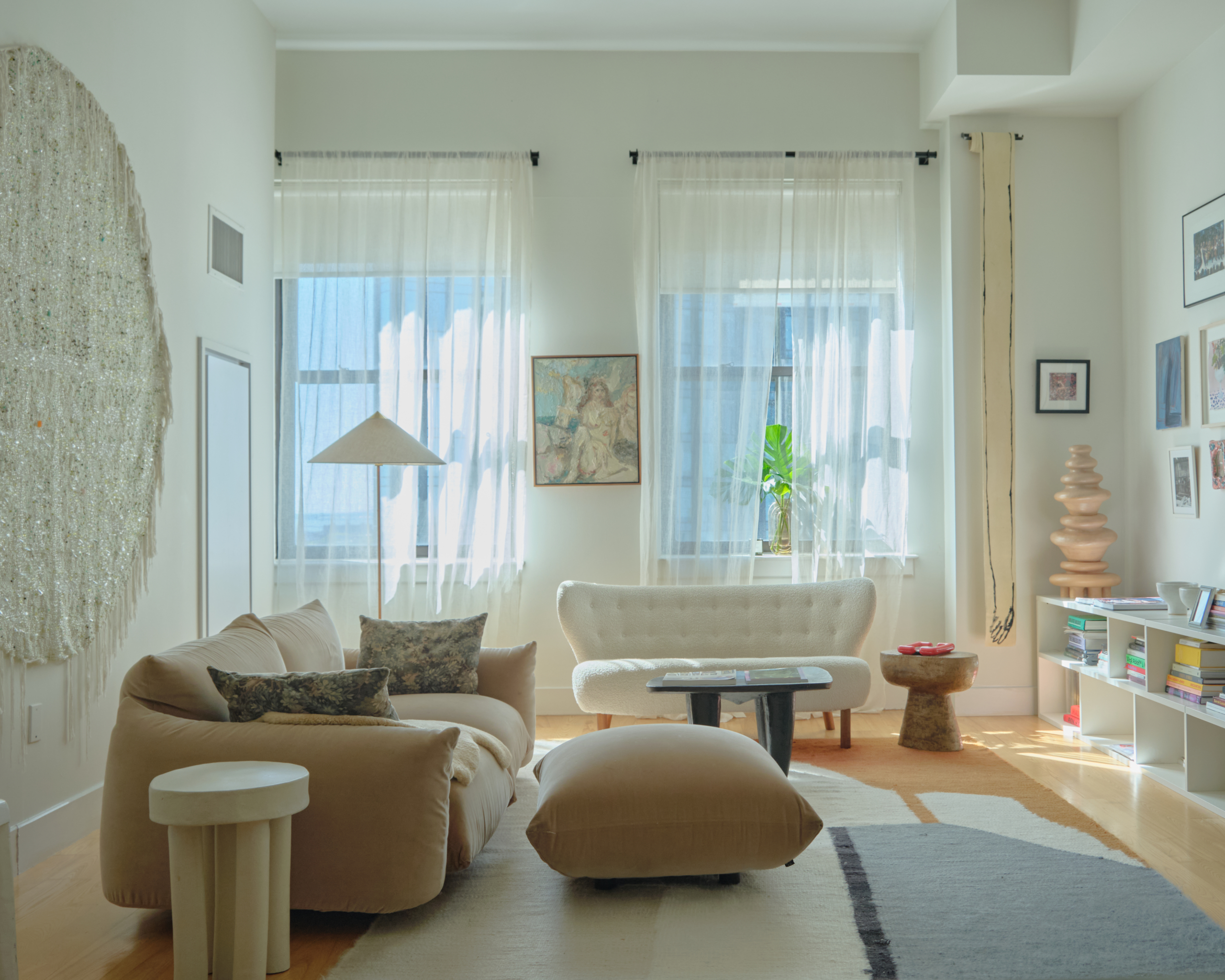
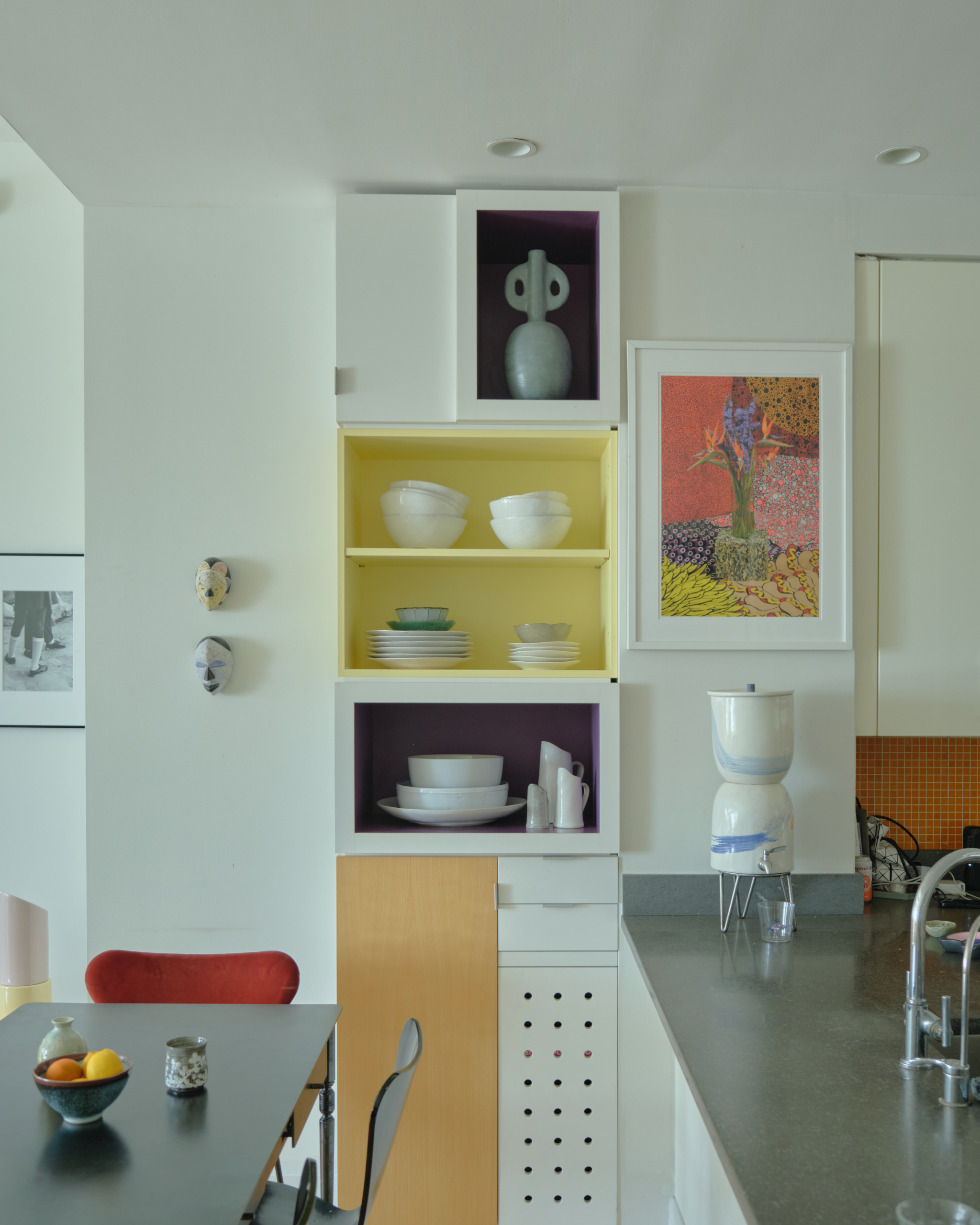
With an untold amount of overhead lighting (“an American thing… obscene”) and shelving units finished in royal purple and lemon yellow hues, the apartment came with some interior decisions Fiona wouldn’t have made herself, but as a renter, her ability to change the existing decor was limited. “Instead of trying to hide the colour or pretend it wasn’t there, I decided to lean into it,” she explains. As it happens, Fiona’s ever-growing collection of art and design, gathered with an eye that leans towards the bold and provocative, has proved more than a match for the inherited colour scheme. Yet it’s all been arranged and lived with under a sensibility that favours balance and things feeling in their right place, from which a “cacophonous harmony” has emerged. “It shouldn’t work, but it does.”
We think so too, and it’s surprising to hear Fiona has done it all without any formal design training. Instead, her knowledge was acquired on the job. In the early part of her career in London, she worked in fashion PR and media, but most formatively as an editor at Nowness, where she reported stories on leading figures in art, design, music, travel and hospitality. It was, she says, a “rapid education in art and design”. “If there was something I didn’t know about, I made sure to teach myself quickly.” In 2014, she moved to New York to study for an MBA at Columbia.
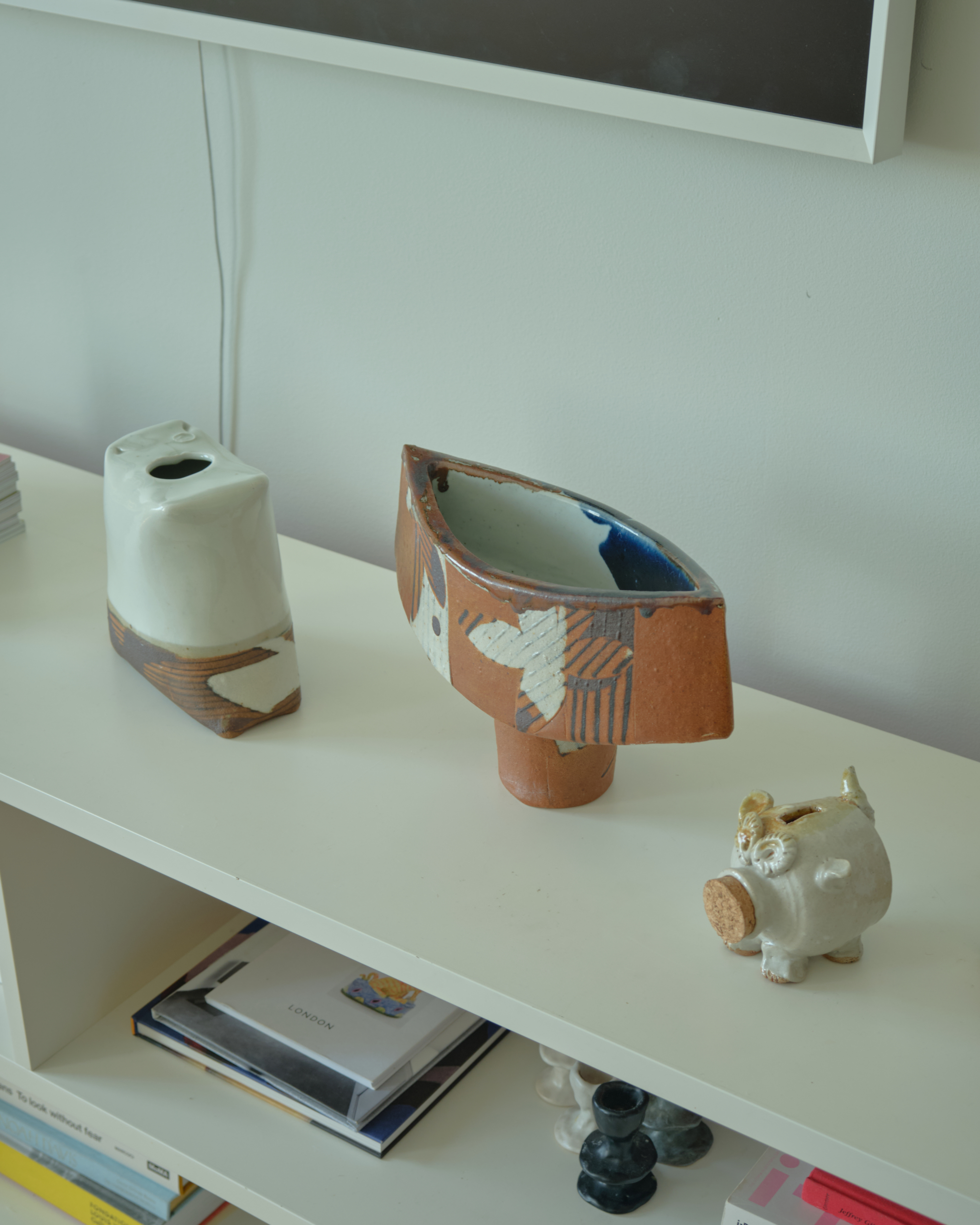
She started buying art and investing in design classics not long after. The pieces she’s most drawn to are “playful or have a sense of humour, so there are lots of colours and textures around,” Fiona explains, pointing out the pillowy form of her dusty taupe Marenco sofa. “I like 1970s Italian design for its luscious shapes and use of colour. It’s often a little bit sexy, tactile, and it doesn’t take itself too seriously.”
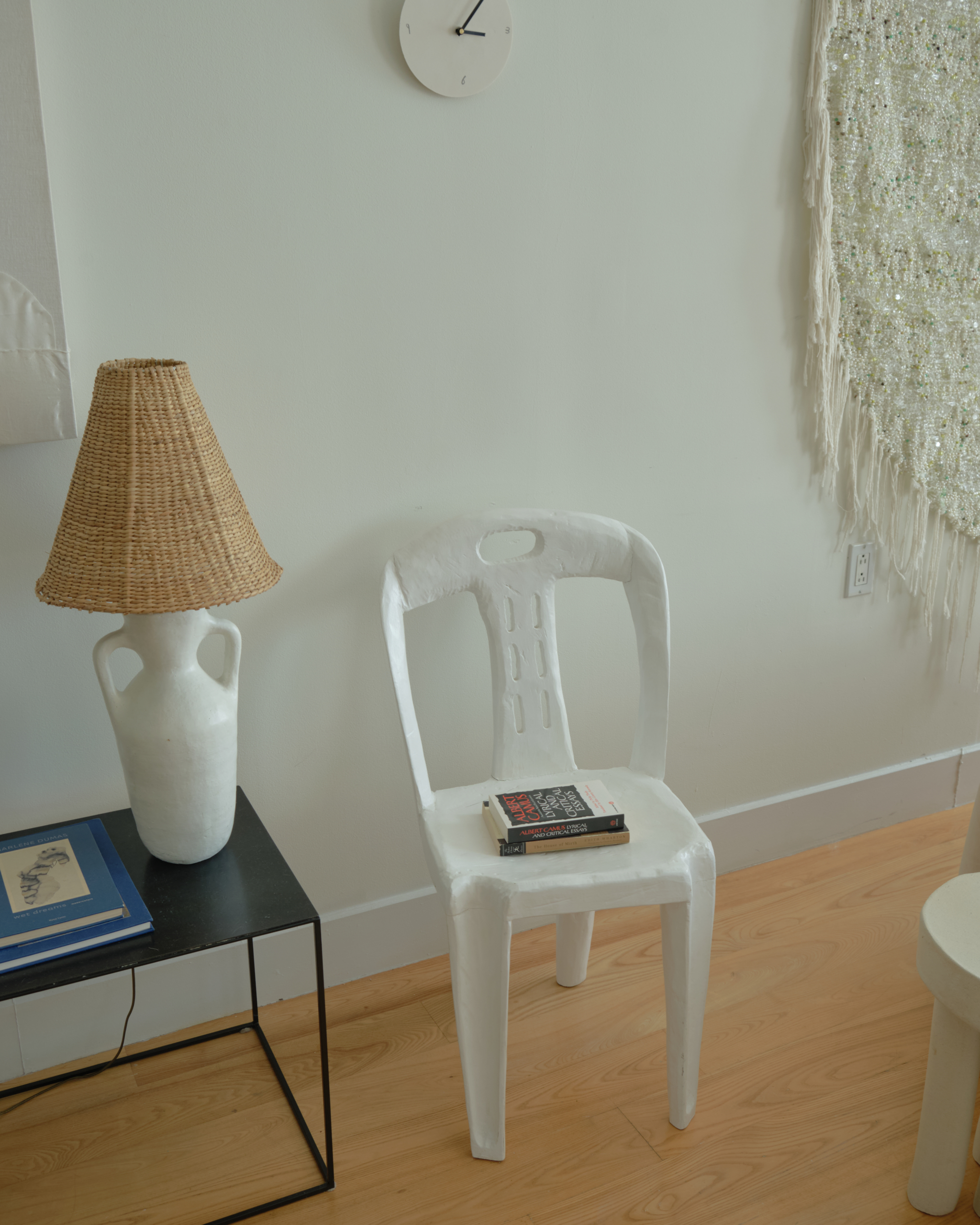
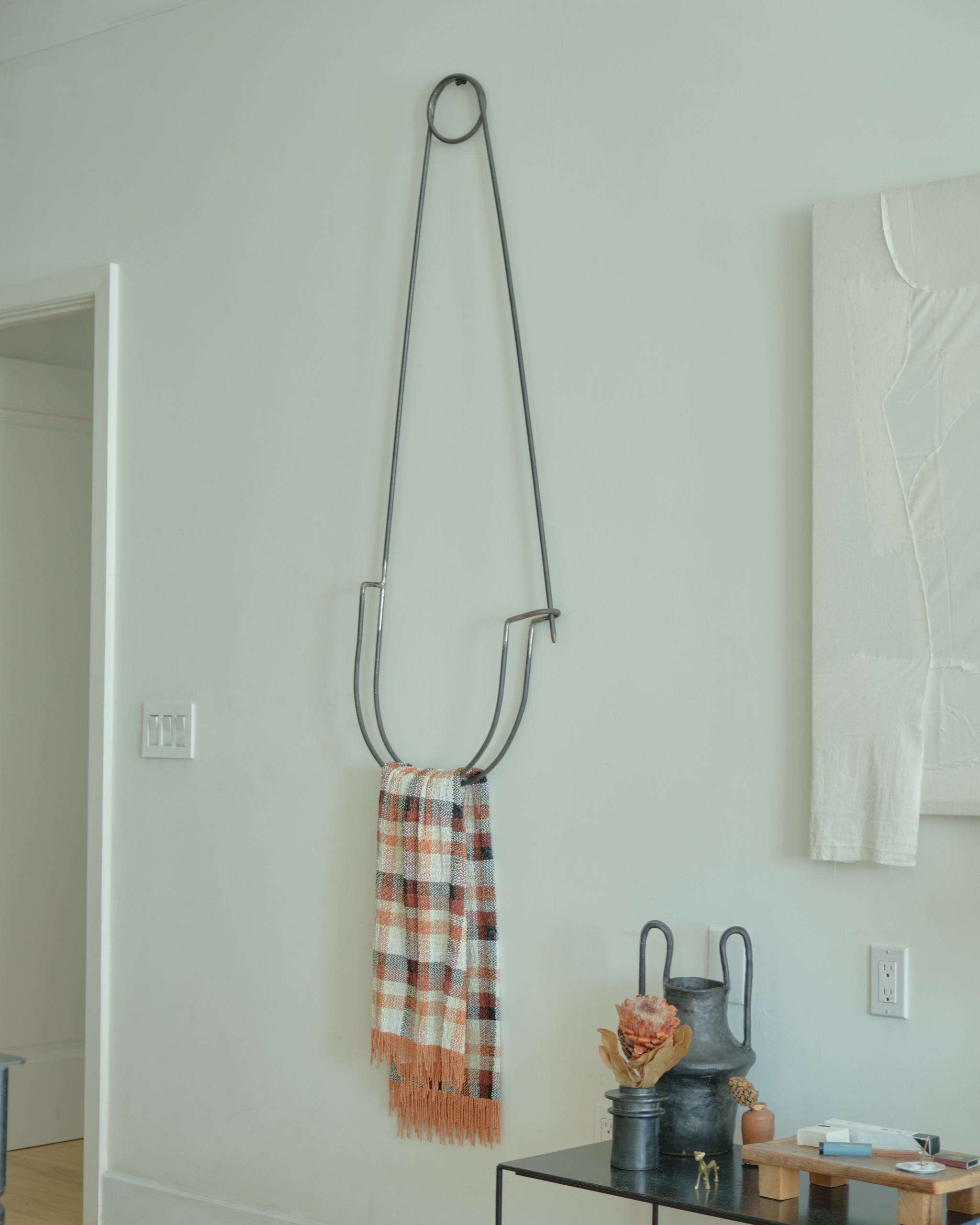
Her other major pull is design and art from South Africa, where she grew up. Through her gallery, Kombi, Fiona represents contemporary designers from the country whose work ranges widely, from austere steel and aluminium furniture to delicate mohair tapestries. “At the same time, there’s a throughline in the curation,” she says: “colour, expressive form, material honesty and the mark of the hands that made the work.” This is perhaps best embodied here in ‘Slow Dance’, a work by Cameron Platter, for which he carves jacaranda wood into the shape of a cheap plastic monobloc chair, often sourced worn and discarded from local townships, ‘totemifying’ it into an object that plays with the division between high and low culture. “It’s got this wry wink to it, a rebuff to the art and design world and how seriously it takes itself,” she says.
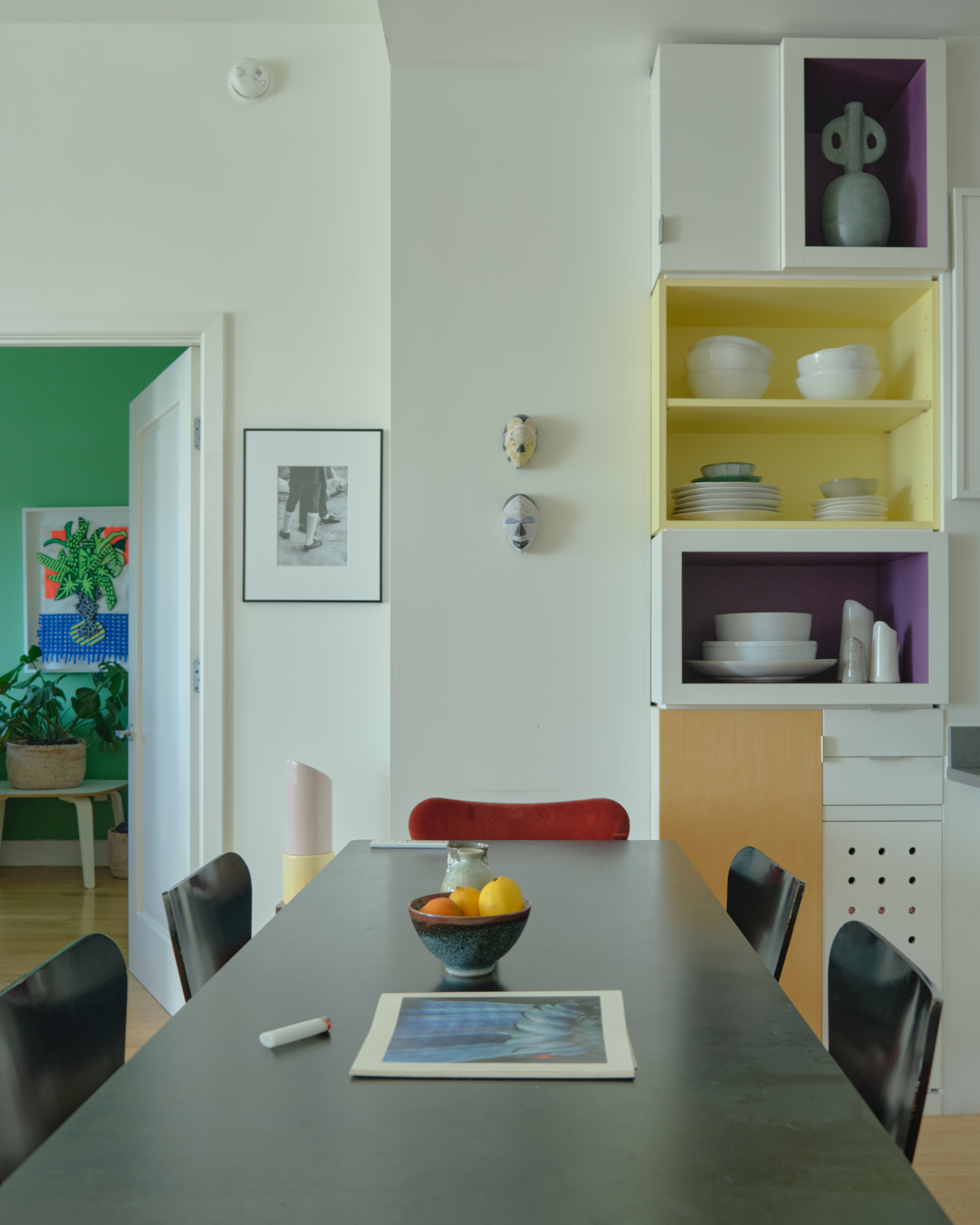
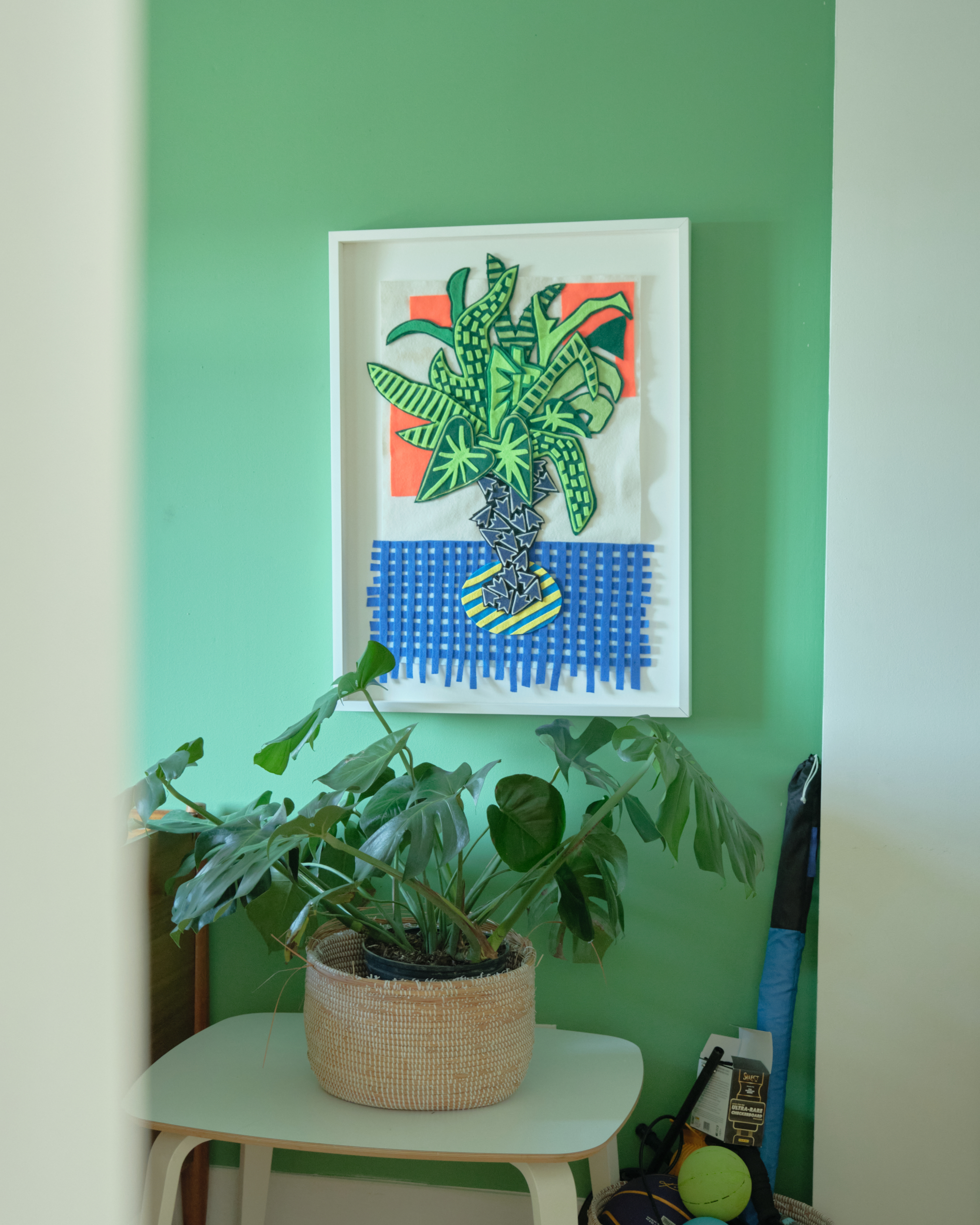
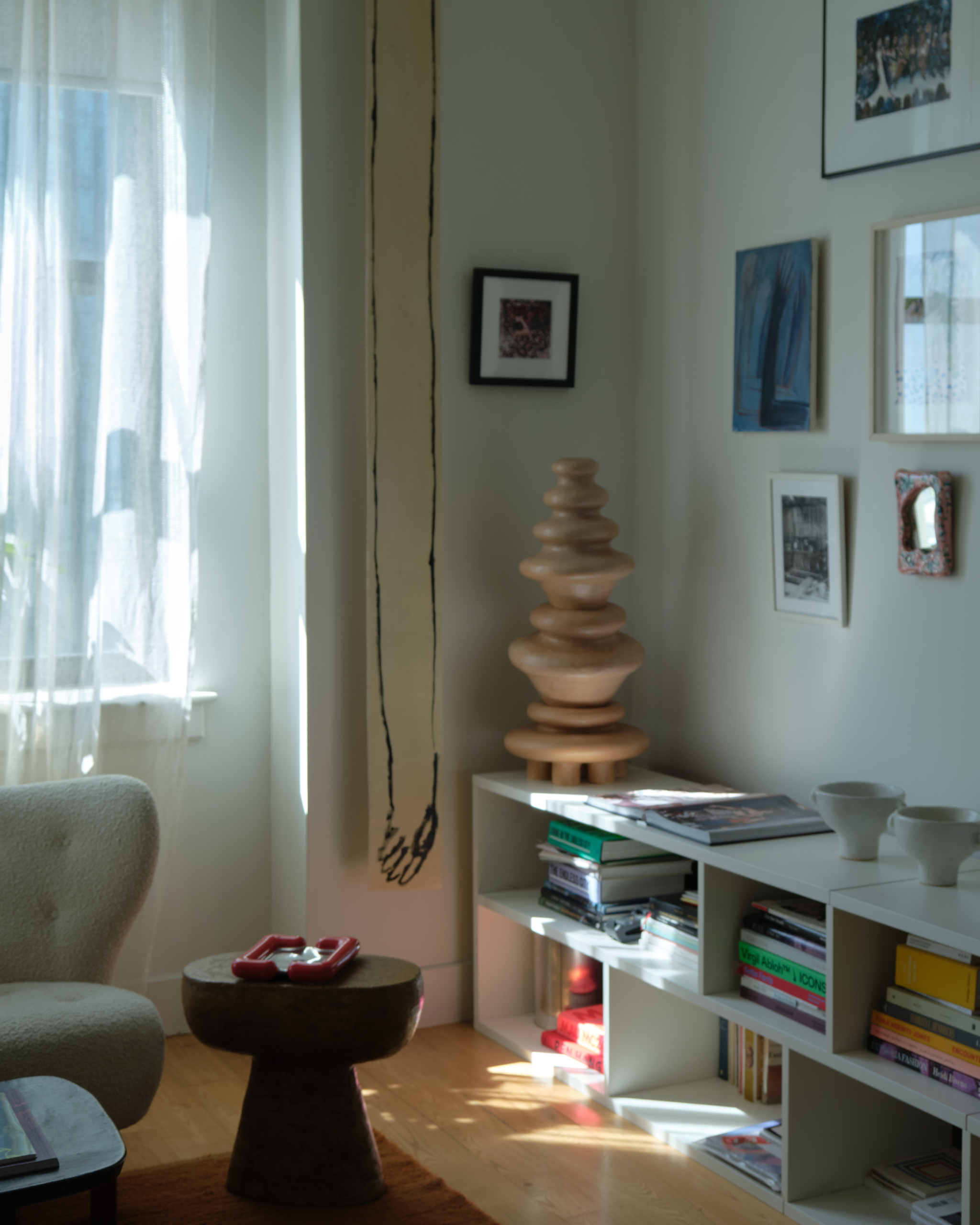
Fiona’s own aversion to treating things with too much reverence at home is somewhat necessitated by the realities of living with a 10-year-old son and a lively bulldog who likes to jump on furniture. One of her favourite pieces, a beaded tapestry by Igshaan Adams, hangs behind the sofa “very casually”, without much breathing room and tall ceramic sculptures are positioned in corners. She still needs order, though. “Everything has its place, even if the harmony only makes sense to me”, she explains. “It’s funny what the eye obsesses over – I’m always shifting a table just a few inches,” she laughs.
As well as running Kombi, Fiona is also one half of Bhalla Munro, an art advisory she set up with Amanda Bhalla Wilkes, who is based in Los Angeles. Through it, she often introduces clients to South African artists they might not otherwise have come across. In the process, she has forged close relationships with the artists whose pieces also fill her home, something that enriches the experience of living with them. “Each piece has a story attached.”
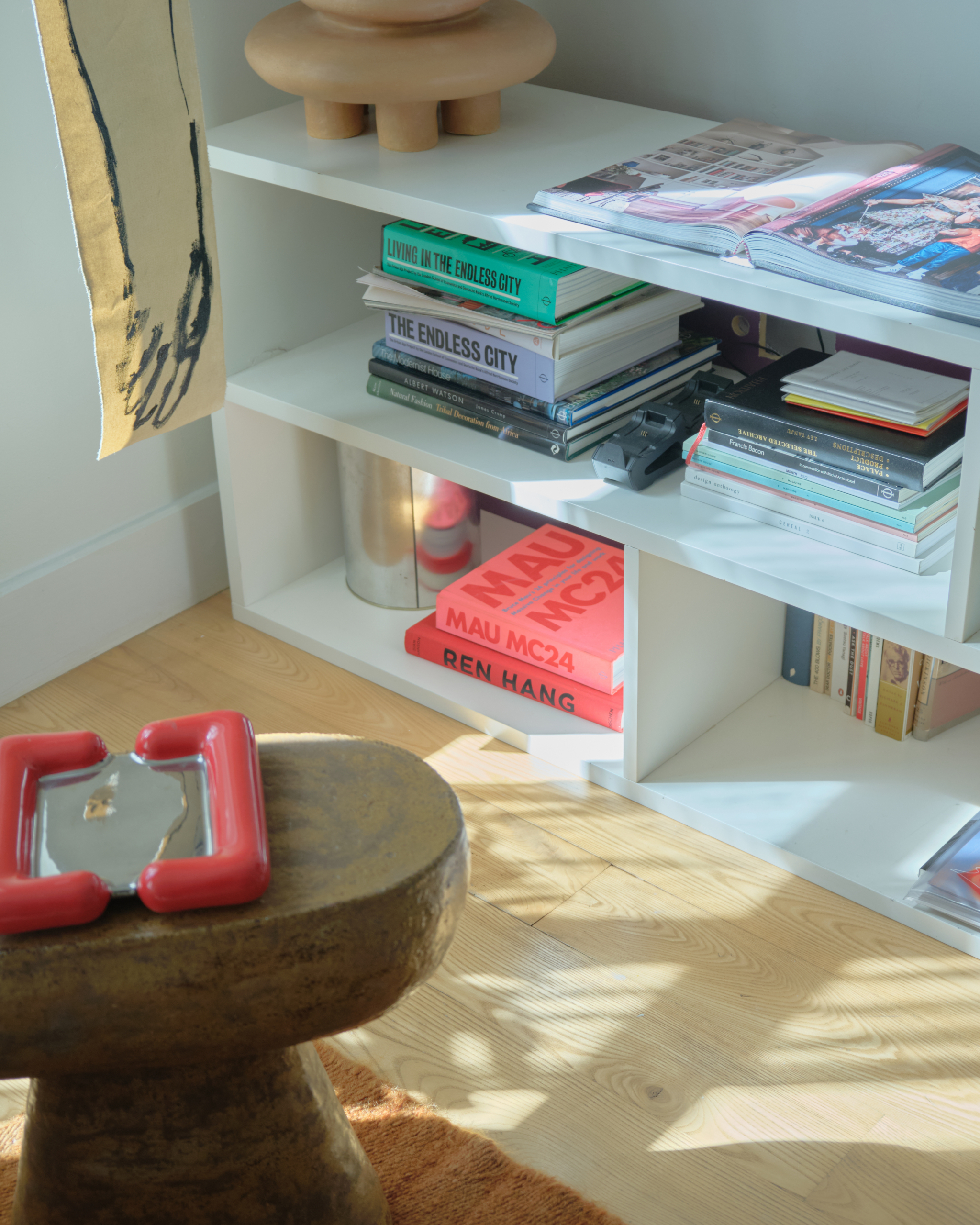
Her newest acquisition is by Jared Ginsburg, a friend whose work she describes as “conceptual, moving between abstraction and figuration, but always poetic and a little off-kilter.” It is the outline of a long arm, painted on nine metres of unstretched canvas mounted on a roll and hung from a frame on one of the apartment’s tall walls. It reminds Fiona of the first work of his she loved, which she saw at Blank Projects, the gallery that represents him in South Africa. “It was the outline of a couple’s legs entangled, on a huge white canvas. Human form in the most minimal of gestures, but very tender,” she recalls. “It’s a quizzical work, but at the same time it’s elegant and sophisticated. I would say that is quite representative of what I’m drawn to.”

With two businesses to run and a child to raise, New York life is busy for Fiona, but the apartment offers the chance for a more intimate social life. Across the corridor live two close friends, an art advisor and an interiors photographer, whom she often bumps into with their new baby. Some evenings they come over to make popcorn and watch a movie. In New York, Fiona says, a lot of socialising happens midweek, and entertaining at home tends to be low-key. A girlfriend might come round with her son, so their boys can play chess while the adults have a glass of wine over sushi or an easy one-pot supper.
Bigger gatherings happen upstate, at the three-storey stone house built in 1758 where Fiona spends summers and many weekends, and where friends often come to stay. In the country, Fiona gardens a lot – “It’s so calming” – and is immersed in nature, things that act as a counterweight to life on the 18th floor in Brooklyn. “I work from home a lot and being so high up, it’s like you’re in a very nice box in the sky, but it can also feel isolating,” she says. “Getting out into nature with my friends and family is really important for me – it’s the balance of things.”
Soon, Fiona will be on the move: her landlord has sold, and she leaves One Hanson Place in a couple of months. Next, she hopes to find a brownstone in Fort Greene and live “at a level where I look at the trees again”. They are hard to come by, but she plans to do what worked last time. “You just have to say it into existence.”
Suggested stories
Faezah Shaharuddin is Making Furniture On Her Own Terms
An Artist’s Home in Hackney with Plenty of Creative Headroom
Going Out, Staying In With Dan Pope
Filippo Muzi Falconi’s World Is Filled With Wonder, Naturally
Making Work – and a Home – Out of Restrictions, Remains and Resourcefulness
A Designer Finding New Forms in Ancient Traditions
A Collector Who Sells – and Lives With – the Things She Loves
Functional Beauty: Jewellery Designer Helena Vieira’s Converted Warehouse Apartment
The State of Design? Designer David Searcy Has Thoughts
Inside Jesse Butterfield’s Studio

Jewellery Designer Jessi Burch’s Brooklyn Apartment is a Portal into her Mind
How “primitive craft” and “contemporary production” come together at Lewis Graham’s studio
An Apartment With No Sofa But 50 Lamps
A Happy Family Collaboration in De Beauvoir
How “The Muse of Spirited Resourcefulness” Guided The Making of Glass Artist Juli Bolaños-Durman’s Edinburgh Home
ON UGLINESS WITH DAVID MICHON, AUTHOR OF FOR SCALE
The Home That Thomas Wheller Is Making
Designer Jake Robertson’s Home is a “Living Library”
Jewellery Shaped by Architecture, History and the Human Hand

THE SCURA GUIDE TO GOSPEL OAK & AROUND
Scura Selects: November 2025
Luke Malaney’s Work is Always in Motion
Going Global: Reflections and Recommendations from Flawk’s Show at Collectible NYC
The Fluent Creativity of Liyang Zhang
SCURA Selects: What to see at Open House & LDF
FRIENDS OF SCURA: ALEXANDRA ARIAS
What is Flawk?
A Design Duo’s Reunion with a Family Farmhouse in Alsace

The best eats in London under £20
Introducing the Flawk Shop: a new home for a family of objects

An Architectural Adventure in Finland’s Far North
Freddy Tuppen’s Flat Keeps Getting Better

A Slower Guide to Istanbul

Inside A Copenhagen Apartment Shaped By Instinct, Collaboration and Kerbside Finds
A Guide to Copenhagen, Curated by a Design Duo We Love
Step Inside Tom Golland’s Colour Playground
Picasso Chairs and Playful Precision: Josh Page’s Creative World

Ajay Larr on the Architecture of Food and Why Meals Matter
A Slower Guide to London
The Scura Guide to eBay
The Homespun Beauty of Textile Designer Isabel Farchy’s Patchwork Panels
NYC Design Getaways
Our friends: PPP LAB on crafting for simplicity and usability
Hidden Feasts: Jiaonest
Scura’s Guide to Independent Stoke Newington
Welcome to Scura